
FlyCart 30 in Mountain Solar Farm Filming
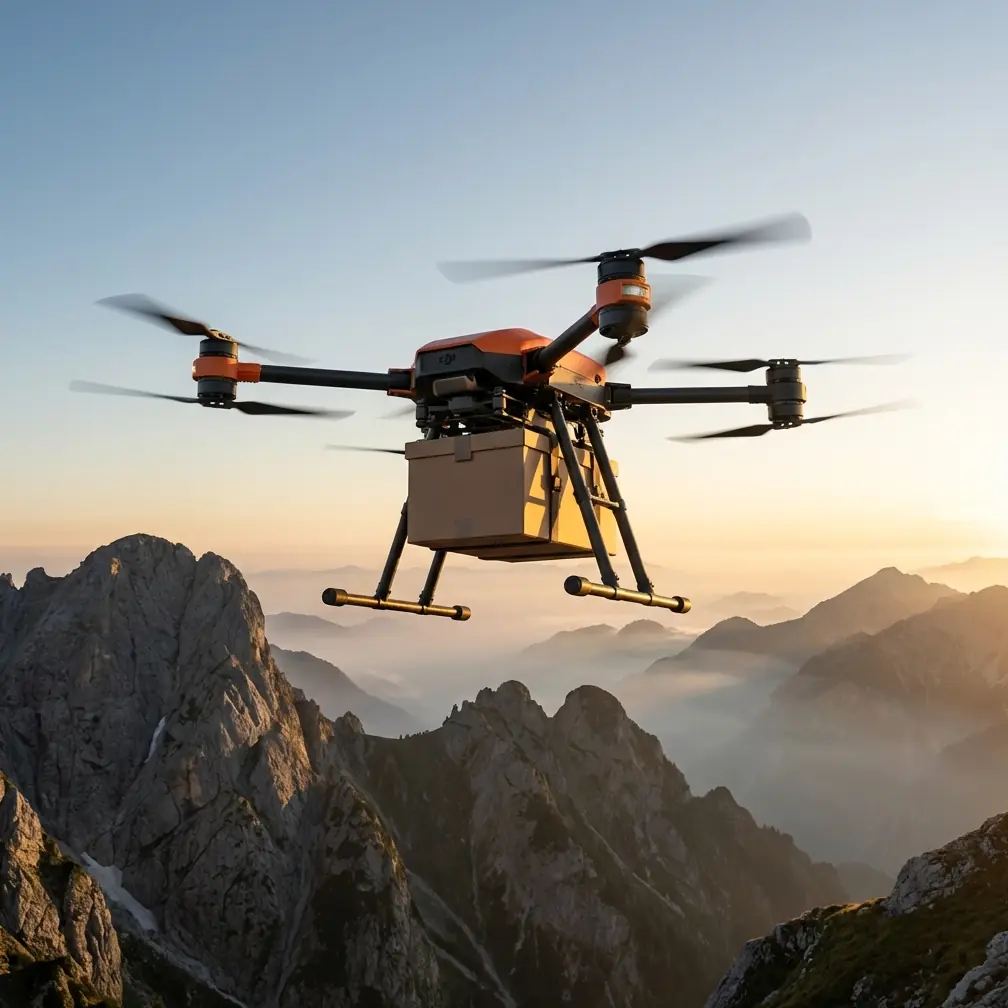
FlyCart 30 in Mountain Solar Farm Filming: A Field Case Study From the Logistics Side
META: A practical FlyCart 30 case study for mountain solar farm filming, covering payload ratio, winch operations, dual-battery planning, BVLOS workflow, route optimization, and pre-flight safety checks.
When people picture the DJI FlyCart 30, they usually think of cargo drops, remote logistics, and utility work. Fair enough. But in the field, aircraft capability rarely stays inside one neat category. I’ve seen that firsthand while planning support operations for filming teams working around mountain solar farms, where access roads are narrow, slopes are unstable, and every extra human movement across the site adds friction, delay, or risk.
This case study looks at how the FlyCart 30 fits into that environment when the objective is not simple freight delivery, but keeping a filming operation moving across a complex solar installation in mountainous terrain. I’m writing this from the perspective of a logistics lead, because that is where the aircraft becomes most useful: not as a headline, but as a system that changes how the whole day gets organized.
The critical shift is this. In a mountain solar farm shoot, the bottleneck is rarely the camera itself. It is the chain around it: batteries, lenses, rigging, emergency supplies, radio gear, weather contingencies, and moving equipment between elevation-separated work zones without burning half the schedule on foot transport. That is where the FlyCart 30 starts to matter.
Why the mountain solar farm scenario is hard on the ground team
Solar farms built in mountain regions are operationally awkward places to film. Panel rows follow contours. Service roads may zigzag or terminate well below the point where a crew needs to set up. Wind behaves differently at ridgelines than it does inside valleys. Dust, pollen, and loose debris collect in places you would not expect. Add early-morning condensation and strong midday glare, and the site quickly becomes a test of planning discipline rather than pure flight skill.
A conventional support plan often forces the crew into repeated uphill and downhill movement with heavy cases. That drains time and people. It also degrades decision quality. By midday, tired teams make worse calls about where to stand, what to carry, and how quickly to reset.
The FlyCart 30 changes that equation because it allows the logistics layer to detach from the walking speed of the crew. For a filming operation, that matters more than many teams realize.
The actual role of the FlyCart 30 on a shoot like this
Used well, the FlyCart 30 is not the hero aircraft in the frame. It is the aircraft that keeps the hero aircraft, camera team, and support staff from stalling out.
In a mountain solar farm project, we typically map the site into temporary logistics nodes. One lower staging zone near vehicles. One mid-slope transfer point. One or more upper work positions with direct visual access to panel corridors, inverter blocks, or ridgeline angles needed for the film sequence.
The FlyCart 30 then moves tightly defined loads between those nodes. That sounds simple, but the operational significance sits in the details.
First, payload ratio matters. If the load is poorly chosen relative to mission distance, altitude, and reserve requirements, the aircraft becomes inefficient fast. The smartest use is not to max out carrying capacity on every leg. It is to match each load to the route and conditions so that turnaround remains fast and battery planning stays clean. In mountain work, carrying less on more predictable cycles often beats chasing theoretical maximum lift.
Second, the winch system becomes more valuable than many first-time users expect. At a solar farm, there are many locations where landing is a bad idea: uneven gravel, cable runs, fragile vegetation, narrow maintenance strips, and panel-adjacent areas where rotor wash can spread dust onto surfaces or disturb loose material. With a winch, the aircraft can hold a safer hover point while lowering a case or technical pack into a controlled pickup zone. That protects the aircraft, the site, and the equipment being delivered.
Those two details alone—payload ratio discipline and correct use of the winch—turn the FlyCart 30 from a brute-force lifter into a precise logistics tool.
The pre-flight cleaning step that gets overlooked
Before every mountain deployment, I insist on a cleaning step that some teams treat as optional. It is not optional.
Safety features only work properly when the aircraft’s sensing and deployment-related areas are free from the grime the site naturally produces. Fine dust from access roads, dried mud mist, grass fragments, and panel-adjacent debris can collect around critical surfaces during transport or after earlier sorties. If the aircraft is equipped with an emergency parachute system, you do not want anything interfering with inspection, access paths, or surrounding hardware. The same goes for exposed sensing zones that support stable operation during low-altitude or precision delivery work.
So the routine is straightforward: wipe down external surfaces around relevant sensors, inspect for dust buildup in crevices, verify the parachute-related components are unobstructed, and confirm the winch line path is clean and free of contamination. This takes a few minutes. On a mountain solar farm, it can prevent the kind of tiny mechanical or sensing issue that escalates at the worst possible time—mid-slope, with gusts rising and the crew waiting on essential equipment.
That cleaning step is not housekeeping. It is mission assurance.
A practical mission profile
On one representative mountain-site workflow, the filming team needed to capture sunrise light over stepped panel arrays, then reposition to a higher ridge for a wide tracking sequence once the shadows cleared. Vehicle access covered only the lower zone. Everything above that required either a long carry or air support.
The FlyCart 30 was assigned a support schedule rather than ad hoc flights. That distinction is important. Instead of waiting for someone to radio “we need another battery” after a delay had already started, we planned timed resupply windows based on shot sequence.
Early flights moved compact loads uphill: camera batteries, radio relays, water, and protective coverings for gear. Later flights repositioned specialty items and retrieved depleted packs on the return leg. The dual-battery setup was central here, not as a spec-sheet talking point, but as a planning variable. Dual-battery operations let us maintain a more stable sortie rhythm by reducing the chance that one energy decision would cascade into missed shot windows. In mountain filming, predictability is often worth more than headline performance.
That same predictability supports route optimization. A direct line on the map is not always the best route in the air. Ridgeline turbulence, temporary crew positions, reflective surfaces, and the need to keep clear of active filming angles all shape the preferred corridor. We typically build routes that favor consistent air behavior and operational separation rather than raw shortest distance. That means the aircraft may fly slightly farther while producing safer, more repeatable results.
For crews considering a similar setup, I usually suggest a quick field-planning conversation before the first shoot day through our operations WhatsApp channel, especially when terrain and timing pressure are both high.
Where BVLOS thinking enters the conversation
BVLOS is one of those terms that gets thrown around loosely, but in mountain solar farm operations it deserves careful treatment. Even when a mission is not formally conducted beyond visual line of sight, teams still benefit from BVLOS-style planning discipline.
Why? Because mountain terrain creates partial visual interruptions, changing sight lines, and segmented work zones. If you build your support plan as though visibility will always be simple, you are designing for the wrong environment.
That means using defined corridors, clear communication roles, contingency points, and route logic that remains understandable even when the aircraft is not continuously obvious to every person on site. The FlyCart 30 is strong when treated as part of a broader operational framework, not just a lift platform with a destination.
This is especially true around solar infrastructure. Long repeating rows can distort distance perception. Slopes can hide personnel until the last moment. Bright panel reflections can complicate situational awareness. A route that looked fine during a quick walk-through can become clumsy once the site is active and the light changes. Borrowing BVLOS discipline helps eliminate that looseness.
Why the winch matters more than landing at the top
A lot of teams initially think the upper handoff point should always involve landing. In mountain solar farm work, that is often the wrong assumption.
The winch system solves three common problems at once.
It avoids forcing a landing on imperfect terrain. It keeps rotor wash farther from sensitive surfaces and loose grit. And it allows handoff into a very small operational footprint. That footprint matters around panel strings, survey markers, and narrow maintenance clearances.
The operational significance is hard to overstate. If your support aircraft can deliver to a hover point instead of needing a physically generous landing area, your route design becomes cleaner and your crew placement becomes safer. It also reduces the temptation to improvise a makeshift landing spot in terrain that never deserved one.
For filming teams, this has another benefit. Less disturbance near the active set. When you are trying to maintain a controlled environment for audio, movement, or dust-sensitive equipment, minimizing unnecessary downwash near crew positions is a real advantage.
Payload ratio is not just about what the aircraft can lift
One of the most common planning errors is treating payload capacity as the only number that matters. For mountain support work, payload ratio should be understood relative to route length, elevation change, weather margin, and how urgently the item actually needs to move.
A heavy but non-urgent item may be better consolidated later. A lighter but time-critical item can be dispatched immediately. That sounds obvious, but in the field, crews often prioritize by annoyance rather than mission value.
We use a simple rule: move the load that preserves shot continuity first. In practice, that means batteries, media, comms support, and protective equipment often outrank bulkier convenience items. Once teams understand this, the FlyCart 30’s productivity improves sharply because the aircraft is no longer being used as an airborne substitute for poor packing discipline.
That is what professionals mean when they talk about route optimization. It is not software alone. It is matching aircraft movement to mission priorities.
The emergency parachute discussion belongs in planning, not afterthoughts
Mountain weather and terrain create a different risk profile than flatland logistics. Gust fronts can build quickly. Recovery access may be limited. Ground surfaces vary from gravel to brush to panel-adjacent technical areas.
That is why the emergency parachute should not be treated as a comforting checkbox. It belongs in the planning conversation from the start. Teams need to know what it changes operationally: where they are comfortable flying, what buffers they maintain, how they think about ground risk, and how they brief personnel below the route.
Just as important, they need to maintain it properly, which brings us back to pre-flight cleaning and inspection. A safety feature you assume is available without disciplined checks is not a serious safety feature. It is wishful thinking.
What the FlyCart 30 really contributes to this kind of production
For mountain solar farm filming, the FlyCart 30 is most effective when it is treated as infrastructure. Not spectacle. Not a novelty. Infrastructure.
It reduces uphill transport strain. It shortens reset times between shot positions. It makes remote nodes viable without overcommitting crew energy. Its dual-battery architecture supports steadier sortie planning. Its winch system allows delivery without forcing poor landing decisions. Its emergency parachute informs a more mature safety posture. And when paired with BVLOS-style route discipline, it becomes far more than a cargo aircraft filling dead time between camera takes.
That is the core lesson from this kind of operation. The aircraft does not just move equipment. It changes the shape of the workday.
And on a mountain solar farm, where terrain punishes inefficiency and delays can erase the best light in minutes, that shift is exactly what makes the difference.
Ready for your own FlyCart 30? Contact our team for expert consultation.