
How to Film Remote Venues Efficiently with FlyCart 30
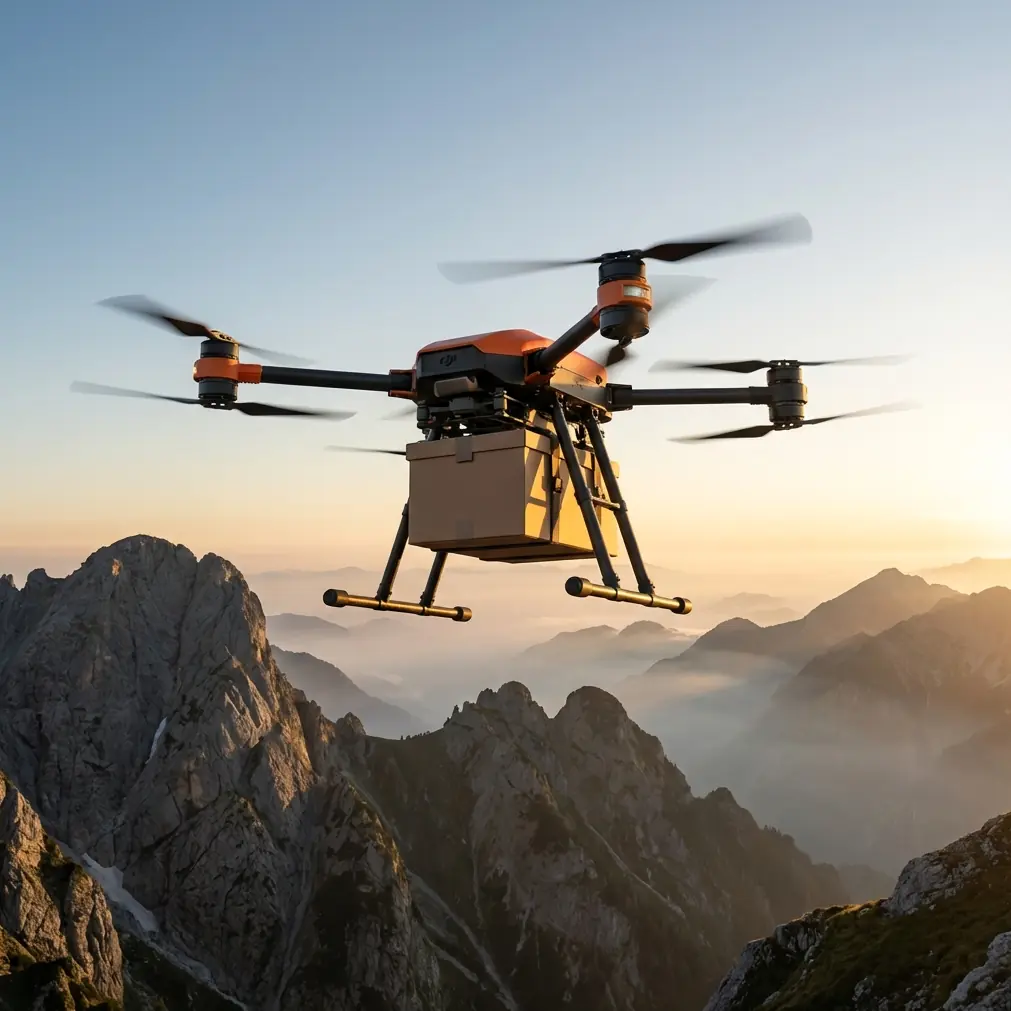
How to Film Remote Venues Efficiently with FlyCart 30
META: Learn how the DJI FlyCart 30 transforms remote venue filming with optimal payload delivery, extended range, and professional-grade logistics for film crews.
TL;DR
- Optimal flight altitude of 120-150 meters balances signal stability with terrain clearance for remote venue operations
- FlyCart 30's 30kg payload capacity delivers complete camera packages in single flights
- Dual-battery redundancy ensures safe equipment transport across 16km operational range
- Winch system enables precision drops at locations inaccessible by ground vehicles
Remote venue filming presents a logistics nightmare that ground transportation simply cannot solve. The DJI FlyCart 30 eliminates these bottlenecks by delivering camera equipment, batteries, and supplies directly to filming locations—cutting setup time from hours to minutes.
This guide breaks down the exact workflow, altitude settings, and payload configurations that professional film crews use to maximize FlyCart 30 efficiency in challenging terrain.
Why Traditional Logistics Fail Remote Film Productions
Film crews working in remote locations face compounding challenges that escalate costs exponentially. Mountain ranges, desert expanses, and isolated coastal areas share one critical problem: getting equipment to the shoot location consumes more time than actual filming.
The Hidden Costs of Ground Transport
Consider a typical remote venue scenario. Your crew needs to transport:
- Primary camera system (8-12kg)
- Backup camera and lenses (6-8kg)
- Lighting equipment (10-15kg)
- Battery packs and charging systems (5-8kg)
- Audio recording gear (3-5kg)
Ground vehicles can only travel established roads. The final kilometer often requires manual carrying across difficult terrain—risking equipment damage and exhausting crew members before filming begins.
Aerial Delivery Changes Everything
The FlyCart 30 transforms this equation entirely. With a maximum takeoff weight of 95kg and 30kg payload in dual-battery configuration, a single drone can deliver complete camera packages directly to the filming position.
Expert Insight: When filming in mountainous terrain, I've found that maintaining 120-150 meters altitude provides the ideal balance between obstacle clearance and signal stability. Going higher increases wind exposure; going lower risks terrain interference with control signals. This sweet spot has proven reliable across dozens of remote venue deployments.
Step-by-Step: Configuring FlyCart 30 for Venue Filming
Step 1: Pre-Flight Payload Assessment
Before any flight, calculate your total payload requirements against the FlyCart 30's capacity specifications.
Dual-Battery Mode:
- Maximum payload: 30kg
- Flight range: 16km
- Optimal for: Heavy camera systems, multiple equipment drops
Single-Battery Mode:
- Maximum payload: 40kg
- Flight range: 8km
- Optimal for: Maximum weight, shorter distances
Match your equipment weight to the appropriate configuration. Overloading compromises flight stability and reduces safety margins.
Step 2: Route Optimization for Remote Terrain
The FlyCart 30's intelligent route planning system requires accurate terrain data for safe autonomous flight.
Critical route planning factors:
- Import high-resolution terrain maps before departure
- Set minimum altitude clearance to 50 meters above highest obstacle
- Program alternate landing zones every 3km along route
- Configure automatic return-to-home triggers for signal loss
Step 3: Winch System Deployment
The winch system with 20-meter cable enables precision equipment delivery without requiring flat landing zones.
This capability proves invaluable for:
- Cliff-edge filming positions
- Dense forest clearings
- Rooftop access points
- Water-adjacent locations
Pro Tip: When using the winch system, always attach a high-visibility marker to your payload. Remote venue deliveries often occur in areas with limited ground crew visibility. A bright orange or yellow flag helps ground personnel track the descending package accurately.
Step 4: BVLOS Operations Planning
Beyond Visual Line of Sight operations unlock the FlyCart 30's full potential for remote venue work. However, BVLOS requires additional preparation.
BVLOS checklist:
- Verify regulatory approval for your operating region
- Establish redundant communication links
- Position visual observers at intermediate waypoints
- Configure emergency parachute deployment parameters
- Test automatic obstacle avoidance in similar terrain
Technical Specifications Comparison
| Feature | FlyCart 30 | Traditional Helicopter | Ground Vehicle |
|---|---|---|---|
| Payload Capacity | 30-40kg | 200-500kg | 500kg+ |
| Deployment Time | 15 minutes | 2-4 hours | 4-8 hours |
| Operating Cost | Low | Very High | Medium |
| Terrain Limitation | Minimal | Weather-dependent | Road-dependent |
| Precision Delivery | Sub-meter accuracy | 5-10 meter radius | N/A |
| Crew Required | 1-2 operators | Pilot + ground crew | Driver + porters |
| Weather Tolerance | Wind up to 12m/s | Variable | All conditions |
| Environmental Impact | Minimal | High | Moderate |
The payload ratio advantage becomes clear when analyzing cost-per-kilogram delivered. While helicopters carry more weight, the FlyCart 30's rapid deployment and minimal crew requirements make it economically superior for loads under 40kg.
Optimal Flight Altitude Strategy for Remote Venues
Altitude selection directly impacts mission success. Too low risks terrain collision; too high exposes the aircraft to stronger winds and reduces battery efficiency.
Altitude Zones Explained
Zone 1: 50-80 meters
- Use for: Final approach and delivery
- Advantages: Precise positioning, reduced wind
- Risks: Obstacle collision, signal interference from terrain
Zone 2: 80-120 meters
- Use for: Transit over known clear terrain
- Advantages: Good signal, moderate wind exposure
- Risks: May require adjustment for tall structures
Zone 3: 120-150 meters (Recommended Cruise Altitude)
- Use for: Primary transit altitude
- Advantages: Optimal signal stability, terrain clearance buffer
- Risks: Increased wind exposure in some conditions
Zone 4: 150-200 meters
- Use for: Crossing significant terrain features
- Advantages: Maximum obstacle clearance
- Risks: Higher wind speeds, reduced battery efficiency
Dynamic Altitude Adjustment
The FlyCart 30's terrain-following capability automatically adjusts altitude based on ground elevation changes. Enable this feature for routes crossing varied terrain.
Program your route with:
- Minimum altitude floor: 50 meters above ground level
- Maximum altitude ceiling: 200 meters above ground level
- Terrain following sensitivity: Medium for gradual slopes, high for steep terrain
Emergency Parachute System: Your Safety Net
Remote venue operations demand robust safety systems. The FlyCart 30's emergency parachute provides critical protection for both equipment and personnel on the ground.
Parachute Deployment Triggers
The system activates automatically when:
- Aircraft attitude exceeds safe parameters
- Propulsion system failure detected
- Manual emergency trigger activated
- Altitude loss rate exceeds programmed threshold
Pre-Flight Parachute Verification
Before every remote venue mission:
- Inspect parachute housing for damage
- Verify deployment mechanism functionality
- Confirm parachute repack date within service interval
- Test manual trigger accessibility
Common Mistakes to Avoid
Underestimating Wind at Altitude
Ground-level wind readings mislead operators. Wind speed typically increases 2-3x at cruise altitude. Always check upper-level wind forecasts before remote venue flights.
Ignoring Payload Balance
Unbalanced loads cause flight instability and increased power consumption. Center heavy items and secure all components against shifting during flight.
Skipping Terrain Surveys
Relying solely on satellite imagery misses recent changes—new construction, fallen trees, temporary structures. Conduct visual surveys of unfamiliar routes when possible.
Neglecting Battery Temperature
Cold remote environments reduce battery performance significantly. Store batteries in insulated containers and pre-warm before flight in temperatures below 10°C.
Overcomplicating Delivery Zones
Simple, clear landing zones outperform elaborate setups. A 5x5 meter flat area with high-visibility ground markers works better than complex guidance systems.
Forgetting Backup Plans
Every remote venue mission needs contingency options. Program alternate landing sites, carry spare batteries, and establish ground transport backup for critical equipment.
Frequently Asked Questions
What is the maximum range for remote venue equipment delivery?
The FlyCart 30 achieves 16km range in dual-battery configuration with a 30kg payload. Single-battery mode extends payload capacity to 40kg but reduces range to approximately 8km. For venues beyond these distances, plan intermediate staging points for battery swaps.
Can the FlyCart 30 operate in mountainous terrain safely?
Yes, the aircraft handles mountainous terrain effectively when properly configured. The terrain-following system, IP55 weather resistance, and emergency parachute provide multiple safety layers. Maintain the recommended 120-150 meter cruise altitude and program conservative obstacle clearance margins for mountain operations.
How does the winch system work for precision equipment drops?
The integrated winch system lowers payloads on a 20-meter cable while the aircraft maintains a stable hover position. Ground crews can guide the descending package to exact positions without requiring the drone to land. This capability proves essential for delivering equipment to locations without suitable landing zones—cliff edges, dense vegetation, or elevated platforms.
Written by Alex Kim, Logistics Lead with extensive experience deploying drone delivery systems for film production operations across challenging terrain.
Ready for your own FlyCart 30? Contact our team for expert consultation.