
Mountain Venue Filming with the FlyCart 30
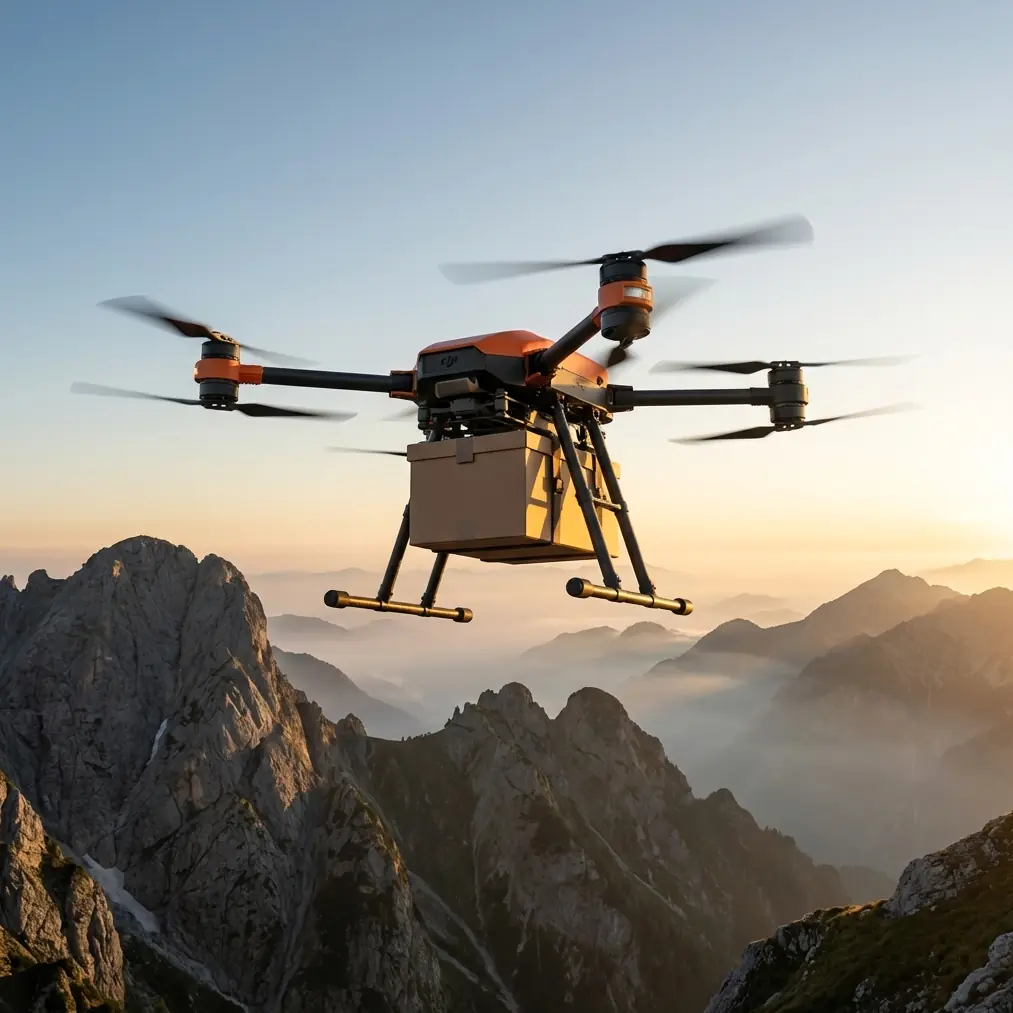
Mountain Venue Filming with the FlyCart 30
META: Learn how the FlyCart 30 drone transforms mountain venue filming with heavy payload capacity, dual-battery reliability, and route optimization for rugged terrain.
TL;DR
- The DJI FlyCart 30 carries up to 30 kg of filming equipment across rugged mountain terrain where vehicles and crew can't reach
- Dual-battery redundancy and an emergency parachute system keep expensive camera gear safe at high altitudes
- Built-in route optimization and BVLOS capability let you scout and film remote venues without deploying ground teams
- The winch system enables precision equipment drops at exact coordinates, even on uneven mountain surfaces
The Mountain Filming Problem Nobody Talks About
Hauling cinema-grade equipment up a mountainside to film a venue nearly ended my career. Two years ago, our logistics team spent three full days transporting 45 kg of gear—gimbal rigs, lighting kits, battery packs—to a cliffside wedding venue in the Colorado Rockies. A porter slipped on loose scree, and we lost a stabilizer worth more than the entire shoot's budget.
That experience forced me to rethink everything about how we move filming equipment to elevation. This guide breaks down exactly how I now use the DJI FlyCart 30 to film mountain venues faster, safer, and with better results than any ground-based logistics approach.
Whether you're a production company scouting alpine resorts or an event filmmaker covering destination weddings at elevation, this step-by-step how-to will show you how to deploy the FlyCart 30 for mountain venue work from first flight plan to final delivery.
Step 1: Assess Your Mountain Venue and Payload Requirements
Before you power anything on, you need a clear picture of the terrain, altitude, and the total weight of gear you're moving.
Map the Terrain Profile
Use satellite imagery and topographic maps to identify:
- Landing zones with at least a 4 m × 4 m flat area
- Wind corridors and thermal updraft zones common on ridgelines
- Obstacles like power lines, cable car systems, and tree canopies
- Emergency landing options along the planned flight corridor
Calculate Your Payload Ratio
The FlyCart 30 supports a maximum payload ratio that tops out at 30 kg in dual-battery mode and 40 kg in single-battery configuration. For mountain venue filming, I almost always recommend dual-battery mode. Here's why: altitude reduces air density, which cuts lift efficiency. At 3,000 m elevation, expect roughly a 10–15% reduction in effective payload capacity.
Expert Insight — Alex Kim: "I calculate my effective mountain payload at 85% of the FlyCart 30's rated maximum. At altitude, that buffer has saved me from overloading the motors every single time. For a venue at 2,500 m, I plan for no more than 25 kg per flight in dual-battery mode."
Itemize and Weigh Every Piece of Gear
Build a manifest. Every cable, every lens, every battery pack goes on the list:
- Cinema camera body and lens kit
- Gimbal stabilizer and mounting plate
- LED lighting panels
- Audio recording equipment
- Backup batteries and charging units
- Weatherproofing cases
Sort items by priority. The FlyCart 30 can make multiple runs, so stage your most critical gear for the first flight.
Step 2: Plan Your Flight Route with BVLOS Capability
Mountain terrain makes visual line of sight nearly impossible once the drone clears a ridgeline. The FlyCart 30's BVLOS (Beyond Visual Line of Sight) capability is what makes this entire workflow possible.
Build the Route in DJI DeliveryHub
The FlyCart 30 integrates with DJI's flight planning software, which lets you:
- Set waypoints with GPS precision down to 1 m accuracy
- Program altitude gates that adjust for terrain elevation changes
- Define route optimization paths that minimize battery consumption
- Establish geofenced no-fly corridors around obstacles
Account for Mountain Weather Windows
Mountain weather shifts fast. I schedule all flights for early morning between 0600 and 0900, when thermals are weakest and wind speeds typically stay below 12 m/s—the FlyCart 30's maximum rated wind resistance.
- Check forecasts at summit level, not base level
- Plan for 15-minute weather buffer windows between flights
- Program automatic return-to-home triggers for wind speed spikes
Step 3: Configure the Dual-Battery and Safety Systems
This is where the FlyCart 30 separates itself from every other delivery drone on the market for high-stakes filming logistics.
Dual-Battery Redundancy
The dual-battery system provides 28 km of range with a 30 kg payload. In mountain operations, I typically see 16–20 km of effective range due to altitude compensation and wind resistance. The critical advantage: if one battery fails mid-flight, the second battery sustains flight long enough for a controlled landing.
Emergency Parachute Deployment
The integrated emergency parachute activates automatically if the flight controller detects:
- Dual motor failure
- Complete power loss
- Uncontrolled descent exceeding safe parameters
For mountain filming, this isn't optional peace of mind—it's equipment insurance. A 30 kg camera rig in freefall from 200 m is a total write-off. The parachute system reduces descent velocity to a survivable rate for both the drone and its cargo.
Pro Tip: Before every mountain deployment, I run a parachute system self-check on the ground. The FlyCart 30's diagnostics panel shows chute deployment readiness—green means go. I've never launched without confirming this first, and neither should you.
Step 4: Use the Winch System for Precision Equipment Drops
Mountain venues rarely offer perfect landing surfaces. Rocky outcrops, sloped meadows, and narrow terraces make conventional drone landings risky when you're carrying fragile filming equipment.
The FlyCart 30's winch system solves this entirely.
How the Winch Drop Works
- The drone hovers at a stable altitude of 15–20 m above the drop point
- The winch cable lowers the payload at a controlled rate of approximately 0.5 m/s
- An onboard camera lets you monitor the descent in real time
- The cargo hook releases automatically upon touchdown detection
Best Practices for Winch Drops on Mountain Terrain
- Use padded cargo cases rated for impact—even controlled drops involve some contact force
- Station a ground crew member at the drop zone to guide and unhook cargo
- Avoid winch operations in winds exceeding 8 m/s for precision placement
- Mark your drop zone with a high-visibility ground tarp so the pilot can confirm positioning
Step 5: Execute the Multi-Run Filming Equipment Deployment
For a full mountain venue filming setup, I typically plan 3–4 FlyCart 30 flights across a single morning window.
| Flight | Payload | Weight | Priority |
|---|---|---|---|
| Run 1 | Cinema camera body + primary lens kit | 12 kg | Critical |
| Run 2 | Gimbal stabilizer + mounting hardware | 9 kg | Critical |
| Run 3 | LED lighting panels + stands | 18 kg | High |
| Run 4 | Audio gear + backup batteries + accessories | 11 kg | Medium |
Between flights, swap batteries and run a full pre-flight diagnostic. The FlyCart 30's battery swap takes under 3 minutes with practiced hands.
Technical Comparison: FlyCart 30 vs. Alternative Mountain Transport Methods
| Factor | FlyCart 30 | Helicopter Charter | Manual Porter Team |
|---|---|---|---|
| Max Payload Per Trip | 30 kg (dual-battery) | 500+ kg | 15–20 kg per person |
| Deployment Time | 20 min setup | 2–4 hours coordination | 4–8 hours per trip |
| Weather Flexibility | Operates up to 12 m/s wind | Grounded in moderate wind | Slowed significantly |
| Terrain Access | Hovers/winch drops anywhere | Needs landing pad | Limited by trail access |
| Risk to Equipment | Low (parachute backup) | Low | High (human error) |
| Crew Required | 1–2 operators | Pilot + ground crew | 3–6 porters |
| Regulatory Complexity | Part 107 + BVLOS waiver | FAA charter regulations | None |
| Repeatability | Fully programmable routes | Variable | Inconsistent |
Common Mistakes to Avoid
Overloading at altitude. The 30 kg rating is at sea level. At 2,000+ m, reduce your planned payload by at least 15% to maintain stable flight characteristics and adequate battery reserve.
Ignoring microclimate wind patterns. Valley floors may read calm while ridgeline winds hit 15 m/s. Always check conditions at your actual flight altitude, not your launch altitude.
Skipping the winch for "flat enough" terrain. I've seen operators attempt direct landings on mountain surfaces that looked level from the air. Rocks, hidden slopes, and soft ground cause tip-overs. Use the winch system whenever the landing zone isn't confirmed flat and hard.
Flying without redundancy planning. If the FlyCart 30 goes down mid-route—even with the emergency parachute—you need a recovery plan. Map a hiking route to every segment of your flight path before you launch.
Neglecting battery temperature management. Mountain temperatures at dawn can drop below 5°C. The FlyCart 30's batteries perform best between 15–45°C. Pre-warm batteries in an insulated case before flight to maintain optimal route optimization and range.
Frequently Asked Questions
Can the FlyCart 30 operate at extreme mountain altitudes above 4,000 meters?
The FlyCart 30 is rated for a maximum service ceiling of 6,000 m above sea level. However, effective payload capacity and battery range decrease significantly above 3,500 m due to reduced air density. For filming operations at extreme altitude, reduce your payload to 60–70% of the sea-level maximum and plan for shorter flight legs with more frequent battery swaps.
Do I need special permits for BVLOS mountain filming flights?
Yes. In the United States, BVLOS operations require an FAA Part 107 waiver or approval under the newer rule frameworks. Mountain terrain adds complexity because you may cross multiple jurisdictions, including national forest or park boundaries with their own drone restrictions. Apply for waivers at least 90 days in advance and document your safety case, including the FlyCart 30's emergency parachute and dual-battery redundancy systems.
How does the winch system handle uneven mountain surfaces with rocks and vegetation?
The winch system lowers cargo on a cable while the FlyCart 30 maintains a stable hover above the terrain. The payload descends independently of the surface conditions below, which means rocks, low vegetation, and moderate slopes don't affect the delivery. For surfaces with tall vegetation or sharp rock features, use a reinforced cargo case and position a ground spotter to guide the final meter of descent and unhook the payload safely.
Mountain venue filming used to mean choosing between safety and access. The FlyCart 30 eliminated that tradeoff for my team. Every shoot at elevation now starts with a flight plan instead of a hiking plan, and our gear arrives intact, on time, and exactly where we need it.
Ready for your own FlyCart 30? Contact our team for expert consultation.