
FlyCart 30 in Mountain Filming Logistics
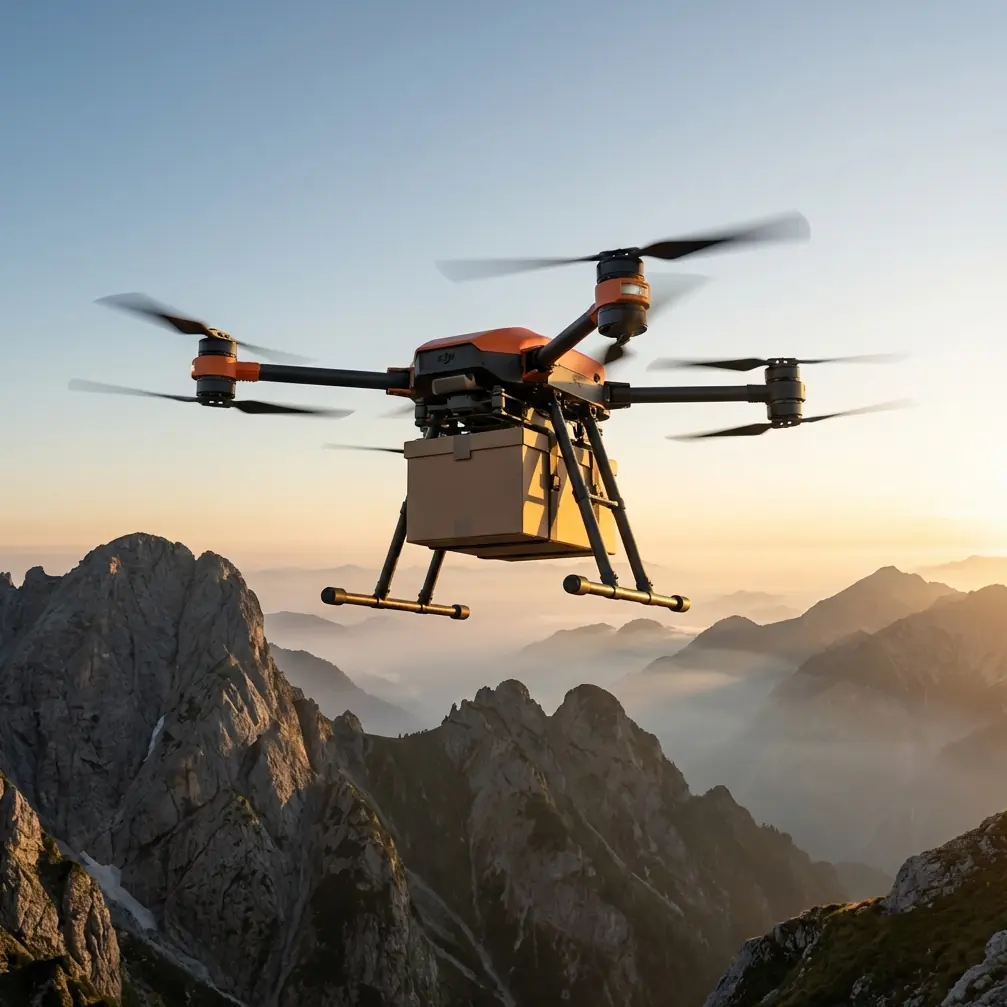
FlyCart 30 in Mountain Filming Logistics: A Field Case Study from the Loading Zone
META: A mountain filming case study on FlyCart 30 covering payload ratio, winch workflow, dual-battery checks, emergency parachute cleaning, route planning, and practical image-quality lessons for venue operations.
Mountain film work has a way of exposing weak logistics.
On paper, a location may look manageable: a ridge-top ceremony platform, a forest pull-off for crew vehicles, a short horizontal distance between the two. Then the real conditions show up. Narrow access roads. Elevation changes that punish every extra kilogram. A shooting window tied to light, weather, and venue bookings. Add fragile camera support gear, batteries, communication kits, décor materials, and last-minute forgotten items, and the old pattern returns: people hiking loads uphill while the schedule slips.
That is where the FlyCart 30 starts making sense, not as a headline feature set, but as a system that changes the shape of the work.
I’ve been looking at mountain venue support through the lens of logistics rather than pure aircraft performance. In that context, the most interesting part of a FlyCart 30 deployment is not simply whether it can carry cargo. It’s whether it can reduce friction across the whole filming day: staging, lift cycles, route discipline, handoff safety, and the small procedural habits that keep operations consistent under pressure.
This case study is built around a mountain filming scenario, with one unexpected lesson borrowed from an unrelated piece of camera advice: sometimes the reason your visual result looks flat is not hardware at all, but a hidden default setting. That idea applies to logistics just as much as photography.
The mountain venue problem is rarely distance alone
A lot of crews underestimate mountain jobs because they judge the route by map view. The venue may only sit a short distance from the road, but the operational cost is buried in elevation gain, unstable footing, and the inability to move gear in a clean sequence.
For film venue support, the challenge is usually not one giant load. It is mixed loads with different urgency levels:
- camera supports needed before first light
- power modules needed before sound and video checks
- décor or event materials that cannot be dragged across rough terrain
- replacement items that always seem to be missing once the unit is already uphill
This is where payload ratio becomes more than a brochure term. In mountain logistics, what matters is how much useful cargo you move relative to the number of sorties, battery cycles, and handoffs required. A poor payload ratio means the aircraft may technically be flying, yet the overall job still stalls because too much time is spent repacking, reprioritizing, and waiting.
With the FlyCart 30, the useful conversation is not “How much can it lift?” in isolation. The better question is “How many critical uplifts can it remove from the human carrying chain before the crew starts burning time and energy?”
A small lesson from photography that mountain operators should not ignore
One of the source references makes a simple point about phone photography: people often blame image quality on the camera, when in practice a hidden setting is the real culprit. The article claims 90% of people ignore three buried camera settings, and specifically points to turning off auto HDR to avoid photos that look gray and lacking depth.
At first glance, that has nothing to do with the FlyCart 30.
In practice, it has everything to do with mountain filming logistics.
Venue teams often assume weak outcomes come from limited aircraft capability, weak battery endurance, or mountain weather. Sometimes that’s true. But just as often, the real issue is a hidden operational default. A route built without terrain-aware margins. A winch line packed carelessly after the previous mission. A safety system visually checked but not physically cleaned. A dual-battery set installed correctly but not evaluated as a pair.
The photography reference matters here because it captures an operational truth: defaults can flatten outcomes. In photos, auto HDR can make scenes look washed out. In drone logistics, neglected setup habits can flatten mission efficiency and introduce avoidable risk.
That is why our mountain workflow begins with something unglamorous.
A cleaning step.
The pre-flight cleaning step most crews rush past
Before any cargo movement, the safety hardware gets attention first. Not after the first sortie. Not if the aircraft “looks fine.” Before launch.
For mountain venue work, dust is not the only contaminant. You get pine debris, grit from roadside staging, fibers from cases, moisture residue from fog, and mud splatter when crews are unloading in uneven pull-offs. Those materials can collect around exposed interfaces and moving elements, especially on aircraft and cargo handling systems that have already worked previous jobs.
For a FlyCart 30 operation, the pre-flight cleaning focus should include the areas tied directly to safety functions and cargo stability:
- winch contact points and visible line path
- cargo hook and release interface
- landing gear contact areas
- emergency parachute housing exterior and nearby surfaces
- battery compartment sealing surfaces and contacts, following approved maintenance procedures
- visual surfaces used to confirm latch closure and mechanical alignment
The emergency parachute is a particularly good example of why this step matters operationally. Crews tend to think of it as a passive backup. But passive systems still live in an active environment. If you are staging from dusty mountain roads and grassy launch pads, the condition around that safety feature deserves disciplined attention. Cleaning is not cosmetic. It supports reliable inspection and helps crews detect anything unusual before the aircraft is airborne over a venue corridor.
That single habit changes the tone of the mission. It forces the team to slow down just enough to catch the kind of issue that usually gets discovered at the worst time.
How the winch system changes mountain handoffs
For filming venues in the mountains, a winch system can be more valuable than a simple point-to-point drop.
There are two reasons.
First, mountain terrain is rarely kind to landing zones. The space near the venue may be narrow, sloped, crowded with production staff, or too sensitive for repeated touchdown cycles. If the aircraft can maintain a controlled hover while lowering cargo into a designated handoff area, the whole transfer becomes cleaner.
Second, venue operations live on choreography. Camera teams, decorators, audio techs, and site coordinators are all working within narrow windows. A winch-based handoff lets the receiving team stay in a prepared zone rather than improvising around a landing aircraft.
On a real mountain job, that means the FlyCart 30 is not just transporting gear. It is preserving the structure of the site.
That has a direct effect on route optimization. Instead of designing every movement around a usable landing footprint, the team can design routes around safe aerial corridors and compact receiving points. In mountain environments, that usually opens better options for keeping the aircraft away from crew congestion and visual set areas.
Dual-battery discipline is operational discipline
Dual-battery architecture is often discussed as a resilience feature, and that’s fair. But on mountain film support jobs, its real value is procedural consistency.
A dual-battery system encourages the team to stop treating power as a vague percentage number and start treating it as a mission planning input. That means logging battery pairing, tracking cycle use, and building sortie sequences around actual mission segments rather than wishful estimates.
Why does that matter on a venue shoot?
Because mountain filming days are full of temptations to cut corners. The light is changing. The director wants one more transfer. The venue manager wants access cleared. The crew thinks the “next hop” is quick. These are exactly the conditions where poor battery discipline creates poor decisions.
A well-run FlyCart 30 team uses dual-battery planning to support route optimization, not just endurance. Loads are grouped by urgency and weight. Delivery order is built around the minimum number of airborne interruptions. Battery pairs are assigned with enough margin for environmental variables and return conditions, not just the best-case outbound leg.
This is one of those areas where logistics lead thinking matters more than drone enthusiasm.
BVLOS thinking starts on the ground
BVLOS gets attention because of airspace, regulation, and technical enablement. All of that matters. But for mountain venue work, the practical value of BVLOS-capable planning begins long before the aircraft leaves the ground.
It begins with route discipline.
Mountain operations are full of visual traps. A direct line on the map may cross rising terrain, rotor-disturbing edge conditions, temporary human activity, or communication blind spots created by geography. That means route optimization cannot be reduced to “shortest path.”
The better approach is to build routes around repeatability:
- stable corridor selection
- known clearance margins
- predictable pickup and drop timing
- contingency turns that avoid active venue space
- battery margins that assume mountain conditions will not cooperate
In other words, BVLOS is not just about seeing less. It is about planning more.
When a FlyCart 30 operation is built that way, mountain venue support stops feeling improvised. It starts feeling like a scheduled utility.
What changed on the filming day
In the mountain case I keep returning to, the biggest improvement was not dramatic. Nobody on the crew stopped to admire the aircraft. The value showed up in the parts of the day that did not go wrong.
The uphill foot-carry chain was reduced early, which preserved crew energy for actual production tasks. Time-sensitive items reached the venue in sequence rather than in a pile. The winch handoff kept the receiving area tighter and safer than repeated landings would have. The pre-flight cleaning step flagged debris buildup around cargo handling surfaces before first launch, which would have been easy to dismiss in a hurry. Dual-battery tracking made it easier to say no to unnecessary extra cycles late in the day. The route plan avoided pushing aircraft movement through the busiest visual zones around the set.
And there was a subtler effect too.
The camera team was working in a mountain environment where atmosphere can already flatten contrast and visual separation. That source note about gray-looking photos caused by hidden settings came back to mind. If 90% of people overlook buried camera controls, it should not surprise us that field teams overlook buried process controls. Once both sides were treated seriously, image work and logistics work both improved. Better movement preserved the shooting window. Better camera awareness helped the team avoid washed-out location references and scouting captures.
If your team is evaluating mountain venue workflows and wants to compare route logic or handoff planning, this FlyCart operations chat line is a practical place to start the conversation.
Why this matters specifically for FlyCart 30 evaluations
The market does not need another vague summary of cargo drones. What serious operators need is a grounded way to judge whether the FlyCart 30 fits a mountain filming job.
Here’s the honest standard I would use.
Not whether it can impress on a spec sheet.
Whether it can turn a difficult venue day into a repeatable logistics pattern.
That means asking:
Can the payload ratio reduce manual carry volume enough to affect schedule quality?
Can the winch system support controlled handoffs without forcing the aircraft into poor landing choices?
Can dual-battery workflow be managed as a planning discipline rather than an afterthought?
Can BVLOS-oriented route design improve consistency in terrain where “direct” often means “wrong”?
Can emergency parachute inspections and pre-flight cleaning be embedded as real habits, not ceremonial checks?
Those questions are more valuable than generic performance claims because they reflect what mountain crews actually live with.
The FlyCart 30 is most interesting when viewed through that lens. It is not merely a cargo platform. In the right mountain filming workflow, it becomes a way to separate critical movement from human fatigue, reduce chaos at the venue edge, and keep the day organized under conditions that usually erode organization first.
And that is the key lesson from both the drone side and the photography side of the reference material. Flat results are often created by invisible defaults. Change the hidden settings, and the outcome sharpens. In images, that may mean switching off auto HDR when it is washing out the scene. In mountain logistics, it means refusing lazy setup habits and building a process around clean inspections, disciplined power planning, thoughtful routes, and cargo handoffs designed for the terrain you actually have.
That is where operational quality starts.
Ready for your own FlyCart 30? Contact our team for expert consultation.