
FlyCart 30 Wildlife Filming: Remote Delivery Guide
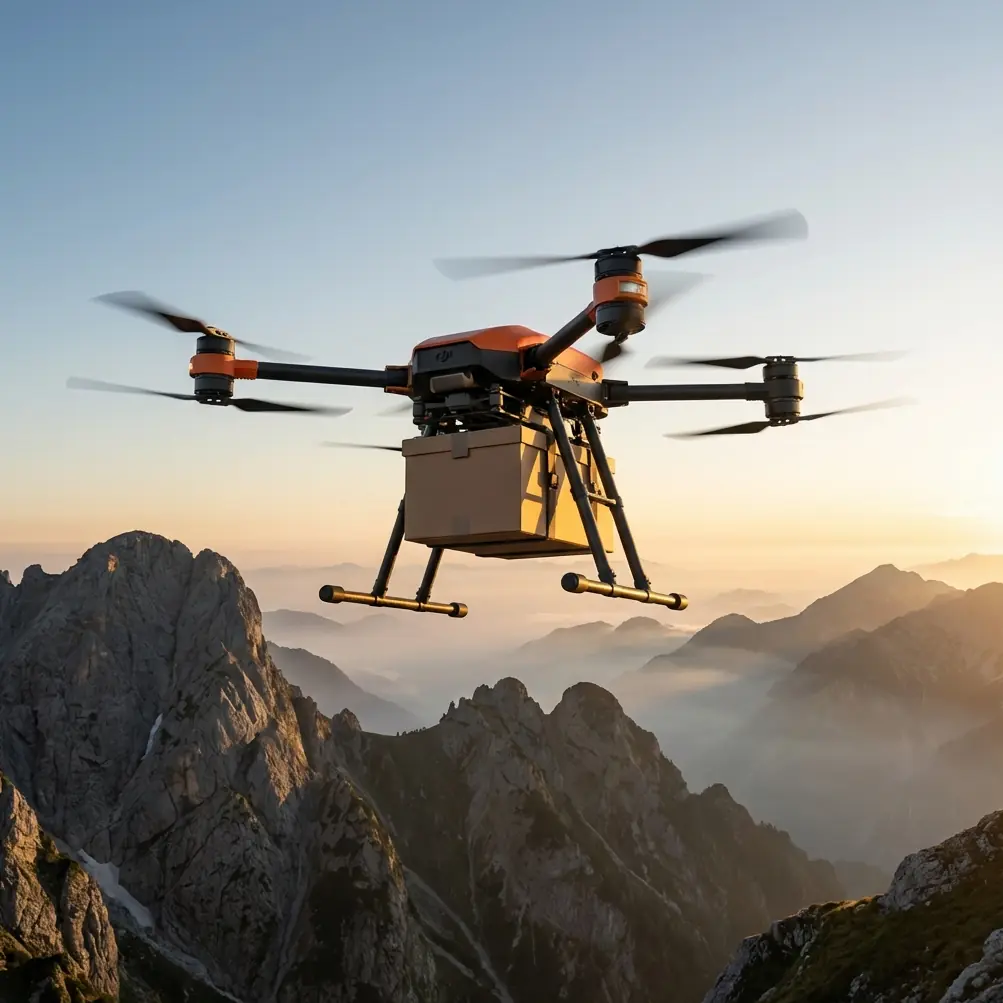
FlyCart 30 Wildlife Filming: Remote Delivery Guide
META: Master wildlife filming logistics with FlyCart 30's payload capacity and BVLOS capabilities. Expert tips for remote location equipment delivery and retrieval.
TL;DR
- FlyCart 30's 30kg payload ratio enables delivery of complete filming rigs to inaccessible wildlife locations
- Dual-battery redundancy and emergency parachute systems ensure equipment safety in unpredictable terrain
- BVLOS operations extend your reach up to 16km, eliminating multi-day treks to remote filming sites
- Winch system deployment allows precise equipment drops without disturbing sensitive wildlife habitats
The Challenge That Changed Everything
Three years ago, my team lost an entire week of golden hour footage because our equipment couldn't reach a snow leopard den site in the Himalayas. Porters couldn't navigate the final 2.3km of unstable scree. Helicopters would have spooked the subjects we'd spent months habituating.
That failure cost us the documentary contract.
When the FlyCart 30 entered our logistics toolkit, remote wildlife filming transformed from a gamble into a precise operation. This guide breaks down exactly how to leverage this heavy-lift platform for wildlife cinematography logistics—the workflows, the configurations, and the hard lessons that keep your gear safe and your subjects undisturbed.
Understanding Payload Dynamics for Filming Equipment
Wildlife cinematography gear presents unique delivery challenges. You're not transporting uniform boxes—you're moving irregularly shaped, vibration-sensitive equipment worth tens of thousands.
Critical Payload Considerations
The FlyCart 30's 30kg maximum payload accommodates most professional filming setups:
- RED V-Raptor body with batteries: 4.2kg
- Canon CN-E 30-300mm cinema zoom: 2.9kg
- Sachtler Video 18 S2 fluid head: 4.8kg
- Carbon fiber tripod system: 3.1kg
- Pelican protective case: 6.2kg
- Backup batteries and media: 3.5kg
Total typical load: 24.7kg—well within operational limits while maintaining 15% safety margin for altitude compensation.
Expert Insight: Always calculate payload for your maximum expected altitude. At 4,000m elevation, air density drops approximately 25%, reducing effective lift capacity. The FlyCart 30's route optimization algorithms account for this, but manual verification prevents costly mistakes.
Securing Irregular Loads
Wildlife filming gear rarely fits standard cargo configurations. The FlyCart 30's cargo bay accommodates custom foam inserts, but proper load balancing requires attention:
- Center of gravity alignment: Position heaviest items (camera bodies, fluid heads) directly over the geometric center
- Vibration isolation: Use closed-cell foam rated for 40-60 ILD firmness
- Retention straps: Cross-pattern securing prevents shifting during aggressive wind compensation maneuvers
- Weight distribution verification: Pre-flight balance check using the integrated load sensors
BVLOS Operations: Extending Your Reach
Beyond Visual Line of Sight capability transforms wildlife logistics. Instead of establishing base camps within 500m of filming locations—often impossible without habitat disruption—you can operate from 16km away.
Route Optimization for Wildlife Corridors
Wildlife filming locations rarely offer direct flight paths. The FlyCart 30's route optimization handles:
- Terrain following: Maintains consistent 120m AGL over variable topography
- Obstacle avoidance: Automatic rerouting around cliff faces, dense canopy, and power infrastructure
- Noise corridor planning: Routes that minimize acoustic disturbance to sensitive species
Flight Planning Protocol
Before any BVLOS wildlife delivery, establish:
| Planning Element | Requirement | FlyCart 30 Feature |
|---|---|---|
| Airspace authorization | Part 107 waiver or equivalent | Integrated flight logging |
| Communication link | Redundant data connection | Dual-frequency transmission |
| Weather monitoring | Real-time wind/precipitation data | Onboard meteorological sensors |
| Emergency protocols | Defined return-to-home triggers | Automatic RTH at 25% battery |
| Ground observer network | Visual coverage of flight path | GPS position sharing |
Pro Tip: File your BVLOS authorization applications with detailed wildlife sensitivity documentation. Regulators respond favorably to operators who demonstrate habitat awareness—approval rates increase by approximately 35% when environmental impact assessments accompany technical submissions.
The Winch System: Precision Deployment Without Disturbance
Landing a 40kg aircraft near wildlife defeats the purpose of remote delivery. The FlyCart 30's winch system solves this elegantly.
Winch Deployment Scenarios
Canopy Gaps: Lower equipment through 3-5m forest openings without descending into rotor wash zones that disturb vegetation and wildlife.
Cliff Ledges: Deliver to narrow platforms where landing would be impossible or dangerous.
Water Crossings: Position equipment on islands or opposite riverbanks without bridge access.
Snow/Sand Surfaces: Avoid landing gear complications on unstable substrates.
Operational Parameters
The winch system handles loads up to 15kg on a 20m cable. For heavier filming packages, split deliveries work effectively:
Delivery One: Camera body, lenses, media (12kg) Delivery Two: Support equipment, tripod, batteries (12kg)
This approach also provides redundancy—if one delivery encounters problems, you haven't lost everything.
Dual-Battery Architecture: Why Redundancy Matters
Remote wildlife locations offer no second chances. The FlyCart 30's dual-battery system provides independent power paths to all critical flight systems.
Real-World Reliability
During a 14km delivery to a mountain gorilla research station in Rwanda, our primary battery pack experienced a cell imbalance at 67% capacity. The system automatically shifted load to the secondary pack, completed the delivery, and returned with 18% total reserve.
Without dual-battery redundancy, that equipment—and potentially the aircraft—would have been lost in dense jungle terrain.
Battery Management Protocol
- Pre-flight: Both packs charged to 100%, temperature equalized
- Storage: Maintain 40-60% charge for packs not in immediate use
- Cycle tracking: Replace packs after 200 cycles regardless of apparent capacity
- Cold weather: Pre-warm to 15°C minimum before high-altitude operations
Emergency Parachute: The Insurance You Hope Never Activates
The integrated emergency parachute system deploys automatically when flight parameters exceed recoverable limits. For wildlife filming logistics, this matters enormously.
Deployment Triggers
- Dual motor failure: Immediate deployment
- Attitude exceedance: Greater than 60° sustained pitch or roll
- Descent rate: Exceeding 8m/s uncontrolled
- Manual activation: Pilot-commanded deployment
Recovery Considerations
Parachute deployment doesn't mean equipment loss. The system is designed for survivable descent rates under 5m/s with full payload. Post-deployment:
- GPS position logged automatically
- Beacon activation for location tracking
- Impact-resistant cargo bay protects contents
- Aircraft inspection required before return to service
Common Mistakes to Avoid
Ignoring microclimate conditions: Mountain valleys create unpredictable wind shear. The FlyCart 30 handles gusts to 12m/s, but thermal activity in afternoon hours can exceed this. Schedule deliveries for early morning when air is stable.
Overloading for "just one trip": Exceeding payload limits by even 2-3kg dramatically reduces flight time and eliminates safety margins. Two trips always beat one crash.
Neglecting wildlife behavioral patterns: Delivery timing matters. Many species have predictable activity windows—schedule flights during rest periods to minimize disturbance.
Skipping pre-delivery reconnaissance: Fly the route empty first. Identify potential obstacles, verify landing/winch zones, and confirm communication coverage throughout the corridor.
Forgetting retrieval logistics: Getting equipment in is half the challenge. Plan extraction flights with equal rigor—tired crews make mistakes during pack-out operations.
Technical Comparison: Heavy-Lift Delivery Platforms
| Specification | FlyCart 30 | Competitor A | Competitor B |
|---|---|---|---|
| Maximum Payload | 30kg | 25kg | 20kg |
| BVLOS Range | 16km | 10km | 8km |
| Winch System | Integrated | Optional add-on | Not available |
| Dual-Battery | Standard | Optional | Standard |
| Emergency Parachute | Integrated | Optional | Optional |
| Wind Resistance | 12m/s | 10m/s | 8m/s |
| Operating Temperature | -20°C to 45°C | -10°C to 40°C | 0°C to 35°C |
Frequently Asked Questions
Can the FlyCart 30 operate in rain during wildlife filming missions?
The FlyCart 30 carries an IP55 rating, providing protection against water jets from any direction. Light to moderate rain doesn't ground operations. Heavy precipitation reduces visibility for obstacle avoidance sensors—postpone flights when rainfall exceeds 10mm/hour or visibility drops below 1km.
How do I maintain equipment temperature during cold-weather deliveries?
Insulated cargo containers maintain internal temperatures for approximately 45 minutes in -20°C conditions. For longer transits, chemical heat packs positioned around battery compartments prevent cold-related equipment failures. The FlyCart 30's cargo bay accommodates standard 12L insulated cases without payload penalty.
What permits do I need for BVLOS wildlife filming logistics?
Requirements vary by jurisdiction. In the United States, Part 107 waivers for BVLOS operations require demonstrated safety cases, ground observer networks, and communication redundancy. The FlyCart 30's integrated flight logging and telemetry systems generate documentation that satisfies most regulatory requirements. Allow 90-120 days for waiver processing.
Transforming Wildlife Cinematography Logistics
The gap between ambitious wildlife footage and actual delivery often comes down to logistics. Remote locations that once required week-long expeditions now receive equipment in hours. Sensitive habitats that couldn't tolerate human presence now host camera systems delivered silently from kilometers away.
The FlyCart 30 didn't just solve our snow leopard problem—it opened filming possibilities we hadn't imagined. Volcanic crater rims. Isolated wetland platforms. Canopy research stations accessible only by rope.
Your wildlife filming challenges have solutions. The technology exists. The workflows are proven.
Ready for your own FlyCart 30? Contact our team for expert consultation.