
Filming Wildlife at Altitude with FlyCart 30
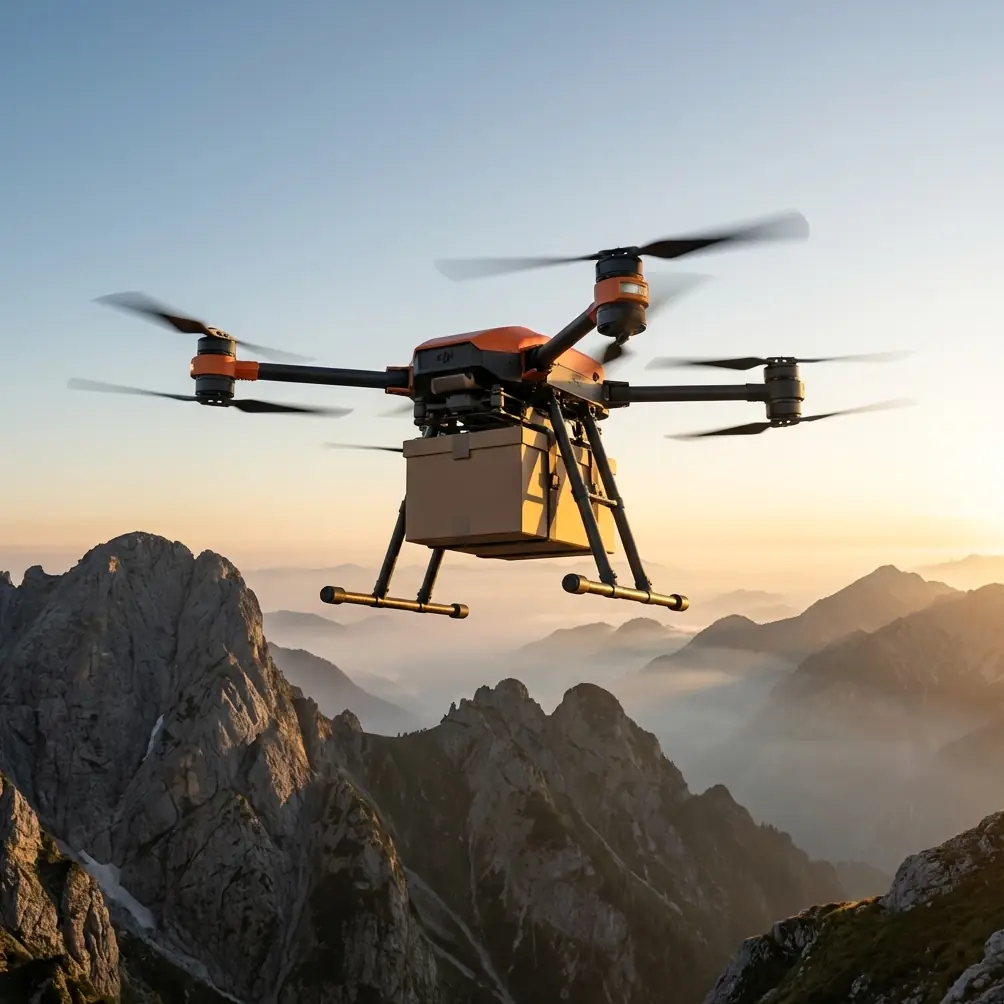
Filming Wildlife at Altitude with FlyCart 30
META: Learn how to use the DJI FlyCart 30 for high-altitude wildlife filming. Expert tutorial covers payload ratio, safety systems, and route optimization tips.
Author: Alex Kim, Logistics Lead
TL;DR
- The FlyCart 30's payload ratio and dual-battery system make it uniquely suited for hauling professional cinema gear to remote, high-altitude wildlife locations.
- Pre-flight cleaning of safety sensors is a non-negotiable step that prevents mid-flight failures in dusty, debris-heavy field environments.
- BVLOS route optimization allows you to position camera rigs in terrain that's completely inaccessible on foot.
- The emergency parachute and winch system protect both your crew and gear when conditions shift suddenly at altitude.
Why High-Altitude Wildlife Filming Needs a Cargo Drone
Getting a 40 kg cinema payload to a mountain ridge at 6,000 meters elevation has traditionally required helicopter charters, pack animals, or multi-day treks with porters. Each option introduces delays, cost overruns, and risk to fragile equipment.
The DJI FlyCart 30 changes that equation entirely. With a maximum takeoff weight of 95 kg and a maximum payload capacity of 30 kg in dual-battery mode, this heavy-lift cargo drone can shuttle professional-grade cameras, stabilization rigs, hides, and battery banks to locations that would otherwise be unreachable.
This tutorial walks you through every step—from pre-flight sensor cleaning to BVLOS route planning—so you can deploy the FlyCart 30 safely and efficiently for wildlife cinematography at extreme altitudes.
The Step Most Crews Skip: Pre-Flight Sensor Cleaning
Here's where most operations go wrong before they even launch. The FlyCart 30 relies on an array of binocular vision sensors, infrared sensors, and a CSM radar system to detect obstacles and maintain stable flight. At high-altitude filming sites, these sensors accumulate fine particulate dust, pollen, condensation, and even insect residue.
A dirty sensor is a blind sensor. If the FlyCart 30's obstacle avoidance system misreads terrain because of a smudged lens, you risk losing the drone, your payload, and potentially endangering wildlife in a protected habitat.
Pre-Flight Cleaning Protocol
Follow this checklist before every flight:
- Inspect all vision sensors (front, rear, left, right, top, bottom) with a headlamp at a 45-degree angle to catch smudges invisible to the naked eye.
- Use a microfiber cloth with isopropyl alcohol (90%+) to wipe each sensor lens. Never use cotton swabs—they leave fibers.
- Clear the CSM radar dome of any debris, mud splatter, or moisture film.
- Check the propeller surfaces for nicks, cracks, or accumulated grime that affects thrust efficiency at altitude.
- Verify the emergency parachute compartment is free of foreign objects and the release mechanism isn't obstructed.
Pro Tip: At altitudes above 4,500 meters, temperature swings between dawn and mid-morning can cause rapid condensation on sensor glass. Arrive at your launch site 30 minutes early and keep the drone powered on with sensors active—the residual heat prevents fogging.
Understanding the FlyCart 30's Payload Ratio for Camera Gear
Payload ratio—the relationship between the drone's empty weight and its maximum carrying capacity—determines what you can actually haul to your filming position. The FlyCart 30 delivers a payload ratio that outperforms nearly every platform in its class.
Payload Configuration Breakdown
| Configuration | Max Payload | Flight Time (Loaded) | Optimal Altitude Range |
|---|---|---|---|
| Dual-Battery Mode | 30 kg | Up to 28 min | Sea level – 3,000 m |
| Single-Battery Mode | 40 kg | Up to 16 min | Sea level – 2,000 m |
| Winch Delivery Mode | 30 kg (suspended) | Up to 24 min | Sea level – 3,000 m |
| High-Altitude (reduced air density) | ~20–24 kg (recommended) | ~18–22 min | 3,000 m – 6,000 m |
Critical note: Air density drops roughly 3–4% per 300 meters of elevation gain. At 5,000 meters, the FlyCart 30's rotors generate significantly less lift than at sea level. Reduce your payload to 70–80% of maximum capacity to maintain safe thrust margins.
What a Typical Wildlife Cinema Payload Looks Like
- Primary camera body (RED V-RAPTOR or ARRI Alexa Mini): 3.5–6 kg
- Telephoto lens (600mm or 800mm prime): 3–4.5 kg
- Gimbal stabilizer and mounting plate: 4–6 kg
- Battery packs for camera system: 2–3 kg
- Weatherproof camera hide/blind: 3–5 kg
- Backup storage media and tools: 1–2 kg
Total: approximately 16.5–26.5 kg, well within the FlyCart 30's adjusted high-altitude capacity.
Route Optimization for Remote Wildlife Locations
Flying cargo to a mountain ridge isn't a matter of pointing the drone uphill and pressing go. BVLOS operations—flights beyond visual line of sight—require meticulous route planning, especially in terrain where GPS signals bounce off rock faces and wind patterns shift every few hundred meters.
Step-by-Step Route Planning
Step 1: Terrain Survey Use satellite imagery and topographic maps to identify your launch site, delivery point, and at least two alternate landing zones. The FlyCart 30's onboard flight planning system supports waypoint-based routing, but you need accurate elevation data for each point.
Step 2: Wind Corridor Analysis Mountain environments create channeled winds, thermals, and rotors (turbulent downdrafts on the lee side of ridges). Check wind forecasts at multiple altitude layers, not just ground level. The FlyCart 30 handles winds up to 12 m/s, but gusts above 15 m/s at altitude are a grounding condition.
Step 3: Waypoint Altitude Stacking Set waypoints that gradually increase in altitude rather than commanding a steep climb. This preserves battery life and keeps the dual-battery system balanced. A 10-degree climb angle is optimal for loaded flights.
Step 4: BVLOS Communication Check Verify your DJI Pilot 2 link and the 4G module's connectivity along the entire route. In remote mountain terrain, cellular coverage drops unpredictably. Identify dead zones in advance and program the drone's return-to-home behavior for those segments.
Expert Insight: When filming wildlife such as snow leopards, golden eagles, or high-altitude ungulates, noise is your enemy. Plan your drone's approach route to follow a ridge-shielded path that uses terrain to block rotor noise from reaching the target area. The FlyCart 30's motors are louder than smaller survey drones—strategic routing is essential to avoid disturbing animals.
Safety Systems That Protect Gear and Wildlife
Emergency Parachute System
The FlyCart 30 features an integrated emergency parachute that deploys automatically if the flight controller detects a critical failure—motor loss, structural compromise, or total power failure. At high altitude, this system is your last line of defense against dropping 30 kg of camera equipment onto a mountainside or, worse, into a sensitive habitat.
- The parachute activates within milliseconds of failure detection.
- It is designed to reduce descent speed to a survivable rate for the payload.
- Manual trigger is also available via the DJI RC Plus controller.
The Winch System for Precision Drops
The FlyCart 30's winch system lowers payloads on a cable to locations where the drone itself cannot safely land—cliff edges, narrow ledges, dense canopy openings. For wildlife filming:
- Use the winch to lower a camera hide into a position among rocks or vegetation.
- Deploy the winch at a hover altitude of 15–20 meters above the drop point to minimize rotor wash disturbance to the environment.
- The winch cable extends up to 20 meters and supports loads up to 30 kg.
Dual-Battery Redundancy
The dual-battery configuration isn't just about extended flight time. If one battery fails or drops below critical voltage, the FlyCart 30 can continue flying on the remaining pack long enough to execute a controlled landing. At high altitude where power drain accelerates, this redundancy is non-negotiable.
Technical Comparison: FlyCart 30 vs. Alternative Delivery Methods
| Factor | FlyCart 30 | Helicopter Charter | Ground Porters |
|---|---|---|---|
| Payload Capacity | Up to 30 kg (dual-battery) | 500+ kg | 15–25 kg per person |
| Setup Time | 15–30 min | 2–4 hours (logistics/permits) | 4–12 hours (hiking) |
| Wildlife Disturbance | Moderate (rotor noise) | Severe (rotor wash, noise) | Low |
| Altitude Capability | Up to 6,000 m | Up to 6,000 m+ | Human endurance limit |
| Repeatability | Multiple flights per day | Single chartered window | Once per day |
| Risk to Equipment | Low (parachute backup) | Low | High (drops, weather exposure) |
Common Mistakes to Avoid
1. Overloading at altitude. Just because the FlyCart 30 handles 30 kg at sea level doesn't mean it can do the same at 5,000 meters. Reduce payload by 20–30% for every 1,500 meters above sea level.
2. Skipping the sensor cleaning protocol. Dust and condensation at altitude accumulate faster than you expect. One dirty sensor can cascade into a collision avoidance failure.
3. Ignoring wind layer differences. Ground-level winds may read calm while conditions at your flight altitude are dangerously turbulent. Always check multi-layer forecasts.
4. Flying directly over wildlife. Even if the animals appear undisturbed, sustained overhead drone noise causes physiological stress in many species. Maintain lateral offset and use the winch for final payload placement.
5. Not carrying spare batteries to the launch site. The dual-battery system drains faster in cold, thin air. Bring at least one full backup set and keep them insulated above 20°C until use.
6. Programming a single return-to-home point. In mountain terrain, weather can close your launch site in minutes. Always set secondary and tertiary RTH waypoints on different aspects of the mountain.
Frequently Asked Questions
Can the FlyCart 30 fly in sub-zero temperatures typical of high-altitude environments?
Yes. The FlyCart 30 operates in temperatures from -20°C to 45°C. However, battery performance degrades below 0°C, so pre-warm batteries and expect 10–15% reduced flight time in freezing conditions. Keep spare battery packs in insulated, heated cases until immediately before use.
How loud is the FlyCart 30, and will it scare wildlife?
The FlyCart 30 is a heavy-lift platform with large propellers, making it noticeably louder than consumer or survey drones. At a hover distance of 100 meters, noise levels are significant enough to disturb many bird and mammal species. Use terrain masking, fly indirect routes behind ridgelines, and limit hover time near sensitive areas. The winch system helps by allowing the drone to remain at higher altitude during payload drops.
Do I need special permits for BVLOS cargo drone operations in wildlife areas?
Almost certainly, yes. BVLOS operations require regulatory approval in virtually every jurisdiction—typically involving a specific operations risk assessment, pilot certification, and coordination with aviation authorities. In protected wildlife areas, additional permits from conservation agencies are standard. Begin the permitting process at least 8–12 weeks before your planned shoot dates, and consult local regulations for drone weight thresholds and restricted flight zones.
Ready for your own FlyCart 30? Contact our team for expert consultation.