
FlyCart 30 in Dusty Wildlife Productions
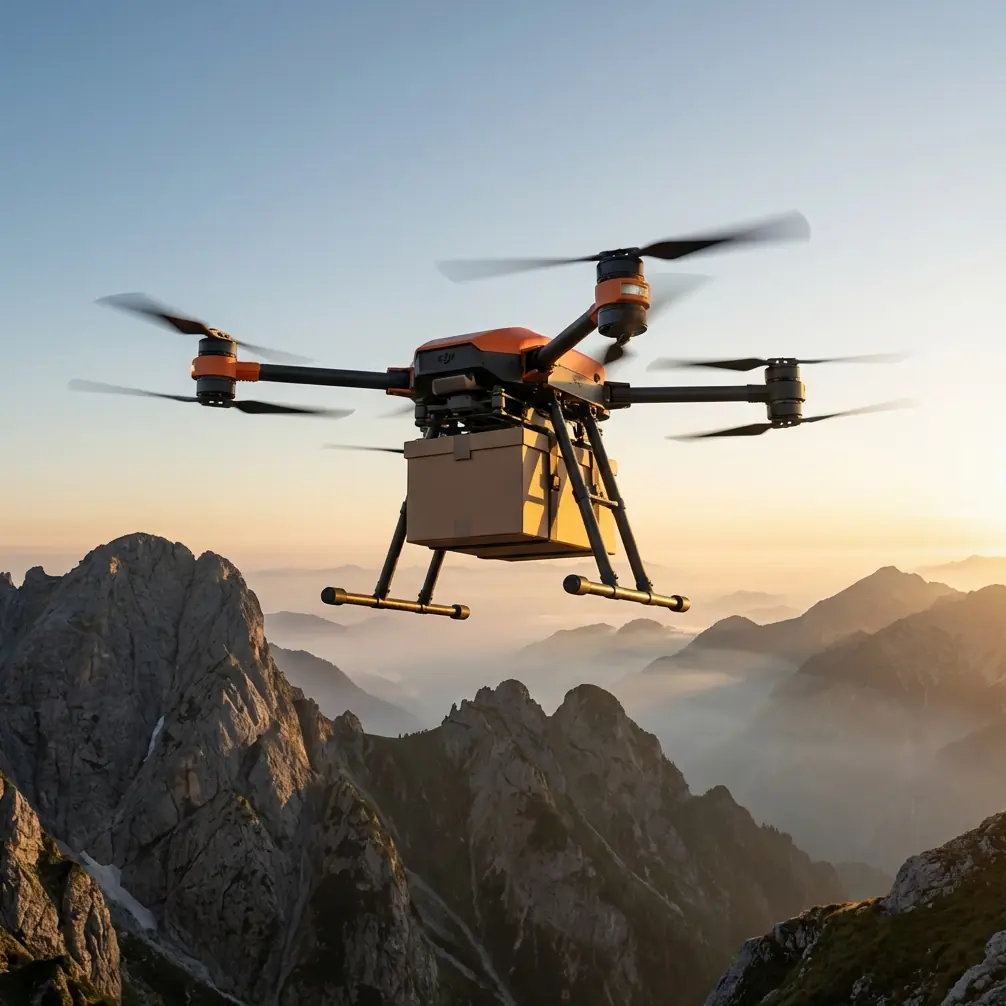
FlyCart 30 in Dusty Wildlife Productions: What a London NHS Drone Route Reveals About Real-World Reliability
META: A case-study style analysis of what Matternet’s NHS hospital route in Central London suggests for FlyCart 30 operators filming wildlife in dusty environments, with practical insight on payload ratio, winch use, BVLOS thinking, route planning, and safety systems.
Dust is a ruthless editor. It finds weak seals, exposes cooling problems, settles into moving parts, and turns a smooth field shoot into a maintenance lesson. Anyone planning wildlife production work in dry terrain already knows the camera is only half the equation. The aircraft has to survive repeated takeoffs from rough ground, hold stable performance as the air gets dirty, and move equipment where vehicles cannot go without turning every battery cycle into a gamble.
That is where the FlyCart 30 becomes interesting.
Most people see it as a cargo drone first. Fair enough. But from a logistics perspective, that label is too narrow. The stronger story is about operational discipline: how a platform designed to move payloads under real constraints can give wildlife crews a practical edge when the environment is dusty, distances are awkward, and time on site is limited.
A recent data point from outside the film world helps frame this well. Matternet launched drone delivery operations for the NHS in Central London, its first deployment in the United Kingdom. The route connects two major hospital campuses in a bi-directional system, and the purpose is very specific: moving critical medical items between sites in minutes. That is not a wilderness shoot. It is a dense, consequence-heavy urban route. Yet the operational principles map surprisingly well to FlyCart 30 field work.
The lesson is simple: when a drone service is trusted to carry essential items on a repeated route between important sites, the conversation shifts away from novelty and toward reliability, route design, turnaround speed, and risk management. Those same four factors shape whether the FlyCart 30 is merely impressive on paper or genuinely useful on a dusty wildlife production.
Why a hospital delivery route matters to a film crew
At first glance, an NHS campus transfer and a wildlife filming assignment seem unrelated. They are not.
The London deployment highlights two details that deserve attention. First, it is a bi-directional delivery route. That means the operation is not built around a one-off trip. It is built around regular back-and-forth utility. Second, the mission is to move critical medical items in minutes. Speed matters, but only speed that can be repeated safely and predictably.
That is exactly the mindset that separates serious FlyCart 30 use from occasional experimentation.
In dusty wildlife production, the aircraft’s value is rarely in a single dramatic lift. It is in repeated short logistics cycles: moving lenses to a hide, delivering batteries to a remote ridge crew, lowering supplies into a sensitive habitat without landing nearby, or repositioning compact support gear between observation points. A drone with a sound payload ratio and a dependable transport workflow saves walking time, reduces vehicle intrusion, and cuts down on the sort of rushed human movement that often disturbs wildlife more than the aircraft itself.
The NHS example matters because it confirms where the commercial drone sector is headed. Not toward headline flights for their own sake, but toward routine routes with operational consequence. The FlyCart 30 fits that direction better than many aircraft marketed to creators, because it was built around moving things reliably.
The FlyCart 30 advantage in dust: cargo DNA beats improvised camera workflows
For dusty wildlife productions, many crews make the same mistake: they try to force a conventional camera drone or a general-purpose UAV into a logistics role. It works, until it does not.
The FlyCart 30 starts from a different premise. It is engineered to carry meaningful loads, and that changes the field equation. Payload ratio is not just a specification sheet talking point. In practical terms, it determines whether you can move a mission-critical package in one trip or split it into several. Every extra trip adds exposure to wind shifts, dust ingestion, battery use, and scheduling friction.
This is one area where the FlyCart 30 tends to outperform lighter alternatives. Competitor platforms may offer transport accessories, but many are still compromised by modest useful load once safety margins are respected. The result is a platform that looks flexible yet forces crews into smaller payload parcels and more rotations. In a dusty habitat, that is the wrong direction. More cycles mean more takeoffs, more landings, more rotor wash, and more contamination around equipment.
A stronger payload ratio lets the FlyCart 30 carry consolidated loads, reducing the number of sorties needed to support a day’s filming. Operationally, that is huge. It means fewer launch events near wildlife corridors and less ground handling in abrasive conditions.
The winch system is not a gimmick. In wildlife work, it changes the site footprint.
If I were setting up a FlyCart 30 workflow for a wildlife team, the winch system would be one of the first features I’d prioritize.
Dusty environments punish landings. Fine debris gets lifted by downwash, and improvised pads often become contamination zones for optics, connectors, and cases. The ability to hover and lower cargo instead of touching down is not just convenient; it is cleaner and often less disruptive.
That matters in at least three ways.
First, it keeps the aircraft out of the worst surface-level dust plume generated during touchdown. Second, it allows gear transfer to narrow or uneven receiving points where a safe landing would be awkward. Third, it can reduce habitat intrusion. A receiver can collect a suspended package from a controlled spot without requiring the aircraft to settle near fragile ground cover or animal movement routes.
Compared with competitors that rely more heavily on direct landing exchanges, FlyCart 30 has an edge here. In field logistics, the best landing is often the one you never have to make.
For crews planning hide-based filming, this matters even more. You can stage batteries, media kits, lightweight support items, and emergency supplies without turning a hidden observation position into a rotor-washed mess.
Dual-battery thinking: what “minutes” really means in the field
The NHS route in Central London is designed around movement in minutes. That phrasing is worth examining. In drone operations, “minutes” is not simply about top speed. It is about dispatch readiness, flight repeatability, and turnaround confidence.
This is where dual-battery architecture earns respect. In a dusty wildlife scenario, battery strategy is not just endurance management. It is continuity planning. Redundancy matters because field conditions are unforgiving, and every aborted trip has a ripple effect on the whole production schedule.
A dual-battery setup supports more resilient operations in two practical senses. It can improve continuity in case one power component underperforms, and it helps structure disciplined swap-and-rotate workflows for teams running multiple supply legs during a shoot day. That kind of predictability is what makes route optimization possible. Without predictable aircraft availability, route planning becomes guesswork.
This loops directly back to the London hospital story. A bi-directional route only works when the operator can depend on the platform each time it launches, not just on its best day. For FlyCart 30 users, the dual-battery concept is operationally significant because it supports exactly that style of repeated, timed movement.
Route optimization for wildlife crews: borrow the hospital model
One of the strongest ideas hidden inside the Matternet NHS deployment is route discipline. Two major hospital campuses. One repeated corridor. A bi-directional service. It is structured, not improvised.
Wildlife crews should think the same way.
Do not treat FlyCart 30 logistics as ad hoc flying. Build a route map. Define launch and receive points. Standardize package weights. Assign windows for battery drops, camera support transfers, and recovery shipments. If your team is spread across multiple observation areas, design a primary route and a fallback route the same way a professional logistics operator would.
Even if your operation does not require formal BVLOS procedures, adopting BVLOS-style planning discipline is smart. Think beyond line-of-sight convenience and toward route reliability: terrain effects, safe loiter areas, alternate drop zones, communication procedures, and return contingencies. Dusty wildlife environments often involve ridgelines, vegetation breaks, and thermals that can complicate direct point-to-point assumptions. Route optimization is not just efficiency; it is how you prevent the last-minute improvisation that causes delays and unnecessary disturbance.
If your team wants to compare route layouts or discuss a practical field workflow, one easy option is to message our logistics desk on WhatsApp.
Safety systems matter more in remote shoots than in city headlines
Urban medical routes naturally draw attention because of the setting. Central London, hospital campuses, critical items. But from an operator’s perspective, the bigger story is trust. A drone service moving important payloads in such an environment depends on visible layers of operational safety.
For FlyCart 30 users, the emergency parachute deserves attention in the same spirit. In remote wildlife production, crews sometimes underestimate safety because the area feels open and less complex than a city. That is a mistake. Open terrain can still contain people, vehicles, field camps, expensive optics, and sensitive wildlife zones. A robust emergency recovery measure is not a luxury feature. It is part of how you reduce the consequence of a failure event.
This is another point where cargo-oriented aircraft can stand apart from lighter, creator-focused platforms. Safety systems integrated around payload operations reflect a different design philosophy. When you are moving equipment over rough ground, the risk picture changes. The emergency parachute is operationally significant because it helps turn a bad moment into a controlled incident rather than a cascading loss.
A practical case study: using FlyCart 30 to support a dusty wildlife assignment
Let’s put the pieces together.
Imagine a crew filming wildlife across two observation zones separated by rough terrain. Driving between them is slow, noisy, and visually intrusive. Walking is possible but burns time and energy in heat and dust. The team needs to move batteries, a compact lens kit, media storage, water, and lightweight blind material across the day.
A conventional drone could maybe shuttle some of this, but only in smaller pieces and with more direct landings. That means more total flights and more dust exposure. The FlyCart 30 changes the pattern.
You establish a repeated route between a base staging point and two receiving locations. Loads are grouped to take advantage of the aircraft’s stronger payload ratio. The winch system handles drops where landing would create dust or disturb the site. The dual-battery setup supports a timetable rather than an opportunistic launch habit. The emergency parachute adds a layer of risk control for flights over work zones or gear caches. And route optimization keeps aircraft movement predictable, reducing disruption.
That is the real value proposition. Not glamour. Not novelty. Fewer variables.
The Matternet NHS deployment is relevant because it reinforces exactly this operational logic. A drone route becomes useful when it is repeatable, bi-directional, and built to move items that matter fast enough to affect real work. In London, that means medical transfers between hospital campuses in minutes. In dusty wildlife production, it can mean keeping a field team supplied without constant vehicle runs or contamination-prone hand-carrying.
Where FlyCart 30 stands out against competitors
If I had to reduce the comparison to one line, it would be this: many competing UAVs can transport gear occasionally; the FlyCart 30 is better suited to making transport part of the workflow.
That distinction matters.
Its edge is not about one isolated headline feature. It is the combination of payload-minded design, winch-enabled delivery flexibility, safety architecture, and support for disciplined route operations. In dusty field conditions, those elements stack together. A rival platform might match one of them. Few combine all of them in a way that feels coherent for real logistics.
And logistics is the hidden engine behind successful wildlife production. The audience sees the shot. They do not see the battery that arrived on time, the lens that stayed clean because the aircraft did not land in dust, or the crew member who stayed in position because supplies came to them instead of forcing a noisy trek.
Those unseen wins are usually the ones that decide whether a production day holds together.
The London NHS route is a useful signal for anyone evaluating the FlyCart 30 seriously. Commercial drone operations are maturing around trust, repetition, and time-sensitive movement of important items. For wildlife crews working in dusty environments, that same framework points to a clear conclusion: the best support drone is not the one with the flashiest marketing story. It is the one that can build a dependable route, carry enough to matter, deliver without dirtying the site, and maintain safety when conditions are less than ideal.
That is why the FlyCart 30 deserves attention well beyond cargo-only conversations. In the field, its logistics-first design can become a production advantage.
Ready for your own FlyCart 30? Contact our team for expert consultation.