
FlyCart 30 in Wind and Sudden Snow: A Field Review
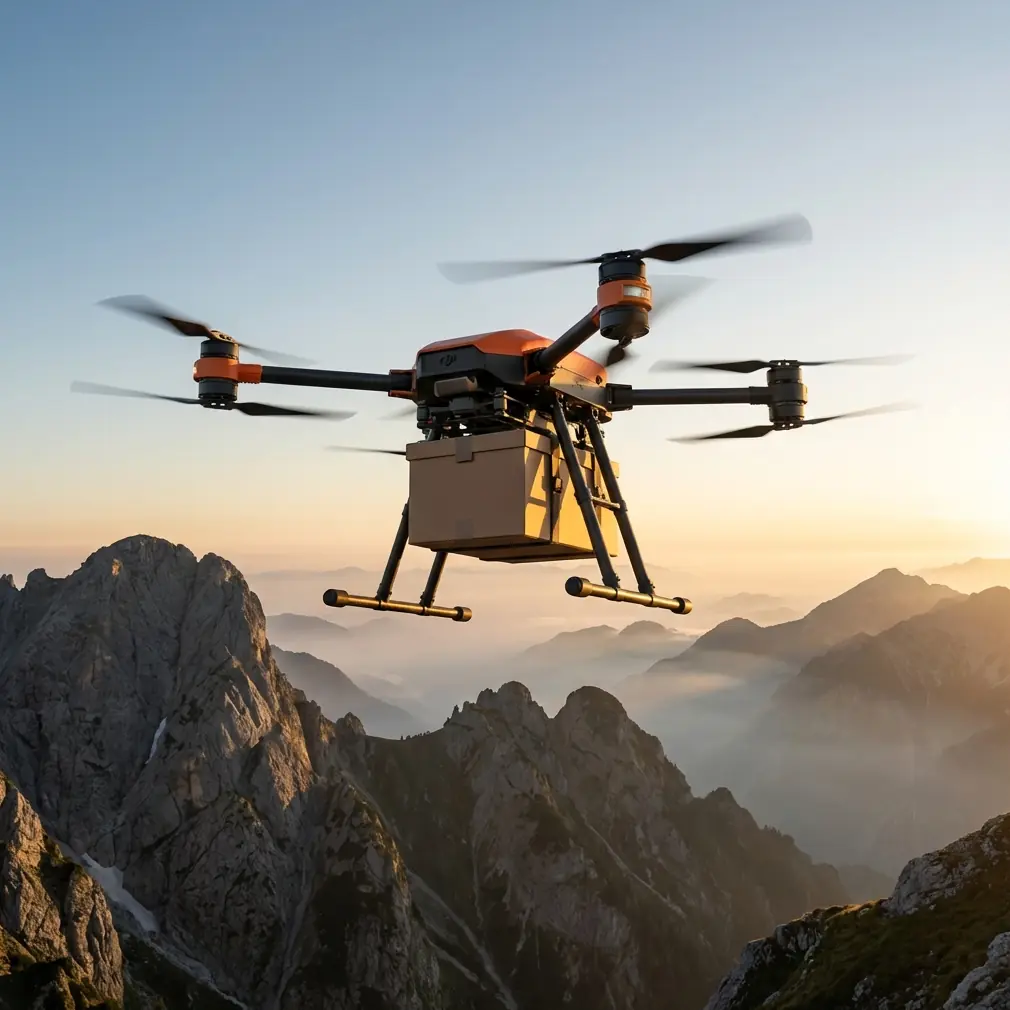
FlyCart 30 in Wind and Sudden Snow: A Field Review for Wildlife Filming Logistics
META: A technical FlyCart 30 review for wildlife filming in windy, fast-changing weather, with practical insight on payload handling, winch use, dual-battery resilience, route planning, and safety systems.
I’ve spent enough time around remote field operations to know that the aircraft usually gets the attention, while the mission succeeds or fails on logistics. That is especially true when wildlife crews are working in open terrain, carrying camera kits into places where weather turns faster than the schedule can adapt.
The FlyCart 30 sits in an unusual category because it is not a camera drone pretending to help with production support. It is a purpose-built cargo platform. For teams filming wildlife in wind-prone landscapes, that distinction matters. The aircraft does not replace the cinematography drone. It supports the entire filming system around it: batteries, lenses, shelters, comms kits, lightweight hides, field sensors, food, and emergency gear. In the right conditions, it can turn a marginal shooting day into a workable one.
That operational value becomes even clearer when you think about a landscape like Shandan Horse Farm in Gansu’s Hexi Corridor. On October 9, a cold-air event brought snowfall to the area, covering autumn grassland in white. That sounds picturesque, and for a wildlife unit it probably is. But from a logistics perspective, it changes everything at once. Visual contrast improves. Ground access worsens. Wind exposure often becomes more punishing. Crew movement slows down. Recovery windows get tighter.
That is the kind of environment where the FlyCart 30 deserves a serious review.
Why the weather story matters
Most product writeups talk about specs in a vacuum. Real field teams do not operate in a vacuum. They launch in the morning under one set of assumptions, and by midday the terrain can feel like a different season.
The reference case from Shandan Horse Farm is useful because it captures a real weather pivot, not a theoretical one. A cold front moved through on October 9 and the autumn prairie was suddenly snow-covered. For wildlife filmmakers, that kind of shift has two immediate consequences.
First, access routes become less reliable. Vehicles may still move, but not necessarily on the timetable the crew needs. Foot travel becomes slower and more fatiguing, especially when operators are carrying support gear over uneven ground.
Second, the value of remote resupply increases. If the crew has already positioned itself near a wildlife corridor, ridge line, or observation zone, sending people back and forth for forgotten equipment wastes both energy and filming opportunity. A cargo drone becomes less of a convenience and more of a continuity tool.
That is where the FlyCart 30’s payload ratio and route efficiency start to mean something in practical terms rather than brochure terms.
FlyCart 30 as a production support platform, not a headline act
I approach the FlyCart 30 less like a drone pilot and more like a logistics lead. In that role, the first question is simple: does this aircraft reduce friction in the field?
In wildlife filming, friction shows up in small but expensive ways. A crew settles into a location at dawn, then realizes the long lens support plate is in another case. The wind picks up and the team suddenly needs heavier tie-downs for a blind. Temperature drops, battery performance planning changes, and now spare power becomes urgent. A weather front brings snow, and you need insulated covers or dry storage moved to a position that is no longer easy to reach.
The FlyCart 30 is built for exactly that support layer. It is not glamorous work, but this is the work that protects the shoot day.
One of the strongest signs that the platform was designed with real operations in mind is the way its cargo handling options fit mixed terrain. In wildlife filming, you are not always landing onto a clean pad. Brush, snow crust, wet ground, and animal-sensitive zones can all make direct touchdown undesirable. A winch system is not just a nice extra in that scenario. It can be the difference between completing a delivery cleanly and forcing a landing where you do not want rotor wash, surface contact, or extra disturbance.
That becomes even more relevant in a snow event like the one reported in the Hexi Corridor. Once the grassland is coated white, judging surface firmness and touchdown suitability gets harder. The ability to hover and lower a load instead of committing the aircraft to every surface is a genuine operational advantage.
Mid-flight weather change: what matters when the plan starts to bend
The most revealing moments in field operations are not the easy launches. They are the moments when the conditions begin to drift away from the original mission profile.
Picture the setup. A wildlife crew is staged along an exposed grassland edge. The morning began cold but manageable. The aircraft is tasked with moving support gear to a secondary camera team operating farther out. Winds are already present, which is common in open corridor terrain. Then the weather changes. Visibility flattens. Snow starts to come through in pulses. Ground contrast changes. The route that looked straightforward before takeoff now demands a calmer, more disciplined system.
In that kind of mid-flight shift, several FlyCart 30 features become more than checklist items.
Dual-battery architecture
A dual-battery setup matters for resilience. Not because it makes the aircraft invincible, but because cold and wind both put pressure on power planning. Field teams working in exposed conditions need margin. They need predictable return logic and fewer single-point concerns during a mission where environmental load can change quickly. When the weather deteriorates partway through a run, that reserve mindset matters more than raw ambition.
For wildlife filming support, the practical significance is simple: the crew can plan safer logistics cycles without treating every mission like a max-range gamble.
Emergency parachute
An emergency parachute is one of those systems that people mention quickly and then move on from. I would not. In operations near expensive equipment, hard-to-access ground, or environmentally sensitive areas, a last-line safety system changes the risk conversation. Wildlife crews often work near terrain that is visually open but operationally unforgiving. Wind can shear across ridges. Snow can alter depth perception. If something goes seriously wrong, a parachute system is not there to make the event pleasant. It is there to improve the outcome of a bad day.
That matters even more when support flights are happening near crew positions and staging gear that cannot be easily replaced once the weather turns.
Route optimization and rerouting discipline
The real strength of route optimization is not speed for its own sake. It is control. In wind and shifting precipitation, the best route is rarely the straightest line drawn on a screen before launch. Teams need to think about exposure corridors, terrain effects, safe drop zones, and return margins.
A good cargo drone workflow allows route planning to function like a living part of the mission. If a snow band pushes through or gusts intensify over a ridge, the operator should not be forced into an all-or-nothing decision. Practical route management gives the mission a chance to degrade gracefully instead of failing abruptly.
That is especially useful in a place like central Hexi Corridor grassland, where open expanses can look simple but still create long, energy-draining flight legs in wind.
Payload ratio is not an abstract spec in wildlife production
Payload ratio sounds like engineering language until you are deciding what stays behind.
Wildlife crews rarely move one perfect, self-contained package. They move awkward combinations of equipment: audio protection, rain covers, tripod components, batteries, compact shelters, field monitors, and personal cold-weather supplies. The value of a cargo aircraft increases when it can carry meaningful mission bundles instead of forcing the crew into too many fragmented shuttle runs.
That is where payload ratio has direct operational significance. If the aircraft can move a better proportion of useful field load relative to its own operating demands, the crew gets fewer sorties, less exposure to changing weather, and tighter support timing. In practical terms, that means less waiting and fewer moments where the camera team is stationary because one critical piece of kit is still in transit.
For filming wildlife in windy areas, every extra minute of delay can matter. Animals do not hold position because your logistic chain is elegant on paper.
BVLOS thinking in large-area support missions
For broad terrain operations, BVLOS concepts enter the conversation quickly, even if a given mission is conducted within local regulatory constraints and site-specific approvals. Large grassland or plateau-style filming environments naturally stretch the distance between the staging point and the actual working team. Once weather starts changing, minimizing unnecessary human movement becomes even more attractive.
What matters here is not hype around long-distance flight. What matters is whether the logistics design respects geography. A platform like the FlyCart 30 makes the most sense when the mission is built around clear route logic, disciplined communication, and realistic fallback planning. In open-country filming, those principles let the aircraft act as a bridge between base and crew rather than just another device in the kit list.
If you are building out that sort of workflow and need scenario-specific planning, a direct message through this field support contact is often more useful than trying to generalize from standard setup notes.
The winch system deserves more attention than it gets
A lot of teams focus first on payload and endurance, but for wildlife work I would put the winch system much higher in the decision stack.
Why? Because delivery quality matters as much as delivery completion.
In open habitats, rotor wash can be disruptive. In snow, surface conditions can hide hazards. Near wildlife observation points, crews often want to keep aircraft interaction brief and controlled. A winch lets the operator hold the aircraft in a more favorable hover position and place the load with more precision than a rushed landing on uncertain terrain.
That is not merely convenient. It reduces the chance of gear contamination by slush or wet grass, lowers the need for crew repositioning, and gives the receiving team more flexibility about where they accept the load. If a filming crew is tucked into a sheltered pocket while the surrounding area is exposed to gusts, the ability to lower cargo into the right spot is a real tactical benefit for a civilian production mission.
What the October 9 snowfall example tells us about the FC30
The Xinhuanet report is brief, but the operational lesson is strong. On October 9, a cold-air shift turned an autumn grassland scene at Shandan Horse Farm into a snow-covered landscape. That single fact captures the challenge of field logistics in exposed western terrain: conditions can flip without waiting for your schedule.
For a wildlife filming team, a drone like the FlyCart 30 makes sense when it is treated as weather-adaptive infrastructure. Not as an accessory. Not as a novelty.
The significance of the snow is not just visual. It implies colder batteries, slower ground movement, more fragile access timing, and stronger demand for remote delivery precision. The significance of the Hexi Corridor location is not just geographic. It points to broad, wind-exposed terrain where route planning and safety margins are central, not optional.
Put those two details together and you get a realistic use case for the FC30: support flights into open country where the crew must keep operating even after the environment changes mid-mission.
My verdict as a logistics-minded reviewer
The FlyCart 30 is at its best when the mission is bigger than the aircraft. That may sound strange, but it is the truth. If your goal is simply to test a cargo drone on a calm day near a parking area, you will not learn much.
Where the platform proves itself is in the messy middle of real fieldwork: wind increasing, access degrading, team positions spreading out, weather shifting from cold to snow, and the production still needing to function. In those moments, the dual-battery design, emergency parachute, route optimization logic, payload efficiency, and winch-based delivery system stop being features and start becoming operational tools.
For wildlife filming in windy areas, that is the right lens through which to judge the FC30.
Not by whether it looks impressive on a spec sheet. By whether it keeps the crew supplied when the landscape stops cooperating.
Ready for your own FlyCart 30? Contact our team for expert consultation.