
FlyCart 30 for Wildlife Filming in Complex Terrain
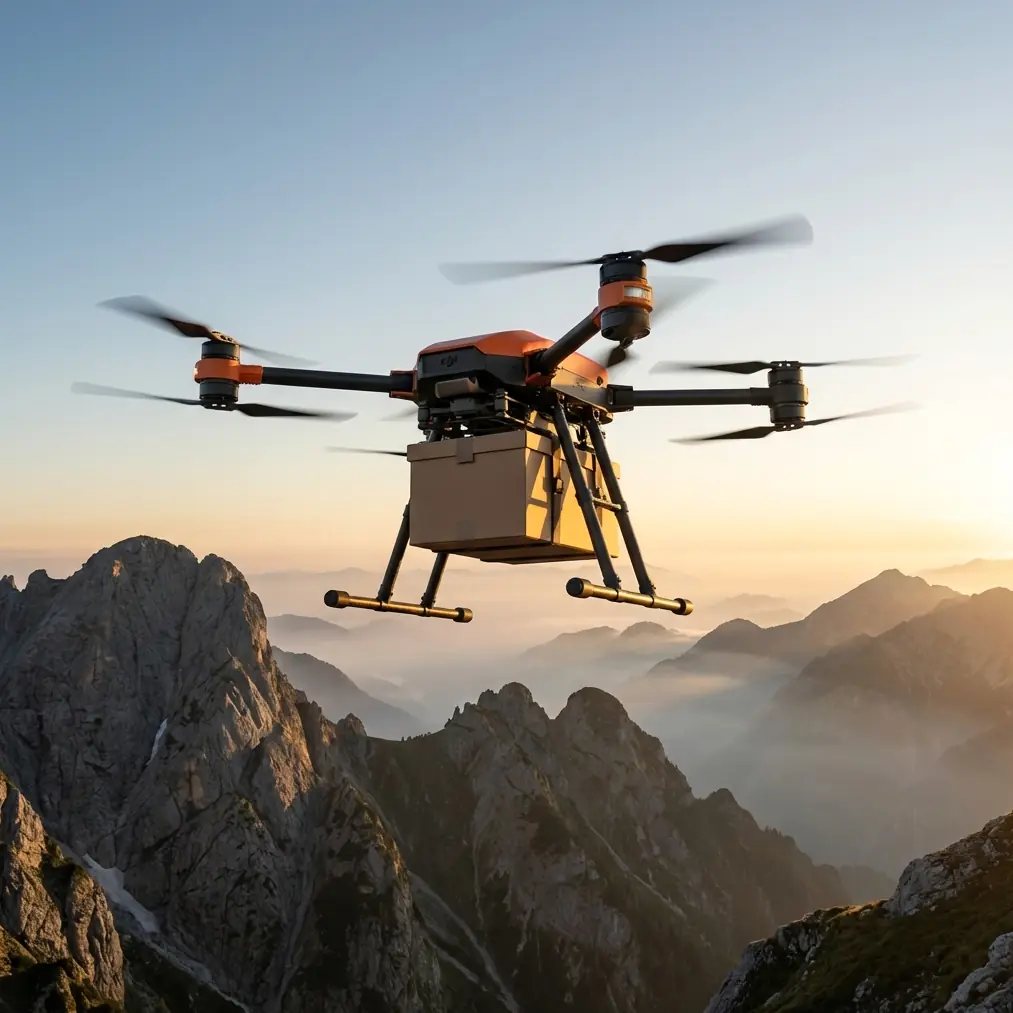
FlyCart 30 for Wildlife Filming in Complex Terrain: A Technical Review from the Field
META: A technical review of the DJI FlyCart 30 for wildlife filming support in complex terrain, covering payload handling, winch logistics, route planning, dual-battery endurance, emergency parachute systems, and a practical slow-motion phone workflow for field teams.
When people talk about wildlife filming, most of the attention goes to the camera body, the lens package, or the pilot flying the hero aircraft. Fair enough. But in difficult terrain, the production rises or falls on logistics. Not glamour. Not hype. Logistics.
That is where the FlyCart 30 becomes genuinely interesting.
I’m approaching this as a logistics lead, not as someone trying to turn every aircraft into a silver-bullet platform. For wildlife crews working in forested valleys, ridgelines, wetlands, river corridors, or broken mountain ground, the FlyCart 30 is not the camera ship. It is the machine that makes the camera mission possible. It moves batteries, supports remote teams, places equipment where vehicles cannot reach, and reduces the number of risky human carry-ins across unstable or ecologically sensitive terrain.
That distinction matters because too many reviews flatten specialized aircraft into generic “drone capability” talk. The FlyCart 30 deserves a more practical reading. In wildlife production, especially in complex terrain, its value comes from how efficiently it supports the broader operation.
Why the FlyCart 30 fits wildlife work better than many competing heavy-lift platforms
A lot of heavy-lift UAVs can move gear. Fewer do it in a way that works for real field crews dealing with changing terrain, compressed daylight windows, and limited staging access.
What separates the FlyCart 30 is not just that it can carry meaningful loads. It’s how its core design choices line up with actual production friction points.
The first is payload ratio. In wildlife filming, every kilogram moved by air can replace a slow human carry over steep or muddy ground. That saves time, yes, but it also reduces disturbance in the habitat. A better payload ratio means less wasted aircraft mass relative to useful transport work. Competitor systems often become inefficient once you add practical field accessories, or they demand bulky support infrastructure that weakens their usefulness in rough terrain. The FlyCart 30 is better understood as a working transport node rather than a novelty lifter.
The second is the winch system. This is one of the most operationally significant features for wildlife teams. In dense canopy edges, rocky ledges, marsh margins, or uneven clearings, landing is often the worst option. A winch lets the aircraft remain clear of obstacles while lowering or retrieving gear into a controlled spot. That changes the mission profile entirely. Instead of hunting for a safe touchdown zone, the crew can work vertical delivery into a narrow target area.
For wildlife production, that means battery cases, remote audio kits, lightweight shelters, field sensors, or even protective weather covers can be delivered to observation teams without forcing the aircraft onto questionable ground. Competing platforms that rely mostly on direct landing require cleaner terrain and create more rotor wash interaction near the drop site. The FlyCart 30’s winch architecture is one reason it stands out in this niche.
The hidden production advantage: less crew movement, less disturbance
Wildlife crews often focus on staying visually concealed. They should also think about movement signatures. Repeated foot traffic, gear shuttles, and rushed repositioning can affect animal behavior long before the camera starts rolling.
This is where route optimization becomes more than an efficiency term.
If your base camp, charging station, and remote observation post are separated by ridges or water crossings, every physical resupply creates a timing problem. The FlyCart 30 can shrink that problem if routes are planned properly. The aircraft becomes a scheduled link between points instead of a one-off emergency mule. Batteries can be staged. Sensor packages can be moved when animal activity is low. Food, weather protection, and communication kits can be delivered without widening the human footprint.
BVLOS capability is part of that discussion, though it should always be viewed through the lens of local regulations, site procedures, and risk controls. In practical terms, for large estates, private reserves, licensed industrial-adjacent conservation areas, or authorized corridor operations, BVLOS-style planning expands what a logistics drone can realistically support. Without that, long terrain-separated teams remain dependent on people and vehicles. With it, the operational geometry changes. The production can spread out while staying connected.
That can be the difference between capturing a behavior sequence and missing it because a field unit had to break concealment to fetch power or storage media.
Why dual-battery architecture matters more in the wild than on paper
Specs are easy to admire in a brochure. In the field, what matters is resilience.
Dual-battery systems matter because wildlife filming rarely happens in ideal launch conditions. Temperature shifts, elevation changes, repeated transport cycles, and uncertain retrieval windows all stress operations. A dual-battery setup gives crews a better margin for mission continuity and safer recovery logic than a single-point power strategy.
That has two practical consequences.
First, turnaround planning becomes cleaner. Field teams can build predictable rotation schedules around available packs rather than gambling on marginal energy margins late in the day.
Second, reliability improves at the mission level, not just the aircraft level. A delayed battery run can stop an entire hide, remote camera station, or ridge team from working. The FlyCart 30’s dual-battery design supports continuity in a way that aligns with professional production discipline.
Some competing cargo drones look impressive until you map their support burden. If battery handling is clumsy, transport cases are excessive, or the power workflow creates bottlenecks, the crew loses the very time the aircraft was supposed to save. On difficult wildlife shoots, elegance in the energy chain matters almost as much as payload capacity.
Emergency parachute: not a headline feature, a planning feature
For operations over broken terrain, the emergency parachute system should not be treated as marketing decoration. It belongs in risk planning.
Wildlife productions often work near ravines, tree lines, slopes, or inaccessible low ground where a conventional forced landing may be hazardous for people, equipment, or habitat. An emergency parachute adds a layer of consequence reduction. It does not replace proper route planning, weather discipline, or operator training. What it does is improve the safety envelope when the environment offers very few forgiving outcomes.
That is one area where professional crews should think differently from casual users. The parachute is not there to make teams feel comfortable. It is there because in remote work, recovery options shrink quickly. On a job involving expensive field equipment and fragile environments, even one mitigated incident can justify the inclusion of that safety layer.
The real workflow: FlyCart 30 as the backbone behind the footage
Let’s make this concrete.
Imagine a wildlife team filming in complex terrain where the observation unit is set above a river cut, the audio crew is tucked under a tree line, and the primary power station remains on a service road far outside the quiet zone. The hero images may come from cinema drones, fixed hides, or long-lens operators. The FlyCart 30’s role is to keep all three nodes alive.
Morning run: batteries and weather covers to the ridge team.
Midday run: storage, water, and a lightweight communication relay to the audio position.
Late afternoon run: retrieval of exposed media and replacement power before the golden-hour animal movement window.
That is not flashy. It is decisive.
In this kind of setup, the winch system reduces the need for touchdown. Route optimization minimizes disturbance corridors. Dual-battery logistics support repeatable cycles. The emergency parachute strengthens the safety case. And if the operation is structured for extended routing, BVLOS-style planning expands reach across terrain that would otherwise fracture the crew.
This is where the FlyCart 30 excels compared with many alternatives: not in one isolated spec, but in the way its features stack into a coherent field logistics system.
A surprisingly relevant field detail: phone slow motion for spotting and documentation
One of the more overlooked realities of wildlife filming is that not every useful clip comes from the main camera system. Field teams constantly record reference footage: animal movement at a distance, wind behavior through vegetation, test drops, winch behavior, landing zone conditions, and improvised route observations.
Here the reference detail from the provided source is more useful than it first appears.
A recent note from chinahpsy describes a very simple phone-based slow-motion workflow that requires no extra props and no editing. The point is straightforward: crews can use the built-in camera and get immediate slow-motion footage with almost no setup. On iPhone, the process is simply to open the Camera app and swipe left to “Slo-mo.” On Android, you open the video section and select “Slow Motion” or “Slow-mo.”
Why does that matter in a FlyCart 30 wildlife workflow?
Because slow-motion phone footage is an effective field tool for reviewing operational details that happen too quickly in real time. If a crew wants to examine how a suspended payload behaves in gusty air near a tree gap, or how quickly a lowered package settles onto uneven ground, a phone in slow motion can reveal swing patterns, line tension changes, and touchdown instability without any elaborate setup. You do not need a secondary production camera. You do not need post work. You just record and review.
That same trick is useful for wildlife teams checking how much movement a remote hide causes when a crew member enters, how birds react to distant rotor noise, or whether vegetation movement near a drop point suggests hidden turbulence. The simplicity is the strength. No extra gear. No editing delay. Fast feedback.
For production logistics, immediate feedback often beats polished footage.
What buyers and operators should evaluate before choosing FC30 for this role
The FlyCart 30 is strong, but only if the mission design matches the aircraft’s strengths.
Start with route geometry. If your wildlife operation involves repeated point-to-point deliveries over difficult ground, FC30 makes far more sense than a conventional camera drone pressed into utility work. Next, examine your delivery environment. If safe landings are scarce, the winch system becomes a major differentiator, not a nice extra. Then look at crew structure. If your operation depends on remote nodes staying in place for long periods, dual-battery continuity and disciplined route scheduling will deliver outsized value.
Also consider how your documentation loop works. That simple smartphone slow-motion method from the source is not just a social-media trick. It is a field diagnostic tool. The fact that it requires no added props or editing means any team member can use it instantly. A logistics lead, spotter, or site tech can record a short clip and make a better call on payload behavior or site conditions within seconds.
If your team is comparing platforms and wants a practical discussion around route planning, payload configuration, or whether a winch-based workflow is the right fit for remote filming support, it may help to message a field specialist directly.
Final assessment
The FlyCart 30 should not be judged as a “wildlife filming drone” in the narrow sense. That misses the point. Its role is more foundational. It is a field logistics aircraft that enables wildlife filming teams to operate farther, quieter, and with less terrain friction.
That is why it stands out.
Its payload-focused design matters because remote crews always need transport. Its winch system matters because difficult ground rarely offers perfect landing zones. Dual-battery architecture matters because production schedules collapse when power chains break. An emergency parachute matters because rough terrain gives you few second chances. And even a small supporting workflow detail, like using a phone’s native slow-motion mode on iPhone or Android with no editing required, can improve how a team validates field behavior around deliveries and setup changes.
For wildlife filming in complex terrain, the most valuable aircraft is not always the one that captures the shot. Sometimes it is the one that keeps the shot possible.
Ready for your own FlyCart 30? Contact our team for expert consultation.