
How I’d Prepare a FlyCart 30 for Dusty Coastline Inspection
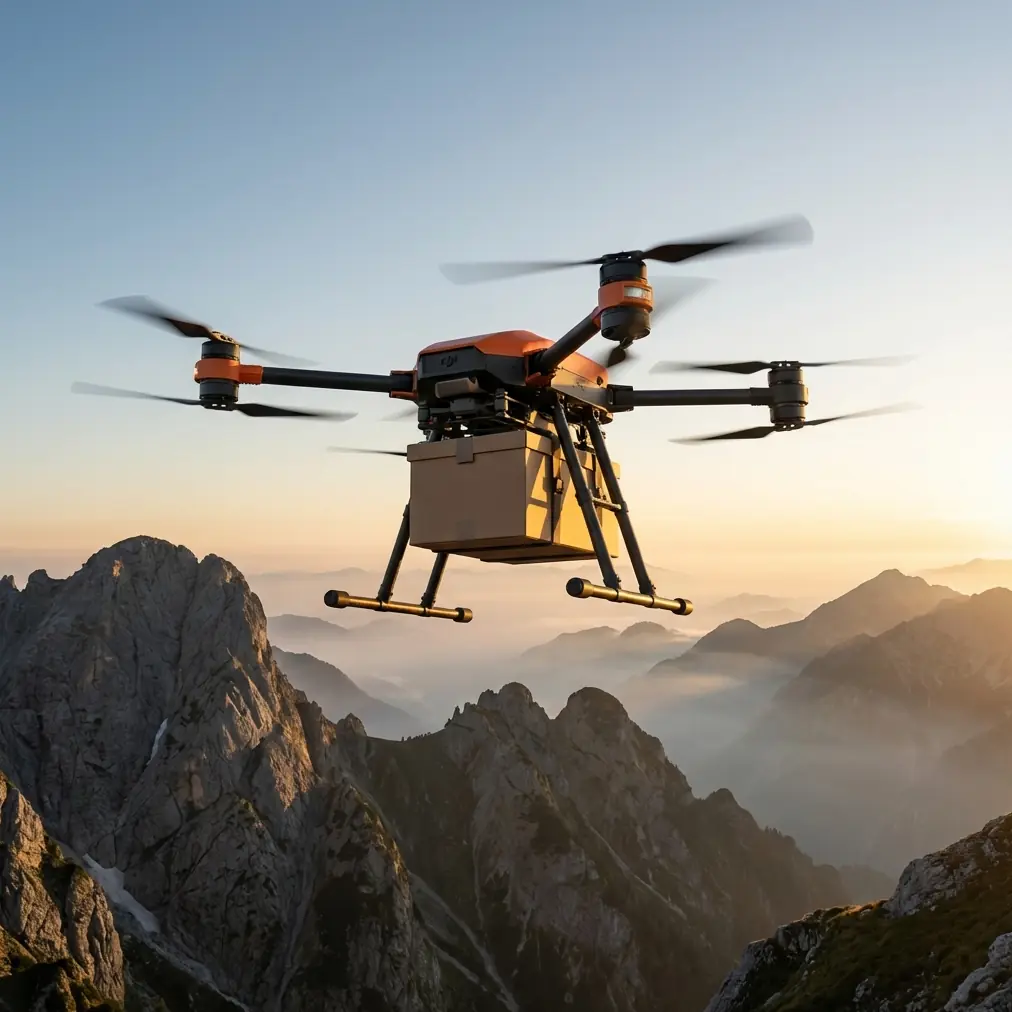
How I’d Prepare a FlyCart 30 for Dusty Coastline Inspection Work Near Large Airport Networks
META: A practical FlyCart 30 tutorial for dusty coastline inspection missions, covering pre-flight cleaning, payload planning, route logic, safety systems, and why integrated air-ground transport ecosystems matter.
Dust changes everything.
On paper, a coastline inspection mission can look straightforward: launch, follow the edge, collect visuals or sensor data, return, repeat. In the field, especially in dry, sandy coastal environments, the aircraft is only half the equation. The other half is the operating system around it: nearby airports, civil aviation constraints, logistics support, route discipline, and the condition of the drone before it ever leaves the ground.
That broader context matters even more now. On March 17, Uisee Technology signed a strategic cooperation agreement with Xinjiang Airport Group to explore deeper integration between autonomous driving technology and civil aviation scenarios. That is not a minor headline. Xinjiang Airport Group manages 27 civil transport airports and 2 general aviation airports, built around an airport system centered on the Urumqi international hub. For anyone thinking seriously about FlyCart 30 deployment, especially in long-distance commercial operations, this signals where the industry is headed: drones will not operate as isolated tools. They will increasingly sit inside a coordinated air-ground ecosystem.
For coastline inspection teams, that shift is practical, not theoretical.
A FlyCart 30 mission near port corridors, coastal industrial zones, airport-linked freight routes, or shoreline infrastructure needs more than lift capacity. It needs clean execution under dust exposure, predictable turnaround, and a planning model that respects the realities of civil aviation infrastructure. If I were setting up a FlyCart 30 for dusty coastline inspection work, this is how I’d approach it.
Start with the mission profile, not the aircraft spec sheet
The mistake I see most often is starting with payload capability and working backward. The right sequence is the opposite.
Define the shoreline problem first. Are you checking erosion barriers? Inspecting utility lines running parallel to the coast? Moving sensors or replacement parts to isolated points? Running repeated visual inspection along a fixed segment? The FlyCart 30 is often discussed as a cargo platform, but in field operations, its usefulness comes from payload ratio and mission adaptability. A drone that can carry meaningful weight while maintaining stable route discipline opens up more than transport. It supports distributed inspection workflows.
For a dusty coastline, I would break the work into three layers:
- Recon passes for broad situational awareness
- Targeted inspection runs for problem areas
- Logistics legs to move tools, sensors, or consumables to field teams
This is where FlyCart 30 becomes interesting. It can support inspection operations not just by flying cameras or equipment, but by reducing the friction between coastal access points. If your shoreline team is stretched across long sections with poor vehicle access, the drone’s role becomes part data platform, part resupply link.
That “air-ground” thinking lines up with the logic behind the Uisee–Xinjiang Airport Group agreement. Their stated focus is the deep fusion of autonomous driving technology with civil aviation scenarios and the construction of an “air-land integrated” intelligent transport ecosystem. Even though that agreement is centered on airports, the operating lesson extends outward: drone efficiency improves when flight planning and ground movement are designed together.
Dusty coastline work begins with pre-flight cleaning
If I had to choose one habit that prevents the most avoidable problems, it would be this: treat cleaning as a safety procedure, not housekeeping.
Dusty coastal environments are deceptive. Teams usually watch for salt exposure near the waterline, but windblown fine dust is often the more immediate operational threat. It gets into connectors, settles around moving mechanisms, coats sensors, and hides the early signs of wear.
On a FlyCart 30, I would make the pre-flight cleaning step mandatory before every mission block, especially if the aircraft was transported over dirt roads or staged near sandy embankments.
My sequence would be simple and consistent:
- Inspect the airframe exterior for dust buildup around joints and mounting points
- Check the winch system area carefully if the mission uses suspended delivery or remote drop-off workflows
- Clean around sensor windows and obstacle sensing surfaces with approved materials
- Inspect battery contact areas and confirm the dual-battery installation is free of contamination
- Look closely at the parachute housing and deployment-related surfaces for dust intrusion or obstruction
- Verify payload attachment points are clean and secure
That last point matters more than people think. Safety systems do not fail only because of major faults. They also fail because a small obstruction, a dirty latch, or fine grit interferes with a mechanism when the system is needed most.
The emergency parachute, for example, is a safety layer you hope never to use, but dusty staging areas are exactly where disciplined preparation pays off. If the aircraft operates over shoreline rocks, narrow access roads, or infrastructure corridors, you cannot afford uncertainty around emergency hardware. Cleaning is not cosmetic. It is part of airworthiness.
Why the winch system deserves special attention on coastlines
Coastline inspection often involves awkward ground conditions: riprap, tidal edges, fenced utility areas, embankments, and unstable surfaces where landing is not ideal. That is where the FlyCart 30 winch system can be more valuable than many operators first assume.
A winch-equipped workflow lets you keep the aircraft clear of uneven terrain while still delivering a tool kit, sensor package, or replacement part to a technician below. For inspection teams, that can mean fewer risky landings and faster cycle times between shoreline points.
In dusty conditions, though, the winch assembly should be treated as a precision component. Sand and grit can affect motion smoothness, line handling, and inspection confidence. Before launch, I would always run a short functional check with no mission-critical payload attached. You are not just confirming movement. You are listening for irregular mechanical behavior and watching for hesitation.
Operationally, this matters because route efficiency is worthless if your last 10 meters are unreliable. Coastal missions often fail at the handoff stage, not during cruise.
Route optimization should reflect infrastructure reality
A lot of “route optimization” advice stays too abstract. On actual coastline projects, route logic should be built around access friction, environmental exposure, and airspace boundaries.
This is where the Xinjiang airport network example becomes useful as a way of thinking. An airport group managing 27 civil transport airports and 2 general aviation airports across a wide region must think in networks, not isolated facilities. Drone teams should do the same. Even if your coastline mission is local, the planning mindset should be network-based:
- Where are the safe launch and recovery points?
- Which shoreline segments have the highest dust exposure?
- Where does BVLOS become necessary to avoid excessive repositioning?
- Which sections are better served by ground crews supported by drone resupply rather than repeated aircraft landings?
- How close are you operating to airport-managed or civil aviation-sensitive corridors?
A FlyCart 30 operation near a major hub region should be designed as one node in a larger transportation and aviation environment. Xinjiang Airport Group’s network is centered on Urumqi, with additional international gateway functions and multiple coordinated hubs. That kind of structure highlights a broader truth: commercial drone operations become more durable when they fit into regional movement patterns instead of fighting them.
For a coastline inspection team, that means planning drone legs in harmony with vehicle staging, battery swap points, maintenance stations, and communication coverage. BVLOS can expand workable shoreline distance, but only if your route logic accounts for recovery contingencies and field support timing.
Dual-battery discipline is really an uptime discipline
People often mention dual-battery systems as if redundancy alone solves the problem. It does not. What dual-battery architecture really gives you is a better foundation for operational continuity, provided your team manages it correctly.
For dusty coastline inspection, battery handling needs extra care because contamination can turn a reliable power workflow into an avoidable delay. My process would include:
- Cleaning and inspecting battery interfaces before installation
- Matching battery condition and charge readiness by mission type
- Assigning shorter, higher-confidence sorties during peak dust conditions
- Rotating batteries with logging discipline, not by memory
- Checking thermal behavior after each cycle if ambient conditions are harsh
The benefit is not just safety. It is schedule stability. If the mission includes repeated shoreline hops and support deliveries, predictable power management helps preserve route timing and crew trust.
BVLOS is useful only when the ground plan is mature
FlyCart 30 discussions often bring up BVLOS because it expands practical coverage for long corridors. That is true, but coastline operators should resist treating BVLOS as the first answer.
The better question is whether the ground system is strong enough to support it.
Again, this circles back to the “air-land integrated” concept in the recent cooperation agreement. Civil aviation is moving toward environments where automated systems, airport infrastructure, and surface transport are linked more tightly. Drone operators can borrow that same discipline on a smaller scale. Before stretching the aircraft farther down the coast, tighten the ground process first:
- Defined crew roles
- Pre-positioned batteries and tools
- Clear emergency procedures
- Communication checks
- Dust-control practices at every staging point
- Documented recovery alternatives
When those pieces are stable, BVLOS becomes a force multiplier rather than a complexity multiplier.
The overlooked value of airport-adjacent thinking
Even if your inspection mission has nothing to do with airport operations directly, nearby airport networks shape what “good” drone deployment looks like. The Uisee–Xinjiang Airport Group agreement is a sign that autonomy in civil aviation is no longer being discussed as a narrow aircraft topic. It is being discussed as ecosystem design.
That has operational significance for FlyCart 30 users.
In regions with dense aviation activity, distributed infrastructure, or strategic transport corridors, the winning drone programs will be the ones that can coordinate aircraft, vehicles, technicians, and data handoffs across many points. Coastline inspection often suffers from fragmentation: the drone flies well, but crews waste time repositioning, carrying equipment, or recovering from rough launch environments. An air-ground integrated model reduces that waste.
If your team is building that kind of workflow and wants a practical discussion around FC30 deployment choices, mission setup, or payload handling, you can reach out here: message the operations desk.
My field-ready checklist for a dusty coastline FlyCart 30 mission
If I were briefing a team before launch, I’d keep it direct.
1. Clean first
Especially around sensors, battery contacts, payload mounts, winch components, and the emergency parachute area.
2. Build the route around handoff points
Do not optimize only for flight distance. Optimize for where the aircraft actually adds value to the inspection team.
3. Use the payload ratio strategically
Carry what shortens field delays: sensors, replacement parts, communications gear, or specialized inspection tools. Avoid dead weight.
4. Respect the ground network
Vehicles, technicians, launch sites, and battery support should be planned with the same seriousness as the flight path.
5. Treat BVLOS as a scaling step, not a starting point
Expand only after the basic operating rhythm is stable.
6. Validate safety systems after cleaning
Dust can quietly undermine confidence in mechanisms you may never need until the worst possible moment.
What this means for FlyCart 30 users now
The most useful takeaway from the recent Xinjiang aviation cooperation news is not a headline about technology ambition. It is the operating model beneath it. A region with a large airport portfolio, including 27 civil transport airports and 2 general aviation airports, is investing in the fusion of autonomy and civil aviation workflows because scale demands coordination.
That same lesson applies to FlyCart 30 shoreline work.
In dusty coastal inspection, success rarely depends on one dramatic capability. It comes from many disciplined details working together: a clean aircraft, a protected winch, verified parachute readiness, sensible payload choices, dual-battery care, BVLOS restraint, and route optimization that reflects how teams actually move across the ground.
That is the difference between a drone mission that looks good in a demo and one that survives real field conditions day after day.
Ready for your own FlyCart 30? Contact our team for expert consultation.