
FlyCart 30 Mountain Construction Site Inspection Guide
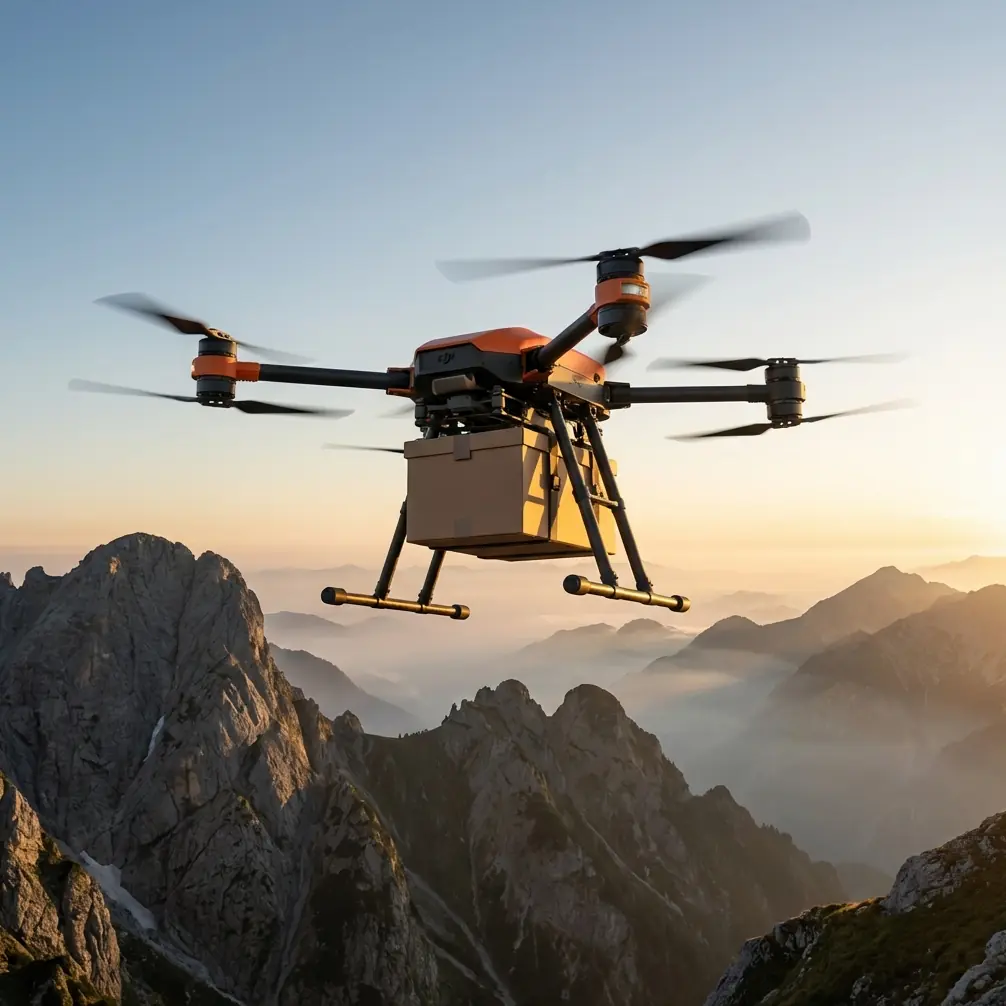
FlyCart 30 Mountain Construction Site Inspection Guide
META: Master mountain construction inspections with FlyCart 30's heavy-lift capabilities. Learn payload optimization, route planning, and safety protocols for rugged terrain.
TL;DR
- FlyCart 30 delivers 30kg payload capacity ideal for transporting survey equipment, materials, and tools across challenging mountain construction sites
- Dual-battery redundancy and emergency parachute system provide critical safety margins when operating in unpredictable alpine conditions
- Winch system enables precision delivery to inaccessible ledges and steep gradients without requiring landing zones
- BVLOS capabilities extend operational range to cover expansive mountain construction projects efficiently
The Mountain Construction Challenge That Changed My Approach
Three years ago, my team faced a nightmare scenario on a hydroelectric dam project in the Rockies. We needed to transport 45kg of survey equipment daily across a 2.3km gorge. Traditional helicopter runs cost us four hours per trip and grounded operations during afternoon wind shifts.
The FlyCart 30 transformed that operation entirely. What previously required helicopter coordination now takes 23 minutes per delivery cycle. This guide shares everything I've learned about deploying heavy-lift drones for mountain construction inspections.
Understanding FlyCart 30's Core Specifications for Mountain Operations
The FlyCart 30 wasn't designed as an inspection drone—it's a logistics platform that happens to excel at construction site support. This distinction matters when planning mountain operations.
Payload and Performance Metrics
The aircraft handles 30kg maximum payload in standard configuration, dropping to approximately 20kg at elevations above 3,000 meters due to reduced air density. Plan your equipment loads accordingly.
| Specification | Sea Level Performance | High Altitude (3,000m+) |
|---|---|---|
| Max Payload | 30kg | 18-22kg |
| Flight Time (loaded) | 28 minutes | 20-24 minutes |
| Max Range | 16km | 12-14km |
| Wind Resistance | 12m/s | 10m/s |
| Operating Temp | -20°C to 45°C | -20°C to 35°C |
Dual-Battery Architecture Explained
Mountain operations demand power redundancy. The FlyCart 30's dual-battery system doesn't simply double capacity—it provides independent power paths. If one battery fails or experiences thermal issues in cold conditions, the second maintains controlled flight.
Expert Insight: Pre-condition batteries to 20-25°C before mountain flights. Cold batteries lose up to 30% capacity. I keep spare batteries in an insulated case with hand warmers during winter operations.
Route Optimization for Mountain Construction Sites
Effective route planning separates successful mountain operations from dangerous ones. The terrain creates unique challenges that flat-land pilots never encounter.
Elevation Change Management
Vertical movement consumes significantly more power than horizontal flight. A 500-meter elevation gain uses roughly equivalent energy to 2km of horizontal travel when carrying full payload.
Map your routes to minimize unnecessary climbing:
- Identify the highest point on your route first
- Plan approach angles that maintain consistent climb rates
- Avoid routes requiring descent followed by re-climbing
- Factor wind patterns at different elevations into timing
Wind Corridor Identification
Mountain terrain creates predictable wind acceleration zones. Saddles, ridgelines, and canyon mouths concentrate airflow, sometimes doubling or tripling ambient wind speeds.
Before any operation, I conduct a reconnaissance flight at 30% payload to map actual wind conditions. The FlyCart 30's telemetry records wind speed and direction throughout the flight path—data that proves invaluable for loaded operations.
Pro Tip: Schedule heavy payload flights for early morning hours when thermal activity remains minimal. Mountain winds typically intensify after 10 AM as slopes heat unevenly.
Winch System Deployment Techniques
The winch system transforms the FlyCart 30 from a point-to-point transport into a precision delivery tool. For construction sites on steep terrain, this capability eliminates the need for prepared landing zones.
Optimal Winch Operation Parameters
The winch handles 40kg maximum load with a 20-meter cable length. However, operational best practices suggest more conservative limits:
- Keep winch loads under 30kg for controlled descent
- Maintain minimum 15-meter hover altitude during winch operations
- Limit cable extension to 15 meters in winds above 5m/s
- Never winch while the aircraft is moving horizontally
Rigging for Construction Materials
Standard cargo hooks work for bagged materials and equipment cases. For irregular loads like rebar bundles or formwork sections, custom rigging becomes necessary.
Essential rigging principles:
- Center of gravity must align with hook point
- Use spreader bars for loads wider than 60cm
- Attach tag lines for ground crew guidance on descent
- Color-code rigging for quick load identification
BVLOS Operations in Mountain Environments
Beyond Visual Line of Sight operations extend the FlyCart 30's utility across large construction sites. Mountain terrain actually simplifies some BVLOS challenges while complicating others.
Regulatory Considerations
BVLOS authorization requirements vary by jurisdiction. Most regulatory frameworks require:
- Detect and avoid capability demonstration
- Redundant communication links
- Pre-filed flight paths with altitude restrictions
- Ground-based observers at key waypoints
The FlyCart 30's 4G/5G connectivity option provides the communication redundancy most authorities require. In remote mountain areas, verify cellular coverage along your entire route before planning BVLOS operations.
Terrain Masking Solutions
Mountains block radio signals. A ridge between your control station and the aircraft creates a communication dead zone. Address this through:
- Elevated control station positioning
- Relay stations at strategic high points
- Pre-programmed return-to-home waypoints that avoid terrain masking
- Cellular backup communication where available
Emergency Parachute System: Your Final Safety Layer
The integrated emergency parachute deploys automatically when the flight controller detects unrecoverable conditions. Understanding its parameters helps you plan operations within safe envelopes.
Deployment Parameters
The parachute requires minimum 30 meters altitude for full deployment. At maximum payload, descent rate under parachute reaches approximately 5-6 m/s—survivable for the aircraft and most cargo, but plan accordingly for fragile equipment.
Automatic deployment triggers include:
- Dual motor failure
- Complete power loss
- Excessive attitude deviation (tumbling)
- Manual trigger activation
Recovery Planning
Mountain parachute deployments rarely land in convenient locations. Before each operation, identify potential emergency landing zones along your route and brief ground crews on recovery procedures.
Common Mistakes to Avoid
Overloading at altitude: Sea-level payload ratings don't apply in mountains. I've watched operators attempt 28kg loads at 2,800 meters and wonder why their aircraft struggles to climb. Calculate density altitude and reduce payload accordingly.
Ignoring battery temperature: Cold batteries fail without warning. A battery showing 80% capacity at 5°C might deliver only 50% of expected energy. Always pre-warm and monitor battery temperatures throughout flight.
Single-route dependency: Mountain weather changes rapidly. Always plan alternate routes and abort points. A cloud rolling through your primary corridor shouldn't strand equipment or personnel.
Rushing winch operations: The winch system rewards patience. Rapid descent creates pendulum motion that can destabilize the aircraft. Lower loads at 1 m/s maximum and pause if swinging develops.
Neglecting ground crew communication: Mountain acoustics play tricks. Establish clear radio protocols and visual signals before operations begin. A misunderstood instruction during winch operations can damage equipment or injure personnel.
Frequently Asked Questions
How does the FlyCart 30 handle sudden mountain weather changes?
The aircraft's 12 m/s wind resistance provides margin for typical afternoon thermal development. However, mountain storms develop faster than the aircraft can return to base. Monitor weather radar continuously and establish hard abort criteria—I use 8 m/s sustained wind as my return trigger, preserving margin for gusts.
Can the FlyCart 30 operate in snow conditions?
Yes, with precautions. The motors and electronics tolerate cold temperatures down to -20°C, but snow accumulation on propellers degrades performance rapidly. Avoid flight during active snowfall. For operations in snow-covered terrain, the white aircraft can be difficult to track visually—consider adding high-visibility markings.
What maintenance schedule applies for intensive mountain construction support?
Mountain operations stress aircraft more than standard use. I follow a 50-flight-hour inspection cycle rather than the standard 100 hours. Pay particular attention to motor bearings, propeller condition, and battery health. Dust and debris from construction sites accelerate wear on all moving components.
Bringing It All Together
Mountain construction inspection demands respect for both the terrain and your equipment's limitations. The FlyCart 30 provides capabilities that genuinely transform what's possible in these environments—but only when operated within appropriate parameters.
Start with conservative payload and range estimates. Build experience with your specific terrain before pushing operational limits. Document everything—wind patterns, power consumption, timing—because mountain conditions vary dramatically between sites and seasons.
The investment in proper planning pays dividends in operational reliability and safety margins that let you focus on the construction work rather than worrying about your logistics platform.
Ready for your own FlyCart 30? Contact our team for expert consultation.