
FlyCart 30 for Urban Construction Inspection
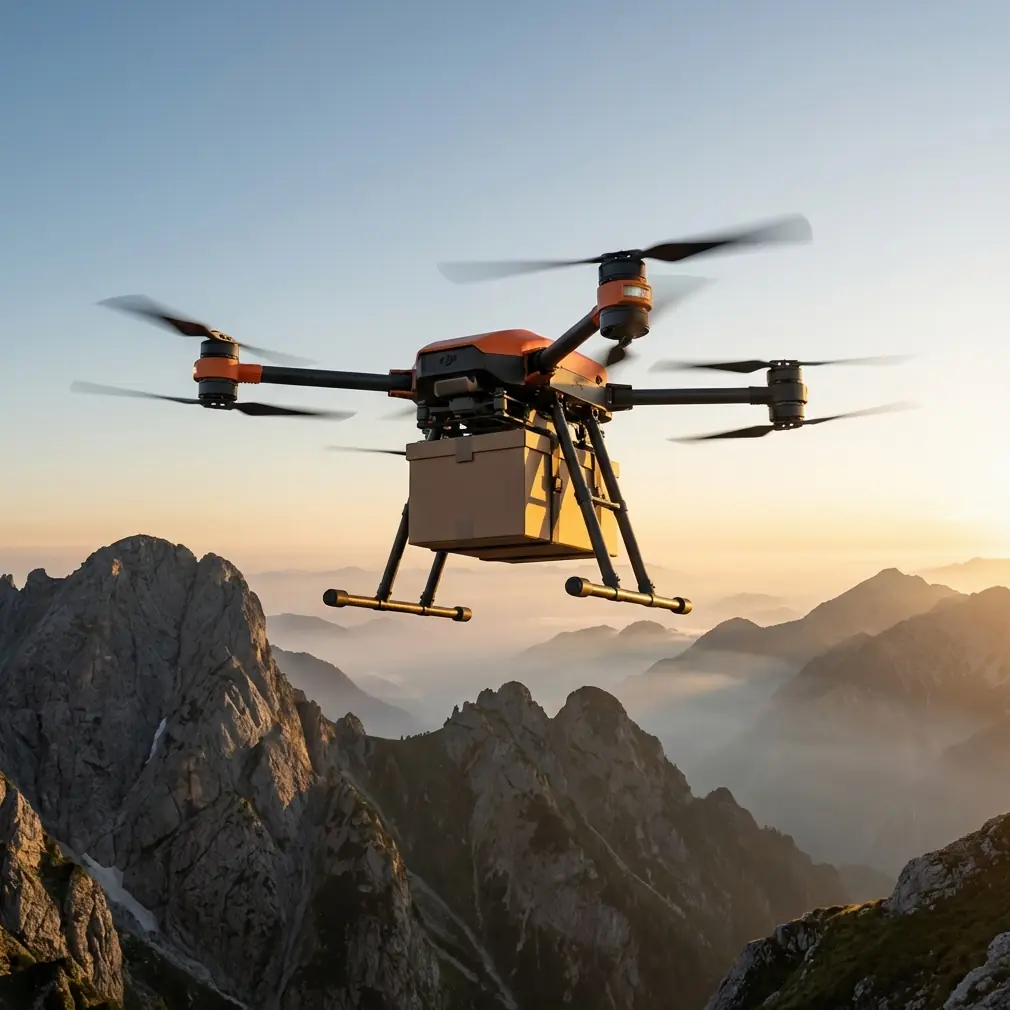
FlyCart 30 for Urban Construction Inspection: How Sharper Imaging Decisions Improve Every Lift
META: A practical FlyCart 30 tutorial for urban construction inspection, using recent photography lessons on detail, focus, and blur control to improve aerial image quality, route reliability, and on-site decision-making.
Urban construction inspection is usually framed as a hardware question. How much can the aircraft carry? How stable is the link between pilot and drone? Can the winch place or retrieve a payload without swinging into scaffolding, glass, or rebar?
Those questions matter. But they are not the whole job.
On real sites, inspection quality often rises or falls on something less glamorous: image discipline. The latest photography guidance circulating in Chinese tech media makes that point with unusual clarity. One piece argues that strong images are not the result of talent or luck, but of patient work on details and a consistent creative standard. Another breaks down 7 root causes of blurry photos in professional shooting mode and reduces them to three operational buckets: shake blur, focus blur, and parameter error. That advice was framed for phone photography across brands like Huawei, Xiaomi, OPPO, Honor, and vivo, yet the logic maps cleanly onto drone inspection. And for a platform like the FlyCart 30, that matters more than it may seem.
If you inspect urban construction sites with a FlyCart 30, sharper operational thinking around image capture can save re-flights, reduce risk exposure, and turn each sortie into something more useful than a folder full of technically valid but operationally weak footage.
Why this matters specifically for FlyCart 30 missions
The FlyCart 30 is often discussed as a logistics aircraft, and rightly so. Its payload-oriented design, dual-battery architecture, winch system, and mission flexibility make it attractive for difficult job sites where crews need tools, sensors, or small critical parts moved vertically and precisely. On an urban construction project, that can mean lifting inspection equipment to a roof deck, lowering a line into a confined courtyard, or supporting a mixed workflow where transport and visual verification happen during the same operational window.
That combination changes the inspection equation.
A pilot using the FlyCart 30 is not always trying to create cinematic material. The goal is usually tighter: document facade progress, verify crane clearance, inspect edge protection, check rooftop mechanical placement, or confirm whether a previously flagged issue was actually fixed. In those situations, a soft image is not just aesthetically weak. It can erase evidence. If rebar spacing, anchor bolt alignment, hairline concrete cracking, or water pooling cannot be confirmed, the mission has not done its job.
The recent photography articles highlight two useful truths.
First, high-quality imagery is built through attention to detail rather than relying on instinct. Second, blur in “professional mode” often comes from very basic mistakes, not a lack of sophisticated camera knowledge. That is an especially relevant message for construction teams adopting the FlyCart 30 because many of these programs are led by logistics managers, site coordinators, or safety teams rather than dedicated cinematographers. The aircraft may be advanced; the image workflow often is not.
The three blur problems every urban inspection team should diagnose first
The article on blurry photos gives a practical structure: most failed images stem from hand shake, missed focus, or incorrect parameters. Translate that into FlyCart 30 field operations, and you get a powerful troubleshooting framework.
1. Shake blur becomes aircraft motion blur
On a phone, the culprit is a trembling hand. On a construction site, it is more complicated. The drone may be dealing with wind shear between towers, rotor wash near parapets, turbulence around scaffold netting, or slight winch-induced movement if the platform is transitioning between transport and observation tasks.
In an open field, a little movement may be tolerable. In urban inspection, it rarely is. Vertical lines, window frames, bolt heads, cable terminations, and facade joints all demand crisp edges. If you are working close to structures, even minor yaw correction can soften critical detail.
This is where route optimization matters. Do not only optimize for shortest flight time. Optimize for the cleanest hover points and the safest angles of approach. A FlyCart 30 mission that takes an extra minute but avoids the wind funnel between two unfinished towers often produces better inspection evidence than a faster route with unstable holds.
Operational significance:
- Better route planning reduces motion-induced blur.
- Cleaner hover points lower the chance of repeat flights.
- Repeatable flight positions improve before-and-after inspection comparisons.
2. Focus blur becomes subject ambiguity
The source article calls out “跑焦,” or focus drifting off the intended subject. In urban inspection, this happens when the camera system locks onto the wrong plane: foreground mesh instead of a facade crack, a reflective window instead of a sealant joint, or hanging cables instead of the bracket behind them.
This is not a trivial failure. A site team may think it has documented a defect when the actual area of concern is soft and unusable. That can delay sign-off, trigger extra access work, or create disagreement between field crews and project managers reviewing imagery later.
The broader photography article also stresses that compelling images come from observation and thoughtfulness. For FlyCart 30 operators, that translates into intentional framing. Before capturing, define the subject. Is the mission about corrosion on rooftop steel, clearance at a hoist landing, or alignment of MEP penetrations? If the subject is vague, focus tends to drift operationally even before it drifts optically.
Operational significance:
- Define one inspection objective per capture sequence.
- Use slower, deliberate framing near cluttered structures.
- Review images on-site before leaving the position.
3. Parameter errors become workflow failures
The source says many people think they “cannot tune parameters,” when the real problem is stepping into basic traps. That is a useful corrective for FlyCart 30 teams. Too often, crews overcomplicate settings and under-manage conditions.
Urban construction sites are full of lighting extremes: bright concrete, dark shadow lines, reflective curtain wall panels, sodium work lights, dust, fog, and sunset glare between buildings. Parameter mistakes in this environment create false confidence. The image looks exposed enough on a small screen, but when reviewed later, the important texture is gone.
A disciplined checklist beats improvisation:
- Match capture settings to the inspection target, not to a generic preset.
- Reassess whenever you move from rooftop sun into alley shade.
- Treat each building face as a new lighting environment.
The original article’s promise that changing even 1 root cause can immediately improve clarity is not hype when applied to inspection. Sometimes the mission does not need a new aircraft or a new sensor. It needs one corrected variable.
What the FlyCart 30 adds to this workflow
The FlyCart 30 changes more than transport capacity. It changes how a site can organize inspection support.
Because the platform is built around utility, crews can combine logistics and observation in the same operating concept. A dual-battery setup supports mission resilience and practical turnaround planning. That matters on construction sites where access windows are narrow, crane schedules shift, and airspace deconfliction may force teams to complete work in tight blocks. If one sortie is carrying a tool or sensor package and the next is documenting installation quality, the aircraft’s operational continuity becomes a real advantage.
The winch system is equally relevant in dense urban zones. Inspection is not always about flying close for a picture. Sometimes the safer move is to lower a device, marker, or lightweight instrument into a space that would otherwise require a worker to access an awkward edge. Once that task is done, the aircraft can reposition for visual confirmation. The imaging discipline from the photography articles becomes more important here because these hybrid missions create distractions. Teams can become so focused on the delivery task that they treat the inspection imagery as an afterthought.
That is a mistake. If the image is the record, the image deserves the same planning as the lift.
A tutorial mindset for urban FlyCart 30 inspection
Here is the simplest way I explain it to site teams.
Step 1: Decide what “sharp” means before takeoff
Sharpness is not abstract. It should be tied to a decision. Do you need to read a serial plate, verify weld continuity, inspect membrane seams, or confirm whether protective mesh is properly fastened?
The recent photography guidance emphasizes that good work comes from deep engagement and careful polishing of details. On a FlyCart 30 mission, that means your inspection target should be specific enough that any crew member can answer, in one sentence, what must be visible when the flight is complete.
Step 2: Separate transport objectives from image objectives
If you are using the aircraft for both payload movement and inspection support, do not merge the tasks mentally. A cargo leg and an imaging leg have different success criteria. Payload ratio, flight path, hover duration, and camera handling all shift accordingly.
This is especially important in urban canyons where airflow changes block by block. A route that is acceptable for moving an item with the winch may be a poor route for collecting stable, analyzable imagery.
Step 3: Use BVLOS capability with restraint, not bravado
BVLOS expands what is possible on large or segmented urban projects, especially where multiple buildings or long corridors must be checked efficiently. But extended operational reach only adds value if the captured data remains reliable.
Longer routes increase the temptation to “collect everything.” Resist that. Route optimization should prioritize clarity and repeatability. A shorter mission with cleaner evidence is worth more than broad coverage full of uncertain frames.
Step 4: Build a blur triage into your field review
Borrow directly from the photography article’s structure. After each capture sequence, ask:
- Was the aircraft moving?
- Was the subject actually in focus?
- Were the capture settings appropriate for the light and surface?
Those three checks solve a surprising number of problems. The article’s “7 causes” framework is useful because it reminds teams that blur is not one issue. It is a family of avoidable mistakes. That mindset fits urban inspection perfectly.
Step 5: Respect the environment, including wildlife
Construction sites in cities are not sterile airspace. Birds use ledges, cranes, half-finished floors, and rooftop equipment as perches. During one downtown inspection sequence, a kestrel cut across the facade line just as the aircraft was settling into position near an upper mechanical level. The onboard sensors detected the obstacle and the pilot adjusted laterally before resuming the hold. That moment mattered for two reasons. It protected the bird, and it prevented a rushed correction that would have ruined the image set.
This is where emergency systems and intelligent sensing stop being brochure items. Obstacle awareness, conservative piloting, and an emergency parachute framework all serve the same operational goal: preserve safety while keeping the mission recoverable. On an active urban site, that is not optional.
The hidden lesson in the source material
The most useful insight from these photography articles is not about phones. It is about discipline.
One article argues that strong work across landscapes, documentary scenes, and portraits comes from refusing to be trapped by a single category and instead learning to observe, think, and preserve emotional and visual detail. That has a direct parallel in FlyCart 30 deployment. Urban inspection is not just “drone work.” It blends logistics, risk control, visual documentation, and site communication. Teams that treat it as one rigid category usually underperform.
The second article strips away the myth that technical failure is always complex. Sometimes a blurry image is just a basic mistake repeated under pressure. That mindset is valuable for construction programs scaling up drone use. You do not need a dramatic overhaul every time imagery disappoints. Often you need a better preflight question, a cleaner hover, a clearer subject definition, or a more disciplined review loop.
If your team is building a FlyCart 30 workflow for urban inspection and wants a practical way to map those procedures to real site constraints, this field support line is a useful place to start: message Alex’s operations desk.
What experienced operators do differently
The strongest FlyCart 30 operators on urban construction jobs are rarely the ones chasing the most flight minutes. They are the ones who make each flight leg answer a site question clearly.
They understand that dual-battery endurance is not just a specification. It gives them more control over timing and reserves, which supports safer decisions around repositioning and re-capture. They know the winch system is not merely a lifting accessory. It can reduce unnecessary worker exposure in awkward access zones. They use route optimization to avoid turbulence traps rather than simply cut distance. They treat BVLOS as a planning tool, not a performance stunt. And when environmental surprises appear, whether that is reflected glare off a new glass curtain wall or a kestrel crossing the flight lane, they trust sensors and procedure over improvisation.
That mindset is what turns the FlyCart 30 from a capable aircraft into a reliable inspection platform.
The recent photography coverage may seem far removed from heavy-duty UAV operations at first glance. It is not. The core lesson is brutally relevant: excellence is built in details, and blur is usually a solvable problem once you identify its true source. For urban construction inspection, that is not artistic philosophy. It is operational leverage.
Ready for your own FlyCart 30? Contact our team for expert consultation.