
FlyCart 30 in the City: A Field Report on Urban
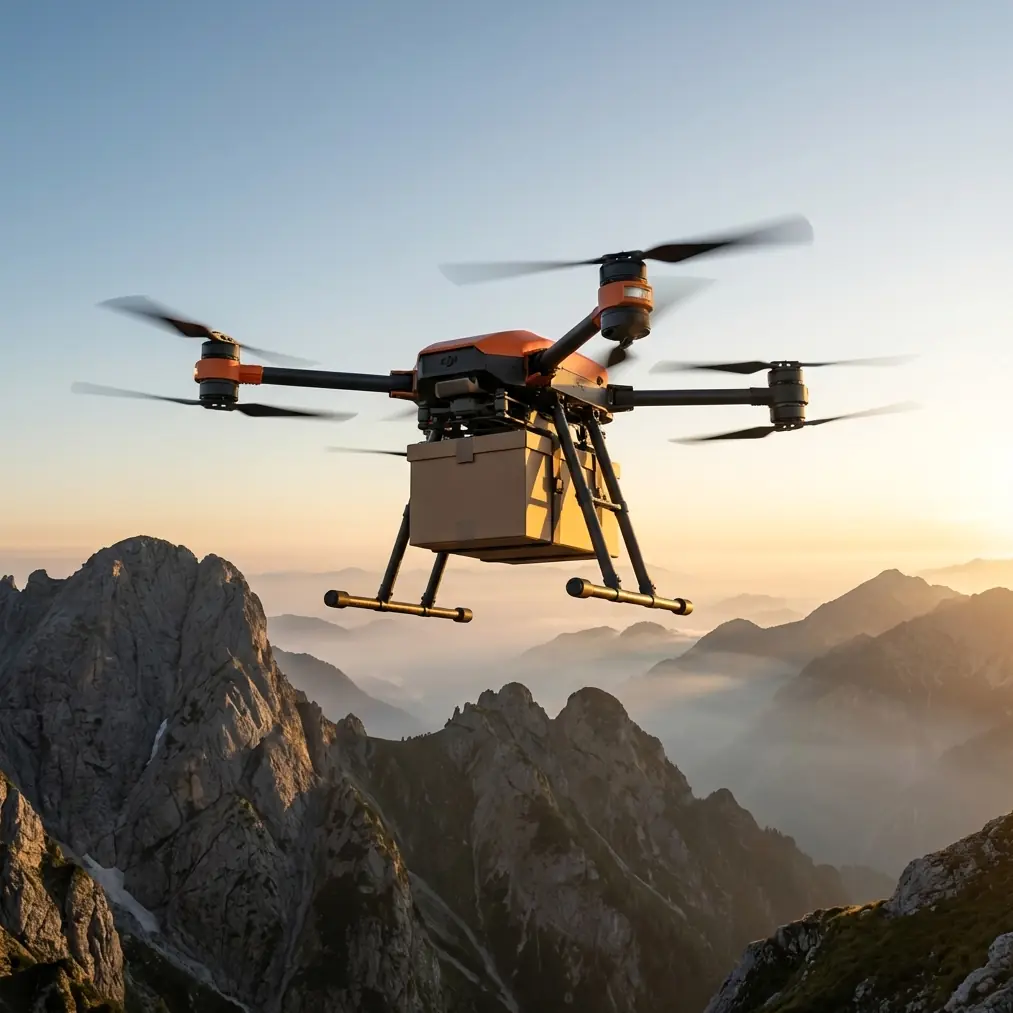
FlyCart 30 in the City: A Field Report on Urban Construction Logistics After New York’s East River Cargo Drone Trial
META: A field report on what New York’s East River cargo drone trial means for FlyCart 30 urban construction workflows, including payload strategy, winch use, route planning, safety systems, and medical-grade logistics lessons.
I spend a lot of time around urban job sites where everyone agrees on the problem and argues about the method. Materials, tools, samples, and urgent replacement parts all need to move across dense city blocks without getting trapped in the same gridlock that slows everything else. On paper, “drone delivery” sounds straightforward. On an actual construction site, it turns into questions about lift margin, staging space, route risk, vertical obstructions, and whether the aircraft can work reliably between towers, cranes, and tight delivery windows.
That is why the recent New York cargo drone trial matters more than it may first appear.
According to the report, the Port Authority of New York and New Jersey is starting a yearlong cargo drone trial on April 27, working with Skyports to test scheduled middle-mile flights over the East River. The stated goals are practical: reduce traffic congestion and support medical logistics and deliveries. Those details are not just headline material. They point directly at the kind of conditions where the FlyCart 30 starts to look less like a niche aircraft and more like a working tool for urban operations.
I’m looking at this through the lens of city construction and inspection support, not hospital supply chains. Still, the logic is almost identical. If a drone platform can prove its value in a corridor where timing, reliability, and route discipline matter enough for medical logistics, that same framework can be adapted to move urgent items between urban construction nodes: rooftop staging areas, blocked streets, temporary laydown zones, and hard-to-reach inspection points.
Why the New York trial is operationally relevant
The phrase that stands out in the news item is “scheduled middle-mile cargo flights.” That is a very specific use case. This is not about dropping consumer parcels on doorsteps. It is about moving goods between controlled points in a repeatable pattern. For construction teams, that is the sweet spot.
Urban construction rarely needs a drone to replace every van run. It needs a drone to handle the jobs that break the day:
- a failed sensor that stops a crane-monitoring setup
- a concrete test sample that needs to move fast
- a replacement tool, battery, or rigging component needed on another site
- a document package or inspection device that cannot wait for a courier stuck in traffic
- lightweight medical or safety equipment moving across a campus-style project or between nearby sites
That is where the FlyCart 30 fits better than many “inspection-first” drones that happen to carry a small load. The difference is not just payload capacity. It is the whole cargo workflow.
Where FlyCart 30 stands out in an urban construction environment
For city work, payload ratio matters more than spec-sheet bragging rights. The aircraft has to lift something genuinely useful, not just technically carry an object for a short demo. With the FlyCart 30, the conversation shifts from “Can it carry anything?” to “Can it carry the right thing safely and predictably enough to be worth integrating into the operation?”
That distinction matters on construction sites because loads are awkward. They are not always packaged as neat rectangular boxes. You may be moving:
- a coil of cable
- a compact LIDAR unit
- a box of anchors or fastening hardware
- PPE kits
- a specialty instrument for facade inspection
- a replacement communications device for a rooftop crew
A drone built around cargo operations has an advantage here, and this is one area where the FlyCart 30 tends to outperform many competitor platforms adapted from camera or mapping roles. Competitors often look fine until the payload changes shape, pickup conditions get messy, or the landing zone turns out to be less than ideal. The FlyCart 30’s cargo-oriented design is more useful because it accounts for the way real job sites behave: imperfect access, changing elevations, and the need to place loads without bringing the aircraft too close to obstacles or workers.
The winch system changes the job, not just the delivery method
If you inspect construction sites in urban areas, the winch system is not a side feature. It is one of the reasons to consider the platform in the first place.
Landing is often the hardest part of urban cargo operations. Rooftops can be cluttered. Ground-level areas can be active with crews, vehicles, rebar stacks, and temporary barriers. Even when there is enough room to descend, there may not be enough room to land cleanly without interrupting site activity.
A winch-based drop or retrieval solves a different problem than a conventional touchdown. It lets the aircraft remain at a safer standoff while placing a load into a constrained area. On a construction site, that can mean:
- lowering a sensor package onto a roof for a mechanical inspection
- delivering a compact tool bag to a fenced-off floor deck
- moving samples between a tower site and a nearby logistics point
- retrieving a lightweight item from a spot where dust, obstructions, or access rules make landing impractical
This is where the FlyCart 30 often excels against platforms that are technically able to carry cargo but rely on simpler delivery mechanics. In urban operations, precision placement is often more valuable than raw lift alone. A drone that can hover safely above a complicated zone and manage delivery vertically is simply more usable.
What New York’s East River flights signal about route design
The East River portion of the trial is revealing. Testing cargo flights over the East River shows planners are using airspace to bypass one of the oldest inefficiencies in cities: forcing everything onto crowded roads even when there is a more direct route overhead.
For construction logistics, route optimization should be approached the same way. Don’t ask whether a drone can replace a truck. Ask whether a drone can remove the worst route bottlenecks from your workflow.
In practice, the most efficient FlyCart 30 route in a city is often:
- between fixed, pre-approved transfer points
- over lower-risk corridors where possible
- tied to scheduled site needs instead of ad hoc dispatches
- built around recurring items with known dimensions and weights
That mirrors the logic of the New York trial. Scheduled middle-mile service matters because scheduled operations are easier to assess, safer to supervise, and easier to justify inside a broader logistics system. For an urban construction group, that means a FlyCart 30 program works best when integrated into repeat tasks such as site-to-site transfers, rooftop inspection support, and recurring parts movement between a warehouse and active projects.
BVLOS is part of the story, but discipline matters more
Whenever people talk about cargo drones in cities, BVLOS becomes the headline topic. Fair enough. Extended route utility usually depends on operational frameworks that go beyond keeping the aircraft within direct visual sight.
But on the ground, success comes from discipline before distance.
The New York program is not interesting because it involves drones flying farther. It is interesting because it is a yearlong trial, which suggests process validation over time: scheduling, handoff procedures, route consistency, weather thresholds, and operational reliability. That is exactly how urban FlyCart 30 teams should think.
A construction operator should not start with the farthest possible mission. Start with the most repeatable one. Build route logic around known conditions. Create standard loading procedures. Define weather and wind limits around specific urban canyons. Establish who owns launch approval, landing-area control, and chain-of-custody at each end.
BVLOS expands value. Repeatable process creates it.
Why dual-battery architecture matters in city operations
Urban cargo work is unforgiving. You are not flying over empty farmland. You are flying in environments where every decision has consequences for timelines, access, and safety margins. That is why a dual-battery approach deserves more attention than it usually gets.
Redundancy in power architecture is not just a reliability talking point. In practical site terms, it supports mission continuity and strengthens risk management. For construction teams working around deadlines, a drone system that is designed with more fault tolerance is easier to justify in the daily plan. It also aligns with the expectations city stakeholders bring to any aircraft operation above complex infrastructure and dense work zones.
When comparing the FlyCart 30 to lighter cargo-capable alternatives, this is one of the less glamorous areas where it can pull ahead. Some aircraft impress during demonstrations and become much less convincing when the conversation turns to operational resilience. Urban teams need platforms that make safety engineering visible, not assumed.
Emergency parachute: not a brochure detail in dense environments
The same goes for the emergency parachute. On an open site, people may treat it as a nice extra. In a dense urban setting, it belongs in the core conversation.
Construction environments are filled with partially completed structures, temporary equipment, reflective surfaces, and shifting work zones. A system-level safety feature that helps mitigate worst-case outcomes has real operational significance when you are trying to obtain internal approval, reassure site management, and build procedures that can survive scrutiny.
This is where cargo programs either become credible or stay theoretical. The New York trial’s emphasis on public-benefit outcomes like congestion reduction and medical logistics only works if the operations are paired with a safety model stakeholders can accept. The same standard applies to FlyCart 30 deployments around urban construction projects. The aircraft has to do more than move a load. It has to fit inside a defensible risk framework.
A realistic FlyCart 30 workflow for urban construction inspection support
Here is the model I see making sense for city projects.
A contractor or inspection team sets up two or three controlled transfer points: one at a nearby logistics hub, one at the main site, and one at a secondary roof or annex location. The FlyCart 30 is assigned recurring movement tasks during fixed windows each day. Instead of waiting for a street courier, the team uses the aircraft for urgent but lightweight cargo tied directly to inspection and continuity of work.
That might include:
- sending replacement sensors for facade or structural monitoring
- moving a thermal unit or compact camera package to a rooftop team
- delivering calibration gear for surveying equipment
- transferring safety-critical consumables between adjacent projects
- lowering equipment by winch to a restricted or awkward access zone
This is not flashy. That is the point. It is useful.
And it tracks neatly with the New York trial’s emphasis on scheduled operations and medical logistics. Medical supply movement demands timing, control, and low tolerance for disruption. Construction inspection support has a similar profile when delays can idle teams, postpone signoff, or force expensive rescheduling.
The hidden value: reducing site friction, not just travel time
Most discussions about cargo drones fixate on speed. Urban construction managers usually care more about friction.
Traffic delays are only one layer of friction. Others include:
- elevator dependency
- security checkpoints
- blocked loading bays
- crane scheduling conflicts
- rooftop access restrictions
- coordination lag between multiple subcontractors
A well-run FlyCart 30 operation can reduce several of these at once. By moving selected items directly between controlled points, the drone cuts out handoffs that often consume more time than actual transportation. That is why the Port Authority’s goal of reducing congestion is so relevant beyond transportation policy. Congestion is not just cars on roads. It is every choke point in the chain.
If you are evaluating whether the platform makes sense for your own site program, I’d frame the question this way: what recurring delay costs more than the effort required to standardize drone movement?
That usually produces clearer answers than asking whether drones are “faster.”
A note from the field
The best urban drone programs are rarely built around dramatic one-off missions. They are built around boring reliability. If New York’s East River trial proves anything over its yearlong run, it will likely be that cargo drones become valuable when they are folded into routine logistics, not treated as special events.
That is why the FlyCart 30 deserves serious attention for urban construction inspection support. The platform’s cargo-first design, usable payload profile, winch system, dual-battery architecture, and emergency parachute make it better suited to real city workflows than many alternatives that were not truly built for structured logistics.
And the timing of the New York program is useful. A public trial starting April 27 and running for a full year gives the industry a visible example of how scheduled urban middle-mile drone operations may mature. If those flights can show meaningful value over the East River in support of medical logistics, construction teams should be paying attention. The same operating principles can be translated into site-to-site support, rooftop delivery, and inspection enablement with the right procedures.
If you’re mapping a similar workflow and want to talk through route logic or site constraints, you can reach me here: message Alex directly on WhatsApp
Ready for your own FlyCart 30? Contact our team for expert consultation.