
FlyCart 30 Forest Inspection Tips: What Actually Matters
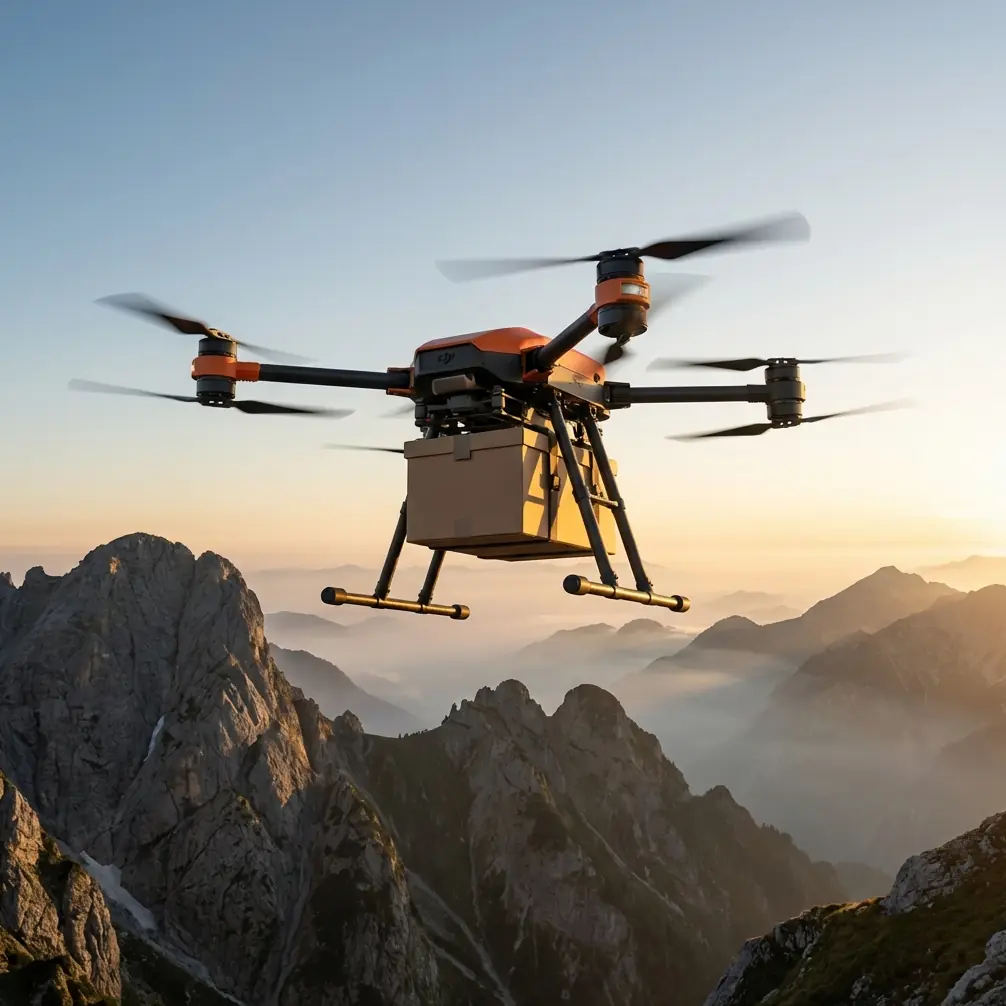
FlyCart 30 Forest Inspection Tips: What Actually Matters When the Worksite Is Deep, Wet, and Far From Roads
META: Practical FlyCart 30 forest inspection tips for remote operations, covering payload ratio, winch use, BVLOS planning, route optimization, dual-battery strategy, and emergency parachute considerations.
Remote forest inspection exposes every weak point in an aircraft program.
I learned that the hard way on a utility corridor survey that cut across steep timberland, soft ground, and long stretches with no practical vehicle access. On paper, the mission looked simple: move sensors, spare batteries, line samples, and small tools between temporary field teams while keeping inspection progress moving. In reality, the terrain turned every hand-carried kilogram into wasted time and operator fatigue. The aircraft we had then could fly, but it could not support the pace of the job. Payload was too limited, battery swaps came too often, and landing options were poor under dense canopy edges and uneven clearings.
That is where the FlyCart 30 starts to make sense for forestry and remote inspection work. Not as a flashy aircraft spec sheet, but as a field logistics tool that closes the gap between the truck you cannot get in and the crew you cannot afford to stall.
This article is not a generic overview. It is a practical look at how I would set up FlyCart 30 operations for remote forest inspection, based on what actually slows these jobs down: access, lift capacity, safe delivery in awkward terrain, route repetition, and keeping operations stable when weather and geography stop cooperating.
Start with the real bottleneck: moving useful weight into difficult terrain
In remote forest inspection, the aircraft is rarely carrying just one thing.
A crew may need a thermal camera one hour, replacement handheld radios the next, then sample containers, rope, hand tools, or a compact sensor package after that. The question is not simply “What is the maximum payload?” The better question is “How much of the mission can this aircraft remove from human carrying effort per sortie?”
That is where payload ratio matters.
A strong payload ratio changes the economics of an inspection day. If the airframe is efficient enough to carry a meaningful percentage of what field staff actually use, you reduce repeat trips and compress cycle time between teams. In forests, that effect compounds because distance alone is not the issue. Elevation change, unstable footing, creek crossings, mud, and vegetation all magnify the cost of ground transport.
The FlyCart 30’s value in this environment is that it is built around carrying work, not just carrying a camera. For inspection managers, that means you can think in terms of task bundles rather than single-item flights. Instead of sending one flight for a battery and another for a sensor head, you can often consolidate. Fewer launches. Fewer handoffs. Less idle labor.
That is the first principle: use the aircraft to eliminate dead movement, not just to prove the aircraft can fly.
The winch system is not a feature add-on in forests. It is the whole difference.
Forest work punishes aircraft that need neat landing zones.
Many remote inspection sites do not offer one. You may have a narrow break in tree cover, a sloped clearing, wet ground, or brush that makes touchdown risky and inefficient. Even if a landing is technically possible, it may expose the aircraft to branch strikes, rotor wash debris, or awkward manual loading in cramped spaces.
This is why a winch system matters so much.
A properly used winch turns the aircraft from a transport platform into a standoff delivery tool. You hold a safer hover above the rough area, lower the payload into the usable pocket, and avoid forcing a landing where the terrain has already told you not to. In practical terms, that means your field teams can receive equipment closer to their actual work position instead of hiking to whatever improvised drop zone the aircraft can physically land on.
Operationally, the significance is huge:
- It reduces touchdown risk in irregular terrain.
- It speeds up deliveries where no clean landing pad exists.
- It helps preserve aircraft reliability by avoiding repeated landings on wet, unstable, or debris-laden surfaces.
- It keeps rotor systems farther from branches and undergrowth during the most vulnerable phase of flight.
For forest inspectors, that translates into cleaner workflows. If your team is checking tree health, corridor encroachment, slope conditions, or remote infrastructure, the winch allows the aircraft to serve the team where they are, not where the terrain is convenient.
BVLOS thinking starts long before the aircraft leaves the ground
Remote forestry operations often tempt teams into stretching visual line of sight because the geography is expansive and the road network is poor. That is exactly why BVLOS planning, where permitted and properly managed under local rules, should be treated as a structured operational discipline rather than an improvisation.
The real challenge is not distance by itself. It is terrain masking, changing microclimates, and limited recovery options.
In forested areas, hills, ridgelines, and dense vegetation can interfere with your assumptions about route continuity and emergency handling. A mission that looks simple on a map can become operationally fragile if it crosses drainage basins, wind funnels, or patchy communications coverage. So the FlyCart 30 works best in this context when paired with route planning that accounts for:
- launch and recovery fallback points
- known canopy gaps or safe lowering zones
- battery reserve thresholds by terrain segment
- communications consistency across elevation changes
- alternate delivery logic if a receiving team has to relocate
This is where route optimization stops being a software checkbox and becomes a field productivity tool. A good route is not the shortest line on the display. It is the line that preserves margin.
I advise teams to split forest routes into operational zones. Each zone should have a known risk profile: open access edge, mixed canopy transition, ridge crossing, sheltered lowland, or crew-served hover point. Once you structure routes that way, you can assign battery reserve expectations, delivery methods, and contingency actions to each section. That reduces in-flight decision pressure and helps standardize repeat missions.
If your team is building a forest inspection workflow around FlyCart 30 and wants a practical setup discussion, I would point them to this direct field coordination channel: message a drone logistics specialist here.
Dual-battery strategy is not just about endurance. It is about operational continuity.
A lot of buyers hear “dual-battery” and think only in terms of flight time. That is too narrow for forest inspection.
In remote jobs, continuity matters as much as endurance. When crews are staged far from access roads, interruptions become expensive quickly. A delayed delivery can pause inspection progress, force a team to ration device power, or push a day’s schedule into deteriorating weather.
Dual-battery architecture helps on two levels.
First, it supports the practical energy demands of carrying useful payloads over meaningful distances. That matters, obviously. But second, it supports a more resilient field rhythm. The operator can build cleaner sortie planning around known battery management cycles, reducing the stop-start disorder that often ruins productivity in rough terrain.
The significance becomes clear when you compare aircraft operations to truck-based support. A truck loaded with gear may be parked miles away because the route ahead is impassable. In that situation, the drone becomes the last-mile logistics layer. If its power strategy is unstable, the entire remote support chain becomes unstable.
For that reason, I recommend planning battery use around mission windows, not around maximum numbers. In other words:
- assign batteries to route classes rather than ad hoc flights
- reserve matched sets for heavier loads or ridge-crossing sorties
- protect a separate reserve pool for weather delays and return-to-base contingencies
- avoid mixing mission-critical transport with casual nonessential flights during the same battery cycle block
That discipline is what turns an aircraft into a dependable field asset.
Emergency parachute planning should be treated as part of site access design
Forests are forgiving in some ways and unforgiving in others.
They can provide open low-population operating environments, but they also complicate emergency response. If an aircraft has an issue over dense canopy, retrieval may be slow, visual confirmation may be limited, and ground access may be poor. That is why an emergency parachute should not be discussed as a brochure safety item. It has real planning value in remote inspection work.
The significance is straightforward: if you are operating in hard-to-access zones, every layer that improves controlled emergency outcomes matters more because your recovery options are weaker. A parachute system can support risk mitigation in areas where terrain limits normal emergency landing choices.
But the operational point many teams miss is this: having an emergency parachute should influence how you design your route corridors. You should ask:
- If deployment were needed here, where would the aircraft likely descend?
- Can the crew reach that area?
- Would canopy density complicate retrieval?
- Are there corridors that reduce the chance of losing the aircraft in inaccessible timber?
- Does the route cross any water, ravines, or unstable slopes that change the consequence profile?
Those are not abstract questions. In a remote forest mission, aircraft retrieval can consume half a day or more. Good route optimization reduces that risk before the first launch.
Build your inspection workflow around repeatable drops, not one-off hero flights
The worst remote flight operations often look impressive in the moment.
A pilot threads a difficult route, improvises around weather, and gets the payload in. Everyone applauds. Then the team realizes the process cannot be repeated consistently for the next ten sorties.
Forestry inspection does not need heroics. It needs repeatability.
The FlyCart 30 is strongest when you standardize around recurring mission patterns:
- base to ridge crew resupply
- roadside staging to canopy-edge hover drop
- base to sensor replacement point
- sample extraction from temporary forest stations
- battery and tool shuttle to split field teams
Once those routes are defined, you can optimize them for load type, delivery altitude, battery consumption, and turnaround sequence. You are no longer “using a drone.” You are operating an aerial support lane.
That shift in mindset matters because it determines whether the aircraft saves time all season or only on a few dramatic days.
A note on the wider drone industry: manufacturing scale matters, but field performance matters more
Recent reporting in the drone sector has highlighted how governments are willing to exchange massive resources to secure drone production capability. One widely discussed example described a deal framed around 4 tons of gold in exchange for a drone production line, with the explicit goal of strengthening domestic manufacturing capacity and closing technology gaps.
For commercial operators, the takeaway is not geopolitical. It is practical.
It shows how seriously drone production capacity is now being treated worldwide. Aircraft are no longer niche tools. They are infrastructure. But for a forestry inspection team, factory output by itself does not solve the field problem. What matters is how the platform performs in real operating conditions: difficult access, repeated logistics cycles, constrained landing options, and long support chains.
That is why aircraft selection should be tied to mission friction. If your recurring obstacle is terrain access, a cargo platform with a winch system and a solid payload ratio has more operational value than a platform chosen only because it looks advanced on paper. If your challenge is keeping remote teams supplied without constant road repositioning, then dual-battery continuity and route structure become more important than isolated top-line claims.
The market may be expanding because nations recognize drone manufacturing as strategically significant. Field crews still win or lose based on whether the aircraft can lower a useful load into a muddy forest opening without wasting half the shift.
My practical setup checklist for FlyCart 30 in remote forest inspection
If I were deploying the FlyCart 30 for this job category tomorrow, I would keep the checklist brutally simple:
1. Define the payload classes first
Do not start with route maps. Start with what the crews actually need moved: sensors, power, tools, samples, communications gear, and emergency field items.
2. Match route design to delivery method
Some forest points are landing friendly. Most are not. Pre-classify locations for touchdown, winch delivery, or no-go status.
3. Build routes around margin, not distance
A shorter line through bad terrain is often the weaker route. Use corridors that preserve communications, recovery options, and safe lowering zones.
4. Organize battery cycles around mission priority
Keep critical support sorties insulated from low-priority flights. Remote crews should never lose delivery support because someone burned a good battery set on convenience work.
5. Use repeat mission templates
The faster your team can execute the same delivery pattern cleanly, the more value the aircraft creates across a long inspection campaign.
6. Plan emergency descent and retrieval logic in advance
If the aircraft cannot be retrieved quickly from a route segment, that route deserves more scrutiny or a redesign.
The real advantage
The FlyCart 30’s advantage in forest inspection is not that it makes remote work easy.
Remote work stays difficult. What it does is remove the least productive part of the difficulty: carrying necessary equipment through terrain that does not care about your schedule. When the aircraft can move meaningful loads, lower them precisely with a winch, support organized BVLOS-style route planning where appropriate, and maintain continuity through a disciplined dual-battery approach, the inspection team spends more time inspecting and less time surviving logistics.
That is the difference that matters.
Ready for your own FlyCart 30? Contact our team for expert consultation.