
FlyCart 30 for Remote Forest Inspection: A Practical Field
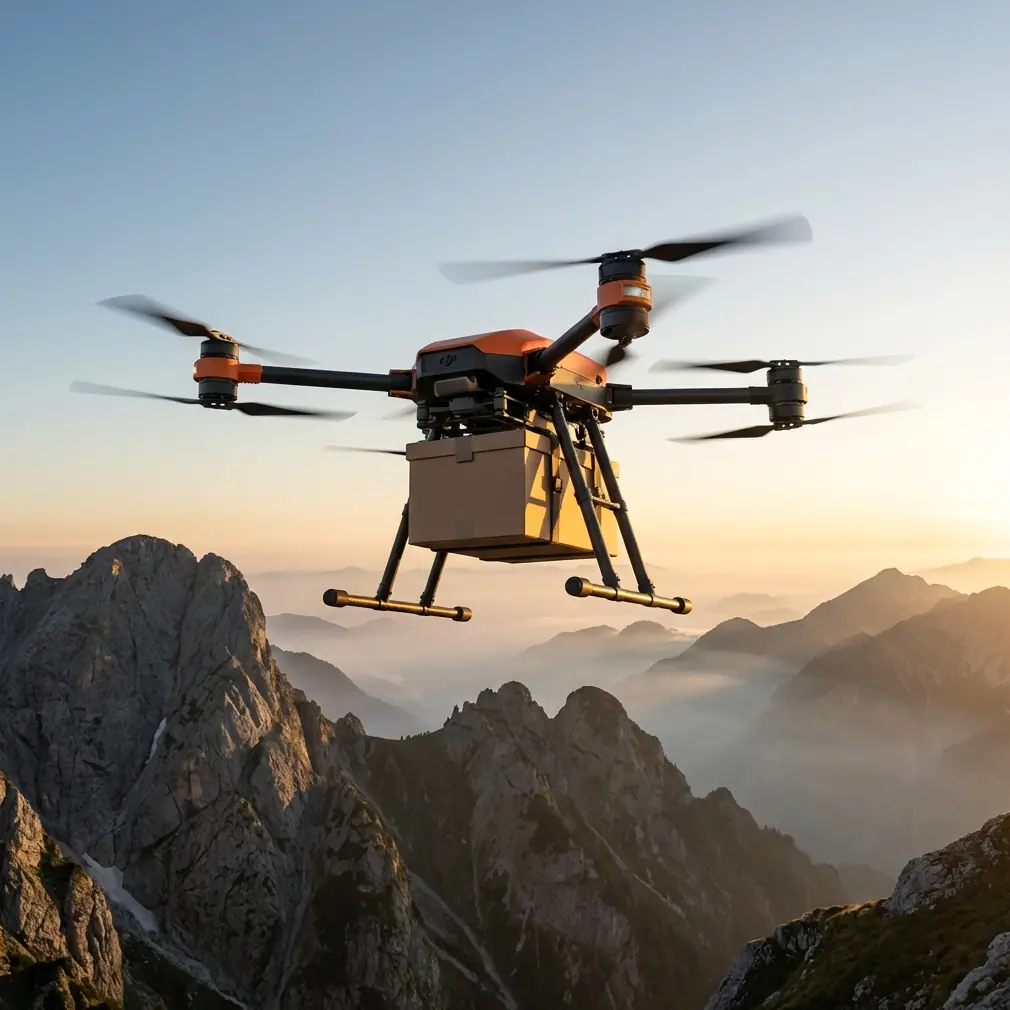
FlyCart 30 for Remote Forest Inspection: A Practical Field Method That Holds Up When Access Doesn’t
META: A field-focused guide to using the FlyCart 30 for remote forest inspection, covering payload ratio, winch workflows, route optimization, BVLOS planning, dual-battery endurance, and why supply-chain reliability now matters more than ever.
Remote forest inspection rarely fails because the aircraft cannot fly. It usually fails because the whole job system breaks down around the aircraft.
A road washes out. A survey team cannot reach a ridge line before weather moves in. A sensor swap that looked simple on paper becomes a two-hour climb with safety exposure and daylight slipping away. I have spent enough time coordinating field logistics to know that the aircraft is only one part of the equation. The real question is whether the platform reduces the number of fragile links in the operation.
That is where the FlyCart 30 starts to matter.
This is not just about lifting gear into the woods. For remote inspection work, especially in large forest blocks, the value of a delivery-capable drone is that it changes how teams stage equipment, how fast they recover from missed data, and how safely they work around terrain that punishes every unnecessary footstep. If you are inspecting forest assets, canopy health zones, utility corridors through timber, remote monitoring stations, or environmental instruments placed far from vehicle access, the FlyCart 30 can become less of a “transport drone” and more of a force multiplier for your inspection workflow.
The field problem most teams underestimate
A lot of remote inspection plans assume that once the drone crew reaches a launch point, the hard part is over. That is rarely true in forests.
The hard part is often the middle layer between launch and outcome:
- getting replacement sensors or batteries to a remote station
- moving small inspection tools into a clearing without landing space
- retrieving samples or damaged equipment
- servicing repeat checkpoints across uneven terrain
- keeping crews out of hazardous slopes, wet ground, or dense canopy transitions
I remember one project where the airframe was ready, the imaging plan was ready, and the client expected same-day confirmation from three remote sites. What stopped progress was a basic logistics bottleneck: one station needed a replacement module, another required a fresh power pack, and the third had no safe landing area nearby. We spent more energy solving access than collecting inspection data.
A platform like the FlyCart 30 changes that balance because it lets the logistics lead think in aerial supply terms, not just flight terms.
Why the FlyCart 30 fits remote forest inspection better than people expect
The common misunderstanding is that a cargo drone only matters when payloads are heavy. In forest inspection, payload ratio is often more important than absolute weight.
If a drone can carry the right percentage of your mission-critical kit relative to its total deployment burden, you stop making compromises that degrade the inspection itself. Instead of choosing between spare power, replacement instrumentation, basic rigging tools, and communication equipment, you can design cleaner field packages and move them where they are needed.
That matters because forest inspection jobs are often modular. One site may need a thermal unit. Another may need a compact LiDAR accessory, a weather sensor, line kit, sample container, or radio repeater support. A strong payload ratio means fewer split runs and less crew repositioning.
For operators in remote environments, this has a second-order benefit: route optimization becomes practical. Rather than flying ad hoc support missions after something goes wrong, you can structure the day around preplanned drops, timed inspections, and staged recovery windows. The aircraft is not just reacting. It is feeding the inspection sequence.
The winch system is more than a convenience
Forests are full of poor landing geometry.
You may have canopy gaps that look usable from satellite imagery but turn out to be obstructed by deadfall, stumps, rocks, or slope changes. You may have a narrow service corridor through timber with enough vertical access for delivery but not enough horizontal clearance for a safe touchdown. In those situations, a winch system is not a nice extra. It is the mission enabler.
The operational significance is straightforward: the winch lets you deliver or retrieve equipment without committing the aircraft to the ground. That reduces rotor-risk exposure near brush, avoids unstable touchdown zones, and preserves options when the target area is tight or uneven.
For remote forest inspection, that translates into several practical uses:
1. Dropping service kits to remote monitoring points
If a wildlife camera, weather node, or environmental logger needs a battery or component swap, the crew can lower the exact package needed without sending a technician into difficult terrain immediately.
2. Recovering samples or failed components
When a field team already on site needs to send material or defective parts back to the launch area, the same system supports reverse logistics.
3. Supporting ridge and gully operations
Terrain funnels wind, blocks access, and creates deceptive landing conditions. A controlled cable delivery can be much safer than a marginal landing attempt.
This is one of those features that looks secondary in a brochure and becomes central in actual field planning.
Dual-battery design matters because remote work punishes weak margins
In forest environments, endurance is never just a matter of airtime. It is a matter of mission margin.
A dual-battery setup is operationally significant because remote inspections almost always involve some combination of distance, hover precision, elevation changes, and weather variability. You want redundancy and stable power planning, not a setup that leaves the crew guessing whether one extra delivery leg will force an early return.
The real advantage is not simply “longer flights.” It is smoother decision-making.
When teams trust the power system, they can:
- hold a hover while lowering or lifting gear
- maintain reserve for reroutes around wind or canopy issues
- absorb minor schedule disruptions without scrapping the afternoon
- stage support runs between inspection tasks instead of separating them into different deployment days
In my experience, every reliable power margin you build into a forest operation shows up as a safety gain somewhere else. Fewer rushed choices. Fewer awkward landings. Fewer field improvisations with tired crews.
BVLOS changes the economics of forest inspection planning
For large forest tracts, visual-line-only workflows hit a ceiling fast. You can still perform useful work, but you end up leapfrogging crews, relocating launch points too often, and burning time on repositioning rather than inspection.
That is why BVLOS matters in this conversation. Not as a buzzword, but as an operations model.
If your regulatory framework and approvals support BVLOS operations, the FlyCart 30 becomes significantly more valuable for remote forest inspection because it allows logistics runs to align with wider-area survey plans. A crew can support distributed inspection points across a broader footprint without physically chasing the aircraft through the woods.
The gain is not abstract. It shows up in three places:
Fewer launch relocations
Each relocation in forest work carries setup time, travel time, and new site-risk assessment.
Better route optimization
You can build efficient aerial corridors between inspection nodes, support points, and recovery areas.
Stronger response to exceptions
If an inspection reveals an unexpected issue, the aircraft can carry the needed item directly to the relevant area rather than forcing a full ground response.
For readers dealing with remote forest assets, BVLOS is often the bridge between “we can test this method” and “we can operationalize this method.”
How I would structure a FlyCart 30 forest inspection mission
If I were building a repeatable workflow around this platform, I would keep it disciplined.
Step 1: Separate inspection payloads from support payloads
Do not mix every task into one airborne concept. Divide the mission into:
- data collection flights
- logistics support flights
- contingency response flights
The FlyCart 30 adds value when it carries the support burden that normally interrupts your inspection sequence.
Step 2: Build route optimization around terrain, not map distance
A short straight-line route can still be inefficient if it crosses poor airflow, dense canopy transition, or steep elevation changes. Plan corridors that protect energy reserves and make winch drops more predictable.
Step 3: Pre-package field kits by failure mode
Create compact kits for the problems that actually happen:
- power replacement
- sensor replacement
- communications support
- retrieval of damaged or wet equipment
- emergency field consumables for inspection crews
This is where payload ratio becomes practical, not theoretical.
Step 4: Use the winch for “no-landing” doctrine unless landing is clearly better
If the site is constrained, assume winch delivery first. Forest floors are messy, and touchdown confidence is often lower than expected.
Step 5: Keep battery policy conservative
Dual-battery architecture gives breathing room, but remote forest operations still deserve strict reserve thresholds. The best logistics mission is the one that does not force a second problem.
Step 6: Design for reverse flow
A lot of teams only plan outbound delivery. Forest inspections also produce inbound movement: failed parts, collected samples, memory cards, small instruments, and damaged accessories. The mission should support both directions.
Why supply-chain reliability now deserves more attention from commercial operators
There is another angle here that many buyers overlook: supportability.
At XPONENTIAL 2026, industry and government leaders described the U.S. drone sector as moving from prototype-driven development into industrial-scale production. That shift matters even if your work is purely civilian. It signals a broader market expectation that drone operations will depend less on one-off hardware availability and more on scalable production and tighter supplier scrutiny.
That keynote roundtable, moderated by Michael Robbins, centered on the need for a scalable drone supply chain and greater scrutiny of suppliers. Strip away the policy context and the lesson for a forest inspection operator is simple: aircraft capability is only half the story. Parts continuity, battery availability, repair turnaround, and vendor reliability now deserve a place in procurement decisions.
For FlyCart 30 users, this is operationally significant in the field. A forest inspection program cannot rely on a platform if maintenance support, replacement components, or training pipelines are inconsistent. Once your workflow starts depending on aerial logistics, downtime ripples across crews, schedules, and client commitments.
That is why the industry’s move from prototypes to industrial production is more than a headline. It reflects a maturing environment where commercial teams can ask harder questions:
- Can this aircraft be supported at scale?
- Are replacement systems available when operations expand?
- Can training and maintenance processes keep pace with deployment?
For remote inspection teams, those are not procurement footnotes. They determine whether the platform stays useful after the demo phase.
A past challenge this model would have simplified
Looking back at one forest assignment, the biggest drag on performance was not data capture. It was service access to remote checkpoints spread across broken terrain. Every small issue triggered a ground intervention. A drained unit battery. A loose field module. A missing adapter. None of those problems were serious on their own, but each one cost time, walking exposure, and momentum.
A FlyCart 30-style workflow would have changed that day in a very practical way.
Instead of dispatching a technician on foot for each interruption, we could have staged battery packs, sensor replacements, and recovery containers at a central launch zone, then moved them by air using a controlled drop method. The result would not just have been speed. It would have been continuity. The inspection sequence would have stayed intact.
That is the hidden advantage of this platform in remote forests. It protects the rhythm of the mission.
Who should think seriously about this setup
The strongest fit is not every drone user. It is operators who face recurring access friction, such as:
- forestry consultants servicing remote instruments
- environmental monitoring teams
- utility inspectors working through wooded corridors
- conservation groups managing dispersed sensors
- infrastructure owners with assets beyond road access
- field teams supporting long-range mapping or monitoring programs
If your inspection operation repeatedly loses time because gear, power, or replacement parts cannot get where they need to go fast enough, the FlyCart 30 deserves a serious look.
If you want to discuss how this kind of workflow could fit your field program, you can message our logistics desk here.
The real takeaway
The FlyCart 30 is most useful in remote forest inspection when you stop thinking about it as a standalone aircraft and start treating it as airborne infrastructure.
Its value comes from the combination of payload ratio, a practical winch system, dual-battery stability, and the ability to support route optimization across hard terrain. Add BVLOS where it is permitted and well managed, and the platform becomes a way to keep inspectors, sensors, and service kits connected over distance without forcing every problem into a ground-access problem.
At the same time, the wider drone industry’s move toward industrial-scale production and tighter supplier scrutiny is a reminder that capability alone is not enough. For serious commercial operators, support chain resilience now matters almost as much as lift capacity or range.
In remote forests, that distinction is not academic. It decides whether the aircraft helps once or keeps helping all season.
Ready for your own FlyCart 30? Contact our team for expert consultation.