
FC30 Highway Inspections: Low-Light Expert Guide
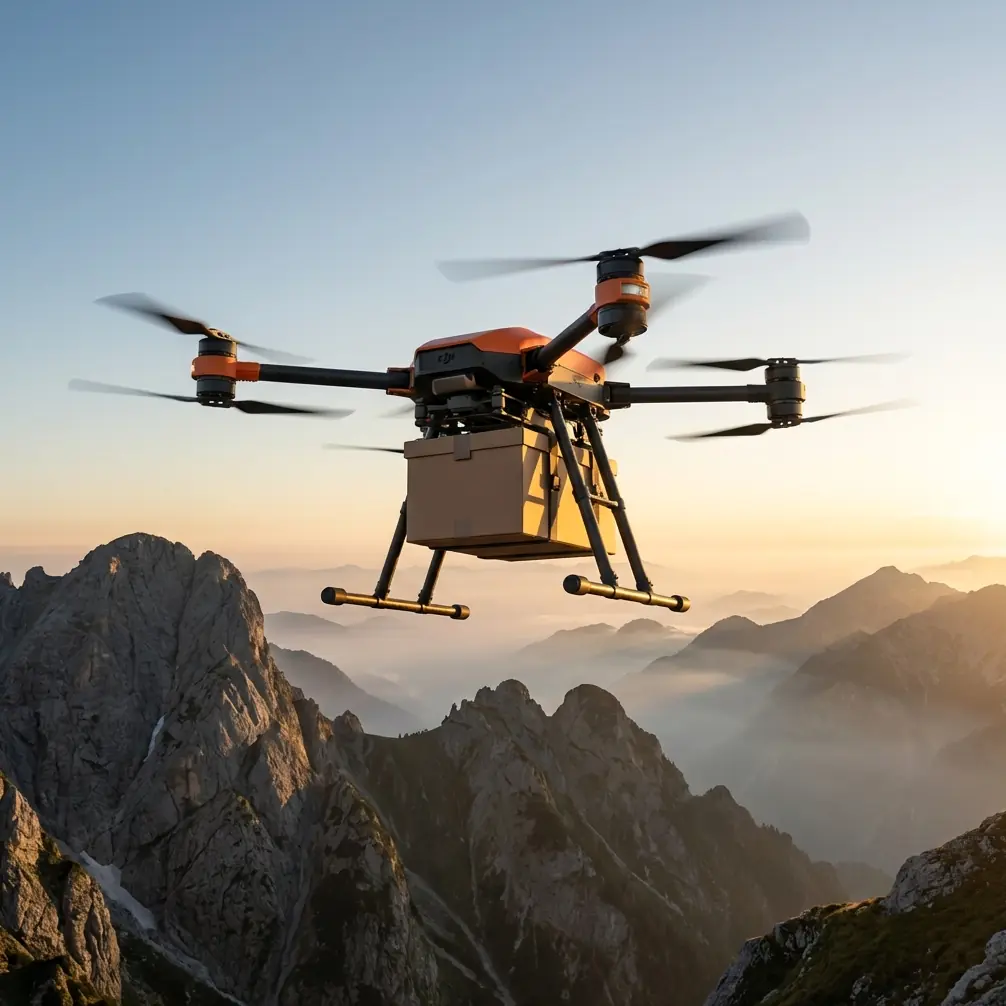
FC30 Highway Inspections: Low-Light Expert Guide
META: Master low-light highway inspections with the FlyCart 30. Expert tips on payload optimization, flight altitudes, and safety protocols for infrastructure monitoring.
TL;DR
- Optimal flight altitude of 80-120 meters provides the best balance between sensor coverage and obstacle clearance during low-light highway inspections
- The FC30's 30kg payload capacity supports thermal imaging and LiDAR systems simultaneously for comprehensive infrastructure assessment
- Dual-battery redundancy ensures mission completion even when lighting conditions extend flight duration requirements
- Emergency parachute system provides critical safety margins when operating near active traffic corridors
Highway infrastructure inspection has entered a new era. Traditional methods requiring lane closures, cherry pickers, and crews working in dangerous proximity to traffic are giving way to drone-based solutions that deliver superior data while keeping personnel safe.
The DJI FlyCart 30 represents a significant advancement for transportation departments and infrastructure contractors tackling low-light highway assessments. This technical review examines how the FC30's capabilities align with the specific demands of highway inspection work, particularly during dawn, dusk, and overcast conditions when traditional visual inspection becomes impractical.
Why Low-Light Highway Inspections Demand Specialized Equipment
Highway infrastructure doesn't stop degrading when the sun sets. Thermal anomalies in bridge decks, pavement stress fractures, and drainage system failures often reveal themselves more clearly during temperature transitions that occur at dawn and dusk.
The challenge lies in capturing actionable data during these optimal windows while maintaining operational safety near active roadways.
Standard commercial drones struggle with three critical limitations:
- Insufficient payload capacity for professional-grade thermal and multispectral sensors
- Limited flight endurance that cuts missions short during extended inspection corridors
- Inadequate redundancy systems for operations near high-speed traffic
The FC30 addresses each limitation through purpose-built engineering decisions that prioritize mission completion and operational safety.
FC30 Technical Capabilities for Highway Applications
Payload Configuration for Infrastructure Assessment
The FC30's 30kg maximum payload capacity transforms what's possible during highway inspections. This isn't about carrying more weight for its own sake—it's about deploying sensor combinations that capture comprehensive infrastructure data in a single flight.
A typical low-light highway inspection payload includes:
- Radiometric thermal camera (3-4kg) for detecting subsurface moisture and structural anomalies
- High-resolution RGB camera (1-2kg) for visual documentation
- LiDAR scanner (2-3kg) for precise dimensional measurements
- Mounting hardware and power distribution (1-2kg)
This configuration totals approximately 8-12kg, leaving substantial margin for additional sensors or extended battery capacity. The payload ratio remains favorable even with full sensor deployment, maintaining the flight characteristics necessary for stable data capture.
Expert Insight: When configuring payloads for low-light operations, prioritize thermal sensors over RGB cameras. Thermal imaging performs consistently regardless of ambient light levels, while RGB quality degrades significantly during twilight conditions. Reserve RGB capture for the brief windows of optimal natural lighting at the beginning or end of your mission.
Flight Altitude Optimization for Highway Corridors
Altitude selection during highway inspections involves balancing multiple competing factors:
- Sensor resolution requirements (lower is better)
- Coverage efficiency (higher covers more ground per pass)
- Obstacle clearance (highway signage, overpasses, power lines)
- Regulatory compliance (airspace restrictions near airports)
For the FC30 operating with typical thermal and LiDAR payloads, 80-120 meters AGL provides the optimal balance for most highway inspection scenarios.
At 80 meters, a standard thermal camera with a 24-degree field of view covers approximately 34 meters of roadway width—sufficient for a four-lane highway with shoulders. Ground sampling distance remains tight enough to detect thermal anomalies as small as 15cm.
At 120 meters, coverage expands to approximately 51 meters, enabling single-pass capture of six-lane highways with medians. Resolution decreases proportionally, but remains adequate for identifying major structural concerns.
| Altitude (m) | Coverage Width | Thermal GSD | Best Application |
|---|---|---|---|
| 60 | 23m | 3.2cm | Bridge deck detail |
| 80 | 34m | 4.3cm | Four-lane highways |
| 100 | 42m | 5.4cm | Six-lane highways |
| 120 | 51m | 6.4cm | Interchange overview |
| 150 | 64m | 8.0cm | Corridor planning |
Pro Tip: During low-light operations, increase your standard altitude by 10-15 meters to provide additional reaction time for obstacle avoidance. The FC30's obstacle sensing performs well in reduced lighting, but additional altitude margin compensates for any sensor degradation during twilight conditions.
BVLOS Considerations for Extended Corridors
Highway inspection routes frequently extend beyond visual line of sight. A 10-kilometer highway segment requires BVLOS authorization for efficient single-mission coverage.
The FC30's route optimization capabilities support pre-programmed flight paths that follow highway alignments precisely. This automation reduces pilot workload during extended missions and ensures consistent data capture regardless of operator fatigue.
Key BVLOS preparation steps for highway operations:
- Airspace coordination with local aviation authorities
- Visual observer positioning at intervals along the route
- Communication protocol establishment between pilot and observers
- Contingency landing zone identification every 2-3 kilometers
- Traffic management coordination with highway operations centers
The FC30's dual-battery system provides the endurance necessary for extended BVLOS missions. With a 28-kilometer maximum range under optimal conditions, single-flight coverage of substantial highway segments becomes practical.
Winch System Applications
While the FC30's winch system sees primary use in cargo delivery applications, highway inspection operations benefit from this capability in specific scenarios.
Bridge inspection often requires sensor positioning below deck level to capture underside structural conditions. The winch enables lowering sensor packages into positions inaccessible to the aircraft itself, expanding inspection coverage without requiring separate equipment.
Additionally, the winch facilitates equipment deployment to inaccessible locations—placing reference markers, retrieving samples, or positioning temporary monitoring equipment along highway corridors.
Safety Systems for Traffic-Adjacent Operations
Operating drones near active highways introduces risks that demand robust safety systems. The FC30 incorporates multiple redundancies specifically relevant to these high-consequence environments.
Emergency Parachute Deployment
The integrated emergency parachute system provides a critical safety layer when operating over or adjacent to active traffic. In the event of catastrophic system failure, the parachute deploys automatically, reducing descent velocity to levels that minimize potential damage to vehicles or infrastructure below.
Parachute deployment considerations for highway operations:
- Minimum deployment altitude of approximately 30 meters for full canopy inflation
- Drift calculation based on wind conditions to predict landing zone
- Traffic notification protocols when deployment occurs over active lanes
Dual-Battery Redundancy
The dual-battery architecture ensures mission completion even when individual cells experience issues. During low-light operations when extended flight times are common, this redundancy prevents the mission-ending scenarios that single-battery systems risk.
Battery management best practices for low-light highway work:
- Pre-heat batteries during cold morning operations
- Monitor individual cell voltages throughout the mission
- Plan return-to-home triggers at 35% remaining capacity rather than the standard 25%
- Carry spare battery sets for multi-segment inspections
Common Mistakes to Avoid
Underestimating twilight duration. Low-light windows are shorter than most operators expect. Civil twilight lasts approximately 30-40 minutes depending on latitude and season. Plan missions that can complete within this window rather than assuming you'll have more time.
Ignoring thermal equilibrium timing. The best thermal contrast for pavement and bridge deck inspection occurs 45-90 minutes after sunset when surface temperatures diverge from subsurface conditions. Flying too early captures minimal useful thermal data.
Neglecting traffic pattern analysis. Highway traffic volumes vary significantly by time of day. Early morning inspections may coincide with rush hour in urban areas, increasing risk profiles. Coordinate with traffic management to identify optimal low-volume windows.
Overloading payload capacity. The FC30's 30kg capacity is a maximum, not a target. Operating at 60-70% of maximum payload improves flight characteristics, extends endurance, and provides margin for unexpected conditions.
Skipping pre-flight sensor calibration. Thermal cameras require flat-field calibration before each mission for accurate radiometric data. RGB cameras need white balance adjustment for the specific lighting conditions. Rushing these steps compromises data quality.
Frequently Asked Questions
What lighting conditions are too dark for FC30 highway inspections?
The FC30's obstacle avoidance sensors function effectively down to approximately 1 lux—equivalent to deep twilight conditions. Below this threshold, obstacle detection reliability decreases. For reference, full moonlight provides roughly 0.25 lux, which falls below reliable operation thresholds. Plan missions to complete before astronomical twilight begins.
How does wind affect low-light highway inspection missions?
Wind impacts increase during low-light operations because thermal layers often create unpredictable gusts during temperature transitions. The FC30 maintains stable flight in winds up to 12 m/s, but for optimal data capture during highway inspections, limit operations to conditions below 8 m/s. Higher winds cause image blur and reduce thermal accuracy.
Can the FC30 operate in light rain during highway inspections?
The FC30 carries an IP55 rating, providing protection against water jets from any direction. Light rain operations are technically possible, but moisture on sensor lenses degrades data quality significantly. More importantly, wet conditions alter thermal signatures, making pavement and structural anomaly detection unreliable. Reserve operations for dry conditions when possible.
Low-light highway inspection represents one of the most demanding applications for professional drone operations. The combination of payload requirements, endurance needs, safety considerations, and data quality demands pushes equipment capabilities to their limits.
The FlyCart 30 meets these demands through thoughtful engineering that prioritizes mission success and operational safety. For infrastructure professionals seeking to modernize their highway assessment programs, the FC30 provides the foundation for reliable, repeatable, and safe inspection operations.
Ready for your own FlyCart 30? Contact our team for expert consultation.