
FlyCart 30 Field Report: Best Practices for Highway
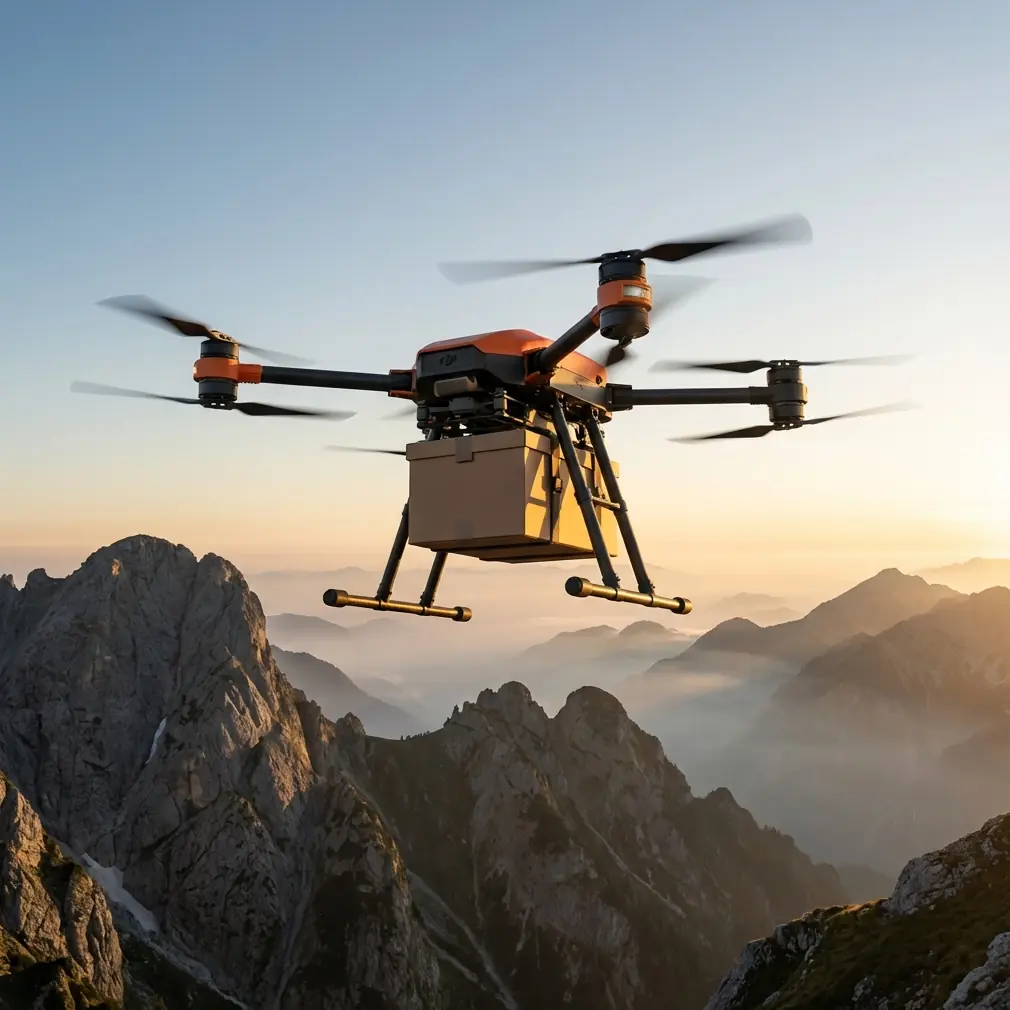
FlyCart 30 Field Report: Best Practices for Highway Inspection in Extreme Temperatures
META: A field-tested FlyCart 30 guide for highway inspection in extreme heat and cold, covering flight altitude, payload ratio, dual-battery planning, winch use, route optimization, BVLOS workflow, and image quality tradeoffs.
Highway inspection sounds straightforward until weather turns hostile. Long corridors of asphalt radiate heat in summer, mountain stretches channel hard crosswinds in winter, and bridge decks create their own turbulence at the worst possible moment. In those conditions, the FlyCart 30 stops being a brochure item and becomes a systems question: payload, energy reserve, route geometry, sensor behavior, and how much margin you keep when the environment starts taking performance away from you.
I’m writing this in the spirit of a field report, not a spec-sheet rewrite. The scenario is specific: inspecting highways in extreme temperatures with the FlyCart 30, where the mission is not only to collect useful imagery and observations, but to do it repeatedly, safely, and with enough consistency that your data remains comparable from one inspection cycle to the next.
That last point gets overlooked. Teams often obsess over endurance or payload, then discover that inspection value lives or dies on image interpretability. And that brings in an unexpected but relevant lesson from camera behavior.
A recent photography discussion compared Canon’s 5D4 DSLR with the R6 Mark III mirrorless line and described the mirrorless files as looking “drier,” while the older DSLR output felt thicker and more saturated. The explanation given was not nostalgia alone. It pointed to three concrete causes: older sensors had lower dynamic range, legacy color tuning pushed saturation harder, and the optical characteristics of lens systems contributed to a richer visual impression. That same logic matters in infrastructure inspection. If your aircraft platform is gathering visual data over hot pavement, shaded culverts, reflective lane paint, and dark expansion joints, the sensor’s rendering style can affect what crews think they are seeing.
In other words, cleaner is not always more legible at first glance.
Why that camera lesson matters on a FlyCart 30 mission
The FlyCart 30 is being evaluated here for highway inspection, not cinematic shooting. Still, image rendering affects defect recognition. On a hot day, high dynamic range can preserve both bright road markings and shadow detail under barriers. That is objectively useful. But teams used to older, more saturated imaging pipelines sometimes interpret modern files as flatter or less “dense.” The photography example above matters because it explains why some operators feel newer captures look less immediate even when they contain more recoverable information.
Operationally, that means two things.
First, don’t judge inspection quality only from the live feed or out-of-camera look. If your team has experience with older visual systems that produce punchier color, recalibrate expectations. Lower dynamic range and stronger saturation can make cracks, edge spalling, or staining appear more dramatic. A modern imaging chain may look restrained while preserving more usable detail for post-flight review.
Second, build your flight profile around consistent lighting angles and altitude so your interpretation is driven by repeatable geometry, not by visual mood. That is where the FlyCart 30’s route planning discipline matters more than people expect.
The altitude insight that improves highway inspection consistency
For this scenario, my preferred working altitude is usually 35 to 60 meters above the roadway corridor, adjusted for terrain, structures, wind, and the specific defect class being checked.
That range is not arbitrary. Fly lower than 35 meters and you often get excellent detail, but the mission becomes inefficient over long stretches. Rotor wash interactions near embankments and bridge edges become more noticeable, and small altitude deviations can create inconsistent image scale. Fly much above 60 meters and some issues lose practical visibility, especially when heat shimmer starts rising off the pavement. In extreme summer conditions, that shimmer can degrade apparent sharpness more than operators expect, even when the aircraft itself is holding position well.
For broad corridor condition scans, around 45 meters is often the sweet spot. It gives enough lateral context to read shoulder condition, barrier transitions, drainage patterns, and pavement anomalies without spending the entire sortie correcting perspective distortion from being too close. For bridge joints, guardrail impact zones, signage mounting points, or slope instability near the highway edge, dropping lower in controlled segments makes sense, but I treat that as a secondary pass, not the baseline cruise altitude.
The real benefit of this altitude discipline is not just image detail. It helps route optimization. If your team standardizes a corridor at one repeatable height band, inspection outputs become easier to compare between hot-season and cold-season flights. That is where trend spotting begins to work.
Extreme temperatures change the payload conversation
A lot of teams think about payload ratio only in terms of “how much can it carry?” In inspection work, the smarter question is “how much are we asking the aircraft to carry relative to the environmental penalty today?”
Extreme temperatures punish margins. In cold conditions, battery behavior changes and your reserve planning must become more conservative. In heat, thermal stress and energy consumption can shift in less obvious ways, especially on long linear missions with repeated accelerations, hover checks, and elevation changes.
That makes payload ratio a live mission variable, not a static capacity number. If your FlyCart 30 is carrying a sensor package, mounting hardware, and any auxiliary inspection tools, the safe and efficient setup is rarely the heaviest one the aircraft can technically lift. For highway work, a moderate payload with more energy reserve usually beats a maximal payload with thinner return margins.
This is where the dual-battery architecture becomes operationally meaningful. Redundancy is only part of the story. The bigger advantage in this use case is planning confidence. In temperature extremes, the dual-battery setup gives you a more resilient envelope for long corridor missions, but only if you fly it like a corridor platform and not like a short-range demo aircraft. Keep your outbound leg conservative, preserve return reserve aggressively, and avoid stacking unnecessary payload just because capacity exists on paper.
Winch system thinking for inspection, not just transport
The winch system is usually discussed in cargo contexts, but for highway inspection it has a practical role in reducing risk around roadside access points, steep shoulders, and bridge-adjacent environments. If a mission requires controlled lowering of a lightweight item to a support crew, sensor marker, or retrieval tool near a difficult access zone, the winch can save a landing cycle and keep the aircraft away from unstable surfaces.
That matters in extreme temperatures because every unnecessary landing or takeoff adds stress to the operation. Softened roadside ground in high heat, frozen gravel shoulders, and gusty overpass wind channels all increase the complexity of touch-and-go field logistics. A well-managed winch procedure can keep the aircraft in a cleaner operational rhythm.
The key point is restraint. Use the winch where it eliminates exposure, not where it adds procedural clutter. Inspection missions win on smooth sequencing.
BVLOS and route optimization along highway corridors
Highway inspection is one of the clearest civilian use cases for BVLOS workflow because the asset itself is linear, repetitive, and geographically constrained. But a highway is also a trap for lazy route design. Long straight segments tempt operators to think simple equals safe. It doesn’t.
A better FlyCart 30 corridor plan breaks the route into thermal and topographic blocks. South-facing mountain roads, open asphalt plains, shaded forest segments, bridge clusters, and interchanges all behave differently. In extreme heat, wide dark pavement amplifies convective turbulence. In cold weather, valley sections can produce abrupt air behavior changes while elevated segments remain comparatively stable.
Route optimization should therefore follow infrastructure behavior, not just map geometry. I recommend segmenting missions by:
- pavement heat exposure
- elevation changes
- structure density
- emergency landing suitability
- signal continuity
- visual line handoff points if multiple observers are involved
This creates more predictable battery management and cleaner decision gates for turning back, descending, or switching to a closer inspection profile.
If your team is refining that kind of corridor workflow, it’s often faster to compare mission architecture directly with an operations specialist through this project chat line.
Why emergency systems matter more in temperature extremes
The emergency parachute should not be treated as a talking point. On a highway mission, especially one conducted over inaccessible shoulders, drainage cuts, or elevated structures, it functions as part of your consequence-management strategy.
High temperatures increase the chance of crews becoming complacent because visibility is often good and the route seems easy to read. Cold-weather missions create the opposite problem: crews become task-saturated by gloves, wind, battery vigilance, and shortened setup tolerance. In both cases, degraded human performance can matter as much as degraded aircraft performance.
An emergency parachute does not replace route discipline or reserve planning. What it does is give the operation another layer of protection when environmental complexity outruns a single-point recovery plan. For a corridor mission over transportation infrastructure, that extra layer has direct operational significance.
Image quality in heat: what crews often misread
Let’s return to the camera point, because it has real field implications.
The source discussion argued that older DSLR output often felt more “oil-rich” because of lower sensor dynamic range and more saturated color algorithms, with lens optics contributing to the effect. In inspection work, modern imaging systems may produce files that look less dramatic but carry more tonal information. On highways in harsh light, that trade can be valuable.
Here’s the trap: crews reviewing imagery from a hot-day FlyCart 30 run may think the footage looks flat, especially if the road surface is bright and the defects are subtle. They compensate by flying lower, lingering longer, or overexposing for visual punch. Often that is the wrong fix.
A better fix is to standardize exposure discipline and inspection timing. Early morning and late afternoon remain the best windows for surface readability if the mission allows it. Midday can still work, but then altitude control and route consistency become even more important because heat distortion is doing part of the image degradation, not the aircraft. This is exactly why I prefer the 35 to 60 meter operating band with a default near 45 meters for first-pass corridor review. It balances detail collection against shimmer, safety margin, and coverage efficiency.
Practical mission template for FlyCart 30 highway inspections
A solid workflow in extreme temperatures looks something like this:
Start with a corridor segmentation brief. Don’t send the aircraft up until the route is divided by thermal risk, terrain complexity, and structure density. Then configure payload only for the data you truly need on that sortie. A better payload ratio leaves room for environmental surprises.
Use the dual-battery setup as a planning advantage, not as permission to stretch the mission. Build return thresholds around the worst segment, not the easiest one. If the route includes bridges or steep access zones, decide in advance whether the winch system will be used and under what trigger conditions. Don’t improvise that mid-flight.
Set a standard altitude profile: broad scan at about 45 meters, lower targeted passes only when a specific defect or structure requires them. Document that altitude in the mission record so future comparison flights mirror it. If operating in summer over dark pavement, expect shimmer to become your limiting factor before nominal camera resolution does.
Finally, keep emergency systems in the planning conversation from the start. The emergency parachute belongs in the same operational frame as observer placement, route segmentation, and battery reserve policy.
The FlyCart 30 is strongest when treated like an inspection platform, not just a heavy-lift drone
That is the central takeaway from this scenario. For highway inspection in extreme temperatures, the FlyCart 30 performs best when you think beyond raw carrying capability. Payload ratio affects endurance margin. The dual-battery design supports resilient planning. The winch system can reduce exposure in awkward roadside environments. BVLOS corridor logic improves efficiency only if route optimization respects thermal and terrain reality. And the emergency parachute matters because long linear missions over infrastructure leave little room for simplistic contingency thinking.
Then there’s the imaging side. The photography reference about the 5D4 and R6 Mark III may seem unrelated at first, but it explains a common field mistake: operators confusing visual richness with useful inspection data. Lower dynamic range and more saturated rendering can make images feel thicker and more immediate. That does not automatically make them better for analysis. On a FlyCart 30 highway mission, consistency, recoverable detail, and disciplined altitude matter more than whether the live image feels “rich.”
That is the difference between flying for impression and flying for infrastructure decisions.
Ready for your own FlyCart 30? Contact our team for expert consultation.