
FlyCart 30 Field Report: What “29 Minutes+” Really Means
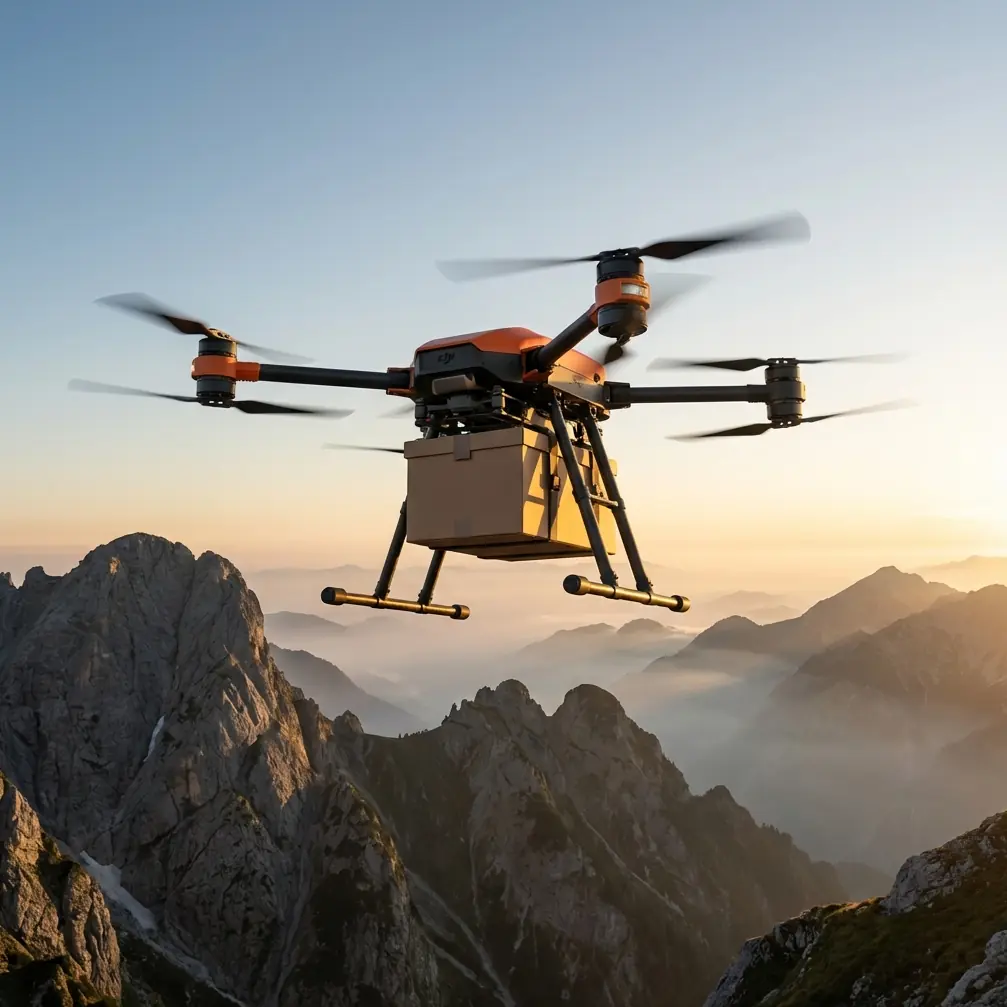
FlyCart 30 Field Report: What “29 Minutes+” Really Means on Urban Solar Farm Inspection Days
META: A field-based FlyCart 30 article for urban solar farm inspection teams, covering endurance misconceptions, payload tradeoffs, winch workflows, route planning, and why real mission time matters more than brochure flight minutes.
I’ve seen smart operators get distracted by the wrong number.
A recent discussion in the Chinese UAV space captured it perfectly. An engineer with years of experience in water-environment monitoring looked at a waterproof drone spec sheet and paused at one line: “29 minutes+.” His reaction was immediate. The aircraft he usually flew for aerial imaging could stay up for more than 30 minutes, so 29-plus sounded slightly underwhelming. The real story, though, was not the missing minute. It was the misunderstanding behind the comparison.
That same misunderstanding shows up when people start evaluating the FlyCart 30 for urban solar farm inspection.
I’m Alex Kim, and from a logistics lead’s perspective, the FC30 only makes sense when you stop treating endurance as an isolated number. Once you put payload, launch geometry, roof access, safety margin, route design, and retrieval method into the same frame, the aircraft becomes much easier to judge properly. On dense city solar sites, that shift in thinking is the difference between an elegant operation and a frustrating one.
The wrong benchmark for the right aircraft
The water-monitoring engineer’s comment matters because it reflects a common habit: comparing unlike aircraft as if all flight minutes are created equal.
They are not.
A camera drone that carries a lightweight stabilized payload on a relatively clean aerodynamic profile is not being asked to do the same work as an industrial platform designed around transport, external-load handling, and operational flexibility. A waterproof aircraft isn’t only solving for time aloft; it is balancing sealing, structural protection, and mission reliability in harsher environments. The same logic applies to the FlyCart 30.
On paper, many teams still begin with the simplest question: “How long can it fly?”
In practice, the better question is: “How much useful work can it complete per cycle without increasing operational risk?”
That is the metric that matters on urban solar assets.
If your inspection program involves moving replacement parts, lifting sensors, dropping test gear to technicians, or servicing hard-to-access roof sections with a winch system, then the payload ratio starts to matter more than the headline endurance figure. If your site is surrounded by neighboring buildings, HVAC clutter, access restrictions, and intermittent GNSS interference, then route optimization and reserve power discipline matter more than a brochure comparison against a lighter aircraft with an easier mission profile.
The lesson from that “29 minutes+” story is simple: endurance numbers are often misunderstood because people ignore what the aircraft is carrying, what environment it is working in, and what task sequence it is expected to complete.
Why urban solar inspection is a logistics problem first
People often describe solar farm inspection as an imaging task. On urban sites, I’d argue it is just as much a logistics task.
Large rooftop arrays spread across warehouses, factories, malls, and mixed-use developments create a fragmented operating environment. The drone team may need to inspect modules, confirm hotspot alerts, move compact tools, place line tags, deliver small spares, or support technicians working on separate roof zones that are physically awkward to access from a central staging area.
That changes aircraft selection.
The FlyCart 30 is not interesting here because it behaves like a standard photo drone. It is interesting because it can help collapse multiple site movements into one coordinated air operation. A platform with dual-battery architecture, cargo-oriented design, and a winch system gives inspection managers options that a pure imaging aircraft does not.
Those options are operationally significant.
A winch-based drop or pickup can reduce the need to land directly on a congested roof section. That sounds minor until you are dealing with narrow service aisles between panel rows, rooftop obstacles, loose debris, and uncertain touchdown zones. In those conditions, avoiding unnecessary landings can save time and reduce risk exposure. The aircraft does not need to commit to every surface it services.
The dual-battery setup matters for similar reasons. Urban solar work is not just about maximum hover time. It is about maintaining confidence in the power system while conducting repeated short sectors, partial-load flights, and reserve-conscious returns. For teams building repeatable SOPs, power redundancy and clear battery management can be more valuable than chasing a nominal endurance advantage that disappears once payload and real-world maneuvering are introduced.
What “real endurance” looks like on an FC30 inspection day
Let’s make this practical.
A rooftop solar team operating in a city rarely performs one long, uninterrupted flight over a clean open field. Instead, the day gets fragmented into micro-missions:
- launching from a constrained staging zone
- transiting around building edges
- pausing for visual confirmation
- lowering a compact sensor or part with the winch
- repositioning to avoid rooftop workers
- returning with conservative battery reserves
- swapping batteries and repeating
That workflow punishes simplistic endurance comparisons.
This is where the “29 minutes+” conversation from the waterproof drone article becomes useful. The engineer initially saw a number that appeared slightly shorter than his usual aircraft. But the article’s core point was that people often misunderstand what endurance actually means. That insight transfers directly to FlyCart 30 operations.
If one aircraft advertises a longer airborne figure under minimal load, and another aircraft completes more useful rooftop tasks per sortie because it can safely lift, lower, and retrieve equipment, which one is more efficient for an urban solar program?
The answer depends on mission design, not emotion.
For FC30 teams, real endurance should be measured as a blend of:
- Transit efficiency
- Payload carried per battery cycle
- Number of rooftop interactions completed
- Safety reserve maintained
- Turnaround speed between sorties
That is a harder metric to fit on a spec card. It is also the only one that matters when your client expects completed work rather than abstract airtime.
The payload ratio question nobody should skip
When operators evaluate the FlyCart 30 for inspection support, I always push them toward payload ratio, not just payload capacity.
Payload ratio is where the mission economics start to reveal themselves. If the aircraft can carry enough useful equipment to justify the sortie without destroying route efficiency or battery planning, then it earns its place in the workflow. If not, you may be using a transport platform for a task that is better handled by a smaller aircraft and a ladder team.
Urban solar sites are ideal for this analysis because most support items are compact but time-sensitive. Thermal check instruments, replacement connectors, lightweight electrical tools, line markers, test kits, and documentation pouches are not individually dramatic. Yet every manual movement of those items across access stairs, lifts, service corridors, or adjacent roof links introduces delay.
A well-managed FC30 deployment changes the rhythm of the site. Instead of sending personnel back and forth, you move the item directly to the work zone, often without exposing more staff to rooftop transit hazards.
That is not a theory. It is operational leverage.
And once you start thinking this way, endurance becomes contextual. A few minutes lost on a raw airtime comparison may be irrelevant if the aircraft saves multiple ground movements and shortens technician idle time.
The winch system is not a gimmick on rooftops
For urban solar inspection, the winch system deserves more respect than it usually gets.
A lot of teams initially think of the winch as a convenience feature. In rooftop environments, it can be the thing that makes the operation workable.
Landing is often the most disruptive part of a cargo-assisted inspection flight. Roof surfaces may be uneven, blocked, thermally turbulent, or occupied. A winch lets the pilot maintain a controlled hover over a safer position while delivering or retrieving a payload vertically. This does three things:
- reduces dependency on questionable landing areas
- keeps rotor wash away from sensitive surfaces and loose debris
- speeds up short service interactions
It also helps with sequencing. If your route plan covers several array blocks across separate rooftop sections, the FC30 can service one technician, climb, transit, and continue to the next handoff point without repeated touchdown cycles. That improves cadence and often simplifies the risk assessment.
One third-party accessory that has made a noticeable difference in this kind of work is a high-visibility suspended load tag line kit built for industrial drone cargo handling. Not glamorous, but useful. It gives the rooftop receiver better visual orientation during lowering, especially against reflective panel backgrounds and bright urban glare. Small accessory choices like that can sharpen handoff accuracy and reduce confusion at the end of the line.
BVLOS thinking matters even when the site looks compact
Even on urban projects that are not executed as full BVLOS operations, BVLOS thinking improves planning.
Why? Because rooftop solar sites distort distance. What appears close on a map can become operationally segmented once you account for height differences, building setbacks, no-fly pockets within the site, worker exclusion zones, and line-of-sight interruptions caused by structural features.
Teams that plan as if every flight were a casual VLOS hop tend to waste battery and attention.
Teams that think in BVLOS terms tend to build cleaner route logic: predefined corridors, known hover points, emergency descent options, delivery zones, and return triggers. That is where route optimization stops being software jargon and becomes field discipline.
The FC30 benefits from this mindset because it is a task aircraft. Its value increases when flights are pre-structured, handoffs are deliberate, and reserve margins are protected. In an urban inspection environment, every unnecessary hover minute is expensive—not because of money in the abstract, but because it consumes your safest options.
Safety systems matter more in cities than in open sites
Solar work in open rural fields gives you room to absorb mistakes. Urban solar work does not.
That is why the emergency parachute conversation should not be treated as a box-ticking exercise. In dense built environments, contingencies need to be designed into the operation, not appended to it. The more rooftop edges, neighboring assets, pedestrian-adjacent areas, and vertical obstructions you have, the more critical your emergency response layers become.
The FC30’s safety profile should be evaluated through that lens.
Not every sortie will require the same degree of caution, but urban inspection programs should assume complexity by default. Payload flights over developed spaces call for disciplined battery thresholds, conservative weather limits, clear rooftop comms, and predefined abort criteria. That may reduce the number of aggressive long flights you attempt in a day. Good. That restraint is part of professional output, not a compromise.
What I’d tell any solar team comparing specs today
If you are reviewing the FlyCart 30 and feel drawn to a single endurance number, go back to the lesson embedded in that recent waterproof-drone discussion.
An experienced engineer saw 29 minutes+ and instinctively compared it to the thirty-plus minutes he was used to seeing on another kind of aircraft. The article argued that this reaction reveals a widespread misunderstanding of endurance itself. I agree.
For urban solar inspection, endurance is not a standalone bragging right. It is mission time after you account for load, safety margin, delivery method, route complexity, and rooftop friction.
That is why the FC30 deserves a field-based evaluation, not a spreadsheet verdict.
Ask harder questions:
- How many technician interactions can it support per battery cycle?
- How much roof access time does it remove?
- Can the winch replace difficult landings?
- Does the dual-battery design improve operational confidence for repetitive sorties?
- Is the payload ratio aligned with your actual inspection support kit?
- Are your routes optimized around reserve power rather than ideal conditions?
If your team is mapping out that workflow and wants to compare accessories, operating patterns, or rooftop deployment setups, I’m happy to share notes here: https://wa.me/85255379740
That kind of conversation is usually more valuable than another argument about whose aircraft stayed in the air one or two minutes longer under unrelated conditions.
The FlyCart 30 is best understood as a productivity platform for constrained industrial environments. On urban solar sites, that means reducing rooftop friction, moving essential gear efficiently, and keeping every sortie tied to a specific operational outcome. Once you evaluate it that way, the endurance question becomes sharper, more honest, and far more useful.
Ready for your own FlyCart 30? Contact our team for expert consultation.