
FlyCart 30 for Solar Farm Inspection in Extreme Temperatures
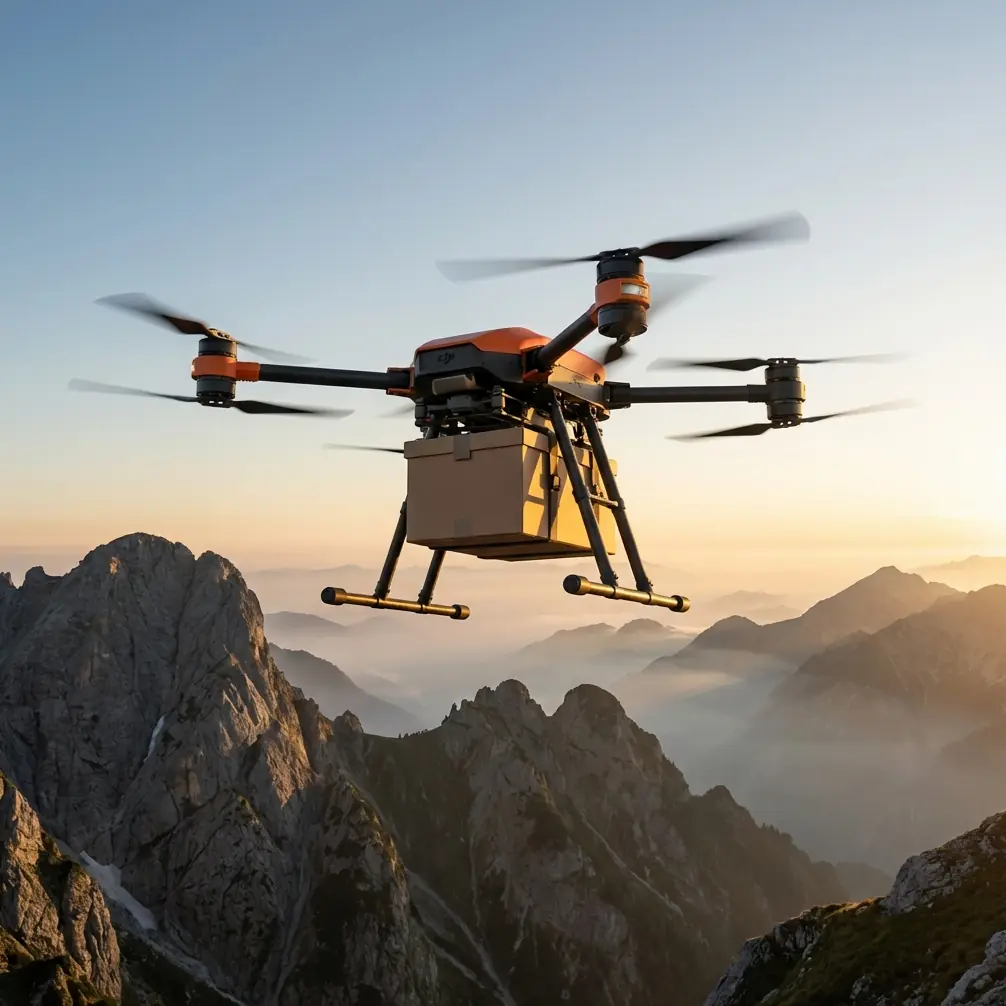
FlyCart 30 for Solar Farm Inspection in Extreme Temperatures: A Technical Review from the Field
META: A field-led technical review of the FlyCart 30 for solar farm inspection in extreme temperatures, covering route discipline, sensor-aware flying, dual-battery resilience, winch workflows, and image quality practices that affect usable inspection data.
When people talk about heavy-lift drones, the conversation usually stops at payload. That misses the real question for utility-scale solar work: can the aircraft keep producing usable inspection data after hours in punishing heat, reflective glare, dust, and long repetitive routes?
That is where the FlyCart 30 becomes interesting.
I’m writing this from the perspective of a logistics lead who spends more time thinking about workflow failure points than headline specifications. On a solar farm, the drone is not there to look impressive. It needs to move through large sites predictably, stay stable in difficult thermal conditions, support repeatable route planning, and preserve enough image fidelity that the inspection team is not forced into a second pass. If the aircraft has a winch system, dual-battery architecture, emergency parachute, and the operational envelope for BVLOS-aligned planning, those features only matter if they reduce friction in real site conditions.
The FlyCart 30 has been discussed mostly in transport terms, but for solar inspection support, its value is broader. It can carry tools, drop small field items by winch to technicians without forcing a vehicle detour, and support long-route logistics around maintenance events. For extreme-temperature solar farms, that combination matters more than many buyers initially realize.
Why solar inspection stresses a drone differently
A solar site in mild weather is straightforward compared with one under temperature extremes. Heat shimmer degrades visual confidence. Panel surfaces reflect and scatter light in ways that can confuse less disciplined image capture routines. Dust accumulates fast. Battery behavior becomes a planning variable, not an afterthought. Ground crews may be spread across long corridors of infrastructure, and every unnecessary trip adds time and heat exposure.
That is why route optimization is not just an efficiency term. On a large solar farm, route design determines whether the aircraft returns with consistent data and safe energy margins, or whether the team slowly drifts into improvised operations. The FlyCart 30’s relevance here is tied to the broader system around it: battery swaps, staging logic, dispatch timing, and the ability to support technicians without repeatedly repositioning ground vehicles.
Payload ratio comes into the conversation because inspection is rarely a single-task mission. A drone may need to carry sensors, field consumables, spare parts, or a communications aid for a remote maintenance team. If the aircraft can handle those additions without turning every mission into a compromise between endurance and utility, it starts to earn its place in solar operations.
Extreme temperatures expose weak operating habits
One of the least glamorous truths in drone inspection is that image quality often collapses because of basic preparation errors. That sounds minor until you realize how often a mission’s value depends on small details being visible in the final record.
A recent photography reference outside the drone world made a simple point that applies directly to inspection work: before capture, clean the lens with a soft cloth. Fingerprints and oil residue noticeably reduce sharpness. It also advised turning off beauty effects and built-in filters because they erase delicate texture and distort real surface detail.
That advice was written for photographing flowers on a phone, but the operational lesson carries over cleanly to solar inspection. If your field tablet, mobile backup device, or supporting handheld capture tool has a smeared lens, you are introducing preventable blur into site documentation. If software enhancements are left on, subtle surface evidence can be softened or altered. On solar assets, that can mean reduced confidence in fine-grain observations around panel condition, labeling, connectors, and maintenance verification images.
The significance is bigger than it sounds. In extreme heat, crews want to minimize repeat walks and repeat launches. A dirty lens can trigger a reshoot. A cosmetic image filter can flatten texture that the engineering team needed preserved. Those are not creative mistakes. They are workflow mistakes.
I now treat preflight image integrity checks as part of the logistics chain. That includes aircraft optics, payload sensors, and any phone-based capture devices used by ground staff. If a technician documents a suspected fault from the array level with a phone, that evidence should be clean and unprocessed. The same goes for secondary records captured during a FlyCart-supported maintenance event.
The FlyCart 30’s winch system is more useful on solar sites than many expect
Most people look at a winch system and think about delivery. On solar farms, I think about interruption control.
If a technician is two sections away from the nearest access road and needs a lightweight tool, connector, label pack, test accessory, or cooling supply, a winch-equipped drone can remove a slow vehicle loop from the day. In extreme temperatures, that is not a luxury. It reduces human exposure and keeps maintenance windows tighter.
This is one area where the FlyCart 30 has practical operational significance beyond headline capability. A controlled lowering system lets the aircraft remain clear of obstacles while placing items where ground access is awkward or inefficient. That can be safer and faster than landing near dense equipment or making a worker cross active work areas unnecessarily.
The result is not just time saved. It is route discipline preserved. Instead of breaking the day’s inspection plan to service a field request, the drone operation can integrate support drops into a structured schedule. That matters on sites where multiple teams share airspace expectations and movement plans.
Dual-battery architecture is not just about redundancy
On hot solar farms, battery performance and swap cadence shape the whole day. A dual-battery design is often discussed as a resilience feature, and that is true. But in logistics terms, it also helps standardize planning.
When temperatures are high, every percentage point of available energy becomes more valuable because margins get consumed by environmental stress, hover demands, and the simple reality that things rarely run exactly on paper. Dual-battery systems support continuity and reduce the chance that one weak battery event turns into a mission-level disruption.
For solar inspection support, that has operational significance in three ways.
First, it improves dispatch confidence for longer route segments. Second, it makes battery management more predictable across repeated sorties. Third, it supports safer decision-making when conditions start drifting away from ideal assumptions.
None of this removes the need for conservative planning. It just means the aircraft is better aligned with a professional operating model where energy margins are built, not guessed.
BVLOS thinking starts before takeoff
Whether a specific site operation is conducted under BVLOS authority or under a workflow designed to be BVLOS-ready, the planning mindset is the same: structure the route, define contingencies, and eliminate unnecessary improvisation.
The FlyCart 30 fits this mode well when used as part of a disciplined solar program. Large farms reward repeatable corridors, consistent launch points, and predictable service loops. The more stable the operation, the easier it is to maintain inspection quality over time.
Route optimization is often framed as a software problem. It is partly that, but on solar sites it is also a physical layout problem. Array geometry, service roads, inverter positions, substation boundaries, and crew locations all influence the best route. A heavy-lift platform like the FlyCart 30 earns its keep when those routes include support tasks, not just airborne observation.
If one sortie can combine inspection-adjacent logistics with planned movement between site sectors, the aircraft is doing more than flying. It is compressing site friction.
A field moment that changed how I evaluate sensors
During one late-afternoon pass near the perimeter of a desert-edge solar installation, we had an unexpected wildlife encounter: a fox moved out from between low scrub near a maintenance corridor just as the aircraft was repositioning for a support drop. It was not dramatic, but it was exactly the kind of real-world event that reveals whether your sensor awareness and flight discipline are genuine or just theoretical.
The aircraft’s sensing and obstacle-awareness behavior gave us enough warning margin to slow the movement, hold position, and adjust the path rather than forcing a rushed descent profile. That matters on solar sites because wildlife is not rare. Birds, foxes, rabbits, and other animals often move through utility-scale installations. A drone working close to infrastructure needs to navigate those variables without destabilizing the mission.
That incident reinforced something I now factor heavily into reviews: sensor systems are not only about avoiding equipment. They help keep operations calm when the environment adds a moving variable you did not script into the route.
Emergency parachute systems belong in serious utility conversations
An emergency parachute is one of those features that too many people mention without discussing context. On a solar farm, context is everything.
These sites are full of high-value assets, distributed electrical infrastructure, and technicians who may be working far from central staging. If an aircraft fault develops, controlled risk reduction matters. An emergency parachute does not solve every scenario, but it represents a meaningful safety layer in a sector where a falling aircraft can damage equipment, interrupt work, or create secondary hazards.
For a platform like the FlyCart 30, that safety architecture is not a marketing accessory. It is part of why larger commercial operators can justify integrating the aircraft into more demanding workflows.
Inspection quality is a systems issue, not a camera issue
A lot of teams still think inspection quality is mostly determined by the drone sensor itself. That is too narrow.
Quality is shaped by preflight cleanliness, route consistency, thermal timing, operator restraint, and the discipline to avoid processing shortcuts that destroy evidence. That is why the earlier photography reference about cleaning a lens and disabling beautification and filters deserves attention here. It may sound unrelated to drones, yet it captures a universal truth: small capture habits have large downstream consequences.
At a solar farm, if your support phone has beautification active, the device may smooth away texture in a close-up of a connector housing or panel edge. If a filter changes tonal relationships, it can confuse later review. If a lens is dirty, clarity drops before the image ever reaches the analyst. These are controllable variables.
I recommend treating every supporting capture device in the FlyCart 30 workflow like an inspection instrument. Clean lens. No beauty mode. No filters. Document reality, not a prettier version of it.
Where the FlyCart 30 fits best
For solar farms in extreme temperatures, the FlyCart 30 is strongest when used as an operational bridge between inspection and field logistics. It is not merely a cargo aircraft and not merely a platform adjacent to inspection. It can reduce travel inefficiency, support remote technicians, preserve maintenance momentum, and work inside a more structured route strategy for large sites.
Its most meaningful traits in this environment are not flashy. They are practical:
- a winch system that helps avoid unnecessary landings and vehicle detours
- dual-battery thinking that supports steadier mission planning
- sensor awareness that helps with unscripted environmental variables, including wildlife movement
- emergency parachute protection that belongs in serious utility risk planning
- compatibility with route-driven operations that can scale toward BVLOS-style discipline
If you’re assessing whether the aircraft belongs in a solar workflow, focus less on the headline lift story and more on whether it reduces rework, travel, heat exposure, and route disruption. That is where the operational return tends to show up.
For teams building out procedures or comparing deployment setups, I usually suggest starting with mission design and field documentation standards first, then matching the aircraft profile to that model. If you need a direct discussion around solar-site routing, payload tradeoffs, or support-drop workflows, you can reach the operations desk on this FlyCart 30 field channel.
The FlyCart 30 makes the most sense on solar assets when the operator thinks like a logistics engineer rather than a gadget buyer. Extreme temperatures punish weak process. Large sites punish improvisation. And inspection programs only create value when the captured data is trustworthy enough to act on the first time.
That is the standard this aircraft should be judged against.
Ready for your own FlyCart 30? Contact our team for expert consultation.