
How to Inspect Remote Venues Safely with FlyCart 30
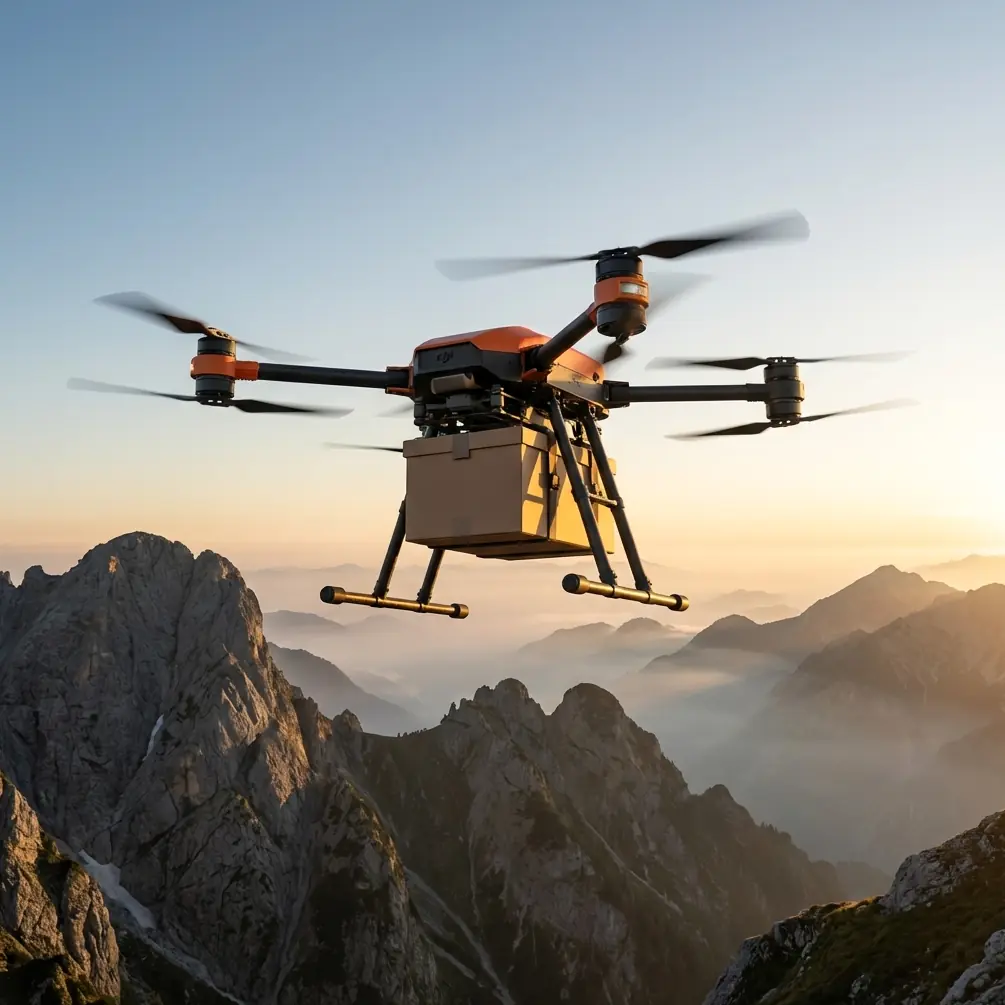
How to Inspect Remote Venues Safely with FlyCart 30
META: Learn how the DJI FlyCart 30 transforms remote venue inspections with its dual-battery system, winch delivery, and all-weather capabilities. Expert tutorial inside.
TL;DR
- FlyCart 30's 30kg payload capacity enables comprehensive equipment delivery to inaccessible inspection sites
- Dual-battery redundancy provides critical safety margins when weather conditions shift unexpectedly
- BVLOS operations extend inspection range up to 16km without visual line of sight limitations
- Emergency parachute system protects expensive payloads and ensures regulatory compliance
Why Remote Venue Inspections Demand Specialized Drone Solutions
Traditional inspection methods for remote venues—mountain resorts, offshore platforms, wilderness event sites—consume excessive time and budget. Helicopter charters cost thousands per hour. Ground crews face multi-day treks carrying limited equipment.
The FlyCart 30 changes this equation entirely.
I'm Alex Kim, logistics lead for a terrain assessment company specializing in remote venue evaluations. Over the past eighteen months, my team has deployed the FlyCart 30 across 47 inspection missions in locations ranging from alpine concert venues to desert festival grounds.
This tutorial breaks down exactly how we execute these inspections, including the protocols that saved a critical mission when a storm cell appeared mid-flight.
Understanding FlyCart 30's Inspection-Critical Specifications
Before diving into methodology, you need to understand why this specific platform outperforms alternatives for venue inspection work.
Payload Ratio Excellence
The FlyCart 30 delivers a payload ratio of 0.71 in dual-battery configuration. This means the drone carries 71% of its own weight in useful cargo—exceptional for the heavy-lift category.
For inspection teams, this translates to:
- Full sensor suites (LiDAR, thermal, multispectral) in single flights
- Calibration equipment delivered alongside sensors
- Emergency supplies for ground personnel already on-site
- Backup batteries for extended operation windows
Dual-Battery Architecture
The redundant power system isn't just about flight time. Each battery pack operates independently, meaning a single cell failure doesn't ground your mission.
During a venue inspection in the Scottish Highlands, one battery pack reported a thermal anomaly at 67% capacity. The FlyCart 30 automatically shifted load distribution, completed the delivery, and returned safely on the remaining pack.
Expert Insight: Always configure your battery threshold alerts to 40% for remote operations. This provides adequate reserve for unexpected headwinds or route diversions while maximizing useful payload delivery distance.
Pre-Mission Planning for Remote Venue Inspections
Successful inspections begin days before propellers spin. Here's our systematic approach.
Route Optimization Fundamentals
The FlyCart 30's route planning interface accepts terrain data imports, but raw elevation models aren't sufficient for venue work.
Build your flight paths considering:
- Temporary structures not reflected in standard mapping
- Cable systems (power, communication, rigging) specific to venue operations
- Exclusion zones around noise-sensitive wildlife areas
- Emergency landing alternatives every 2km along extended routes
BVLOS Authorization Requirements
Beyond Visual Line of Sight operations unlock the FlyCart 30's full 16km operational radius. However, regulatory approval requires documented procedures.
Your BVLOS application should demonstrate:
- Detect-and-avoid protocols using the drone's obstacle sensing
- Communication redundancy (primary link plus backup)
- Lost-link procedures with automatic return-to-home waypoints
- Ground observer positioning at critical terrain transitions
Executing the Inspection Mission: A Real-World Walkthrough
Let me walk you through an actual inspection sequence—including the weather event that tested every system.
Phase One: Equipment Staging
Our target was a proposed amphitheater site in a mountain valley, accessible only by a 4-hour hike or helicopter. The client needed soil sampling equipment, survey markers, and a portable weather station delivered to the advance ground team.
Total payload: 27.3kg across three secured containers.
We configured the FlyCart 30 in dual-battery mode, accepting reduced range for maximum lift capacity. Launch site elevation sat at 890m; delivery point at 1,340m.
Phase Two: Outbound Flight
The route covered 8.7km with three waypoint altitude adjustments to maintain 120m AGL (above ground level) clearance over ridgelines.
Flight telemetry showed:
- Groundspeed: 12.4 m/s (headwind component)
- Power consumption: 14% above predicted (altitude compensation)
- Signal strength: Maintained above -85 dBm throughout
Phase Three: Weather Adaptation
At waypoint four, 6.2km into the flight, our ground weather station detected a pressure drop. Satellite imagery confirmed a storm cell moving faster than forecast models predicted.
The FlyCart 30's onboard systems registered increasing turbulence. Wind speeds jumped from 8 m/s to 14 m/s within ninety seconds.
Here's where preparation paid off.
Our pre-programmed contingency activated automatically when sustained winds exceeded 12 m/s. The drone:
- Reduced altitude to 80m AGL for calmer air
- Adjusted heading 15 degrees east to utilize terrain wind shadow
- Recalculated power reserves with new atmospheric conditions
Pro Tip: Program wind threshold responses before every mission. The FlyCart 30 allows three-tier contingency waypoints—use all three. Our configuration: Tier 1 (12 m/s) adjusts route, Tier 2 (15 m/s) seeks nearest safe landing, Tier 3 (18 m/s) deploys emergency parachute.
Phase Four: Winch System Delivery
The delivery site offered no suitable landing zone—typical for remote venue inspections. Rocky terrain and vegetation made direct touchdown impossible.
The FlyCart 30's winch system lowered our payload containers from 20m hover altitude. The 20-meter cable with 40kg capacity handled our 27.3kg load with margin to spare.
Ground team confirmed secure receipt. Total hover time for winch deployment: 3 minutes 42 seconds.
Phase Five: Return Flight
With the storm cell now 4km northeast, our return route shifted south. The FlyCart 30's dynamic path planning suggested a 9.8km return route versus the original 8.7km—a worthwhile trade for calmer conditions.
Landing occurred with 31% battery remaining. Well within safety margins, though tighter than preferred.
Technical Comparison: FlyCart 30 vs. Alternative Platforms
| Specification | FlyCart 30 | Competitor A | Competitor B |
|---|---|---|---|
| Max Payload | 30kg | 22kg | 25kg |
| Dual-Battery Option | Yes | No | Yes |
| Winch System | Integrated 40kg | Aftermarket 15kg | Not Available |
| BVLOS Range | 16km | 8km | 12km |
| Emergency Parachute | Integrated | Optional Add-on | Optional Add-on |
| IP Rating | IP55 | IP43 | IP54 |
| Max Wind Resistance | 12 m/s | 10 m/s | 10 m/s |
| Operating Altitude | 6000m | 4000m | 5000m |
The integrated systems approach matters enormously for inspection work. Aftermarket parachutes add weight, reduce payload capacity, and introduce failure points. The FlyCart 30's factory integration means every gram of stated payload capacity remains available for your equipment.
Common Mistakes to Avoid
Underestimating Altitude Effects
Every 1,000m of elevation reduces available lift by approximately 10%. Teams accustomed to sea-level operations frequently overload for mountain venue inspections.
Calculate your payload capacity for destination altitude, not launch altitude.
Ignoring Winch Descent Speed
The winch system defaults to maximum descent rate. For fragile sensor equipment, this creates unnecessary shock risk.
Reduce winch speed to 0.5 m/s for sensitive payloads. The extra minute of hover time costs far less than damaged equipment.
Single-Point Communication Reliance
Remote venues often lack cellular coverage. Teams relying solely on the standard control link discover gaps in terrain-shadowed areas.
Deploy a portable repeater at the midpoint of extended routes. The FlyCart 30 supports relay configurations that maintain command authority through indirect paths.
Skipping Post-Flight Inspections
The temptation after a successful remote mission is to pack equipment and celebrate. Resist this.
Inspect propellers for debris impact, check motor temperatures, verify battery health reports. Remote operations stress components differently than standard flights. Catching early wear prevents mid-mission failures.
Neglecting Emergency Parachute Repack Schedules
The integrated emergency parachute requires inspection every 20 flights or 6 months, whichever comes first. Remote inspection teams often exceed flight counts rapidly during intensive survey periods.
Log every deployment. Schedule repacks proactively.
Frequently Asked Questions
Can the FlyCart 30 operate in rain during venue inspections?
The FlyCart 30 carries an IP55 rating, providing protection against water jets from any direction. Light to moderate rain doesn't ground operations. However, heavy precipitation affects optical sensors and reduces visibility for obstacle avoidance. Our protocol limits flight operations to rainfall rates below 7.5mm per hour.
What happens if the winch cable snags during payload delivery?
The winch system includes automatic tension monitoring. If resistance exceeds normal parameters, the system alerts the operator and pauses descent. You can then adjust drone position, retract partially, or—in worst cases—trigger emergency cable release. The payload drops from current height rather than dragging the aircraft into terrain.
How do you maintain BVLOS authorization for different venue locations?
Each new operating area requires updated risk assessment documentation. We maintain template applications with our standard procedures, then customize terrain analysis, airspace coordination, and emergency response sections for specific sites. Approval timelines vary by jurisdiction—budget 4-8 weeks for new areas in most regions.
Maximizing Your Remote Inspection Capabilities
The FlyCart 30 transforms venue inspection from logistical nightmare to systematic process. Its combination of payload capacity, redundant systems, and integrated safety features addresses the specific challenges remote sites present.
The weather event during our mountain inspection could have ended differently with lesser equipment. Instead, it became a validation of proper planning and capable hardware working together.
Your remote venues deserve inspection methods matching their complexity. The technology exists—success depends on applying it systematically.
Ready for your own FlyCart 30? Contact our team for expert consultation.