
FlyCart 30 for High-Altitude Venue Inspection: What Mapping
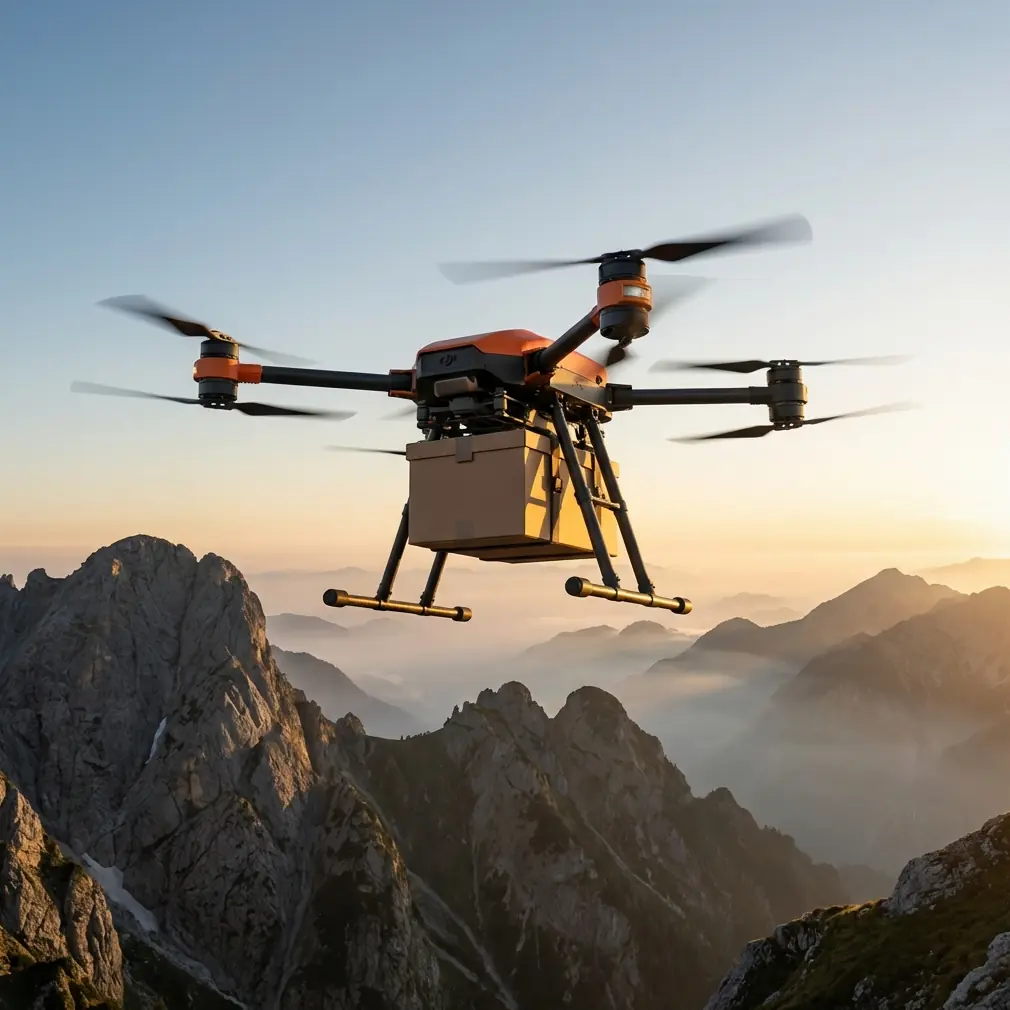
FlyCart 30 for High-Altitude Venue Inspection: What Mapping-First Operations Taught Me
META: A logistics lead’s field-driven look at using FlyCart 30 for high-altitude venue inspection, mapping integration, route planning, and safer data-led operations.
I’ve learned the hard way that high-altitude venue inspection falls apart when the map is wrong.
That sounds obvious, but most failures don’t start with a bad aircraft. They start upstream. Incomplete terrain awareness. Poor field-by-field visibility. Supply plans built on assumptions. Inspection routes that look efficient on paper and become messy once wind, slope, and access limits show up in the real world.
That is why one recent civilian drone case stood out to me. In Zhuxi County, the local tobacco authority used UAV mapping to strengthen source-level control of tobacco fields. The key detail wasn’t just that they flew drones. It was that the mapping data was deeply integrated into contract management, material supply, and disaster prevention and mitigation work, allowing the team to precisely understand the planting status of every single field.
That is the part operators should pay attention to.
Not the headline. The operating model.
For anyone evaluating the FlyCart 30 for high-altitude venue inspection, especially in mountain venues, hillside event sites, remote agricultural stations, or elevated infrastructure-adjacent facilities, this case points to a smarter way to use the platform. The real value is not just moving cargo or reaching hard locations. It is building an inspection workflow where mapping intelligence drives what gets delivered, where it goes, when it goes, and how risk is managed.
The problem I kept seeing in high-altitude inspection work
A few seasons ago, my team was supporting inspections at elevated venues where access roads were narrow, weather windows were short, and crews on the ground kept asking for small but critical items at the worst possible times. Markers. Sensors. Spare batteries. Safety kits. Measuring equipment. In one case, even basic materials had to be repositioned because the original site assumptions were wrong.
The issue was not aircraft capacity alone. It was information quality.
We had route plans, but they were not tied closely enough to current site conditions. We had inventory, but supply staging was not synchronized with what inspection teams actually encountered in the field. We had emergency planning, but it was too detached from the changing conditions across the venue footprint.
That disconnect is exactly why the Zhuxi mapping example matters. When drone-derived survey data is fused with contract management, material supply, and disaster mitigation, the operation stops being reactive. You are no longer guessing which zone needs support. You know. And when the source material says they could accurately grasp the planting condition of each individual field, that level of granularity is the operational lesson. In inspection terms, replace “each field” with each slope section, staging point, cable path, spectator zone, service road, or maintenance pad.
High-altitude venue work rewards that kind of precision.
Why FlyCart 30 fits this model better than many teams realize
People often look at FlyCart 30 through a narrow logistics lens. Can it lift what we need? Can it reach the site? Can the winch system help when there’s no safe landing space?
Those are fair questions. But for inspection-heavy operations, the stronger argument is that FlyCart 30 can sit inside a mapping-first workflow and make the entire support chain more disciplined.
If your venue inspection program starts with updated aerial understanding of the site, FlyCart 30 becomes a responsive transport node rather than a blunt delivery tool. Payload ratio matters here because mountain inspections are full of tradeoffs. Every added kilogram affects route margin, altitude behavior, and reserve planning. A well-managed payload profile lets teams deliver only what a mapped, verified inspection task requires instead of overloading flights “just in case.”
That sounds simple. In practice, it changes everything.
At altitude, unnecessary payload is not just inefficiency. It can narrow your weather tolerance and reduce route flexibility. If your data already tells you which inspection sectors need equipment, where surface access is constrained, and where environmental exposure is higher, you can dispatch lighter, cleaner, more targeted missions.
That is how route optimization becomes real instead of theoretical.
Mapping is not the side task. It is the control layer.
The Zhuxi case used UAV mapping as a way to improve the entire chain of source control. That same logic applies directly to venue inspection.
Here’s what that looks like in the field:
- Map first to establish accurate site conditions.
- Link those findings to work orders or inspection assignments.
- Tie equipment distribution to verified need.
- Build risk planning around actual terrain and exposure, not rough memory.
- Use the aircraft only after the data has clarified the mission.
This is where FlyCart 30 becomes especially useful at high altitude. With a winch system, teams can lower tools or materials into areas where landing is impractical or unsafe. That matters on ridgelines, terraced sites, steep embankments, or venues with limited stable touchdown zones. But the winch is only as effective as the information behind the drop. If mapping has already identified elevation shifts, clearance problems, and exact task locations, the aircraft can support crews with much tighter delivery accuracy.
The operational significance of the Zhuxi approach is that data was not kept in a survey folder. It was merged into material supply and disaster mitigation. For venue operators, that translates into two immediate benefits.
First, supply support gets sharper. You send what the inspection team actually needs at the point of need.
Second, contingency planning gets grounded in reality. If weather degrades, a slope destabilizes, or an access path becomes unusable, your drone-supported response is based on current aerial understanding rather than stale site notes.
High altitude changes the cost of every mistake
At lower elevations, poor planning can often be absorbed by a truck run, a longer walk, or an extra battery swap. At high altitude, those margins thin out quickly.
That is one reason I pay so much attention to dual-battery architecture and emergency parachute considerations in this category. They are not talking points. They are part of risk budgeting. When your venue sits in a more demanding environment, power resilience and emergency recovery planning become part of your daily operating discipline, not a backup paragraph in the manual.
The same goes for BVLOS planning where regulations and approvals allow it. In expansive mountain venues or long inspection corridors, BVLOS can reduce transit inefficiency and support broader route coverage. But BVLOS without updated mapping is just speed applied to uncertainty. The better model is to use aerial survey data to define the route logic first, then use the aircraft’s operational capability to execute within a controlled framework.
That sequence matters.
I’ve seen teams focus on aircraft range before they can clearly describe their support geography. That is backwards. Before asking how far FlyCart 30 can go, ask whether your site data is precise enough to justify the route. The Zhuxi example gets this right: understand each unit of terrain accurately, then integrate that knowledge into the workflows that depend on it.
A better inspection playbook for mountain venues
If I were building a FlyCart 30 deployment plan today for high-altitude venue inspection, I would structure it around four layers.
1. Site truth
Start with current UAV mapping of the venue and surrounding access points. The target is not pretty imagery. The target is operational clarity. Where are the actual constraints? Which sections are exposed? Which areas may need repeat inspection after weather shifts?
The phrase from the reference that stays with me is “precisely grasping” conditions for every plot. For venue inspection, that same level of precision should apply to every inspection zone.
2. Task linkage
Connect the map output to inspection schedules, contractor scope, and support requirements. This mirrors the reference detail about integrating mapping with contract management. Operationally, it helps eliminate a classic failure point: teams showing up with the wrong assumptions about what was assigned versus what the site actually needs.
3. Supply intelligence
Tie equipment, spare parts, consumables, and safety materials to mapped inspection demand. This aligns with the source detail about material supply integration. Once that link exists, FlyCart 30 missions become leaner and more frequent in a useful way. Instead of one oversized run, you can execute a series of targeted deliveries driven by actual inspection progress.
4. Risk adaptation
Bring disaster prevention and mitigation logic into the flight plan. The source specifically mentions disaster prevention and reduction as part of the integrated workflow. For high-altitude venues, this can mean adjusting staging points after heavy rain, monitoring vulnerable edges, reclassifying access zones, or changing drop procedures where terrain exposure increases.
That is not just good planning. It is what keeps the aircraft useful when conditions change.
The practical role of the winch system
I want to stay concrete here, because too much drone writing drifts into abstractions.
In elevated venue inspections, the winch system solves a very real access problem. There are plenty of places where landing is either impossible or undesirable: narrow ledges, rocky service strips, muddy shoulders after rain, fenced utility sections, and crowded temporary event layouts.
In those environments, lowering a payload is often the cleaner option. But it only works well when route optimization has already accounted for vertical clearance, hover position, terrain offset, and retrieval practicality. This is another reason mapping-led operations outperform improvised ones. A good map reduces hover indecision. It tells the crew where the aircraft should be, how the handoff should happen, and which zones should be avoided entirely.
That saves time, but more importantly, it reduces workload when the environment is already demanding.
What changed for my team
Once we shifted toward data-led support, the aircraft stopped being the center of the mission. It became the servant of the mission.
That sounds like a subtle distinction. It is not.
Before, we tended to ask: what can the drone do for this site?
Now we ask: what does the mapped site condition require, and how can FlyCart 30 execute that requirement with the least friction?
That change reduced wasted movements. It improved handoffs with field crews. It made route planning more defensible. It also improved communication with stakeholders who needed to understand why certain support requests were prioritized and others were delayed. When your decisions are tied to updated aerial intelligence, those discussions become easier.
If your operation is exploring a similar workflow, you can share your scenario through this direct field coordination link: https://wa.me/85255379740
The bigger takeaway from a small regional mapping story
Some of the most useful lessons in drone operations do not come from flashy demonstrations. They come from grounded local programs that solved a specific workflow problem well.
The Zhuxi County example is one of those. A civilian organization used UAV mapping not as a standalone technical exercise, but as a practical control layer across the full chain. The data fed contract management, material supply, and disaster mitigation. It also enabled precise visibility into every individual field.
For FlyCart 30 users in high-altitude venue inspection, that framework is more valuable than a generic feature summary. It shows how the aircraft can be part of a disciplined operation where logistics follows verified aerial understanding.
That is the real upgrade.
Not simply flying farther. Not simply carrying more. Using current mapped intelligence to decide what should move, where, and under what conditions.
For mountain venues and elevated inspection sites, that difference is often what separates a smooth operation from a long day of corrections.
Ready for your own FlyCart 30? Contact our team for expert consultation.