
FlyCart 30 for Coastal Venue Inspection: What World Cup
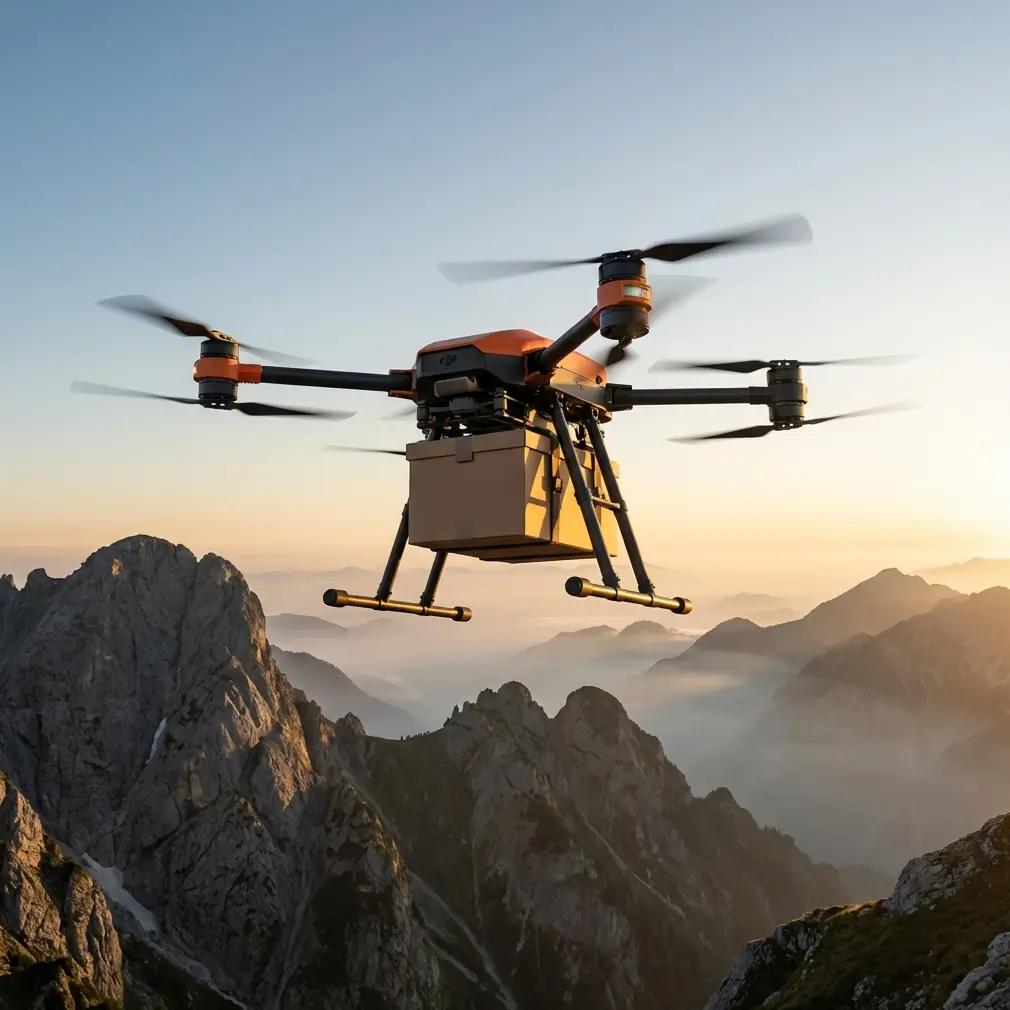
FlyCart 30 for Coastal Venue Inspection: What World Cup-Scale Drone Risk Planning Means on the Ground
META: A practical expert look at using the FlyCart 30 for coastal venue inspection, with lessons drawn from 2026 World Cup drone-risk planning, EMI handling, payload strategy, winch use, BVLOS workflows, and safety systems.
By Alex Kim, Logistics Lead
The most revealing detail in the recent CIS white paper is not simply that drone risk is rising. It is the scale of the environment forcing that conversation. Planning for the FIFA World Cup 2026 is stretching across the United States, Canada, and Mexico, and the event is being framed as one of the most complex public safety environments ever staged in those three countries. That matters well beyond stadium security.
When a major multi-country event drives fresh scrutiny of unmanned aircraft systems at large public gatherings, venue operators, inspection teams, and infrastructure managers feel the effect almost immediately. Coastal venues feel it first. They have harder weather, more RF clutter, more corrosion exposure, and less margin for operational mistakes. If you are evaluating the FlyCart 30 for inspecting a coastal venue, the conversation is no longer just about whether the aircraft can lift equipment. The real question is whether it can do inspection work reliably in an environment where risk tolerance is shrinking and operational discipline has to rise.
That is where the FlyCart 30 becomes interesting.
Most people encounter the FC30 through its cargo identity. Fair enough. It is built to move material. But for venue inspection, especially in coastal settings, the value is not limited to transport. It is the combination of payload handling, flight stability, route control, and contingency systems that makes it useful. On a site where you may need to inspect rooftop mechanical systems, upper facade anchors, temporary event structures, cable runs, lighting rigs, or perimeter assets spread across a large campus, a platform that can both move tools and support repeatable aerial workflows has a practical edge.
Why the CIS white paper changes the inspection conversation
The CIS paper focuses on evolving UAS risks at large public gatherings. Read that through the lens of venue operations, and one point becomes clear: event sites will face more structured airspace oversight, more scrutiny of flight activity, and more pressure to document safe practices. For a coastal venue preparing for international traffic, fan zones, temporary installations, and media infrastructure, inspection flights will need to be cleaner, more predictable, and easier to justify.
This is not abstract policy chatter. It affects how an operations lead chooses aircraft, plans routes, and trains crews.
If a venue is near the shoreline, the inspection mission already comes with environmental penalties: salt-laden air, gust fronts, reflective surfaces, and interference from dense communications infrastructure. Add the reality of heightened sensitivity around drones during a period of World Cup-related preparation, and the burden shifts from “Can we fly?” to “Can we show that this aircraft fits a controlled, professional workflow?”
The FlyCart 30 fits that discussion best when it is treated as an operational tool, not a spectacle.
The coastal inspection problem: distance, access, and interference
Coastal venues are rarely simple boxes. You may have a main structure, parking decks, service roads, concession areas, temporary staging compounds, utility yards, and shoreline protection features all within one operating picture. Inspection teams often need to move between them quickly while carrying sensors, attachment hardware, replacement parts, or drop lines.
That is where payload ratio starts to matter.
A drone with a strong payload profile is not useful only because it can lift more. It changes the number of site movements required. Instead of staging separate ground teams to reach multiple roof zones or catwalk access points, the aircraft can carry inspection support items in fewer cycles. That reduces time lost to repositioning crews across a crowded venue footprint. Operationally, fewer handoffs mean fewer opportunities for delay during tight maintenance windows.
This is one of the underappreciated strengths of using the FlyCart 30 in inspection support. On a coastal site, where moving people around can be slower than moving equipment, payload flexibility becomes a scheduling advantage.
Then there is interference.
Large venues are full of antennas, repeaters, Wi-Fi networks, temporary broadcast links, LED systems, and metallic structures that create noisy electromagnetic conditions. Near the coast, marine comms and nearby port or transport infrastructure can add even more signal complexity. In practice, that means an aircraft may behave perfectly on one side of the venue and show degraded link confidence on another.
The solution is rarely dramatic. Usually, it is disciplined antenna management.
On one coastal inspection workflow, the most effective adjustment can be as basic as changing the controller operator’s stance and reorienting the antennas to maintain cleaner geometry with the aircraft as it passes behind upper steelwork. That sounds minor until you realize what it prevents: unnecessary route deviations, unstable telemetry confidence, and wasted battery time from hover corrections. Handling electromagnetic interference with antenna adjustment is not glamorous, but on a busy venue it is the difference between a professional sortie and a frustrating one.
Where the winch system earns its place
A lot of venue inspections are not just visual. They are “look and act” missions. An inspector spots a loose line, failed marker, damaged weather seal, or suspect fitting and needs a quick, controlled way to place a lightweight item without sending a crew through a long access route.
This is where a winch system changes the economics of the mission.
Instead of landing the aircraft in a constrained area or trying to get a worker into a difficult location immediately, the drone can lower a small inspection tool, retrieval line, sensor package, or temporary marker to a targeted point. For coastal venues, that can be especially valuable on grandstand roofs, facade edges, truss zones, and utility service areas where access is awkward and weather windows are short.
Operational significance matters here. The winch is not simply an accessory; it reduces touchdown risk in cluttered environments. Every avoided landing in a salt-exposed, obstacle-rich area helps preserve the aircraft and tightens the safety profile of the mission. For venue managers under growing scrutiny around drone use during large-event planning cycles, reducing unnecessary landings is a sensible procedural choice.
Dual-battery logic in a place where weather turns fast
Coastal teams know that conditions can shift inside a single inspection cycle. Wind direction changes. Moisture builds. Visibility can flatten. When you are working near a venue preparing for major public use, the answer is not to fly aggressively to make up time. The answer is to protect your options.
That is why dual-battery architecture deserves more attention than it usually gets.
A dual-battery setup is not just about extending usable time. It gives inspection crews a more resilient energy strategy when route changes become necessary. If a section of the venue becomes unavailable, if a temporary mast creates a new obstacle, or if you need to circle back to verify a defect image, you are not instantly forced into a compromised decision. You keep margin. On a coastal site, margin is operational oxygen.
This ties directly to the CIS white paper’s broader relevance. As drone-related risk at large public gatherings draws more serious planning attention, operators need aircraft that support conservative decisions. A platform that encourages reserve thinking is simply easier to fit into modern event-adjacent procedures.
Emergency parachute: not a marketing feature, a venue requirement
At some venues, contingency equipment is viewed as nice to have. At high-traffic or high-visibility venues, especially those touched by international event preparation, it belongs in the baseline conversation.
An emergency parachute system matters because inspection flights near public-facing structures do not get judged only by routine performance. They get judged by how the operation is designed to handle the unlikely case. That distinction becomes sharper as public-gathering risk planning intensifies.
For a coastal venue, where gust behavior around structures can be less predictable, an emergency parachute is not a decorative compliance talking point. It is evidence that the operator understands exposure. If your work involves rooftops over access corridors, concourse-adjacent areas, or perimeter zones that may later handle dense foot traffic, the ability to point to layered mitigations has operational value. It makes internal approvals easier. It improves stakeholder confidence. It supports a more mature risk assessment.
BVLOS and route optimization across spread-out venue assets
Some venue campuses are compact. Many are not. Add parking lots, transport interfaces, temporary fan infrastructure, utility compounds, and shoreline barriers, and the inspection footprint can become surprisingly broad.
That is where BVLOS planning and route optimization deserve a serious look.
To be clear, BVLOS is not a shortcut. It is a framework that only makes sense when procedures, approvals, site controls, and technology all align. But for large coastal venues with dispersed assets, the logic is straightforward: repeated inspection routes are far more efficient when they are designed around the site rather than around line-of-sight repositioning limits alone.
Route optimization on the FlyCart 30 side of the workflow matters because inspection is often repetitive by design. You are not improvising art. You are collecting condition data on the same roof edges, mast mounts, drainage zones, fence lines, and service points on a scheduled basis. If the route is refined properly, the operator gets more consistent image angles, more stable timing, and better battery planning. That leads to stronger trend comparison over time.
And in the specific climate shaped by the CIS paper, consistency is not just an efficiency metric. It is part of proving that drone use near major gathering sites is managed, disciplined, and predictable.
A practical coastal workflow for FlyCart 30 inspections
Here is what a mature FC30 coastal venue inspection workflow can look like in practice:
The team starts at a controlled launch area outside primary pedestrian flow. Before takeoff, they review local RF conditions and identify likely interference pockets near broadcast equipment or heavy steel structures. Instead of waiting for signal irregularities to appear in flight, the remote pilot and visual support team plan antenna orientation in advance for specific route segments.
The first sortie focuses on upper infrastructure and rooftop utilities. The aircraft carries a modest inspection payload rather than pushing maximum lift, preserving control responsiveness and energy margin. Along a facade transition, telemetry confidence dips slightly as the aircraft moves near a dense antenna cluster. The crew responds not by forcing through the route but by adjusting operator position and controller antenna angle to restore cleaner link quality.
A second pass confirms a maintenance issue on a service roof. Rather than dispatching a technician immediately through interior access and roof ladders, the team uses the winch system to lower a marker line and a lightweight diagnostic accessory. That trims response time and reduces unnecessary worker exposure.
Later sorties follow optimized paths across perimeter assets and shoreline-facing structures, with battery planning built around reserve margins rather than bare-minimum completion estimates. If weather degrades, the aircraft returns with options still available, not with the crew boxed into a rushed landing.
That is what the FlyCart 30 looks like when used well in a coastal venue environment. Not flashy. Effective.
Why this matters now
The CIS white paper was triggered by a very specific reality: planning for the 2026 World Cup is accelerating, and large public gatherings across three countries create a uniquely complex public safety environment. Even if your venue is not hosting a match, the same standards culture is spreading. More scrutiny. More documentation. More pressure to show that every drone mission has a clear purpose, controlled method, and defensible risk posture.
For inspection teams, that is not a burden if the aircraft and workflow are chosen intelligently.
The FlyCart 30 stands out in this setting because its strengths map to actual venue problems. Payload ratio affects how much support equipment can be moved without repeated crew relocation. The winch system lets teams interact with difficult access points without unnecessary landings. Dual-battery architecture protects mission flexibility when coastal conditions shift. An emergency parachute strengthens the operational case for flying near high-value public infrastructure. BVLOS and route optimization, where appropriate, help large venues move from ad hoc flights to repeatable inspection systems.
And perhaps most practically, experienced crews know that success in coastal RF-heavy spaces often comes down to habits as simple as antenna adjustment and operator positioning. That is the kind of detail that separates brochure thinking from field thinking.
If you want to discuss a venue-specific workflow, message the team here: coordinate an FC30 coastal inspection conversation
The future of venue drone operations will be shaped less by what aircraft can do in perfect conditions and more by what they can do under scrutiny, near complex infrastructure, in environments where mistakes are expensive. For coastal inspection, the FlyCart 30 is compelling not because it promises everything, but because it supports disciplined work where discipline now matters more than ever.
Ready for your own FlyCart 30? Contact our team for expert consultation.