
High-Altitude Venue Inspection With FlyCart 30
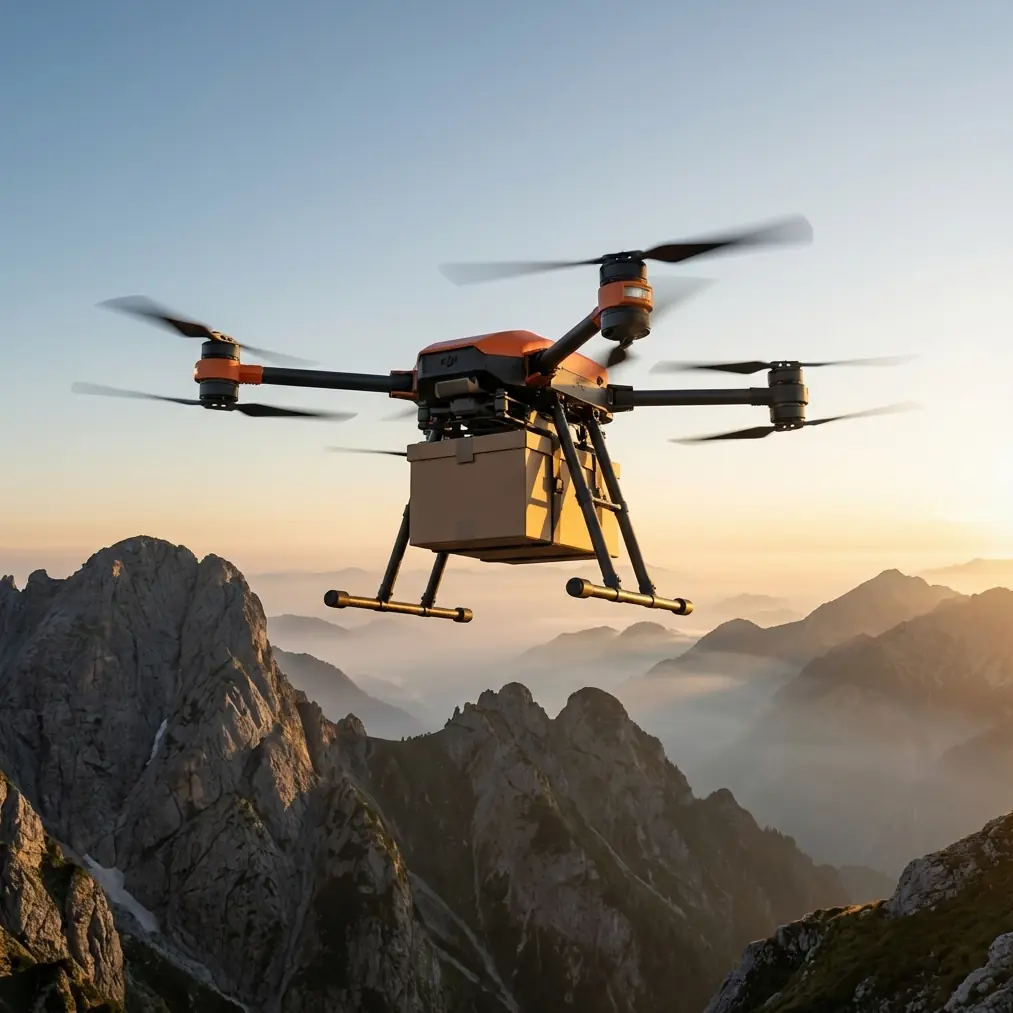
High-Altitude Venue Inspection With FlyCart 30: A Field Report From the Logistics Side
META: A field-tested look at using FlyCart 30 for high-altitude venue inspection, with practical insight on payload ratio, winch operations, dual-battery planning, route optimization, and pre-flight safety checks.
I spend a lot of my time thinking about what happens before a drone ever leaves the ground.
That may sound backwards in a conversation about aerial operations, but on high-altitude venue jobs, the real work starts on the table, not in the sky. Batteries are staged. Redundancies are checked. Routes are reviewed against terrain and wind behavior. Safety systems get attention that would seem excessive to anyone who has not watched thin air, cold temperatures, and mountain gusts turn a routine flight into a very expensive lesson.
For teams considering the FlyCart 30 for venue inspection in elevated environments, that preparation mindset matters more than any brochure headline. This aircraft is usually discussed through the lens of transport, and rightly so. But in the field, especially around remote venues, ski facilities, ridge-top event infrastructure, mountain resorts, and temporary highland installations, the same transport-oriented design choices can create very practical advantages for inspection logistics.
That is the angle I want to focus on here: not a generic feature rundown, but how FlyCart 30 fits the reality of inspecting venues where access is constrained, altitude changes the margins, and every flight has to justify itself operationally.
Why high-altitude venue inspection is a logistics problem first
A venue at elevation is rarely just “a place to inspect.” It is a stack of access challenges.
You may need to check roof sections, suspended lines, tower-mounted hardware, lighting rigs, weather sensors, cable infrastructure, or temporary structures spread across uneven terrain. Vehicles can be limited by narrow paths or snow cover. Technicians on foot move slowly. Carrying tools up and down slopes consumes time and energy. In some cases, the inspection task itself is straightforward, while getting the right gear to the right position is the hard part.
That is where a platform like FlyCart 30 becomes more interesting than a standard visual-inspection drone. Its core value in these jobs is not just seeing the asset. It is supporting the inspection workflow around the asset.
A payload-capable aircraft changes the sequence of work. Instead of sending a team to manually haul small tools, lightweight test devices, spare sensors, tethered attachments, or line materials to an elevated structure, you can reposition those items through the air. That reduces technician exposure on steep ground and keeps the inspection moving.
The payload ratio discussion matters here. In logistics, payload ratio is not a vanity metric. It tells you whether the aircraft is truly useful once real mission equipment is added. At altitude, every gram starts to count twice: once in lift performance and again in your safety margin. A platform designed around cargo handling can preserve more mission flexibility than an aircraft that was built mainly to look at things.
The overlooked value of the winch system
On venue work, a winch system is often more useful than a simple drop-off method.
That distinction matters.
Landing at a high-altitude site is not always practical. Surface conditions may be loose, icy, sloped, obstructed, or crowded with structures. Even when there is technically enough room, rotor wash near sensitive equipment or temporary event installations can create avoidable risk. A winch lets the aircraft remain in a more controlled hover while lowering or retrieving material with precision.
For inspection crews, that can mean sending a sensor package, a small repair item, or a line to an elevated access point without committing the whole aircraft to a landing zone that was never designed for aviation. It also means less disturbance around antennas, scaffolded sections, and lightweight venue structures.
This is one of those details that looks secondary on paper and becomes central in the field. If your operating environment is a mountain venue with inconsistent landing options, the winch is not a convenience feature. It is part of the mission design.
It also affects team composition. A well-drilled crew can use the aircraft and winch system to support inspection personnel stationed at fixed points, reducing repeated climbs and descents. That does not just save time. It reduces fatigue, and fatigue is one of the most underrated hazards in elevated operations.
The pre-flight cleaning step most teams rush through
There is one habit I push hard on every high-altitude job: clean the safety systems before launch.
Not “wipe the drone down” in a cosmetic sense. I mean targeted pre-flight cleaning of the components that must work flawlessly if conditions deteriorate. If the aircraft is equipped with an emergency parachute, that area deserves inspection for dust, moisture residue, packed snow traces, grit, and any debris that could interfere with proper deployment. The same goes for latching points, covers, and adjacent surfaces that may have collected contamination during transport or the prior mission.
High-altitude venues are hard on equipment. Fine dust from access roads, ice crystals, windblown grit, and condensation from temperature swings all have a way of settling into places operators ignore when they are rushing to make a weather window.
I have seen crews obsess over route planning and battery temperature while skipping a basic cleaning pass on safety-critical areas. That is backwards. The emergency systems are there for abnormal days, not ideal ones. If you are relying on an emergency parachute as part of your operating risk framework, then pre-flight cleaning is not housekeeping. It is safety preparation.
The same principle extends to the winch system. Check the line path, attachment hardware, and moving parts for dirt, abrasion, and anything that could affect smooth payout or retrieval. In venue inspection, a snagged line can create as much trouble as a failed sensor.
Dual-battery planning is not just about endurance
A lot of operators hear “dual-battery” and think immediately in terms of flight time. That is too narrow.
For high-altitude venue inspection, a dual-battery architecture has operational significance because it supports mission continuity and risk management. Elevated sites usually punish improvisation. If a battery issue forces a reset of the mission sequence, you do not just lose minutes. You may lose a carefully timed weather opening, a technician’s position at a hard-to-reach checkpoint, or an entire access cycle coordinated with venue operations.
Redundancy in the power system can support a more stable operating plan, especially on flights that combine transport support with visual inspection tasks. It also helps with turnaround discipline. Instead of pushing marginal battery decisions because the team is under pressure to finish one more leg, the crew can structure swaps and reserve thresholds more conservatively.
At altitude, conservative is efficient.
That sounds contradictory until you have run enough mountain jobs to see what happens when teams chase one extra segment beyond the point where conditions say stop. A dual-battery setup gives planners more room to build sensible decision gates into the mission. It is not there to encourage riskier flying. It is there to help avoid it.
Route optimization changes the economics of inspection
Venue inspection in the mountains is rarely a single straight flight. It is a chain of small logistical decisions: where to launch, what to inspect first, which technician needs support, when to reposition equipment, where to avoid updraft zones, and how to keep return options open if visibility changes.
This is why route optimization deserves more respect than it usually gets.
A transport-capable aircraft like FlyCart 30 invites mission planners to think in loops rather than one-off sorties. You are not just sending a drone to look at a structure and come back. You may be delivering a lightweight inspection tool to one point, conducting a pass along a line or ridge section, retrieving an item from another point, and returning on a route that maintains the best emergency options.
That kind of planning turns the aircraft into a workflow engine rather than a flying camera.
For high-altitude venues, route optimization should account for terrain shielding, wind corridors, staging positions, and handoff timing with ground personnel. If BVLOS operations are part of the approved operating framework, the planning burden grows, not shrinks. Beyond visual line of sight can extend usefulness across spread-out venue infrastructure, but it also demands stronger procedures, clearer segmentation of route risk, and better communications discipline.
BVLOS is often discussed as a scale tool. In venue inspection, I see it more as a continuity tool. It can help crews manage distributed assets without repeatedly relocating personnel, provided the regulatory, technical, and operational requirements are satisfied.
FlyCart 30 in a market shaped by crossover innovation
There is a broader industry point worth addressing, especially because it affects how platforms like FlyCart 30 are evaluated.
A 2026 analysis highlighted by DroneLife, citing a report from the Foundation for Defense of Democracies, pointed to a growing overlap between commercial drone technology and other advanced capability pipelines. The report’s core observation was that shared innovation pipelines are shaping both commercial drone markets and adjacent sectors, and that this integration is becoming a defining theme in the wider drone industry.
For civilian operators, the practical takeaway is not political. It is technical and operational.
When innovation pipelines overlap, features tend to mature faster in areas like reliability, autonomy logic, system redundancy, route management, and mission resilience. Commercial users then benefit when those advances translate into better aircraft architecture and more robust workflows for legitimate industrial tasks.
That matters for a platform used in high-altitude venue inspection. You are not buying into a single narrow use case. You are stepping into a product category shaped by broader investment in navigation stability, operational continuity, payload handling, and fail-safe thinking. For commercial teams, the question is whether those developments translate into safer, more efficient civilian jobs.
With FlyCart 30, the answer can be yes, if the operation is designed correctly.
The key is discipline. The aircraft’s utility does not come from using every capability at once. It comes from selecting the right capability for the venue’s actual constraints: winch where landing is awkward, payload support where crews are overextended, route optimization where terrain complicates access, and strict safety checks where altitude narrows the margin for error.
What a real venue workflow can look like
A typical high-altitude venue inspection day with FlyCart 30 might begin at a lower staging point where batteries are conditioned, weather is cross-checked, and the aircraft receives a focused cleaning and inspection pass on the emergency parachute housing and winch assembly.
From there, the team could deploy in phases.
First leg: deliver a lightweight kit to an upper technician station without forcing a long uphill carry.
Second leg: perform a structured inspection pass along mounted venue infrastructure, checking lighting supports, rooftop sections, or communications hardware.
Third leg: lower or retrieve a small item via the winch at a point where landing would be unstable or disruptive.
Fourth leg: reposition to support another inspection node while preserving enough reserve for weather-driven route changes.
That pattern sounds simple. It is not. But it is efficient.
The efficiency comes from reducing dead movement. Every uphill manual trip removed from the day preserves technician attention for actual inspection work. Every avoided landing in a marginal zone removes one source of risk. Every well-planned battery swap prevents rushed decision-making later in the mission.
If your team is trying to build that sort of workflow, it helps to compare notes with operators who have already wrestled with mountain logistics. For direct coordination on setup considerations, mission planning, or integration questions, you can message the operations desk here.
My bottom-line view as a logistics lead
FlyCart 30 makes the most sense in high-altitude venue inspection when you stop thinking of it as only a cargo drone and start treating it as an aerial logistics platform that supports inspection outcomes.
That difference is everything.
The payload ratio matters because altitude exposes weak margins. The winch system matters because many venue surfaces are poor landing environments. Dual-battery planning matters because weather windows and technician positioning make interruptions expensive. BVLOS matters where infrastructure spreads beyond convenient visual access. And the emergency parachute matters enough that cleaning and inspection of that safety system should be a non-negotiable pre-flight step.
The broader drone market is being shaped by shared innovation pipelines across commercial technology domains, as the 2026 industry analysis underscored. For civilian operators, that only matters if the resulting hardware and procedures improve real jobs on real sites.
In high-altitude venue work, FlyCart 30 can do exactly that. Not by replacing inspection expertise, but by removing friction around it.
That is the part worth paying attention to.
Ready for your own FlyCart 30? Contact our team for expert consultation.