
FlyCart 30 for Extreme-Temperature Venue Inspection
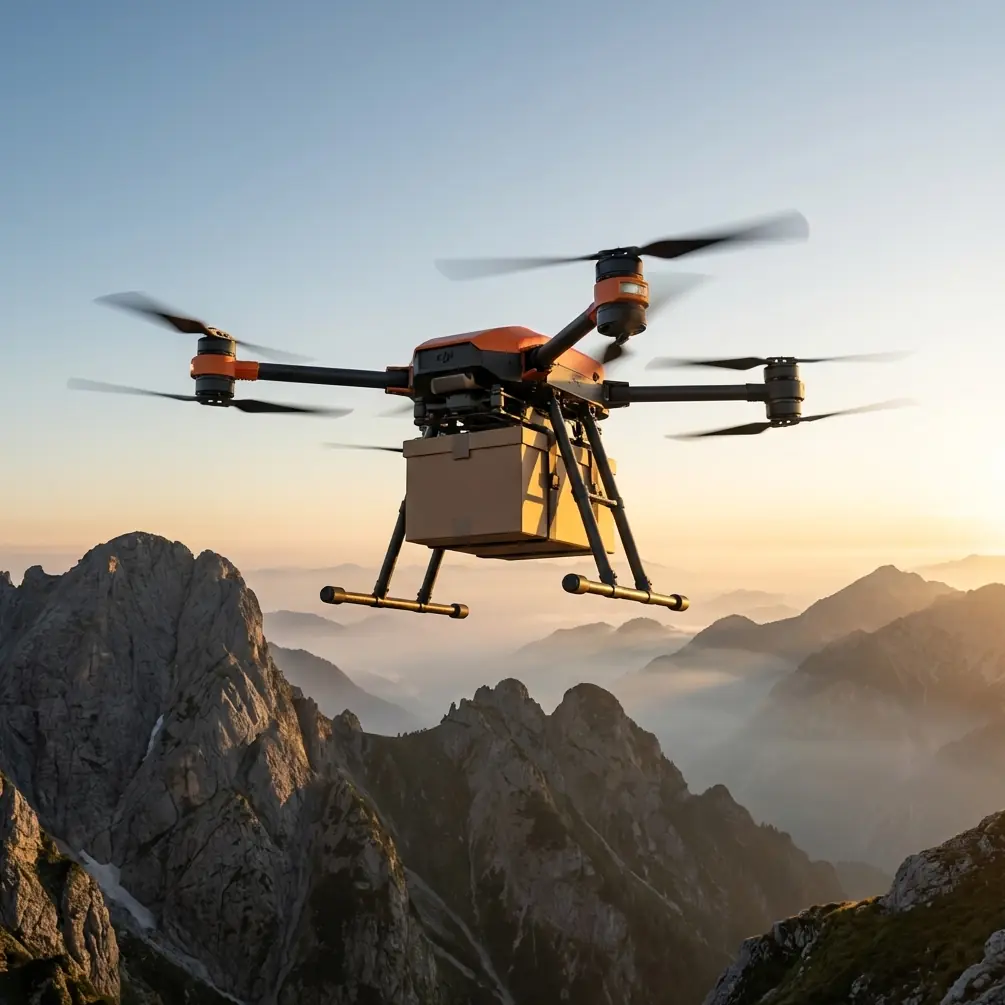
FlyCart 30 for Extreme-Temperature Venue Inspection: What Actually Matters in Guangdong’s New Compliance Reality
META: A practical expert guide to using FlyCart 30 for venue inspection in extreme temperatures, with a focus on Guangdong’s expanded drone airspace, UOM compliance workflows, route control, and operational risk reduction.
Extreme-temperature venue inspection is usually described as a hardware problem. Bigger batteries. Better payload. Stronger transmission. That framing is too narrow.
For teams evaluating the FlyCart 30 in Guangdong, the real operational shift is not just aircraft capability. It is the combination of aircraft capability and a regulatory environment that has become easier to navigate at scale. Guangdong has significantly expanded drone-suitable airspace, and that changes the value of a platform like the FlyCart 30 in very practical ways. When an aircraft built for serious work meets a region where compliant operations are easier to plan, approve, track, and audit, inspection programs stop looking like isolated missions and start functioning like repeatable infrastructure.
I’ve seen this from the logistics side. The bottleneck is rarely the brochure spec. It is whether a team can deploy repeatedly in difficult weather, around sensitive venues, without burning time and money on fragmented compliance steps. That is where the current Guangdong environment matters.
The real problem with extreme-temperature venue inspection
Venue inspection in harsh heat or cold creates two layers of pressure at once.
The first is environmental. Thermal stress affects batteries, mission tempo, crew endurance, and the amount of time you can spend hovering or repositioning around facades, rooftops, utility corridors, loading zones, or external mechanical systems. Even when the inspection objective sounds simple, the flight profile often is not. You may need to approach from multiple angles, hold position near structures, or lower equipment with a winch rather than land in a congested or uneven area.
The second layer is administrative. If your team has to jump between separate systems for airspace checks, registration, geofencing, and post-flight records, every mission becomes heavier before the motors even start. In high-temperature or low-temperature windows, those delays matter. Weather and site access do not wait for paperwork.
That is why Guangdong’s recent airspace expansion deserves more attention than it is getting. The region has not merely opened more space. The UOM platform now brings together airspace inquiry, real-name registration, electronic fencing, and flight-track traceability into a one-stop compliance workflow. That single detail has direct significance for FlyCart 30 operators. It reduces coordination drag and lowers compliance cost for enterprise users, especially those running recurring inspections across multiple venues.
Why FlyCart 30 fits this moment better than lighter inspection drones
Many inspection drones perform well when the mission is just image capture. The FlyCart 30 becomes more interesting when inspection is tied to access, delivery, or contingency planning.
That distinction matters in extreme temperatures. A venue inspection team may need to move sensors, emergency spares, communication devices, or line-drop tools to a point that is inaccessible or unsafe for staff on foot. This is where payload ratio and winch capability stop being side notes and become the reason to choose the platform. Competitor aircraft may be perfectly fine for visual scans, but they often force the operation into a narrower mission design: fly, film, return. The FlyCart 30 is stronger when the job includes interaction with the site.
Its winch system is particularly relevant for venues where landing is impractical. Think roof edges, stadium service zones, industrial yards with heat shimmer, or temporary event infrastructure where a direct touchdown creates unnecessary risk. A controlled lowering operation allows the aircraft to stay clear of obstacles while still completing the task. That is not just convenient. It reduces the number of mission variables in already difficult temperature conditions.
And if you are inspecting venues that experience heat spikes or cold snaps, the dual-battery architecture matters beyond endurance alone. It helps support more stable operational planning. Crews can think in terms of route segments, hover buffers, and reserve margins rather than gambling on a single narrow energy profile. In real operations, confidence in reserve planning often has more value than a headline flight-time number.
Compliance is now part of mission efficiency
A lot of articles separate aircraft performance from regulation as if one is technical and the other is paperwork. On the ground, they are the same thing.
Guangdong’s UOM platform integrates four functions that venue inspection teams constantly need: airspace query, real-name registration, electronic fence control, and flight-track traceability. Each one affects FlyCart 30 deployments in a specific way.
Airspace query reduces pre-mission uncertainty. For venue inspections, especially around dense urban or semi-urban sites, uncertainty is expensive. If the planning team can verify where the aircraft is suitable to fly before dispatching crew and equipment, route optimization becomes realistic instead of theoretical.
Real-name registration supports a cleaner enterprise operating structure. Large inspection programs often involve multiple crews, subcontractors, and assets. A clearer identity and authorization chain reduces friction when sites request proof of compliant operation.
Electronic fencing is not just about restriction. It is about predictability. On a larger aircraft like the FlyCart 30, geofence clarity helps crews design safer stand-off positions and repeatable approach corridors, particularly near venues where structures, public areas, and service roads are close together.
Flight-track traceability may be the most underrated feature in the whole workflow. When you are inspecting a venue in extreme temperatures, especially as part of recurring maintenance or pre-event readiness, being able to review route history has operational significance. It improves auditability, supports incident review, and helps refine future route optimization. If one path around a roofline consistently creates turbulence or signal obstruction, the historical data tells you. That is how operations mature.
The other major shift is enforcement. The platform can provide real-time warning and precise penalties for unauthorized “black flights.” For compliant enterprise teams, that is a good thing. It cleans up the airspace environment and makes professional operations more defendable. If you are running FlyCart 30 missions near valuable facilities or time-sensitive venues, fewer rogue flights mean fewer unpredictable conflicts.
What this changes for BVLOS-style planning
I am not suggesting teams skip local procedures or assume every mission qualifies for beyond visual line of sight. But the expanded suitable airspace in Guangdong changes how professionals can think about scalable route structures.
The old model for many venue inspections was dispatch-and-improvise. A pilot gets to site, checks conditions, manually works around access limitations, then returns with useful but inconsistent data. That model is hard to standardize and expensive to repeat.
A FlyCart 30 paired with a more unified compliance environment supports something better: planned corridors, documented fallback points, known geofence boundaries, and route optimization built from track history. Even when the mission remains within stricter visual constraints, the planning logic starts to resemble mature BVLOS operations. The benefit is consistency. The same venue can be inspected on a repeatable path, in comparable flight windows, with a documented risk envelope.
For logistics-led inspection teams, this is where the aircraft can outclass lighter competitors. Not because it simply flies farther, but because it can execute more useful work per compliant sortie. If a route includes both observation and payload movement, a separate drone or ground crew run may be eliminated. That improves turnaround and reduces exposure for staff during extreme heat or cold.
Extreme temperatures punish inefficiency first
When temperatures are severe, poor workflow shows up faster than poor marketing claims.
A venue inspection mission breaks down if crews spend too long exposed on the launch site, if battery planning is too tight, if the aircraft must land where it really should hover, or if compliance steps are fragmented enough to delay the mission window. The FlyCart 30 addresses several of those friction points at once, but only if the team uses it as an operational system, not just as a flying camera or cargo hook.
For example, the emergency parachute conversation often gets reduced to a safety checklist item. In reality, for inspections near venues with mixed-use surroundings, it supports risk planning and stakeholder acceptance. Site operators are more willing to approve recurring drone activity when they understand the aircraft has layered mitigation features. In a region where digital traceability and electronic fencing are already built into the compliance platform, that safety posture becomes part of a broader professional standard.
The same goes for route optimization. In extreme temperatures, the best route is rarely the shortest line on a map. It is the route that preserves reserve power, avoids turbulent building edges, respects geofence logic, and minimizes hover dwell in the hottest or coldest exposure zones. A capable airframe helps, but disciplined planning does more.
A practical operating model for FlyCart 30 inspections in Guangdong
If I were setting up a FlyCart 30 venue inspection program under the current Guangdong framework, I would structure it around five priorities.
First, build every mission from the compliance layer upward. Use the UOM platform workflow early, not as a final admin step. Airspace status and electronic fence conditions should shape route design from the beginning.
Second, treat dual-battery capacity as planning margin, not an excuse to overextend. Extreme temperatures narrow your comfort zone faster than teams expect.
Third, use the winch system deliberately. If the site has poor landing surfaces, pedestrian movement, roof congestion, or heat-radiating infrastructure, a suspended delivery or retrieval profile may be safer and faster than landing.
Fourth, record and compare flight tracks across repeat inspections. Traceability is not only for regulators. It becomes a performance database for the operation itself.
Fifth, build an escalation path around weather and risk controls, including emergency parachute considerations and go/no-go thresholds tied to site complexity rather than schedule pressure.
That framework sounds basic. It is not. It is what separates a one-off drone mission from a durable commercial operation.
Why Guangdong’s policy shift makes FlyCart 30 more valuable now
The significance of Guangdong’s expanded suitable airspace is easy to miss if you read it as a policy headline. On the ground, it means enterprise operators have more room to standardize. The UOM platform’s one-stop compliance model means less time spent stitching together approvals and records. Real-time warning and precise enforcement against unauthorized flights mean the airspace becomes cleaner for legitimate operators. Lower compliance costs mean recurring missions become easier to justify.
For FlyCart 30 users, those are not abstract advantages. They directly improve dispatch confidence, route repeatability, and mission economics for venue inspection in harsh conditions.
This is also where the aircraft compares well against alternatives. Some competing platforms may be easier to field for simple visual tasks, but they do not offer the same flexibility when the mission expands beyond imaging into access, transport, controlled lowering, and contingency support. In extreme-temperature inspections, versatility matters because conditions force compromises. The platform that can absorb those compromises without breaking the workflow usually wins.
Final take from a logistics perspective
The FlyCart 30 makes the most sense when you stop judging it as a niche heavy-lift drone and start viewing it as a site operations tool. In Guangdong, that view is becoming more practical because the surrounding compliance system is catching up to enterprise reality.
Expanded drone-suitable airspace opens more room to operate. The UOM platform unifies the steps that used to slow teams down: airspace query, registration, geofencing, and traceability. That one-stop structure lowers compliance cost and helps serious operators run cleaner programs. Pair that with a platform that offers a meaningful payload ratio, a useful winch system, dual-battery planning confidence, and safety layers like an emergency parachute, and you get something stronger than a spec sheet advantage.
You get a workable inspection model for difficult venues in difficult temperatures.
If your team is mapping out inspection workflows or compliance planning for this platform, you can share your scenario here: message our operations desk.
Ready for your own FlyCart 30? Contact our team for expert consultation.