
Inspecting Dusty Vineyards with the FlyCart 30
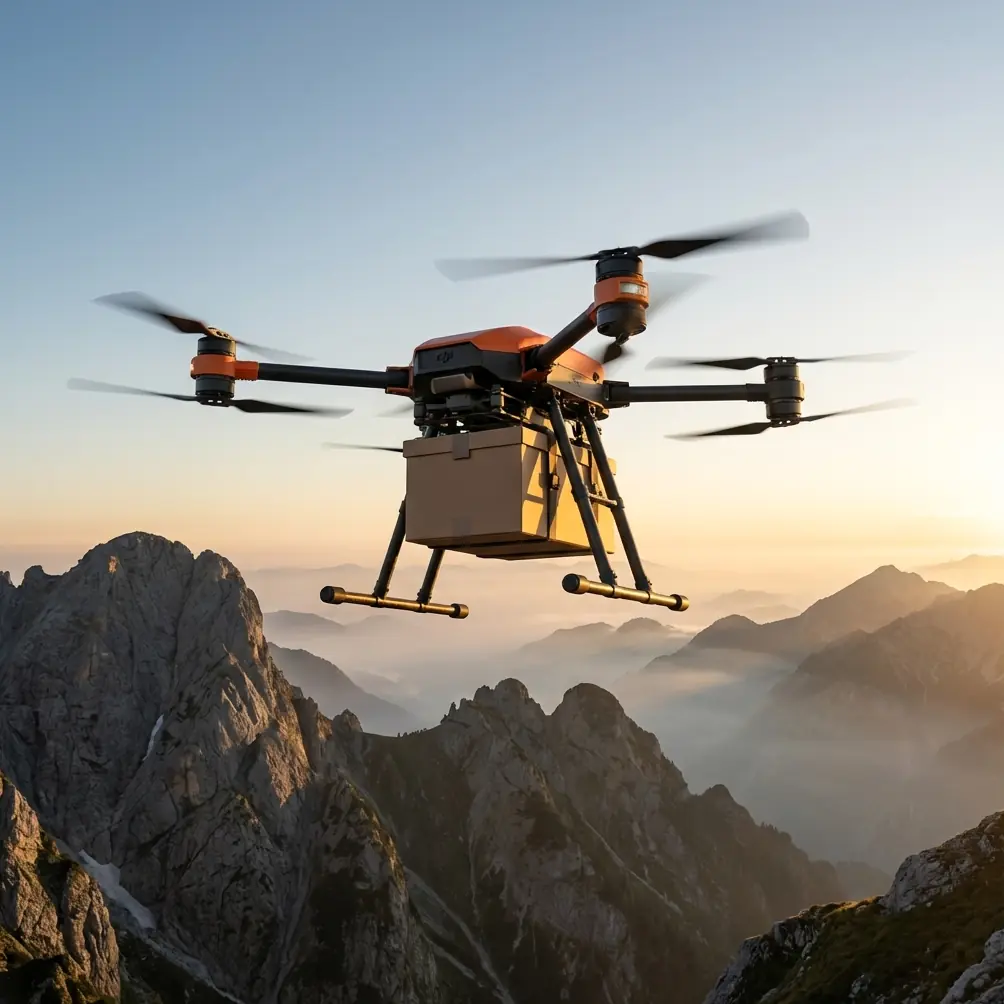
Inspecting Dusty Vineyards with the FlyCart 30: Practical Flight Setup, Altitude, and Power Planning
META: A field-tested how-to for using the DJI FlyCart 30 in dusty vineyard inspection work, with altitude tips, battery planning, route logic, and why U.S. battery manufacturing matters for logistics drone operations.
Vineyard inspection sounds simple until you do it in dry conditions.
Dust changes everything. It reduces visibility near the canopy, settles into landing zones, and turns repeated low-altitude passes into a reliability problem if the aircraft, power system, and flight plan are not chosen carefully. That is why the FlyCart 30 deserves a more specific discussion than the usual “heavy-lift drone” summary. For dusty vineyard work, especially when the job combines visual inspection, supply drops, and movement between uneven rows, the value of the platform is not just payload. It is how payload, power, route logic, and recovery systems work together.
I approach this as a logistics lead would. The mission is not only to get airborne. The mission is to complete a full inspection cycle with fewer interruptions, predictable battery behavior, and safer operation around crops, trellis infrastructure, and workers.
This article breaks down how I would set up a FlyCart 30 for vineyard inspection in dusty conditions, including a practical altitude range, when to use the winch system, how dual-battery planning affects route design, and why a recent battery manufacturing development in North Dakota matters more than it may first appear.
Start with the mission profile, not the drone spec sheet
A vineyard inspection mission using the FlyCart 30 usually falls into one of three patterns:
- Row-by-row visual assessment for vine health, irrigation anomalies, damaged posts, or blocked access lanes.
- Targeted logistics support such as transporting tools, sensors, sample containers, or small maintenance items to crews in hard-to-reach sections.
- Hybrid runs where the aircraft surveys first, then delivers an item to a flagged location.
Those are very different tasks, even if they happen in the same field. The mistake I see most often is flying all three with one generic altitude and one generic route. In dusty vineyards, that wastes battery and can stir unnecessary particulate into the work area.
The FlyCart 30 gives you room to design the mission around the field rather than forcing the field to fit the aircraft. Its payload ratio matters here because a drone that can carry meaningful weight without becoming operationally fragile can support inspection and resupply in one workflow. That reduces vehicle movement on vineyard roads and cuts time lost to ground repositioning.
The best flight altitude for dusty vineyard inspection
If the goal is inspection rather than delivery alone, I would avoid hugging the canopy unless there is a very specific reason to do so.
For most dusty vineyard inspections, a practical operating band is roughly 8 to 15 meters above the canopy, adjusted for row spacing, trellis height, and terrain variation. That range is high enough to reduce rotor wash disturbance over dry soil and loose dust, yet low enough to preserve useful visual detail for spotting irrigation irregularities, canopy gaps, and access obstructions.
Why that band works:
- Below that range, especially on hot, dry days, rotor wash can kick up dust from turning areas, service roads, and exposed soil between rows. That dust can reduce image clarity and create a messy environment for repeated passes.
- Above that range, you gain coverage but lose some fine detail, especially when trying to identify localized stress patterns or damaged infrastructure.
For cross-row transit, I would usually climb a bit higher than the inspection band, then descend only when entering the working segment. That one habit can improve efficiency because the aircraft spends less time generating dust where detailed observation is not needed.
If the vineyard has rolling topography, terrain-following discipline matters more than absolute altitude. The real objective is consistent stand-off from the vine tops, not a single number on the controller.
Use the winch system more than you think
In a dusty vineyard, the FlyCart 30’s winch system is not just a delivery feature. It is a contamination and safety tool.
Every unnecessary landing introduces a new problem set: loose soil, debris ingestion risk, uneven ground, worker proximity, and time spent finding a stable touchdown spot. A winch-based drop or pickup lets you keep the aircraft above the dust layer and away from vines, irrigation lines, and vehicles.
This has direct operational significance in vineyard work:
- Sample retrieval: If a field team collects leaf or soil samples in a specific row, the aircraft can lower a container rather than land nearby.
- Tool resupply: Crews fixing irrigation emitters or trellis components do not need the drone to touch down in narrow or dusty lanes.
- Spot treatment logistics: Civilian agriculture workflows sometimes require moving small non-hazardous items to a point of need quickly. The winch reduces turnaround and preserves cleaner operations.
That changes route design. Instead of planning around landing zones, you plan around hover points. In long vineyard blocks, that can save substantial time over a full workday.
Dual-battery thinking changes route optimization
Dusty field work punishes sloppy battery planning because it encourages short, repetitive, low-altitude maneuvers. Those can be less efficient than operators expect.
This is where dual-battery logic matters. A dual-battery architecture is not just about redundancy. In practical terms, it supports more stable mission planning when the aircraft is carrying inspection gear, support items, or alternating between survey and winch tasks. You can segment the vineyard into route blocks based on realistic energy use rather than optimistic straight-line assumptions.
My preferred route optimization approach for this scenario looks like this:
1. Divide the vineyard into operational cells
Do not map the whole property as one mission unless there is a strong reason. Break it into cells based on terrain, row orientation, and access lanes.
2. Put the dustiest transitions at the beginning, not the end
Early in a battery cycle, you have more flexibility to climb, reposition, and hold if the field team requests a closer look. Ending with the dirtiest, most maneuver-heavy section increases pressure on reserves.
3. Reserve energy for hover work
Inspection missions often drift into decision-making moments: pause over an irrigation break, verify a row blockage, lower a line with the winch. Build that into the battery budget from the start.
4. Minimize low empty repositioning
If the aircraft has just completed a delivery or retrieval, avoid long low-altitude return legs through dusty zones. Climb for transit where safe and practical, then descend into the next work section.
This is where payload ratio matters in a real operational sense. A platform that can carry useful cargo without turning every route into a battery compromise allows inspection teams to think in terms of completed tasks, not isolated flights.
Why battery supply chain news matters to FlyCart 30 operators
At first glance, news about battery manufacturing in North Dakota might seem far removed from a vineyard inspection workflow. It is not.
A recent report noted that Packet Digital and its subsidiary Badland Batteries received 9.8 million under Phase 3 of a U.S. Navy contract to scale battery production at a North Dakota facility. That facility is intended to manufacture NDAA-compliant battery cells, with a focus on logistics drones and other unmanned systems.
For a FlyCart 30 operator in commercial agriculture, the operational significance is straightforward.
First, battery availability and manufacturing depth influence long-term fleet uptime. If domestic or U.S.-aligned battery production scales for logistics-class drones, commercial operators gain a stronger supply foundation for the types of aircraft used in transport-heavy missions. Even when a specific airframe uses its own battery ecosystem, broader investment in logistics drone power systems tends to improve resilience in the market around service, integration, and battery strategy.
Second, compliance and traceability are becoming more relevant in enterprise procurement. Large growers, ag service firms, and contractors increasingly care about documentation, sourcing visibility, and reliability planning. NDAA-compliant battery cell manufacturing is not just a policy phrase. It signals a shift toward more structured supply chains for unmanned systems used in serious field operations.
That matters for the FlyCart 30 because it sits in a category where battery performance is inseparable from mission economics. In vineyard inspection and support work, downtime is not abstract. It means missed weather windows, delayed maintenance, and crews waiting in the field.
BVLOS potential, with vineyard realism
BVLOS is one of those terms that gets used too casually. In vineyards, it can be useful, but only if the operation actually benefits from it.
For long properties with repeated row structure, BVLOS workflows can support efficient movement between distant blocks, especially when the aircraft is doing hybrid logistics and inspection work. But dusty vineyard operations still demand conservative planning around visibility, worker location, and route predictability. BVLOS should be seen as a scale tool, not an excuse to overextend a mission.
Operationally, if BVLOS is part of the roadmap, route standardization becomes more valuable. Consistent altitude bands, predefined hover points for winch operations, and repeatable ingress and egress paths reduce uncertainty. That also makes battery forecasting more reliable over time.
Emergency parachute: not a brochure feature in agriculture
A lot of people mention emergency systems without connecting them to the field environment. In vineyards, the emergency parachute has a clear role.
Rows are narrow. Access roads may have workers, utility vehicles, bins, or irrigation hardware. You may be operating near trellis wires, edge trees, or uneven land. An emergency recovery measure is operationally meaningful because it adds a layer of risk reduction in exactly the kind of low-altitude, infrastructure-dense environment where logistics drones often work.
That does not replace sound mission design. It does mean the aircraft is better suited to repetitive commercial work where one off-nominal event can otherwise shut down an entire day.
A practical FlyCart 30 workflow for dusty vineyards
Here is the field routine I would use.
Preflight
- Identify the driest and loosest soil zones.
- Mark hover-capable service points so the winch can replace landings.
- Build routes by vineyard block, not by total acreage.
- Assign a primary inspection altitude of 8 to 15 meters above canopy.
- Design higher transit segments between blocks.
On-site launch discipline
- Launch from the cleanest stable area available, not simply the closest point.
- Keep initial climb direct and efficient to reduce dust disturbance.
- Confirm worker positions before entering active rows.
Inspection pass logic
- Fly parallel to row structure when the goal is canopy and irrigation assessment.
- Use slower, more deliberate passes only where detail matters.
- Avoid repeated low turns over exposed soil at row ends.
Logistics overlay
- Use the winch system for sample transfer, tools, and small support items.
- Keep hover points offset from workers and fragile vine sections.
- Combine nearby requests into one route cell rather than multiple ad hoc flights.
Battery rotation
- Treat the final segment of each mission as contingency reserve, not productive capacity.
- Save enough margin for hover verification and a clean return.
- Log energy use by block so future flights become more predictable.
If you are planning this type of operation and want to compare setup choices for terrain, route structure, or winch procedures, you can message our vineyard drone team here: https://wa.me/85255379740.
What makes the FlyCart 30 especially useful here
The FlyCart 30 fits dusty vineyard inspection work because it is not limited to observation. It can be inserted into a broader field logistics system.
That sounds obvious, but it changes the economics of the day. Instead of sending one platform to inspect and another process to move supplies, you can keep one airborne asset focused on high-value tasks: verify an issue, lower what the crew needs, move to the next block, repeat. The platform’s value is in reducing friction between noticing a problem and acting on it.
And that loops back to battery infrastructure. A logistics drone is only as useful as the confidence behind its power system. News that 9.8 million is being used to scale battery production in North Dakota for logistics-oriented unmanned systems is not just industrial background noise. It points to a future where the support ecosystem behind this class of aircraft becomes sturdier, more traceable, and better aligned with serious commercial work.
For vineyard operators and ag service providers, that is the bigger picture. The FlyCart 30 is not merely a machine that can carry weight. In dusty inspection environments, it is a platform whose payload ratio, winch capability, dual-battery planning, route optimization logic, and emergency parachute can be combined into a cleaner and more efficient field workflow.
Get the altitude right. Keep the aircraft off the ground when possible. Build routes around energy reality, not hope. Treat battery sourcing and system resilience as part of operations, not procurement paperwork.
That is how this aircraft starts earning its place in the vineyard.
Ready for your own FlyCart 30? Contact our team for expert consultation.