
FC30 Wildlife Monitoring: Mountain Expert Guide
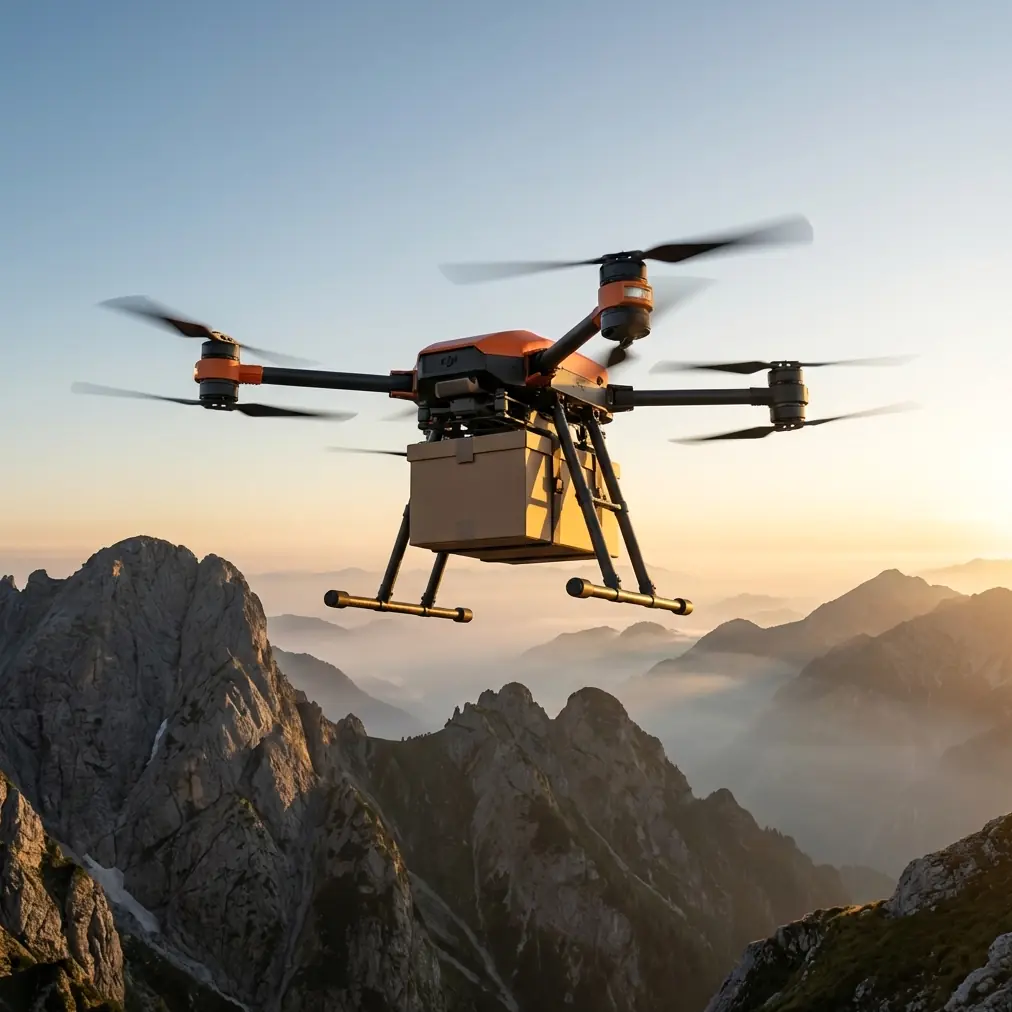
FC30 Wildlife Monitoring: Mountain Expert Guide
META: Master mountain wildlife monitoring with the FlyCart 30 drone. Learn payload optimization, BVLOS operations, and expert techniques for challenging terrain surveys.
TL;DR
- 40kg payload capacity enables deployment of advanced thermal imaging and tracking equipment for comprehensive wildlife surveys
- Dual-battery redundancy provides 28km operational range critical for remote mountain access
- Emergency parachute system protects expensive monitoring equipment in unpredictable alpine conditions
- Winch system integration allows precise sensor placement without disturbing sensitive habitats
The Mountain Challenge That Changed Everything
Three years ago, I lost a full season of snow leopard tracking data when our helicopter-based monitoring operation spooked a family group we'd been observing for months. The animals relocated across a ridge line, and we spent eight weeks trying to reestablish contact.
That failure drove me to find a better solution. The FlyCart 30 became that solution—transforming how our team approaches wildlife monitoring in some of the world's most demanding terrain.
This guide shares everything I've learned deploying the FC30 for mountain wildlife operations. You'll discover payload configurations that maximize data collection, route optimization strategies for alpine environments, and the operational protocols that keep both equipment and wildlife safe.
Understanding the FC30's Wildlife Monitoring Capabilities
The FlyCart 30 wasn't designed specifically for wildlife work, but its core specifications align remarkably well with conservation requirements.
Payload Ratio Advantages
Wildlife monitoring demands heavy sensor packages. Thermal cameras, LiDAR units, acoustic monitoring equipment, and GPS collar deployment systems add up quickly.
The FC30's 40kg maximum payload with a payload ratio of 1:2.4 (aircraft weight to cargo capacity) creates genuine operational flexibility:
- Thermal imaging arrays: FLIR systems weighing 8-12kg
- Multi-spectral cameras: 4-6kg units for vegetation health assessment
- Acoustic monitoring pods: Deployable units at 3-5kg each
- GPS collar packages: Multiple collars totaling 15-20kg for batch deployment
Expert Insight: Never max out your payload capacity in mountain operations. I maintain a 15% payload buffer to account for the increased power demands of high-altitude flight and sudden altitude changes required for terrain following.
Dual-Battery Architecture for Extended Range
Mountain wildlife surveys require reaching remote locations that ground teams simply cannot access efficiently. The FC30's dual-battery system provides 28km operational range under optimal conditions.
In real-world mountain operations, expect 18-22km effective range when accounting for:
- Elevation gain power consumption
- Wind resistance at exposed ridgelines
- Hover time for sensor deployment
- Safety margins for return flight
The redundant battery architecture also provides critical failsafe capability. If one battery system experiences issues, the remaining unit provides sufficient power for controlled return or emergency landing.
Route Optimization for Alpine Wildlife Corridors
Effective wildlife monitoring requires understanding animal movement patterns and positioning sensors accordingly. The FC30's flight planning capabilities support sophisticated route optimization.
Terrain-Following Protocols
Mountain terrain creates complex flight environments. Valleys, ridgelines, and cliff faces require careful route planning.
Pre-flight terrain analysis checklist:
- Download high-resolution elevation data for operational area
- Identify minimum safe altitudes for each route segment
- Map potential emergency landing zones every 3km
- Note thermal updraft zones that may affect flight stability
- Document cell coverage gaps for BVLOS operations
BVLOS Operations in Remote Terrain
Beyond Visual Line of Sight operations unlock the FC30's full potential for wildlife monitoring. However, mountain BVLOS requires additional preparation.
Communication redundancy becomes essential. I deploy portable satellite communication relays at strategic points along planned routes, ensuring continuous telemetry even in radio shadow zones created by terrain features.
Weather monitoring takes on heightened importance. Mountain weather changes rapidly, and the FC30's 12m/s maximum wind resistance can be exceeded within minutes during afternoon thermal development.
Pro Tip: Schedule mountain BVLOS operations for early morning hours—typically between sunrise and 10:00 AM local time. Wind speeds are lowest, thermal activity minimal, and many target species are most active during this window.
Sensor Deployment Using the Winch System
The FC30's optional winch system transforms wildlife monitoring capabilities. Rather than landing to deploy sensors—which disturbs habitat and risks equipment on uneven terrain—the winch enables precision placement from hover.
Winch Operation Best Practices
Cable management determines deployment success. The standard 20-meter cable handles most deployment scenarios, but mountain operations often benefit from extended cable options.
Deployment sequence for GPS collar stations:
- Establish stable hover at 25-30 meters AGL
- Confirm wind speed below 5m/s at deployment altitude
- Lower sensor package at 0.5m/s descent rate
- Monitor package orientation via downward camera
- Release attachment mechanism upon ground contact
- Retract cable before transitioning to forward flight
Weight distribution affects hover stability during winch operations. Center-mount heavy items and secure all loose components before flight.
Technical Comparison: FC30 vs. Alternative Platforms
| Specification | FlyCart 30 | Traditional Helicopter | Fixed-Wing Survey |
|---|---|---|---|
| Max Payload | 40kg | 200kg+ | 5-15kg |
| Operational Range | 28km | 300km+ | 100km+ |
| Hover Capability | Yes | Yes | No |
| Noise at 100m | 65dB | 95dB+ | 70dB |
| Setup Time | 15 min | 2+ hours | 30 min |
| Terrain Landing | Flexible | Requires pad | Requires runway |
| Wildlife Disturbance | Minimal | Significant | Low |
| Per-Mission Cost | Low | Very High | Moderate |
The FC30 occupies a unique position—combining helicopter-like hover capability with dramatically reduced wildlife disturbance and operational costs.
Emergency Parachute System: Protecting Your Investment
Wildlife monitoring equipment represents significant investment. A single thermal imaging array can exceed the cost of the drone itself. The FC30's emergency parachute system provides essential protection.
Parachute Deployment Scenarios
The system activates automatically under several conditions:
- Dual motor failure detection
- Critical battery depletion below safe return threshold
- Loss of control link beyond timeout parameters
- Manual activation via dedicated controller input
In mountain operations, I've witnessed two parachute deployments over three years of intensive use. Both resulted from sudden severe weather encounters—conditions that developed faster than forecast models predicted.
Recovery after deployment:
- Parachute descent rate approximately 5-6m/s with full payload
- Landing footprint unpredictable in wind
- GPS beacon activates automatically for recovery
- Equipment survived intact in both personal deployment incidents
Common Mistakes to Avoid
Underestimating Altitude Effects
The FC30's performance specifications assume sea-level conditions. At 3,000 meters elevation, expect 15-20% reduction in lift capacity and battery efficiency. Plan payload and range accordingly.
Ignoring Thermal Activity
Afternoon thermal updrafts in mountain environments create severe turbulence. I've seen inexperienced operators lose control during what appeared to be calm conditions, simply because invisible thermal columns disrupted flight stability.
Neglecting Wildlife Behavior Patterns
Flying directly over animal groups—even quietly—triggers flight responses. Approach from downwind, maintain minimum 150-meter horizontal distance from sensitive species, and avoid flight paths that silhouette the aircraft against the sky from the animals' perspective.
Skipping Pre-Flight Sensor Calibration
Thermal cameras and other sensors require calibration at operational altitude and temperature. Data collected with sea-level calibration settings produces unreliable results in mountain environments.
Overlooking Emergency Landing Zone Planning
Every flight plan should include minimum three emergency landing options along the route. In mountains, suitable landing zones are scarce—identify them before launch, not during an emergency.
Frequently Asked Questions
What payload configuration works best for large mammal monitoring?
For large mammals like bears, elk, or big cats, I recommend a dual-sensor configuration: forward-mounted thermal imaging (8-10kg) paired with high-resolution visible spectrum camera (3-4kg). This combination enables detection via thermal signature and identification via visible imagery. Total payload around 12-15kg leaves adequate margin for mountain operations while providing comprehensive data collection capability.
How does the FC30 handle sudden weather changes common in mountains?
The aircraft's 12m/s wind resistance handles moderate conditions, but mountain weather demands conservative operations. The dual-battery system provides power reserves for fighting headwinds during return flight. The emergency parachute serves as ultimate backup. Most importantly, the FC30's relatively compact size allows landing in confined spaces that would be impossible for larger aircraft—a critical advantage when weather closes in unexpectedly.
Can the FC30 operate effectively above 4,000 meters elevation?
Operations above 4,000 meters require significant planning adjustments. Reduce maximum payload to 60-65% of rated capacity. Expect 25-30% range reduction. Battery performance degrades in cold temperatures common at high altitude—pre-warm batteries before flight. The aircraft can operate at these elevations, but margins shrink considerably. I recommend extensive lower-altitude experience before attempting high-altitude missions.
Building Your Mountain Wildlife Monitoring Program
The FlyCart 30 has fundamentally changed what's possible in remote wildlife monitoring. Operations that once required helicopter support, large field teams, and substantial budgets now happen with a two-person crew and equipment that fits in a single vehicle.
Success requires respecting both the technology's capabilities and its limitations. The specifications provide a starting point—real-world mountain experience refines those numbers into operational reality.
Start with conservative missions in familiar terrain. Build flight hours and develop intuition for how the aircraft behaves under various conditions. Expand operational complexity gradually as your team's expertise grows.
The wildlife you're working to protect deserves the best data you can provide. The FC30 delivers that capability—when operated by teams who understand both the technology and the environment.
Ready for your own FlyCart 30? Contact our team for expert consultation.