
FlyCart 30 Field Report: What This Week’s Drone News Really
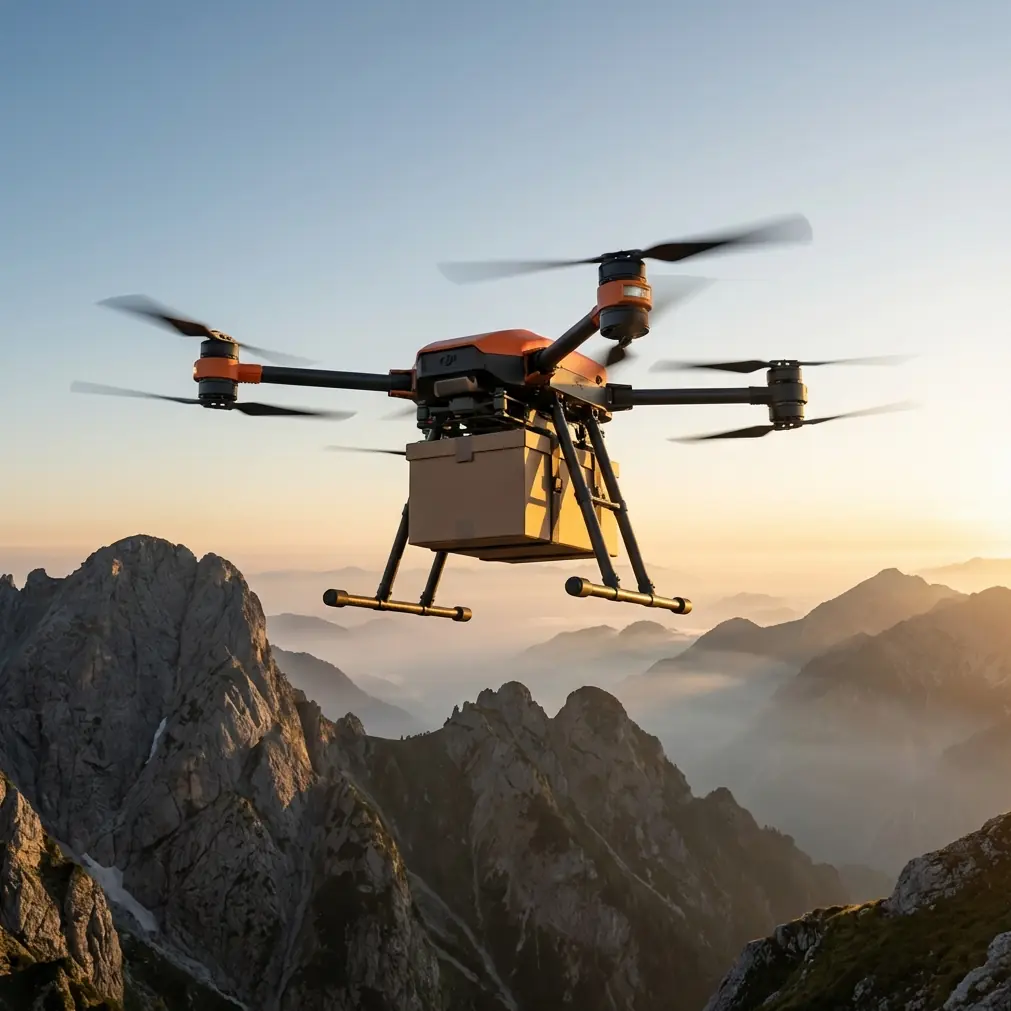
FlyCart 30 Field Report: What This Week’s Drone News Really Means for Coastal Mapping Teams
META: A field report on FlyCart 30 relevance for coastal mapping teams, connecting new UAV training, visual observation discipline, and public-safety scale trends to BVLOS route planning, flight altitude, and mission reliability.
Coastal mapping punishes lazy assumptions.
On paper, the mission sounds straightforward: follow a shoreline, capture consistent data, stay clear of people, structures, and shifting wind. In practice, the coast is one of the messiest operating environments a drone team can face. Light bounces off water. Gusts arrive from odd angles. Salt air works on hardware over time. Shore contours distort visual judgment. A route that looks simple on a map can become inefficient fast once tide line, cliffs, harbors, and no-fly pockets start breaking it apart.
That is why three seemingly unrelated drone news items from this week deserve more attention than they might get at first glance. One focuses on visual perception in photography. Another reports the launch of a China-Italy short-term UAV study program with 14 Italian students training in Tianjin. The third highlights BRINC’s new Guardian platform and a Seattle factory expansion as signals of larger public-safety and manufacturing shifts in the U.S. market.
None of those reports are about the FlyCart 30 directly. Yet all three point to something coastal operators using the FC30 need to understand now: success is moving away from pure aircraft specs and toward operational maturity. The aircraft still matters, of course. But the teams getting repeatable results are the ones that combine visual discipline, formal training, and system-level mission design.
For a platform like the FlyCart 30, that distinction matters.
The FC30 Is Not Just a Heavy-Lift Drone in a Different Job
Most people associate the FlyCart 30 with transport. That is reasonable. Its design language, payload handling, winch system logic, and dual-battery architecture all make it easy to see it through a logistics lens first. But in the field, coastal work often blurs categories. Mapping teams regularly support remote site access, sensor positioning, sample transfer, emergency equipment drops, and shoreline inspection in the same operational cycle.
That is where the FC30 becomes more interesting.
A coastal mapping mission is rarely just “fly and capture.” It can involve staging equipment to a rock shelf, moving lightweight tools between shoreline teams, supporting observers in areas with poor road access, or carrying mission-critical items that keep survey continuity intact. Payload ratio starts to matter not only in terms of lifting capacity, but in terms of how much of the aircraft’s available performance you are consuming before wind margin and endurance start to tighten.
On coastlines, every extra kilogram has a second-order effect. It changes climb behavior, braking distance, power draw, and how conservatively you need to think about return reserves. Operators who understand payload ratio as a mission-planning variable rather than a marketing stat tend to build better FC30 workflows.
This week’s news reinforces that broader shift.
Why a Photography Story Belongs in a FlyCart 30 Discussion
The Chinese article on developing a “photographic eye” might look unrelated to UAV operations. It is not. Its central point is that people often blame equipment and location when the real limitation is perception. That is a deceptively strong lesson for coastal drone teams.
The article quotes the idea that the barrier is not the device or the scene, but the lack of an eye trained to find what matters. In coastal mapping, that translates almost perfectly. Bad shoreline mission outcomes are often blamed on wind, sun angle, or sensor settings when the deeper issue is observational weakness during planning and execution.
A skilled FC30 crew sees the coast differently.
They notice where wet sand and dry sand create false edge lines in imagery. They anticipate how reflective water can confuse visual orientation and degrade confidence in manual intervention. They recognize that a seawall, marina entrance, or estuary mouth can fracture what looked like a clean route into several altitude regimes. They do not simply fly the line; they interpret the shoreline as a dynamic operating surface.
That observational habit changes altitude choices too.
Optimal flight altitude insight for coastal mapping with the FlyCart 30
For most FC30-supported coastline mapping runs, the best starting point is not “as high as allowed.” It is usually a moderate altitude band that preserves shoreline feature clarity while staying high enough to smooth out small terrain disruptions and spray-level turbulence. In many coastal scenarios, that means beginning route design around 60 to 90 meters above ground level, then adjusting by section rather than forcing a single altitude along the full route.
Why that band works well operationally:
- It often keeps the aircraft above low-level obstacles, surf disturbance, and localized rotor wash interaction near uneven ground.
- It usually provides better visual consistency along irregular shore edges than very low passes.
- It avoids the common mistake of flying so high that subtle erosion lines, debris fields, tidal encroachment markers, or infrastructure transitions lose practical survey value.
- It gives the team room to manage route optimization section by section, especially where cliffs, dunes, piers, or harbor structures interrupt the coast.
On exposed coastlines with stronger crosswinds, pushing lower can increase turbulence load and reduce image consistency. Going much higher can flatten the very features you are trying to interpret. The right answer is not a fixed number forever. The right answer is a structured starting band, then local adaptation.
That is the “photographic eye” idea in operational form: seeing the mission instead of merely flying it.
The Tianjin Program Signals Something Bigger Than Student Exchange
The second news item is short, but it carries weight. A joint China-Italy short-term drone application technology program has started in Tianjin, with 14 Italian students participating in UAV technical study and receiving completion recognition after passing assessment.
That is more than an educational footnote.
For FC30 operators, it signals how quickly drone work is becoming standardized, internationalized, and skill-dependent. Cross-border training projects tend to emerge where industries see long-term demand for applied competency, not just theoretical interest. In other words, the market is quietly telling us that drone operations are no longer being treated as isolated pilot activities. They are becoming structured technical disciplines.
Coastal teams should pay attention to that.
The FlyCart 30 can support sophisticated field workflows, but the platform only reaches its value when crews can coordinate payload procedures, route planning, risk checks, and contingency actions with discipline. Formalized training matters even more in coastal environments because the margin for improvisation is smaller. Weather windows are narrower. Launch zones are often constrained. Recovery options can disappear with tide and foot traffic. Communication between visual observers, payload handlers, and remote pilots has to be crisp.
A training culture also improves use of FC30-specific systems.
Take the winch system. On a coastline, winch deployment is not just a convenience feature. It can be the safer option when landing areas are unstable, narrow, or contaminated by water, loose rock, or public presence. Teams that treat the winch as a precision operational tool rather than an occasional accessory reduce unnecessary touchdown risk.
The same applies to dual-battery planning. In coastal work, dual-battery architecture is not merely about redundancy language. It supports better decision-making under shifting wind and route complexity. A well-trained team uses that architecture to protect mission continuity and reserve logic, not to excuse overextension.
If the industry is investing in assessed, international UAV training, FC30 users should read that as a prompt: tighten SOPs now, before the mission set becomes even more demanding.
BRINC’s Expansion Matters Even If You Never Fly Public Safety
The BRINC report from DroneLife points to a “defining moment” shaped by a new Guardian platform, a Seattle factory, scaling pressure, public-safety adoption, and policy shifts in the U.S. drone market. Again, this is not an FC30 announcement. But the signal is unmistakable.
Serious drone operations are moving toward reliability at scale.
Public-safety adoption changes the whole ecosystem because it raises expectations around readiness, documentation, repeatability, and procurement logic. When a manufacturer invests in domestic scale and a market segment prioritizes mission-critical performance, the rest of the industry feels the pressure. Buyers become less tolerant of vague workflows. Regulators sharpen focus on operational discipline. End users expect systems to perform in ugly conditions, not just in demos.
That pressure will spill into coastal operations too.
Why? Because coastline work increasingly intersects with public-interest missions: erosion tracking, storm impact assessment, infrastructure inspection, environmental monitoring, and emergency support. Even when a FlyCart 30 team is not formally part of a public-safety agency, the standard it is measured against keeps rising.
That has direct implications for BVLOS and route optimization.
A lot of operators still talk about BVLOS as if it were mainly a regulatory threshold. In field terms, BVLOS is a planning maturity test. Can your team design routes that account for terrain masking, changing weather exposure, communications reliability, emergency divert logic, and safe mission continuation if the shoreline itself becomes inaccessible?
On a coastline, route optimization is rarely about the shortest line. It is about the safest productive line. The best route may add distance to avoid crowded promenades, sea spray corridors, protected bird zones, or RF-complicated harbor infrastructure. An FC30 mission plan that ignores those realities may look efficient in software and fail in practice.
This is where systems like emergency parachute logic deserve more respect. Coastal areas can present hard choices if propulsion performance degrades or sudden weather shifts close off the clean return path. An emergency parachute is not a substitute for planning, but it is part of a layered risk model that makes more sense as operational stakes rise.
What a Strong FlyCart 30 Coastal Workflow Looks Like
If I were building an FC30 coastal mapping playbook today, based on the direction this week’s news suggests, I would focus on five things.
First, train visual judgment on the coastline before takeoff. Walk the mission mentally and physically. Identify reflective surfaces, public access points, turbulent pockets, and terrain changes that will affect both route and sensor usefulness. The best crews are not surprised by the shoreline because they have already learned to read it.
Second, set altitude by data purpose, not convenience. Start around that 60 to 90 meter band for many shoreline segments, then break the mission into altitude zones. Cliffs, inlets, and built-up harbor edges often need separate logic from open beach runs.
Third, manage payload ratio with ruthless honesty. A FlyCart 30 can carry meaningful loads, but coastal wind punishes optimistic assumptions. Build your route, reserve, and descent planning around realistic performance, not ideal conditions.
Fourth, use the winch system where the ground is the real hazard. If the shoreline offers poor landing surfaces or inconsistent access, suspended delivery or retrieval can reduce contact risk and preserve both aircraft and mission tempo.
Fifth, build BVLOS readiness like a process, not a checkbox. That means communications planning, alternates, emergency procedures, and observer coordination that survive real-world friction. If your team wants to compare notes on how that looks in active operations, I’ve found that a quick message thread can save hours of trial and error: swap field workflows here.
The Bigger Takeaway for FlyCart 30 Operators
This week’s stories, taken together, show an industry moving in three directions at once.
One: sharper human observation matters as much as hardware selection.
Two: structured training is becoming central, not optional.
Three: mission-critical expectations are spreading beyond pure public safety.
That is exactly the environment in which the FlyCart 30 makes sense as more than a transport platform. In coastal mapping and shoreline support, its value comes from how well a team integrates aircraft capability with operational judgment. Dual-battery architecture helps, but only if reserve planning is disciplined. A winch system adds flexibility, but only if crews understand when not to land. BVLOS opens range and productivity, but only if route design respects the coast as a changing, layered environment.
The operators who do best with the FC30 in coastal missions will not be the ones chasing maximum distance or headline payload. They will be the ones who see the shoreline clearly, train methodically, and fly with enough humility to adapt section by section.
That is the real lesson hidden inside this week’s news.
Ready for your own FlyCart 30? Contact our team for expert consultation.