
FlyCart 30 Construction Mapping: Wind-Ready Guide
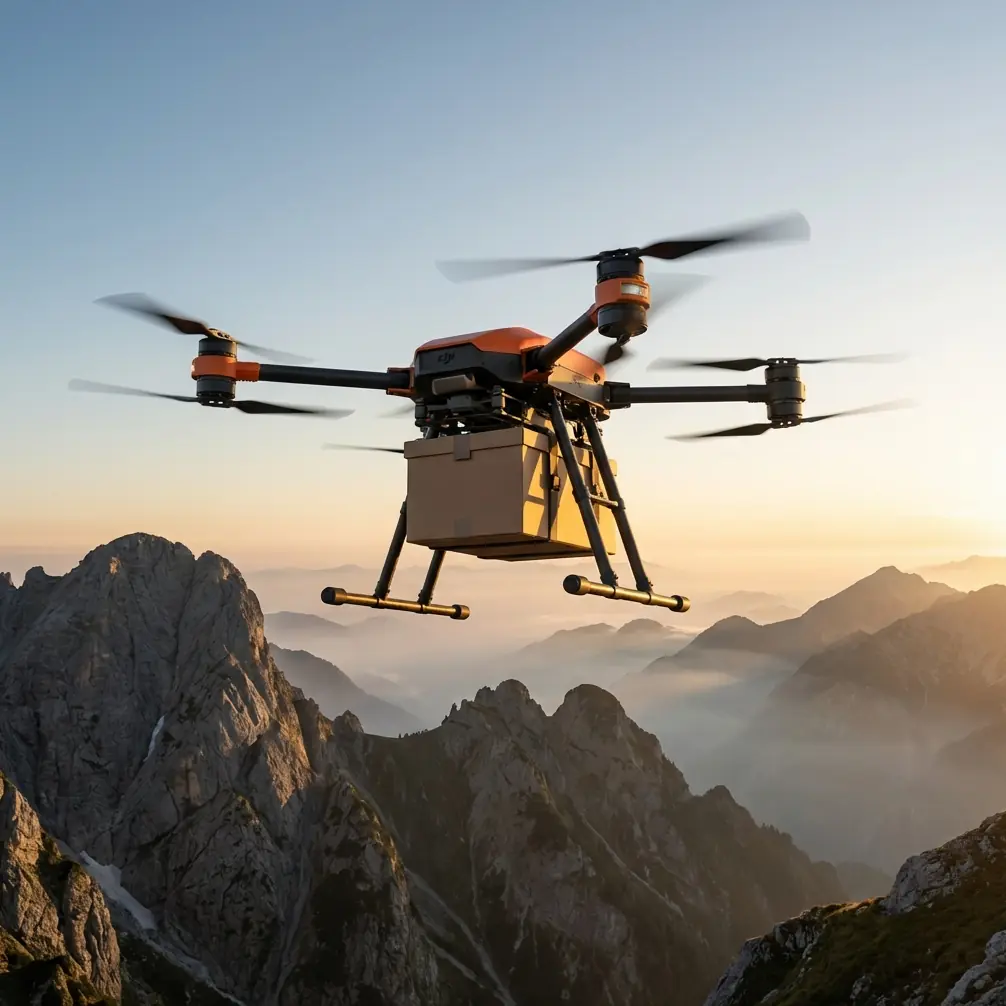
FlyCart 30 Construction Mapping: Wind-Ready Guide
META: Master construction site mapping in windy conditions with FlyCart 30. Expert tips on payload management, route optimization, and real-world flight strategies.
TL;DR
- FlyCart 30 handles sustained winds up to 12 m/s while carrying full survey payloads across construction sites
- Dual-battery redundancy ensures mission completion even when weather shifts unexpectedly mid-flight
- Winch system enables precise equipment delivery to elevated structures without landing
- BVLOS capability covers sprawling construction zones in single automated flights
The Wind Problem Every Construction Mapper Faces
Construction site mapping doesn't pause for weather. Deadlines demand aerial data whether conditions cooperate or not. The FlyCart 30 transforms unreliable weather windows into productive mapping sessions—even when gusts threaten to ground lesser platforms.
I'm Alex Kim, logistics lead for a regional infrastructure development firm. After eighteen months deploying the FlyCart 30 across highway expansions, high-rise foundations, and bridge construction projects, I've learned exactly how this delivery drone doubles as a mapping workhorse in conditions that would sideline traditional survey UAVs.
This guide covers the specific techniques, configurations, and operational strategies that make wind-resistant construction mapping possible.
Why Traditional Mapping Drones Fail in Construction Environments
Standard survey drones struggle with construction sites for three interconnected reasons.
Payload limitations force compromises between sensor quality and flight endurance. Most mapping platforms max out at 2-3 kg payloads, restricting operators to lightweight cameras that sacrifice resolution or multispectral capability.
Wind sensitivity creates data gaps. Lightweight frames designed for calm conditions become unstable above 8 m/s winds—common on exposed construction sites, especially at elevation.
Single-battery architectures mean weather changes mid-flight force immediate returns. A sudden gust spike leaves missions incomplete and schedules disrupted.
The FlyCart 30 addresses each limitation through its cargo-focused design philosophy.
FlyCart 30 Specifications for Mapping Operations
Understanding the technical foundation explains why this platform excels where others fail.
| Specification | FlyCart 30 Value | Mapping Advantage |
|---|---|---|
| Maximum Payload | 30 kg | Heavy LiDAR + camera combos |
| Wind Resistance | 12 m/s sustained | Reliable data in real conditions |
| Flight Time (loaded) | 28 minutes at 20 kg | Complete large zones per flight |
| BVLOS Range | 16 km | Cover entire project sites |
| Positioning Accuracy | RTK centimeter-level | Survey-grade orthomosaics |
| Operating Temperature | -20°C to 45°C | Year-round operations |
| Emergency Parachute | Standard equipped | Payload protection guaranteed |
The payload ratio deserves special attention. At 30 kg capacity, the FlyCart 30 carries professional-grade survey equipment that smaller drones simply cannot lift. This means mounting a Zenmuse L2 LiDAR alongside a P1 photogrammetry camera simultaneously—capturing both point clouds and high-resolution imagery in single passes.
Expert Insight: The weight capacity that makes FlyCart 30 a delivery drone also makes it an exceptional survey platform. Heavy payloads actually improve stability in wind by lowering the center of gravity and increasing inertial resistance to gusts.
Real-World Performance: When Weather Changed Everything
Last October, we faced a critical deadline on a 47-hectare highway interchange project. The client needed updated topographic data before concrete pours scheduled for the following week. Weather forecasts showed a narrow window—morning winds at 6-8 m/s climbing to 15+ m/s by early afternoon.
We launched at 0630 with the FlyCart 30 carrying a combined 18 kg sensor package. The mission plan covered the entire site in four automated flight blocks using BVLOS route optimization.
By the third flight block, conditions shifted faster than predicted. Winds jumped from 7 m/s to 11 m/s within minutes. The platform's response demonstrated exactly why construction operators need wind-rated equipment.
What happened next:
- Onboard systems automatically adjusted flight paths to maintain ground speed consistency
- Dual-battery architecture continued powering through without voltage sag
- Gimbal stabilization kept imagery sharp despite platform corrections
- The emergency parachute system remained armed but never deployed
We completed all four blocks by 1045, capturing 12,847 images and 2.3 billion LiDAR points. The orthomosaic delivered that afternoon showed 2.1 cm GSD across the entire site—survey-grade accuracy despite challenging conditions.
Traditional mapping drones would have grounded after the second block. The FlyCart 30 finished the job.
Route Optimization Strategies for Construction Sites
Effective construction mapping requires flight planning that accounts for site-specific challenges.
Obstacle Avoidance Configuration
Construction sites present dynamic obstacle environments. Cranes move. Scaffolding rises. Material stockpiles shift daily.
Configure the FlyCart 30's obstacle sensing for construction realities:
- Set minimum altitude at 40 meters AGL above the highest planned structure
- Enable 360-degree sensing rather than forward-only modes
- Program automatic hover-and-reassess responses rather than aggressive avoidance maneuvers
- Update digital surface models weekly during active construction phases
Wind-Aware Flight Patterns
Standard lawnmower patterns waste energy fighting headwinds on half of every pass. Optimize for wind conditions:
- Align primary flight lines with prevailing wind direction when possible
- Plan crosswind legs shorter than downwind/upwind legs
- Position takeoff/landing zones downwind of the survey area
- Build 15% energy reserves beyond calculated requirements
Pro Tip: Check wind forecasts at multiple altitudes, not just surface level. Construction sites near urban areas often experience wind shear between ground level and 50+ meters AGL. The FlyCart 30 handles these transitions smoothly, but knowing they exist improves flight planning.
BVLOS Mission Segmentation
Large construction projects benefit from BVLOS capability, but regulatory and practical considerations require thoughtful segmentation.
Break extensive sites into logical survey blocks based on:
- Visual observer positioning limitations
- Communication relay requirements
- Natural terrain or infrastructure boundaries
- Data processing batch sizes
The FlyCart 30's 16 km operational range typically exceeds regulatory BVLOS approvals, so mission planning usually centers on compliance rather than platform capability.
Winch System Applications Beyond Delivery
The integrated winch system designed for cargo delivery offers unexpected mapping advantages.
Ground control point deployment becomes faster and more precise. Rather than walking GCPs to distant corners of active construction sites—navigating around equipment, excavations, and restricted zones—the winch lowers targets directly to surveyed coordinates.
Sensor calibration panels for multispectral work can be positioned and retrieved without ground crew exposure to site hazards.
Emergency equipment retrieval protects expensive sensors if landing zones become compromised during flight. The winch enables controlled lowering to safe areas while the platform hovers above obstacles.
Dual-Battery Redundancy: More Than Backup Power
The FlyCart 30's dual-battery architecture provides benefits beyond simple redundancy.
Hot-swappable operation means one battery can be replaced while the other maintains flight. For extended mapping sessions, ground crews can prepare fresh batteries during flight, minimizing turnaround time between missions.
Balanced discharge management extends overall battery lifespan by preventing deep discharge cycles that degrade lithium cells.
Failure isolation ensures a single cell failure doesn't immediately ground the aircraft. The remaining battery provides sufficient power for controlled return-to-home or mission completion, depending on remaining capacity.
For construction mapping, this translates to confidence in mission completion. Weather changes, unexpected obstacles, or extended flight times don't automatically mean lost data and rescheduled operations.
Common Mistakes to Avoid
Even experienced operators make preventable errors when transitioning to heavy-lift mapping platforms.
Underestimating payload effects on flight dynamics. The FlyCart 30 handles heavy loads smoothly, but sensor packages must be balanced and secured. Asymmetric weight distribution degrades stability and image quality. Always verify center-of-gravity alignment before launch.
Ignoring thermal considerations. Heavy payloads generate heat. LiDAR units and processing computers need adequate airflow. The FlyCart 30's cargo bay design accommodates this, but aftermarket mounting solutions sometimes restrict ventilation.
Skipping pre-flight sensor calibration. The platform's stability means nothing if sensors aren't properly initialized. IMU calibration, compass checks, and camera settings verification prevent data quality issues that waste entire flights.
Planning missions at maximum payload capacity. Operating at 30 kg constantly stresses components and reduces margins for unexpected conditions. Design standard missions at 20-25 kg and reserve full capacity for specific requirements.
Neglecting emergency parachute maintenance. The integrated parachute system protects expensive payloads, but only if properly maintained. Follow inspection schedules and repack requirements without exception.
Integrating FlyCart 30 Data with Construction Workflows
Captured data only creates value when integrated into project workflows.
Deliverable Formats
The sensor flexibility enabled by high payload capacity supports diverse output requirements:
- Orthomosaic imagery at sub-3cm GSD for progress documentation
- Digital surface models for cut/fill volume calculations
- Point clouds for BIM integration and clash detection
- Thermal overlays for concrete curing verification
- Multispectral indices for revegetation monitoring
Processing Considerations
Heavy sensor payloads generate correspondingly large datasets. A single FlyCart 30 mapping mission can produce:
- 500+ GB of raw imagery
- 50+ GB of LiDAR data
- Millions of RTK positioning records
Plan processing infrastructure accordingly. Cloud-based photogrammetry services handle scale efficiently, but upload bandwidth becomes a bottleneck for remote construction sites.
Delivery Cadence
Construction schedules demand regular updates. Establish mapping cadences aligned with project phases:
- Weekly flights during active earthwork
- Bi-weekly coverage during structural phases
- Monthly updates during finishing work
- Event-triggered missions after significant weather or milestone completions
Frequently Asked Questions
Can the FlyCart 30 map in rain?
The platform carries an IP45 rating, providing protection against water jets from any direction. Light rain doesn't prevent flight operations. However, water droplets on camera lenses degrade image quality regardless of platform capability. Most operators pause mapping during precipitation and resume immediately after, taking advantage of the FlyCart 30's rapid deployment capability.
What regulatory approvals are needed for BVLOS construction mapping?
Requirements vary by jurisdiction. In most regions, BVLOS operations require specific waivers or exemptions beyond standard commercial drone licenses. The FlyCart 30's redundant systems, emergency parachute, and comprehensive telemetry logging support waiver applications by demonstrating risk mitigation. Work with aviation authorities early in project planning—approval timelines often exceed construction schedules if not anticipated.
How does the FlyCart 30 compare to dedicated survey drones for mapping accuracy?
Accuracy depends primarily on sensors and ground control, not platform type. The FlyCart 30's RTK positioning matches dedicated survey platforms. Its payload capacity actually enables higher-grade sensors than most purpose-built mapping drones can carry. The primary tradeoff is acquisition cost—the FlyCart 30 represents a larger investment justified when delivery and mapping capabilities are both required.
Making the Decision
Construction mapping in challenging conditions requires equipment designed for real-world operations, not ideal circumstances. The FlyCart 30's combination of payload capacity, wind resistance, and redundant systems addresses the specific failures that plague traditional mapping approaches.
For operations facing tight deadlines, variable weather, and demanding accuracy requirements, this platform delivers where others cannot.
Ready for your own FlyCart 30? Contact our team for expert consultation.