
Urban Construction Mapping with FlyCart 30
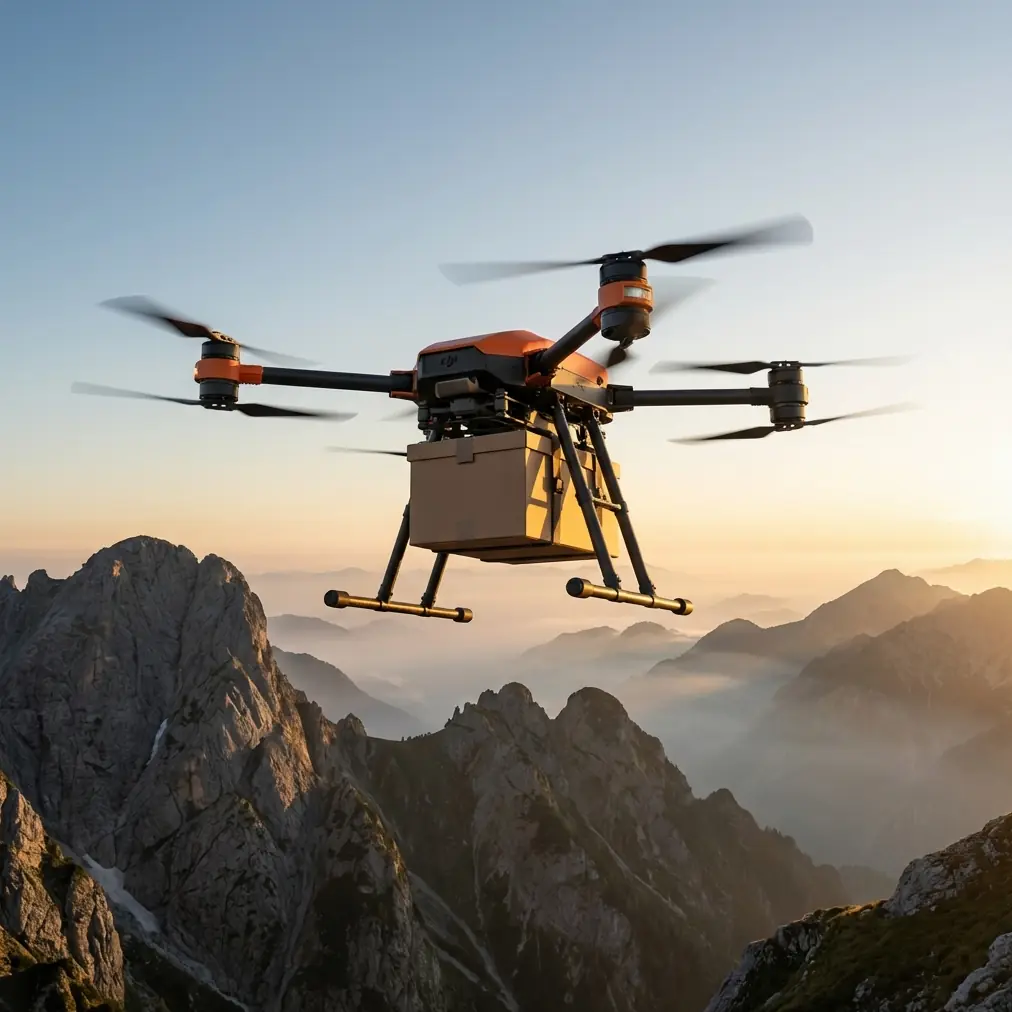
Urban Construction Mapping with FlyCart 30
META: Discover how the FlyCart 30 transforms urban construction site mapping with heavy payload capacity and precision delivery. Expert guide inside.
TL;DR
- FlyCart 30 handles 30kg payloads while maintaining stable flight for precision mapping equipment delivery
- Optimal flight altitude of 80-120 meters provides ideal coverage for urban construction zones without signal interference
- Dual-battery redundancy ensures uninterrupted operations across multiple site deliveries
- Emergency parachute system meets strict urban safety regulations for BVLOS operations
The Urban Construction Mapping Challenge
Construction site managers face a persistent problem. Traditional surveying methods consume 3-5 days for comprehensive site mapping. Ground-based equipment struggles with active work zones, debris, and constantly shifting terrain.
Drone-based solutions changed the game. But standard mapping drones hit a wall when sites require heavy sensor payloads, frequent equipment repositioning, or delivery of calibration tools to remote site corners.
The FlyCart 30 addresses these gaps directly. This heavy-lift platform combines 30kg payload capacity with the stability required for precision mapping support operations.
Why Heavy-Lift Capability Matters for Construction Mapping
Standard mapping drones carry lightweight cameras. That works for basic aerial photography. Urban construction demands more.
Modern site mapping requires:
- LiDAR sensors weighing 8-15kg for accurate elevation data
- Multi-spectral imaging equipment for material analysis
- Ground control point markers distributed across large sites
- Calibration equipment for survey-grade accuracy
The FlyCart 30's payload ratio exceeds industry standards by supporting these heavy sensor packages without sacrificing flight stability or battery life.
Expert Insight: When mapping active construction sites, I deploy the FlyCart 30 at 80-120 meters altitude. This range provides optimal ground sampling distance while staying above crane operations and avoiding signal interference from rebar-heavy structures. Lower altitudes risk magnetic interference from steel reinforcement, while higher altitudes reduce mapping resolution below acceptable thresholds.
Route Optimization for Multi-Point Delivery
Urban construction sites rarely offer simple flight paths. Buildings, cranes, scaffolding, and restricted airspace create complex navigation requirements.
The FlyCart 30's route optimization capabilities handle these challenges through:
- Automated obstacle avoidance using multi-directional sensors
- Pre-programmed waypoint navigation for repeatable flight paths
- Real-time path adjustment when site conditions change
- Geofencing compliance for restricted urban zones
Planning Efficient Mapping Support Routes
Effective route planning starts with site analysis. Identify all delivery points where mapping equipment needs positioning. Mark crane swing radiuses and active work zones.
Create primary and backup flight corridors. The FlyCart 30 stores multiple route profiles, allowing quick switching when primary paths become blocked.
Schedule flights during low-activity periods. Early morning operations between 5:30-7:00 AM typically offer clearest airspace and minimal ground crew interference.
The Winch System Advantage
Ground landings on active construction sites create problems. Debris damages equipment. Workers must clear landing zones. Operations halt during each delivery.
The FlyCart 30's winch system eliminates ground contact requirements. Lower mapping equipment directly to designated points without landing. Retrieve sensors from completed positions without site disruption.
This capability proves essential for:
- Rooftop sensor placement on partially completed structures
- Confined space deliveries between scaffolding
- Rapid repositioning of ground control points
- Equipment retrieval from difficult-access locations
Pro Tip: Configure winch descent speed to 0.5 meters per second when lowering sensitive LiDAR equipment. Faster speeds risk pendulum motion that stresses sensor mounts. The slower approach adds 30 seconds per delivery but prevents costly equipment damage.
BVLOS Operations in Urban Environments
Beyond Visual Line of Sight operations expand mapping coverage dramatically. A single operator can support equipment delivery across multiple construction sites within a defined urban zone.
The FlyCart 30 meets BVLOS requirements through:
- Redundant communication links maintaining constant operator contact
- Automated return-to-home functionality when signal degrades
- Real-time telemetry displaying position, altitude, and system status
- ADS-B integration for manned aircraft awareness
Urban BVLOS operations require regulatory approval. The FlyCart 30's safety systems simplify the approval process by demonstrating compliance with key requirements.
Technical Specifications Comparison
| Feature | FlyCart 30 | Standard Mapping Drone | Heavy-Lift Competitor |
|---|---|---|---|
| Maximum Payload | 30 kg | 2-4 kg | 20 kg |
| Flight Time (Full Load) | 16 minutes | 25 minutes | 12 minutes |
| Winch System | Integrated | Not Available | Optional Add-on |
| Dual-Battery Redundancy | Standard | Not Available | Optional |
| Emergency Parachute | Integrated | Not Available | Optional |
| BVLOS Ready | Yes | Limited | Partial |
| Wind Resistance | 12 m/s | 8 m/s | 10 m/s |
Dual-Battery Redundancy Explained
Urban operations demand reliability. Equipment failure over populated areas creates serious safety and liability concerns.
The FlyCart 30's dual-battery architecture provides genuine redundancy. Each battery system operates independently. If one system fails, the other maintains full flight capability.
This design enables:
- Continued mission completion after single battery failure
- Extended operational confidence for critical deliveries
- Simplified maintenance scheduling with independent battery monitoring
- Regulatory compliance for operations over populated areas
Battery health monitoring alerts operators to degradation before failures occur. Replace batteries proactively rather than reactively.
Emergency Parachute System for Urban Safety
Construction sites sit within urban environments. Surrounding buildings house workers, residents, and businesses. Uncontrolled drone descent creates unacceptable risk.
The FlyCart 30's integrated emergency parachute deploys automatically when flight systems detect critical failures. The parachute reduces descent velocity to safe levels protecting people and property below.
Parachute deployment triggers include:
- Complete power system failure
- Multiple motor failures
- Flight controller malfunction
- Manual operator activation
The system resets quickly after deployment. Replace the parachute cartridge and return to operations within 15 minutes.
Common Mistakes to Avoid
Overloading for single-trip efficiency
Pushing payload limits reduces flight stability and battery reserves. Plan multiple trips rather than maxing out capacity on every flight.
Ignoring wind patterns between buildings
Urban canyons create unpredictable wind acceleration. Check conditions at multiple altitudes before committing to flight paths through building gaps.
Skipping pre-flight communication checks
Signal interference from construction equipment causes unexpected link losses. Verify communication strength across the entire planned route before launch.
Neglecting battery conditioning
Cold morning operations reduce battery performance. Condition batteries to operating temperature before flight. Cold batteries deliver 15-20% less capacity than properly warmed units.
Flying during peak crane activity
Tower cranes swing unpredictably during heavy lift operations. Coordinate with crane operators or schedule flights during documented low-activity windows.
Frequently Asked Questions
What payload configurations work best for construction mapping support?
The FlyCart 30 accommodates various configurations depending on mission requirements. For LiDAR delivery, use the standard cargo box with foam inserts protecting sensitive components. For ground control point distribution, the quick-release basket enables rapid sequential drops. Multi-spectral sensor transport benefits from vibration-dampened mounting plates that protect calibration during flight.
How does weather affect urban construction mapping operations?
Wind creates the primary limitation. The FlyCart 30 handles sustained winds up to 12 m/s, but urban environments amplify gusts between buildings. Rain operations require IP-rated payload protection for sensitive mapping equipment. Temperature extremes affect battery performance—plan for reduced flight times below 5°C or above 40°C. Morning operations typically offer calmest conditions in urban settings.
What regulatory approvals are needed for construction site drone delivery?
Requirements vary by jurisdiction. Most urban operations require Part 107 certification at minimum. BVLOS operations need additional waivers demonstrating safety system compliance. The FlyCart 30's integrated safety features—dual batteries, emergency parachute, redundant communications—support waiver applications. Construction sites may fall under temporary flight restrictions during certain activities. Verify airspace status daily before operations.
Transforming Construction Site Operations
Urban construction mapping support requires equipment matching the complexity of the environment. Standard drones lack payload capacity. Basic heavy-lift platforms lack safety systems for urban deployment.
The FlyCart 30 bridges this gap. Heavy payload capacity meets precision delivery. Integrated safety systems satisfy urban operational requirements. Route optimization handles complex site geometries.
Construction timelines compress when mapping equipment reaches any site location within minutes rather than hours. Survey teams complete work faster. Project managers make decisions with current data.
Ready for your own FlyCart 30? Contact our team for expert consultation.