
FlyCart 30 on Dusty Construction Mapping Jobs
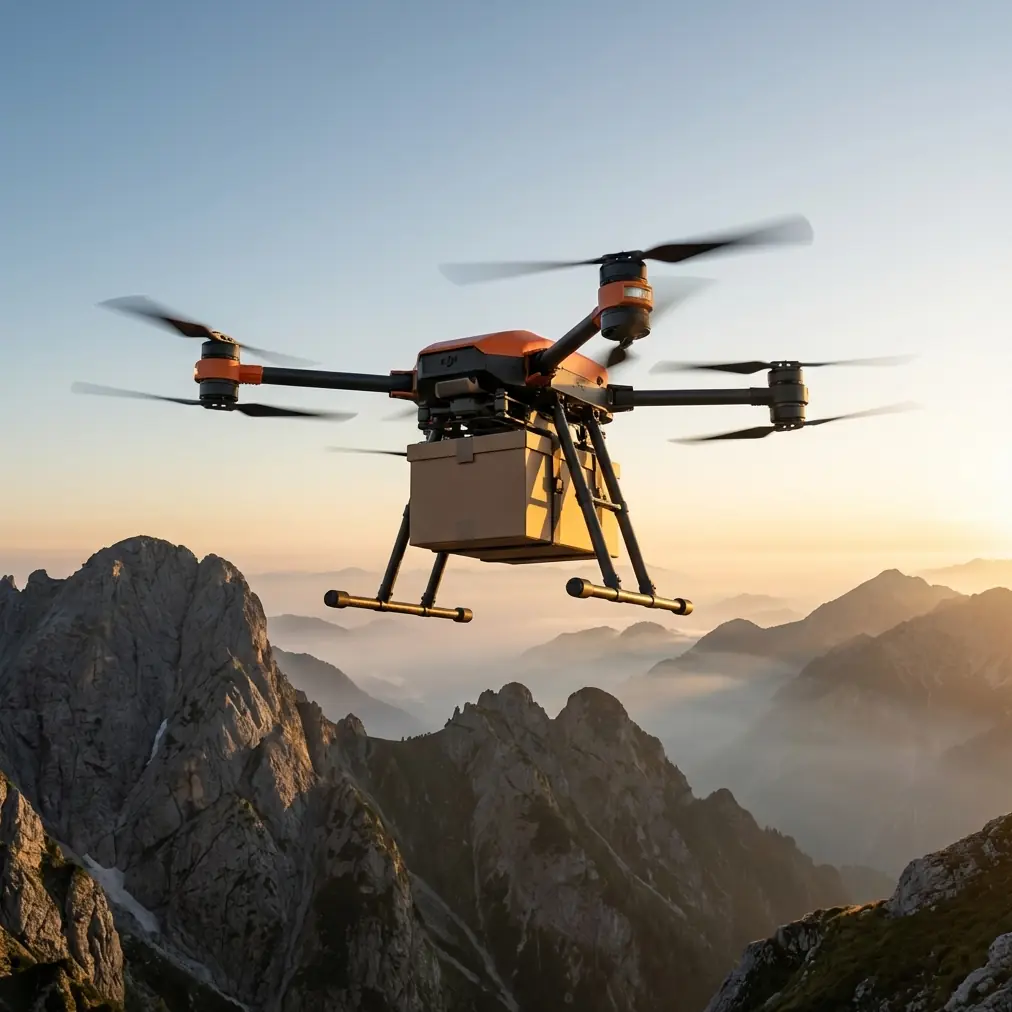
FlyCart 30 on Dusty Construction Mapping Jobs: What Changes When Airspace Rules Tighten
META: A field-driven look at FlyCart 30 for dusty construction site mapping, with practical insight on payload handling, winch workflows, dual-battery endurance, and why new U.S. drone legislation matters for operators planning scalable missions.
Dust changes everything.
On paper, a construction mapping mission can look routine: lift off, fly the grid, collect data, land, process. In the field, especially on active sites with moving equipment, uneven staging areas, and fine particulate hanging in the air, the job gets less tidy. The aircraft has to cope with rough handling conditions. The crew has to keep operations predictable. And increasingly, the operator also has to think about where regulation is heading, not just where the drone is flying.
That is where the FlyCart 30 becomes more interesting than its name suggests.
Most people hear “cargo drone” and immediately think delivery. That misses a major part of the value. In dusty construction environments, the FlyCart 30 can sit at the center of a broader site-data workflow, not only moving tools or sensors but supporting how mapping teams stage equipment, reach awkward drop points, and maintain tempo across large projects. If you are managing logistics and mapping together, that combination matters more than a specification sheet ever will.
I have seen this mindset shift happen on complex sites. The question stops being, “Can this drone carry something?” The better question is, “Can this platform reduce friction across the full mapping operation while still fitting the compliance direction the industry is moving toward?”
Right now, that second question deserves more attention.
Why regulation now matters to FlyCart 30 operators
A recent drone policy push in Washington gives a useful clue about where commercial operators should focus. According to reporting from DroneLife, a Democratic congressman from New Mexico is promoting two federal drone bills: the COUNTER Act and Secure Our Skies. The stated driver is clear enough: UAV use is growing across the United States, and lawmakers want rules that address drone-related risks before those problems grow larger.
That is not abstract beltway noise for construction teams. It is operational context.
If you are planning to use a FlyCart 30 around active development sites, utility corridors, large industrial campuses, or expanding civil works projects, you are operating inside an environment that is becoming more structured. New rules tend to favor crews that already document procedures well, define mission boundaries clearly, and choose aircraft with safety systems that support disciplined operations.
For FlyCart 30 users, this has two immediate implications.
First, the era of casual “we’ll figure it out on site” drone planning keeps shrinking. Second, platforms that can support more controlled workflows, including managed payload handling and safety redundancy, become easier to justify internally. That is especially true for companies trying to scale from occasional flights to repeatable programs.
The regulatory trend does not tell you to stop innovating. It tells you to build an operation that can stand up to scrutiny.
A dusty-site case study mindset
Imagine a large construction site in the dry season. Earthmoving is underway. Survey markers get shifted. Temporary roads appear and disappear. One zone needs updated terrain data, another needs progress imagery, and a third needs a sensor package repositioned near a stockpile boundary before the next flight block begins.
This is where many teams split into inefficient fragments. The mapping crew waits on ground transport. The logistics crew treats air movement as a separate problem. The result is downtime, duplicated site crossings, and more exposure to dust, traffic, and delay.
A FlyCart 30-centered workflow can tighten that up.
Not because it replaces a dedicated mapping drone in every mission. It doesn’t. The better use is as a force multiplier. It can move supporting gear, deliver sensors or batteries to forward teams, lower payloads by winch into areas where a direct landing would kick up debris or create rotor wash issues, and keep work sections supplied without driving vehicles through active measurement zones.
That winch point is easy to underestimate. On a dusty site, avoiding unnecessary touchdown events is not just a convenience issue. It can reduce contamination around sensitive equipment, cut the chances of debris ingestion during loading, and help maintain better control over where equipment is placed. Compared with cargo platforms that rely more heavily on landing for every transfer, a well-used winch system creates cleaner handoffs.
For construction mapping, cleaner handoffs mean fewer interruptions in the data collection chain.
Why payload ratio matters more than marketing suggests
One term that gets tossed around loosely is payload ratio. For a site operator, it is not a vanity metric. It tells you whether the aircraft is doing meaningful work relative to its own size and mission burden.
On dusty projects, teams often carry more than the obvious payload. Cases need moving. Batteries need repositioning. Compact ground control gear, communication kits, field tablets, replacement components, and site-specific sensors all compete for transport time. If the aircraft can carry enough useful mass to remove repeated utility runs, its value compounds quickly.
This is where the FlyCart 30 tends to separate itself from lighter-duty alternatives. Some competing platforms can technically move small items, but not at a threshold that changes the workflow. They save footsteps. They do not save a cycle. The FlyCart 30, by contrast, is better suited to missions where air transport needs to absorb real operational load rather than occasional convenience cargo.
That distinction matters on projects measured in machine hours and survey turnaround, not hobby-style flight counts.
A stronger payload ratio also opens up hybrid mapping support roles. Instead of sending one team back to the staging area for batteries or a field sensor while another pauses work, the aircraft becomes the connector. Site leaders care about that because continuity is often more valuable than raw speed. A consistent pace usually beats a series of short bursts followed by waiting.
Dust, batteries, and why endurance is really about resilience
Construction crews love to talk about endurance, but endurance is often misunderstood as a single number. In field conditions, endurance is resilience: how well the system holds its mission rhythm when the environment is messy.
The FlyCart 30’s dual-battery architecture matters here. Not because it magically solves every downtime issue, but because redundancy and energy management become more consequential when the site is spread out, dusty, and operationally noisy. If one battery-dependent process introduces fragility, the entire sortie chain feels it. Dual-battery systems can support steadier sortie planning and add confidence when missions are staged farther from the core setup area.
That operational significance is easy to see on large construction footprints. A battery strategy that works near a clean launch pad may feel very different when the team is servicing multiple sectors, dealing with changing wind corridors around structures, and trying to minimize dust exposure during equipment handling. The more predictable the aircraft’s power profile, the more predictable your site workflow becomes.
This is also where route optimization stops being a software buzzword and turns into a practical planning discipline. On active projects, route efficiency is not only about flying the shortest line. It is about reducing unnecessary low-altitude transits near dust plumes, avoiding congested work zones, timing drops to match crew readiness, and preserving energy margins that make the day less brittle.
A good operator will treat the FlyCart 30 less like an airborne courier and more like a scheduled site utility.
The safety layer that becomes more valuable under stricter oversight
The DroneLife report on the COUNTER Act and Secure Our Skies points to a policy atmosphere focused on addressing risks before they escalate. Whether the final legal framework lands exactly as proposed or evolves through committee and implementation, the direction is familiar: more attention to misuse, more pressure to define acceptable operations, and less tolerance for vague risk management.
That makes built-in safety features more than a procurement talking point.
For example, an emergency parachute system has practical significance beyond headline reassurance. On construction sites, you often have fragmented work cells, subcontractor traffic, cranes, material stacks, and shifting exclusion zones. A fail-safe recovery layer supports safer contingency planning in these mixed-use environments. It does not replace disciplined mission design, but it does improve the conversation around acceptable risk, especially when you are asking project managers, safety officers, and clients to approve repeat use.
The same logic applies to structured operating concepts around BVLOS planning, even where current permissions and waivers determine what is actually allowed. Companies preparing for wider-area logistics or multi-zone support missions should build procedures that anticipate a more formal future. Legislators are clearly signaling that widespread UAV adoption will bring more scrutiny, not less. Operators who create clean records now will be in a better position when regulators, insurers, and enterprise customers ask harder questions.
If your operation cannot explain how it manages payload movement, route selection, contingency recovery, and site coordination, the aircraft itself is not the weak link. The program is.
Where FlyCart 30 excels against weaker alternatives
This is the part many articles dodge. They hide behind generic praise. Let’s be specific.
In dusty construction support, FlyCart 30 tends to outperform smaller or less purpose-built platforms in three areas that actually affect outcomes.
First, meaningful lift. A drone that carries only token payloads rarely changes site logistics. FlyCart 30 is designed for loads substantial enough to alter how teams stage and move mission-critical gear.
Second, better drop flexibility through the winch system. Competitors that require a clean landing for every transfer are less adaptable around unstable ground, loose dust, rebar fields, and partially obstructed drop zones. A controlled suspended delivery is often the safer and cleaner method.
Third, stronger fit for integrated logistics planning. Some aircraft are excellent at a narrow mission but awkward when asked to support larger operational choreography. FlyCart 30 works best when the site manager, survey lead, and logistics coordinator treat it as shared infrastructure.
That last point is where expert users pull ahead. The drone becomes part of the daily operating system.
A practical operating model for mapping support
If I were building a FlyCart 30 workflow for a dusty construction site today, I would structure it like this:
- Keep core mapping flights and air cargo support missions logically separated, even if they share the same planning team.
- Use the FlyCart 30 to move batteries, field sensors, GNSS accessories, communications gear, and urgent small tools between zones.
- Favor the winch for drops into unstable or debris-prone surfaces.
- Design routes around dust sources and site traffic, not just straight-line efficiency.
- Build written contingency steps that account for dynamic construction hazards.
- Log every recurring mission pattern so the operation grows easier to audit and refine over time.
That kind of structure aligns with the broader legislative mood reflected in the COUNTER Act and Secure Our Skies discussion. Federal lawmakers are reacting to growing drone use and the risk of misuse. Responsible commercial teams should read that signal correctly: cleaner procedures will increasingly matter.
If you are evaluating whether FlyCart 30 fits your site program, it helps to discuss mission design with people who understand cargo operations in real industrial environments. For direct field coordination, you can message a FlyCart specialist here.
The bigger takeaway
The FlyCart 30 is not just relevant because it can carry equipment. It is relevant because the commercial drone market is entering a phase where useful aircraft must do two things at once: solve a real site problem and fit a more demanding compliance culture.
Dusty construction mapping is a perfect test case.
The environment punishes fragile workflows. The schedule punishes delays. The site layout punishes inefficient ground movement. And the regulatory trajectory punishes vague operating discipline. A platform that combines substantial carrying ability, a practical winch system, dual-battery resilience, and a safety-oriented operating profile has a stronger case here than a lighter aircraft with thinner utility.
The recent push by a New Mexico congressman behind the COUNTER Act and Secure Our Skies is one more reminder that drone operations in the United States are being taken seriously at the federal level. For professional operators, that is not bad news. It is a sorting mechanism. Programs built on methodical planning and credible equipment will stand out.
On a dusty construction site, standing out usually starts with something simple: fewer interruptions, cleaner handoffs, and a drone that does real work.
Ready for your own FlyCart 30? Contact our team for expert consultation.