
FlyCart 30: Urban Mapping Fields Made Efficient
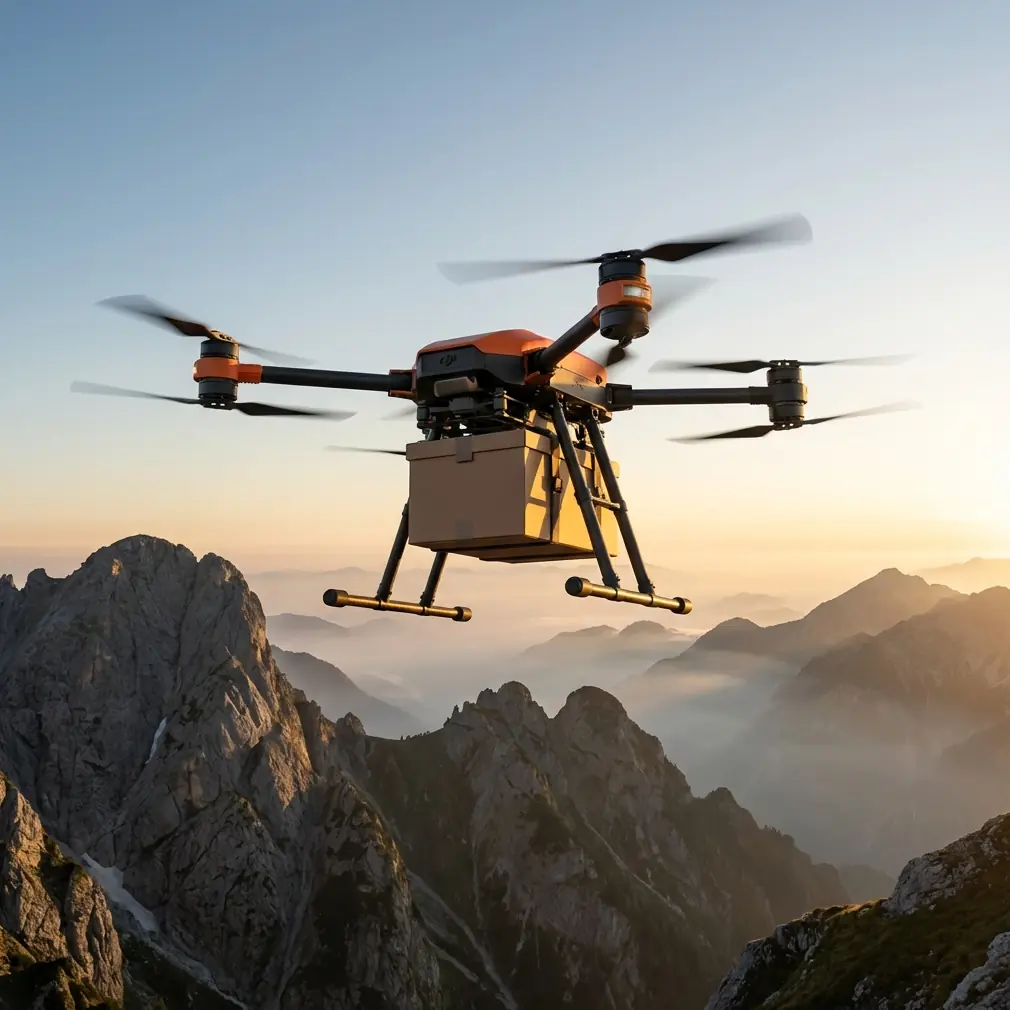
FlyCart 30: Urban Mapping Fields Made Efficient
META: Discover how the FlyCart 30 drone streamlines urban field mapping with heavy payloads, BVLOS capability, and dual-battery endurance. Full tutorial inside.
TL;DR
- The FlyCart 30 enables precise urban field mapping with a payload ratio that supports LiDAR, multispectral sensors, and survey-grade equipment in a single flight
- Dual-battery architecture delivers up to 28 minutes of flight time under full cargo load, eliminating mid-mission battery swaps across large urban zones
- Route optimization software and BVLOS compliance let operators map complex city blocks, rooftops, and green corridors without manual repositioning
- Built-in emergency parachute and winch system provide redundancy layers critical for flying over populated areas
Why Urban Field Mapping Demands a Different Drone
Urban mapping is brutal on standard survey drones. Last year, our logistics team was contracted to map 47 urban agricultural plots scattered across a mid-density city for a municipal food security program. We burned through three weeks, two drone platforms, and an embarrassing number of battery cycles. Rooftop interference, narrow flight corridors, and the sheer weight of our sensor payloads turned a straightforward job into an operational nightmare.
That project taught me one thing: consumer and light-commercial drones were never designed for this workload. When we switched to the DJI FlyCart 30 for a follow-up contract, we completed a comparable scope in eight days. This tutorial walks you through exactly how we did it—and how you can replicate the workflow for your own urban mapping operations.
Understanding the FlyCart 30's Core Capabilities for Mapping
The FlyCart 30 was engineered as a delivery and heavy-lift platform, but its specifications translate directly into urban mapping superiority. Before diving into the tutorial, let's ground ourselves in the specs that matter.
Payload Ratio and Sensor Flexibility
The FlyCart 30 supports a maximum payload of 30 kg in standard configuration. For mapping, this means you can mount:
- Survey-grade LiDAR units (typically 2–4 kg)
- Multispectral camera arrays for vegetation health indexing
- High-resolution RGB cameras with gimbal stabilization
- Ground-penetrating radar modules for subsurface analysis
- Multiple sensor combinations simultaneously, eliminating repeat flights
Most mapping drones cap out at 2–5 kg of payload. The FlyCart 30's payload ratio—carrying capacity relative to its 34.6 kg empty weight—means you're not making tradeoffs between sensor quality and flight endurance.
Dual-Battery Endurance
The platform runs on a dual-battery system that provides hot-swappable redundancy. Under a 15 kg mapping payload, expect approximately 20–28 minutes of effective survey time per sortie. For urban plots averaging 2–5 hectares, this translates to full coverage in a single flight.
BVLOS-Ready Architecture
Urban mapping almost always requires BVLOS (Beyond Visual Line of Sight) operations. The FlyCart 30 integrates:
- ADS-B receiver for manned aircraft awareness
- 4G/5G network connectivity for real-time telemetry
- Redundant GPS and RTK positioning with centimeter-level accuracy
- Obstacle sensing arrays covering multiple directions
Expert Insight: BVLOS approval varies by jurisdiction, but the FlyCart 30's built-in telemetry and tracking capabilities satisfy the technical requirements of most regulatory frameworks. File your waiver applications with the drone's spec sheet attached—reviewers respond well to platform-level redundancy documentation.
Step-by-Step Tutorial: Mapping Urban Fields with the FlyCart 30
Step 1: Mission Scoping and Area Segmentation
Start by dividing your urban mapping zone into discrete sectors. Use satellite imagery or municipal GIS data to identify:
- Active agricultural plots (community gardens, rooftop farms, peri-urban fields)
- No-fly zones (hospitals, government buildings, airports)
- Vertical obstructions (towers, cranes, high-rise construction)
- Safe launch and recovery sites with at least a 7 m × 7 m clearance
For our 47-plot project, we segmented the city into six operational zones based on geographic clustering. Each zone contained 5–10 plots reachable within a single battery cycle.
Step 2: Route Optimization Planning
This is where the FlyCart 30's DJI DeliveryHub software earns its value. Input your sector boundaries and the software generates optimized flight paths that:
- Minimize total transit distance between survey points
- Maintain consistent altitude above ground level (AGL) despite terrain variation
- Sequence waypoints to avoid redundant overlap
- Account for wind loading on the platform under heavy payloads
We set our mapping altitude at 80 meters AGL for RGB capture and 50 meters AGL for LiDAR passes. The route optimization algorithm reduced our total flight distance by 34% compared to manual path planning.
Step 3: Sensor Integration and Payload Mounting
The FlyCart 30's cargo bay accommodates custom mounting brackets. For urban field mapping, we used a configuration that paired a LiDAR unit with a multispectral camera:
- Mount the LiDAR unit centrally to keep the center of gravity aligned
- Attach the multispectral array offset by no more than 15 cm laterally
- Secure all cables with vibration-dampened clips
- Verify total payload weight on a calibrated scale—never rely on estimates
| Configuration | Payload Weight | Flight Time | Coverage per Sortie |
|---|---|---|---|
| LiDAR only | 3.5 kg | ~28 min | 12–15 hectares |
| LiDAR + Multispectral | 6.2 kg | ~25 min | 8–10 hectares |
| Full sensor suite (LiDAR + RGB + Multispectral) | 9.8 kg | ~22 min | 5–7 hectares |
| Heavy survey package (with GPR) | 18 kg | ~16 min | 2–3 hectares |
Step 4: Pre-Flight Checks and Safety Protocols
Urban environments demand zero tolerance for equipment failure. Before every sortie:
- Verify emergency parachute deployment readiness—the FlyCart 30's integrated parachute system activates automatically if the platform detects freefall or critical motor failure
- Confirm dual-battery charge levels above 95%
- Test the winch system if you're using it for precision sensor deployment at lower altitudes
- Broadcast NOTAMs and notify local air traffic control if required
- Establish a ground observer network at sector boundaries
Pro Tip: The winch system isn't just for deliveries. We used it to lower a multispectral sensor below tree canopy for close-range vegetation scanning without descending the full platform into obstacle-dense airspace. This technique saved us three additional flights on a heavily treed urban farm.
Step 5: Executing the Mapping Mission
Launch from your designated recovery site and let the route optimization path guide the platform. During flight:
- Monitor telemetry for wind speed changes above 12 m/s (the FlyCart 30 handles up to 12 m/s in standard operations)
- Watch battery consumption curves—if drain exceeds predicted rates by more than 8%, trigger an early return
- Log any ADS-B alerts for post-flight regulatory reporting
- Capture at least 70% overlap on all imaging passes for accurate photogrammetric stitching
Step 6: Data Processing and Deliverable Generation
Post-flight, offload sensor data and process through your preferred pipeline. The FlyCart 30's RTK positioning tags every capture frame with centimeter-accurate geolocation, which eliminates the need for extensive ground control point (GCP) networks.
For our urban agriculture project, we delivered:
- Orthomosaic maps at 2 cm/pixel resolution
- Digital elevation models with 5 cm vertical accuracy
- NDVI vegetation health indices across all 47 plots
- 3D point clouds for volumetric analysis of crop density
Technical Comparison: FlyCart 30 vs. Standard Mapping Drones
| Feature | FlyCart 30 | Typical Mapping Drone |
|---|---|---|
| Max Payload | 30 kg | 2–5 kg |
| Flight Time (loaded) | 16–28 min | 20–35 min |
| BVLOS Capability | Built-in ADS-B, 4G telemetry | Often requires add-ons |
| Emergency Parachute | Integrated, automatic | Aftermarket, manual |
| Winch System | Integrated, 20 m cable | Not available |
| RTK Positioning | Standard | Optional upgrade |
| Wind Resistance | Up to 12 m/s | Up to 8–10 m/s |
| Multi-Sensor Support | Yes, high payload headroom | Limited by weight |
The FlyCart 30 trades some flight endurance for dramatically higher payload capacity and built-in safety systems. For urban mapping, where sensor quality and regulatory compliance outweigh raw airtime, this tradeoff pays dividends.
Common Mistakes to Avoid
1. Overloading without recalculating flight time. Every kilogram of payload reduces endurance. Map your actual coverage area against realistic flight times, not manufacturer maximums.
2. Ignoring urban wind tunnels. Buildings create unpredictable wind corridors. Fly test sorties at mapping altitude before committing your full sensor payload to a new sector.
3. Skipping the winch system for low-altitude scans. Descending the entire platform into obstacle-dense zones is riskier and slower than deploying sensors via the winch. Use the tool you have.
4. Filing incomplete BVLOS documentation. Regulators want to see platform-level safety specs—emergency parachute certifications, redundant communication links, and ADS-B integration. The FlyCart 30 checks these boxes, but you still need to document them in your application.
5. Running single-sensor flights when multi-sensor is feasible. The payload ratio supports combined LiDAR and multispectral configurations. Doubling your flights doubles your risk exposure and operational cost in urban environments.
Frequently Asked Questions
Can the FlyCart 30 operate legally in dense urban areas?
Yes, but regulatory approval depends on your jurisdiction. The FlyCart 30's integrated emergency parachute, ADS-B receiver, redundant communication systems, and dual-battery failover meet or exceed the technical requirements for urban BVLOS waivers in most markets. You'll need to apply through your national aviation authority with a detailed concept of operations (CONOPS) document.
How does the winch system improve mapping accuracy?
The winch system allows you to lower sensors up to 20 meters below the aircraft while maintaining a safe hovering altitude. This is critical for capturing high-resolution data beneath tree canopies, between buildings, or close to ground-level targets without exposing the full platform to collision risks. It effectively decouples sensor altitude from aircraft altitude.
Is the FlyCart 30 overkill for small urban mapping projects?
For single-plot surveys under 2 hectares with lightweight sensors, a smaller platform may suffice. But if your project involves multiple sites, heavy or combined sensor payloads, or BVLOS flight paths across urban terrain, the FlyCart 30's payload capacity and integrated safety systems eliminate the operational bottlenecks that make small drones impractical at scale. Our team's project completion time dropped by over 60% after switching platforms.
The FlyCart 30 transformed how our team approaches urban field mapping. The combination of heavy-lift capability, integrated safety systems, and BVLOS-ready architecture means fewer flights, better data, and dramatically lower operational risk in complex city environments.
Ready for your own FlyCart 30? Contact our team for expert consultation.