
FlyCart 30 in Coastal Field Mapping: What China’s New HH
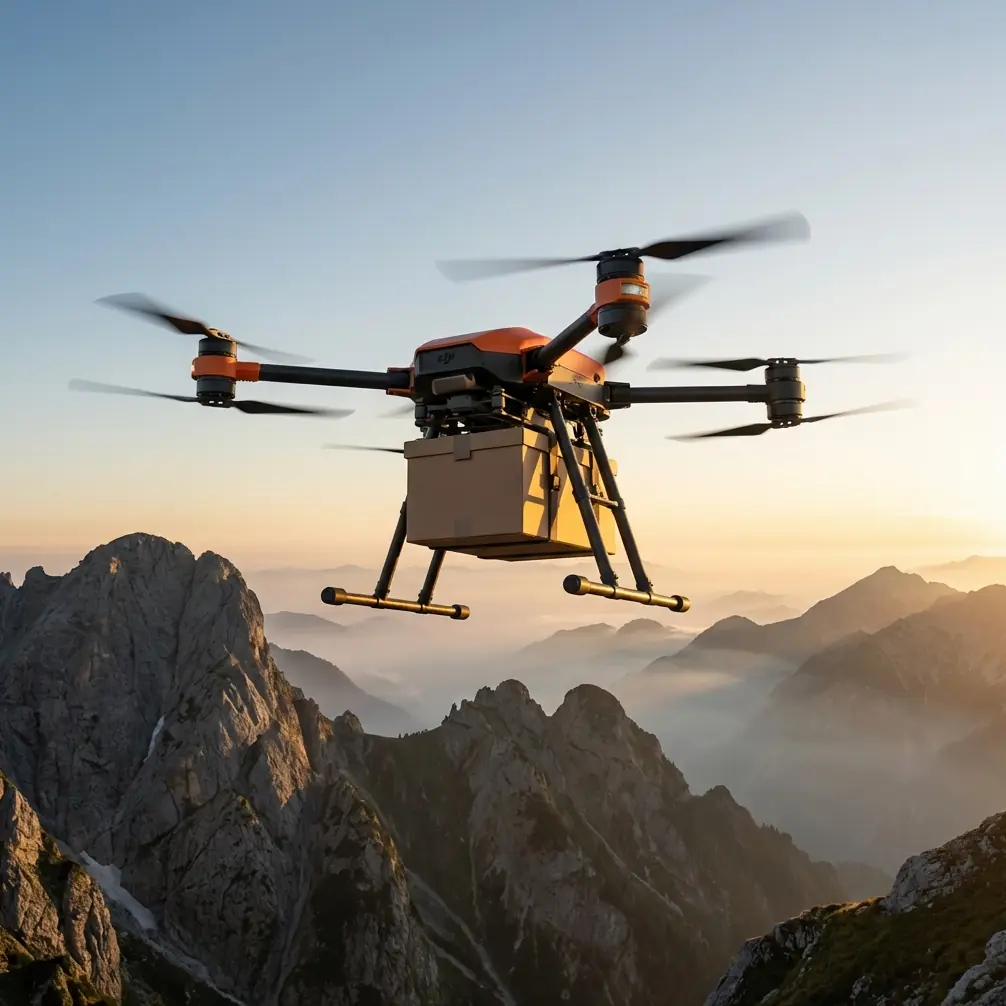
FlyCart 30 in Coastal Field Mapping: What China’s New HH-200 Cargo UAV Signals for Real-World Drone Logistics
META: A field-driven case study on FlyCart 30 coastal mapping operations, exposure control for better aerial imagery, and what the HH-200 unmanned cargo milestone means for BVLOS logistics.
The most useful drone news is not always about the drone you already fly. Sometimes it comes from a different aircraft category entirely, then changes how you think about mission design, operational reliability, and the next step for your own fleet.
That is exactly how I read the recent rollout of the first HH-200 commercial unmanned transport aircraft in Yanliang, Shaanxi on December 29. On paper, it is a cargo aviation story. In practice, it is also a signal for operators using smaller logistics platforms like the FlyCart 30 in field work near difficult terrain, fragmented road access, and weather-sensitive coastlines.
I say that as someone who spends more time thinking about workflow than airframes. My lens is simple: what does this news change for teams trying to move equipment, collect usable field data, and keep missions consistent when the environment refuses to cooperate?
For FlyCart 30 crews mapping coastal farmland, quite a lot.
A larger cargo UAV just validated the direction of travel
The HH-200’s first complete aircraft rolling off final assembly matters because it shows where the unmanned logistics sector is heading: away from isolated demonstrations and toward purpose-built transport systems designed for repeatable operational use. The official framing around “low-altitude plus logistics” is not just policy language. It points to a maturing ecosystem where unmanned aircraft are expected to support logistics transport, emergency assurance, and multi-scenario deployment.
That has direct implications for FlyCart 30 operators.
The FlyCart 30 is not competing with a larger unmanned transport system like the HH-200. It sits further down the operating chain. But that is exactly why the HH-200 milestone matters. When a new aviation-grade commercial transport UAV is introduced with a clear logistics and emergency-support mission, it reinforces a broader shift: unmanned cargo is becoming infrastructure, not novelty.
For a coastal field mapping team, that shift changes planning assumptions. It becomes easier to justify UAV-based equipment delivery to remote plots, battery relay operations, sensor swaps in the field, and time-sensitive support missions where roads, tides, and soft soil slow everything down. A platform like the FlyCart 30 benefits when the whole regulatory and operational culture around cargo drones becomes more serious.
The details from the HH-200 announcement help explain why. Its designers emphasized a stable, reliable configuration, including a high-wing layout and twin-boom tail structure. That design language is not cosmetic. Stability, clearance, and predictable handling are essential when the mission is transport rather than hobby flight. The article also ties the aircraft to key technical progress for logistics and emergency response. Those are the same operational values smaller cargo UAV teams work with every day, just at a different scale.
Why this matters in coastal mapping, not just cargo delivery
A lot of people underestimate how logistics-heavy a mapping job becomes once you leave ideal inland conditions.
Coastal farmland introduces complications fast. Salt haze reduces contrast. Wind shifts earlier than the forecast suggests. Access roads can narrow into embankments or disappear into wet ground. One section of the day is open and bright; the next turns flat and gray. Mapping crews often need to move batteries, RTK gear, markers, replacement props, and sometimes a second sensor package between separated plots that look close on a map and very far on foot.
This is where the FlyCart 30 starts to become more than a transport drone. It becomes the connective tissue of the operation.
In one recent scenario that still sticks with me, our crew was working coastal fields bordered by drainage channels and reed cover. The mission was straightforward enough: move mapping support equipment between two parcels, then launch a separate survey aircraft once the ground team confirmed control points. Halfway through the transfer leg, the aircraft’s sensing system detected unexpected movement near the embankment edge. We identified a small group of egrets lifting late from the reeds, likely disturbed by the vehicle path below and the rotor noise profile arriving across the wind.
What mattered was not drama. It was response quality.
The aircraft adjusted around the obstacle zone without forcing a rushed manual correction, buying the crew a cleaner decision window. In a coastal environment, wildlife encounters are not rare exceptions. Birds, especially in wetland-adjacent farmland, are part of the mission picture. Sensors that help avoid abrupt close-range conflicts are not luxury features. They preserve route integrity and reduce the kind of reactive flying that causes downstream mistakes.
That is one reason I keep linking this FlyCart 30 use case back to the HH-200 story. The industry is moving toward unmanned logistics systems built for operational reality, not brochure conditions. Reliability is now judged by how an aircraft behaves when the mission gets messy.
The overlooked lesson from camera news: brightness changes what your data feels like
The second news item might seem unrelated at first glance. It is a photography explainer centered on exposure compensation, published on March 21, 2026, with a simple but important point: brightness largely determines the texture and feel of an image. The article notes that the same composition can produce completely different impressions depending only on brightness. Higher brightness creates a lighter, clearer mood; lower brightness produces deeper color and a heavier visual tone.
That sounds like beginner camera advice. For coastal mapping operations, it is also practical mission doctrine.
Many FlyCart 30 teams support mapping rather than perform the actual survey capture. They move sensors, batteries, and kit into places where conventional vehicles lose time. But once you are running that support chain, image quality becomes your problem too, because poor field decisions upstream create weak deliverables downstream.
Exposure compensation is one of those deceptively basic controls that separates usable aerial data from frustrating rework.
On bright coastal fields, reflective water, pale soil, plastic crop covers, and sea-facing haze can trick a camera into underrepresenting important surface detail. The image may look clean in the moment yet flatten subtle boundaries needed for field interpretation. In the opposite direction, a darker exposure can make vegetation patterns look richer while burying shadow detail along dikes, track edges, or irrigation structures.
The original photography piece makes a strong operational point through a simple idea: identical framing is not identical output. If brightness shifts, interpretation shifts.
For mapping teams, that means image capture protocols cannot rely on composition alone. You need consistency in brightness handling, especially when multiple flights cover adjacent parcels under changing cloud and marine light. Exposure compensation is not artistic fluff in this context. It influences whether the final orthomosaic looks coherent, whether visual defects appear between sorties, and whether analysts can trust tonal relationships across the site.
That may sound obvious to imaging specialists, but field teams miss it all the time. They focus on route lines and overlap percentages while letting exposure drift because “the camera can sort itself out.” Coastal conditions are unforgiving to that assumption.
FlyCart 30’s role in a modern coastal workflow
So how does this all come together around FlyCart 30 specifically?
Not by pretending the aircraft is something it is not. The smartest FC30 operations are not about forcing it into a pure mapping role. They are about using its logistics strengths to remove failure points from mapping work.
A good coastal deployment often looks like this:
The main survey aircraft remains dedicated to capture quality. The FlyCart 30 handles movement of batteries, spare sensors, tripods, GNSS gear, and emergency replacement items between launch positions. Its payload ratio becomes meaningful here because every kilogram you move by air is time not wasted on unstable roads or foot carry across muddy edges. If the site is split by drainage cuts or difficult access corridors, a winch system can matter even more than a landing. You can place gear precisely where touchdown is unwise, limiting rotor wash effects on loose ground or crops.
That is the difference between “drone as hardware” and “drone as process.”
Dual-battery architecture also earns respect in these settings. Coastal jobs punish margins. Wind can change the return profile, and route optimization is not theoretical when the alternative is carrying expensive field equipment over flooded access paths. Redundancy in power systems supports decision-making discipline. It gives crews a better operational buffer when legs extend, pickup points shift, or the safest route is not the shortest line.
Then there is BVLOS relevance. Even if your current mission profile remains more conservative, the HH-200 announcement shows the broader aviation environment is actively organizing around unmanned transport beyond short, visual-range proof-of-concept work. That matters because every incremental advance in the acceptance of commercial cargo UAV operations helps normalize the planning logic that platforms like FlyCart 30 already serve well: distributed logistics, repeatable delivery, emergency support, and route-based mission execution.
If your team is building internal procedures today, build them as if the rest of the market will catch up tomorrow. Because it will.
Case study: a practical FC30 coastal mapping support mission
Here is a stripped-down version of the model I recommend.
We start with two separated field blocks near the coast, divided by a tidal drainage system and a narrow access road unsuitable for repeated vehicle passes. The survey aircraft is stationed at Block A. Ground control verification is needed at Block B before the second capture window opens. Wind is rising from the shore, and the light is shifting from hard sun to thin haze.
Instead of relocating the entire team, the FlyCart 30 moves a battery set, tripod, RTK rover, and a backup payload component to a preselected drop point near Block B. A winch-based handoff avoids landing in soft, uneven ground. The field team receives the equipment, confirms points, and reports that glare from standing water is affecting the survey preview.
That is where the second news item becomes relevant in a very non-academic way. The survey lead adjusts exposure compensation before the next mapping leg, compensating for the scene brightness instead of trusting a default exposure that would wash out detail. Same field geometry. Better data. Less tonal inconsistency in post-processing.
On the return segment, the FC30 route is adjusted because bird activity has increased along the original embankment corridor. Again, not dramatic. Just real. The aircraft’s sensing package helps maintain separation, and the revised path preserves mission continuity without creating a rushed manual intervention.
That is what operational maturity looks like: logistics, imaging awareness, route control, and environmental adaptation all working together.
If your team is building a similar workflow and wants to compare notes, this is a good point to message our flight planning desk on WhatsApp.
What the HH-200 rollout really tells FlyCart 30 operators
The headline is bigger than one aircraft.
China’s HH-200 rollout marks a visible step in the industrialization of unmanned logistics. The fact that the first aircraft completed final assembly on December 29, at a moment framed as a transition from the end of one planning period into the next, gives the announcement strategic weight. It is not being presented as a niche prototype. It is being positioned as a transport solution for logistics and emergency support scenarios.
For FlyCart 30 operators, three things follow from that.
First, cargo UAV operations are moving into a more structured era. Teams that already understand procedures, risk controls, battery discipline, and route planning will be ahead of the curve.
Second, the line between transport mission planning and data-collection mission planning is getting thinner. If your aircraft supports field mapping, imaging decisions like exposure handling are not separate from logistics. They affect whether the mission finishes cleanly or needs to be repeated.
Third, reliability is now a system property. The HH-200 article highlights stable configuration and broad application potential. The photography piece highlights how a single variable like brightness can alter image meaning. Put together, they point to the same truth: successful UAV operations depend on consistent control of both aircraft behavior and output quality.
That is why the FlyCart 30 remains so relevant in coastal field environments. It does not need to be the largest platform in the conversation. It needs to be the one that keeps the mission moving, protects timing, and helps the rest of the stack perform better.
And in coastal work, that is often the aircraft that matters most.
Ready for your own FlyCart 30? Contact our team for expert consultation.