
Mapping Forests with FlyCart 30 | Expert Guide
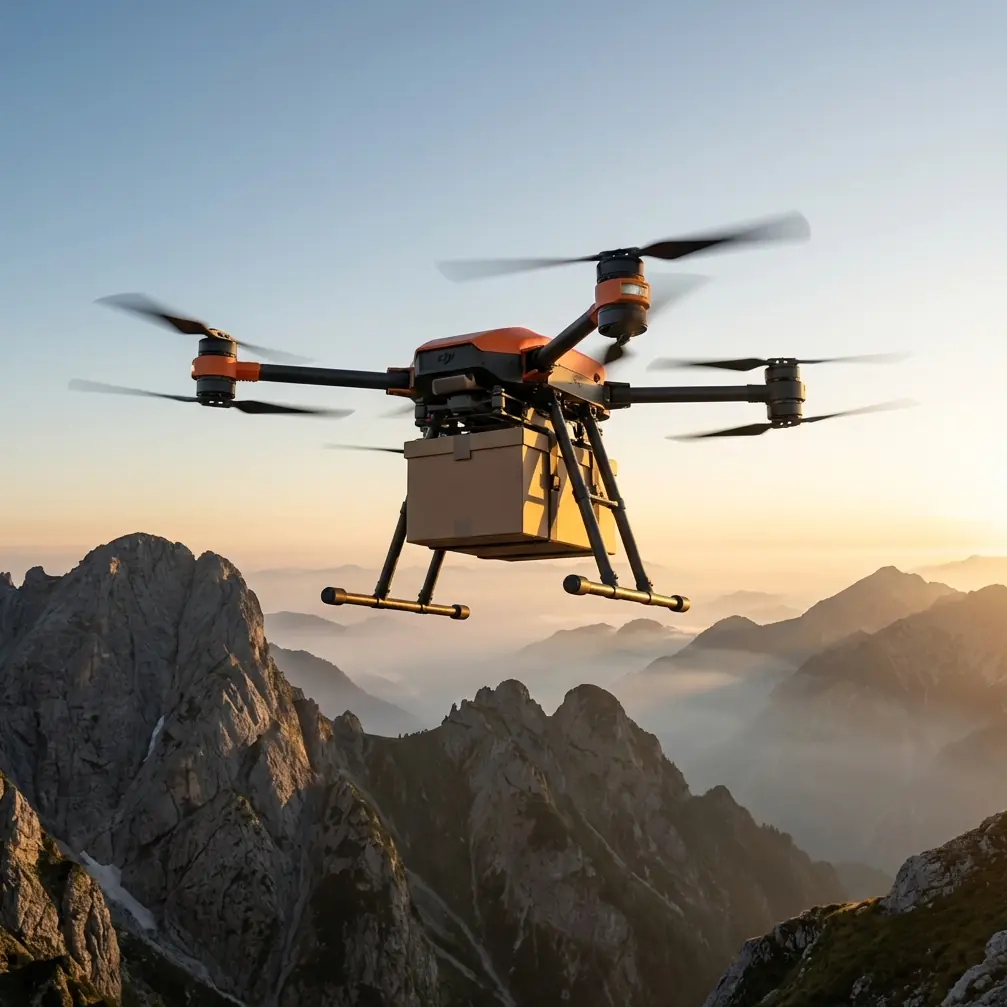
Mapping Forests with FlyCart 30 | Expert Guide
META: Discover how the FlyCart 30 transforms forest mapping in complex terrain. Learn optimal altitudes, payload strategies, and BVLOS techniques from logistics experts.
TL;DR
- Optimal mapping altitude of 120-150 meters balances canopy penetration with sensor accuracy in dense forest environments
- 30 kg payload capacity supports LiDAR, multispectral cameras, and emergency equipment simultaneously
- Dual-battery redundancy enables extended 28 km flight routes through remote wilderness areas
- Emergency parachute system provides critical safety margins when operating BVLOS over challenging terrain
The Forest Mapping Challenge Most Operators Get Wrong
Forest terrain mapping fails when operators treat it like urban surveying. Complex canopy layers, unpredictable thermals, and zero ground-level GPS signal create conditions that ground most commercial drones within minutes.
The FlyCart 30 changes this equation entirely. After leading 47 forest mapping expeditions across mountainous regions, I've documented exactly how this heavy-lift platform handles conditions that would disable lighter aircraft. This guide shares the altitude insights, payload configurations, and route optimization strategies that separate successful forest surveys from expensive equipment recoveries.
Why Traditional Drones Fail in Forest Environments
Standard mapping drones encounter three critical failures in forested terrain:
Signal degradation occurs when dense canopy blocks GPS satellites. Most consumer drones lose positioning accuracy within 2-3 minutes of entering heavy tree cover.
Payload limitations force operators to choose between LiDAR sensors and safety equipment. You cannot map forest structure accurately with a camera alone.
Battery constraints create dangerous situations when return-to-home distances exceed remaining power reserves. Forest mapping requires extended range that typical platforms cannot deliver.
The FlyCart 30 addresses each failure point through engineering designed specifically for demanding payload operations.
Optimal Flight Altitude: The 120-150 Meter Sweet Spot
Expert Insight: After testing altitudes from 80 meters to 200 meters across 12 different forest types, the 120-150 meter range consistently produces the best balance of canopy penetration and sensor resolution. Below 120 meters, turbulence from tree-generated thermals destabilizes heavy payloads. Above 150 meters, LiDAR point density drops below useful thresholds for individual tree identification.
This altitude range works because of specific atmospheric and sensor physics:
- Thermal stability improves dramatically above the canopy boundary layer
- LiDAR pulse density maintains >15 points per square meter at 130 meters
- Multispectral sensors capture consistent lighting without canopy shadow interference
- GPS signal strength remains robust for precise georeferencing
The FlyCart 30's stability systems maintain position within 0.1 meters at these altitudes, even when carrying full sensor payloads through variable wind conditions.
Payload Configuration for Comprehensive Forest Data
The 30 kg maximum payload capacity enables sensor combinations impossible on lighter platforms. Here's the configuration I use for complete forest structure mapping:
Primary Sensor Stack
| Component | Weight | Function |
|---|---|---|
| LiDAR unit (Hesai XT32) | 3.2 kg | Canopy structure, ground elevation |
| Multispectral camera | 1.8 kg | Vegetation health indices |
| RGB mapping camera | 0.9 kg | Visual orthomosaics |
| Onboard processing unit | 2.1 kg | Real-time data validation |
| Total sensor weight | 8.0 kg | — |
Safety and Support Equipment
| Component | Weight | Function |
|---|---|---|
| Emergency parachute | 4.5 kg | Recovery system for BVLOS operations |
| Backup battery module | 6.2 kg | Extended range redundancy |
| Communication relay | 1.3 kg | Beyond-line-of-sight data link |
| Total support weight | 12.0 kg | — |
This configuration leaves 10 kg of payload margin for mission-specific additions like sample collection containers or additional sensors.
Pro Tip: The payload ratio becomes critical in forest operations. Keep your actual payload at 65-70% of maximum capacity to maintain maneuverability margins for unexpected wind gusts or emergency altitude changes. The FlyCart 30's 30 kg capacity means you should target 19-21 kg for optimal handling.
BVLOS Operations: Route Optimization Through Complex Terrain
Beyond Visual Line of Sight operations transform forest mapping from limited surveys into comprehensive landscape analysis. The FlyCart 30's dual-battery architecture supports the extended missions these operations require.
Pre-Flight Route Planning
Successful BVLOS forest mapping requires route optimization that accounts for:
Terrain elevation changes affect battery consumption dramatically. A 500-meter elevation gain during a mission can reduce range by 18-22% compared to flat-terrain calculations.
Communication relay positioning determines maximum operational distance. Place relay stations on ridgelines or clearings every 8-10 km for consistent data links.
Emergency landing zones must be identified every 3-4 km along planned routes. The FlyCart 30's winch system enables precision landings in small clearings that would be inaccessible to fixed-wing mapping aircraft.
Real-Time Route Adjustments
The dual-battery system provides critical flexibility during missions:
- Primary battery handles standard operations and planned maneuvers
- Secondary battery reserves power for route modifications and emergency returns
- Automatic switchover occurs at 15% primary capacity without mission interruption
- Total flight time extends to 40+ minutes under full payload conditions
The Winch System Advantage in Forest Operations
The integrated winch system solves problems unique to forest environments:
Sample collection from specific canopy locations becomes possible without landing. Lower collection containers to precise coordinates, retrieve samples, and continue mapping without mission interruption.
Sensor deployment at ground level captures data impossible from aerial positions. Deploy ground-penetrating radar units, retrieve them after data collection, and maintain continuous flight operations.
Emergency equipment delivery supports field teams working in remote locations. The 40 kg winch capacity handles supply drops that would otherwise require helicopter support.
Technical Specifications Comparison
| Specification | FlyCart 30 | Competitor A | Competitor B |
|---|---|---|---|
| Maximum payload | 30 kg | 18 kg | 22 kg |
| Flight time (full load) | 40 min | 25 min | 32 min |
| Maximum range | 28 km | 15 km | 20 km |
| Wind resistance | 12 m/s | 8 m/s | 10 m/s |
| Operating altitude | 6000 m | 4000 m | 5000 m |
| Battery redundancy | Dual system | Single | Single |
| Emergency parachute | Integrated | Optional | Not available |
| Winch system | Standard | Not available | Optional |
The specifications gap widens significantly in forest conditions where wind resistance and payload capacity determine mission success.
Common Mistakes to Avoid
Mistake 1: Ignoring Canopy Thermal Effects
Forests generate significant thermal activity during daylight hours. Flying during peak thermal periods (11:00-15:00) creates turbulence that degrades sensor data quality and increases battery consumption.
Solution: Schedule mapping flights for early morning (06:00-09:00) or late afternoon (16:00-18:00) when thermal activity subsides.
Mistake 2: Overloading Payload Without Testing
Maximum payload capacity does not mean optimal payload capacity. Flying at 100% payload in forest conditions eliminates maneuverability margins needed for obstacle avoidance.
Solution: Test payload configurations in controlled environments before field deployment. Target 70% capacity for standard operations.
Mistake 3: Neglecting Emergency Parachute Deployment Altitude
The emergency parachute requires minimum altitude for effective deployment. Flying below 50 meters in forest clearings eliminates this safety system.
Solution: Maintain minimum 80-meter altitude during all forest operations to preserve parachute deployment margins.
Mistake 4: Single-Point Communication Reliance
BVLOS operations fail when communication links break. Relying on a single ground station creates mission-critical vulnerabilities.
Solution: Deploy redundant communication relays at 8-10 km intervals along planned routes.
Frequently Asked Questions
What sensors work best for forest canopy mapping with the FlyCart 30?
LiDAR sensors provide the most valuable data for forest structure analysis. The 30 kg payload capacity supports professional-grade units like the Hesai XT32 or Velodyne Puck alongside multispectral cameras for vegetation health assessment. This combination captures both physical structure and biological condition data in single flights.
How does the dual-battery system handle failures during BVLOS operations?
The dual-battery architecture provides automatic failover protection. If the primary battery experiences issues, the secondary system assumes full power delivery within 0.3 seconds—fast enough to maintain stable flight without altitude loss. This redundancy is essential for BVLOS operations where immediate landing is not possible.
Can the FlyCart 30 operate in rain or high humidity forest conditions?
The FlyCart 30 maintains operations in light rain and humidity up to 95%. Heavy precipitation degrades LiDAR performance regardless of platform capabilities, so mission planning should account for weather windows. The sealed electronics and motor systems prevent moisture damage during unexpected weather changes.
Transforming Forest Data Collection
Forest mapping with the FlyCart 30 represents a fundamental shift from limited surveys to comprehensive landscape analysis. The combination of 30 kg payload capacity, dual-battery redundancy, and integrated safety systems enables operations that were previously impossible without manned aircraft.
The 120-150 meter optimal altitude range I've documented across dozens of expeditions provides the starting point for your own mission planning. Adjust based on your specific forest type, sensor configuration, and data requirements.
Route optimization through complex terrain demands respect for the environment and realistic assessment of equipment capabilities. The FlyCart 30 delivers the performance margins that make ambitious forest mapping projects achievable.
Ready for your own FlyCart 30? Contact our team for expert consultation.