
How to Plan Urban Forest Mapping Support with FlyCart 30—Les
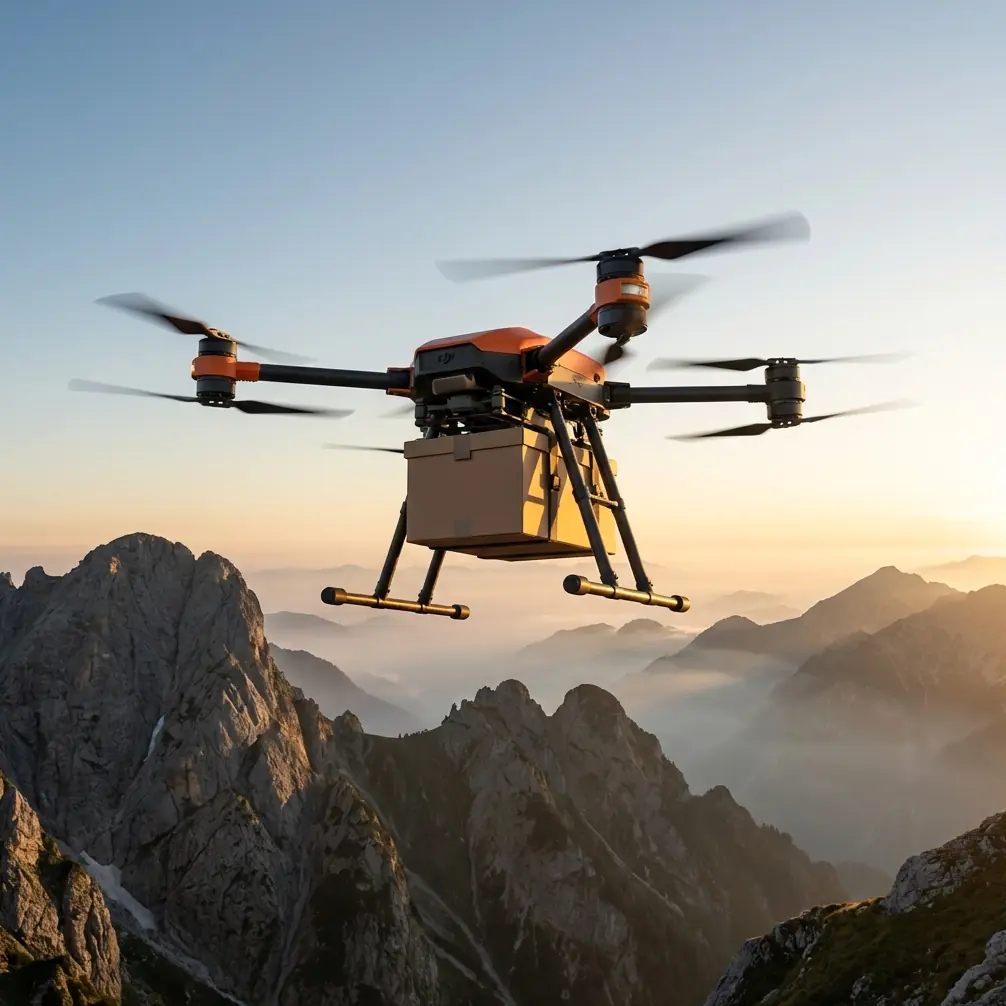
How to Plan Urban Forest Mapping Support with FlyCart 30—Lessons from Drone Journalism’s Short-Lived Classroom
META: A practical expert guide to using FlyCart 30 for urban forest mapping support, with operational insights drawn from the rise and abrupt halt of early drone journalism training.
Urban forest mapping is rarely just about collecting imagery. In real projects, the work is shaped by access limits, safety routines, airspace friction, battery discipline, and the simple question of whether a team can repeat the mission tomorrow under the same rules. That is why the most useful way to think about the FlyCart 30 is not as a flying camera platform in the abstract, but as part of a field system built for structured, repeatable work.
I come at this from an operations mindset. As a logistics lead, I look at what breaks a mission before it leaves the ground: dirty sensors, rushed launch zones, inconsistent payload mounting, route drift, and crews that know how to fly but not how to document. For urban forest mapping, those details decide whether you return with usable data or a half-finished job and a stack of avoidable delays.
There is an overlooked historical clue here. Back in 2012 to 2013, the Missouri School of Journalism ran an experimental drone journalism course for just one year. It did not fade out because the idea lacked value. It stopped because of a Federal Aviation Administration flight ban that shut the effort down. That single fact matters far beyond journalism. It shows that drone capability alone never guarantees operational continuity. Regulation can stop even a promising workflow cold if the program is not designed around compliance from day one.
That lesson is directly relevant to FlyCart 30 deployments in urban forest mapping. If your plan depends only on aircraft performance, you are missing the real job. The real job is building a mission architecture that survives constraints.
Start with the right mission definition
For urban forest mapping, FlyCart 30 should be framed as a support platform inside a broader survey workflow. In dense or semi-dense city-edge woodland, the practical challenge is often moving equipment, batteries, sensors, or field supplies to difficult positions quickly and predictably. Tree canopies distort line of sight, road access may be poor, and crews are often split across small entry points rather than one open staging zone.
That is where payload ratio and route planning become operational, not marketing, concepts.
A healthy payload ratio means the aircraft is not being tasked at the edge of its working envelope every time it lifts. For mapping operations, that translates into steadier handling, less strain across repeated cycles, and better schedule reliability when you need to move batteries, lightweight sensor kits, GNSS gear, marker panels, or communications equipment between teams. In urban forestry, reliability beats theoretical peak capability every time.
Route optimization matters for the same reason. A short straight path on a map may be the wrong choice if it crosses a pedestrian corridor, a utility setback, a school boundary, or a patch of unstable wind around taller buildings. The best FlyCart 30 route is the one that protects schedule, airspace compliance, and public safety together.
Learn from the classroom that only lasted a year
The Missouri example is easy to misread as a niche media story. It is actually a warning for anyone building drone-dependent field operations.
An experimental drone journalism class launched at a major university, explored real aerial reporting applications, and then ended after one year because federal rules made continuation impossible. Operationally, that tells us two things.
First, training without a durable legal pathway has a short shelf life. Second, a drone program gains value only when procedure, permissions, and purpose evolve together.
The same pattern appears in China’s media education landscape from that period. News organizations and communication schools had already started exploring drone use for reporting and imaging. Some institutions hosted public experiences around aerial filming technology; others worked with drone companies on image-focused projects such as documentary production. Yet at that time, there were still no formal drone-related courses in domestic media colleges. That gap is significant. Interest was real, but structured institutionalization had not caught up.
For FlyCart 30 teams supporting urban forest mapping, the takeaway is simple: do not confuse curiosity or pilot enthusiasm with operational maturity. A serious program needs standard operating procedures, maintenance discipline, pre-flight checklists, documentation habits, and a route approval process that can withstand scrutiny.
The pre-flight cleaning step most teams rush
Before discussing batteries or route logic, start with a smaller habit that has outsized safety value: clean the aircraft properly before every mapping support sortie.
This sounds basic. It is not.
Urban forest environments mix dust, moisture, pollen, leaf particles, bark fragments, and fine grit. Those contaminants settle exactly where you do not want them—around sensors, mechanical joints, attachment points, and safety systems. If your FlyCart 30 uses an emergency parachute or other protective subsystem, a dirty housing, obstructed release area, or neglected inspection point turns a designed safety feature into a checkbox.
My rule is that cleaning is not cosmetic. It is a functional inspection.
Wipe down exposed surfaces around vision and positioning sensors. Check the winch system path if the mission calls for suspended delivery. Remove debris from moving interfaces. Confirm battery contacts are clean and dry. Inspect attachment hardware for contamination that could affect locking integrity. Verify no leaf matter or tape residue is near components that need free movement in an emergency. In wet urban woodland, this step becomes even more critical after low-altitude operations near sap-heavy or dusty vegetation.
Why emphasize this? Because urban forest mapping support often involves repeated short cycles rather than one long flight. Repetition breeds complacency. Teams think the first clean aircraft stays clean all day. It does not.
Use the winch system where the ground is the real obstacle
When crews talk about difficult mapping sites, they often focus on airspace. On many urban forest jobs, the ground is the bigger problem.
Steep embankments, fenced conservation areas, drainage lines, and soft soil can make direct drop-off or landing impractical. A winch system solves a very specific operational bottleneck: delivering gear without forcing the aircraft or field crew into the worst part of the terrain.
For example, if one survey team needs a replacement battery, control point materials, or a compact sensor package on the far side of a restricted greenbelt, the aircraft can remain in a cleaner hover position while lowering the item precisely. That reduces landing risk, keeps rotor wash away from loose debris, and minimizes disturbance in sensitive surface conditions.
In urban forestry, that matters because the mapping job is often adjacent to public infrastructure. You do not want crews bushwhacking across unstable slopes or crossing informal pedestrian routes just because the supply chain on the ground was poorly planned.
The winch also supports cleaner handoff logic. Instead of forcing a landing in a cramped opening under partial canopy, you maintain separation, complete the transfer, and continue the workflow.
Dual-battery discipline is about consistency, not just endurance
A dual-battery setup is frequently discussed in terms of redundancy and flight time, but for mapping support the more useful lens is consistency.
Urban forest missions are rarely flown in ideal open environments. Shade, humidity, temperature shifts, stop-start flight patterns, and hovering with suspended loads all affect energy behavior. Dual-battery architecture can smooth operations, but only if teams treat batteries as managed assets rather than interchangeable blocks.
Pair batteries with usage records. Monitor balance and cycle history. Do not casually mix a fresh pack with one that has materially different wear. In repeated support runs, battery inconsistency creates planning noise, and planning noise cascades into route errors, rushed landings, and weak reserve margins.
The operational significance is straightforward: when the aircraft’s energy profile is predictable, route optimization becomes real. When it is not, every route is a guess with nicer paperwork.
BVLOS thinking starts long before the route extends
BVLOS is often treated as an advanced permission topic, but the mindset behind it is useful even for shorter, line-of-sight urban forest work. It forces teams to think in terms of command reliability, fallback paths, communication continuity, and public-risk segmentation.
Even if your specific mission stays within standard visual boundaries, plan it as though every segment must remain understandable without improvisation. Mark handoff zones. Define lost-link responses. Pre-identify no-hover areas near roads, playground edges, utility corridors, and building clusters. Separate the air route from likely public movement below.
This is where the old journalism-course story returns again. The program at Missouri was innovative, but innovation alone could not protect it from the regulatory environment. Modern FlyCart 30 teams should take the opposite approach: design for the most accountable version of the mission first, then scale capability.
If your organization is developing a formal operating method for this kind of work, a practical next step is to compare route design, battery rotation, and safety inspection routines with teams already running structured cargo workflows; one easy way to start that conversation is through this field operations contact: https://wa.me/85255379740.
Route optimization for urban forest mapping support
The wrong route wastes more than time. It compresses decision-making at the exact moments when you need margin.
For FlyCart 30 support in urban forest mapping, route optimization should consider five layers at once:
- Airspace acceptability.
- Ground risk below the path.
- Wind behavior around canopy edges and nearby structures.
- Delivery or pickup geometry.
- Battery reserve at every decision point.
That fifth point is where many teams get sloppy. They think in total mission time instead of branch options. A robust route leaves enough reserve to abort, reposition, or hold briefly if the receiving team is not ready. This is especially relevant when using a winch near mixed canopy and built structures, where visual references can shift with angle and light.
A route that is theoretically efficient but leaves no margin for a second approach is not optimized. It is brittle.
Build a documentation culture, not just a flight routine
The early exploration of drone use in media institutions is instructive because it showed strong interest before formal course structures were established. That gap between enthusiasm and curriculum is the same gap many commercial drone teams still struggle with. They have pilots, aircraft, and client demand, but not a durable documentation culture.
For FlyCart 30 urban forest mapping support, documentation should cover:
- Pre-flight cleaning confirmation.
- Battery pair assignment and health check.
- Payload attachment verification.
- Winch function check, if applicable.
- Route approval and alternate path.
- Emergency parachute inspection status.
- Site-specific hazards such as public foot traffic or canopy interference.
This is not bureaucracy for its own sake. It is how an operation becomes repeatable across crews and seasons.
In practice, repeatability is the difference between a one-off success and a service line you can trust.
What FlyCart 30 actually changes on this kind of job
The strongest case for FlyCart 30 in urban forest mapping is not that it replaces mapping aircraft or field teams. It changes the support equation around them.
It shortens resupply loops. It keeps personnel out of awkward terrain. It reduces interruptions when a team needs gear repositioned across fragmented urban woodland. It supports a more modular field layout, where crews can work from the best data-collection spots instead of the easiest vehicle access points.
That matters because urban forests are operationally messy. They sit between infrastructure, ecology, and public access. A support aircraft that can move equipment efficiently while maintaining disciplined safety checks, strong route logic, and clean delivery procedures can remove friction from the entire mapping day.
And that is the real thread connecting today’s FlyCart 30 workflows with that one-year drone journalism course from 2012 to 2013. Both show that drone value is never just about flight. It is about whether the surrounding system is mature enough to keep flying under real-world constraints.
If you are planning an urban forest mapping support workflow around FlyCart 30, begin there. Clean the aircraft like the safety systems depend on it. Because they do. Treat dual batteries as a planning tool, not a convenience. Use the winch system to solve terrain problems without forcing risky landings. Build routes with margin. Document every cycle.
Do that, and the aircraft becomes more than a platform. It becomes dependable infrastructure for field operations.
Ready for your own FlyCart 30? Contact our team for expert consultation.