
FlyCart 30 for Coastal Forest Mapping: What a Pizza
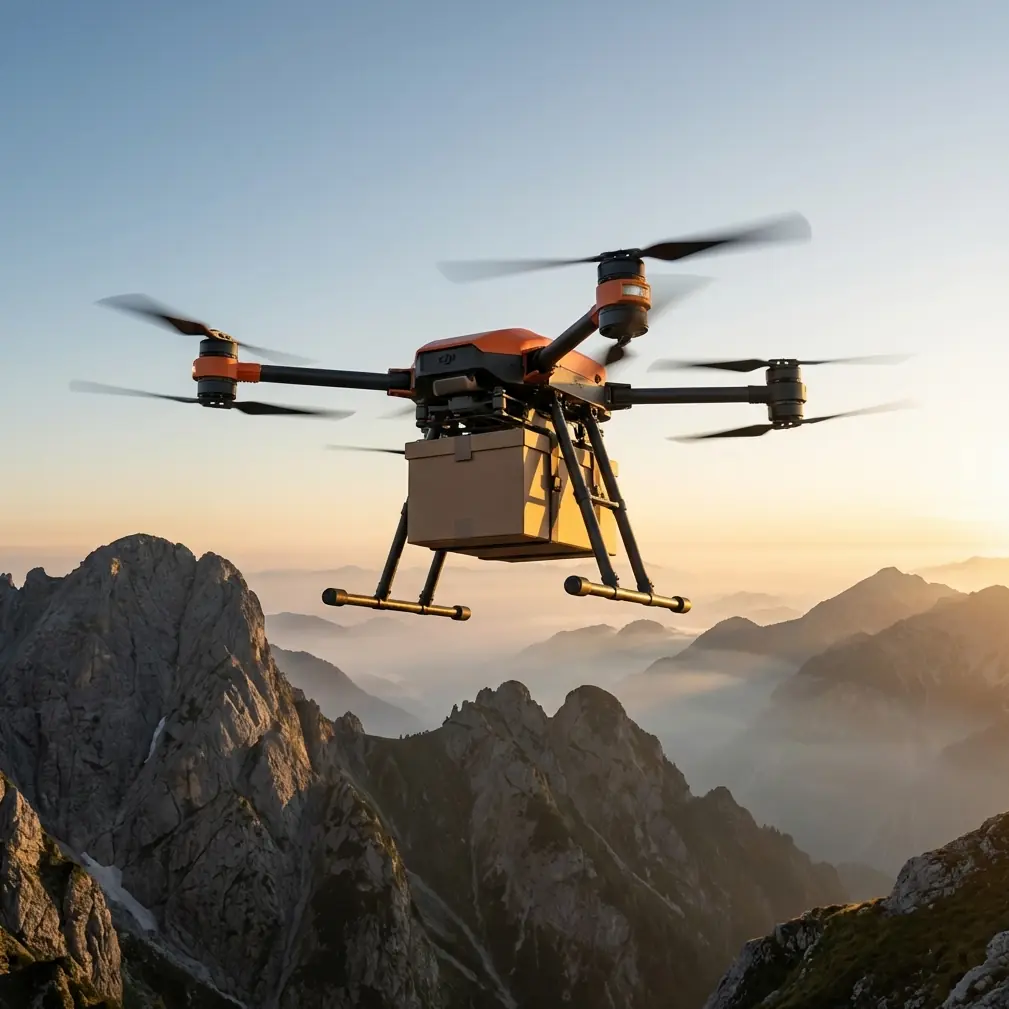
FlyCart 30 for Coastal Forest Mapping: What a Pizza Delivery Breakthrough Actually Tells Us About Heavy-Lift Drone Logistics
META: A technical review of the DJI FlyCart 30 for coastal forest mapping, using real-world drone delivery developments to explain payload handling, route planning, winch use, BVLOS workflow, and operational reliability.
Most articles about the FlyCart 30 start with the aircraft itself. That misses the bigger point.
To understand where a platform like the FlyCart 30 fits in commercial drone work, it helps to look at what the wider industry has finally managed to do reliably. One recent milestone came from outside surveying and forestry: in May 2026, Flytrex and Little Caesars launched what was described as a first-of-its-kind pizza delivery service in the Dallas/Fort Worth area. On the surface, that sounds unrelated to coastal forest mapping. It is not.
Pizza had long been a stubborn outlier in drone delivery, even in a region where residents were already used to receiving food and small items from the air. That detail matters. If a mature drone market can routinely move lightweight consumer goods but struggles with pizza, the bottleneck is not novelty. It is operational complexity. Shape, heat retention, handling stability, timing, and safe drop-off all become real constraints.
That is exactly why the FlyCart 30 deserves a serious look from mapping teams working in coastal forests. The value of a transport drone is not just how much it can lift. The value is whether it can carry awkward, mission-critical equipment into terrain where ground movement is slow, tide windows are tight, and route changes happen fast.
As a logistics lead, I read that Dallas/Fort Worth pizza story as a signal. When the market solves a seemingly simple payload that had resisted routine aerial delivery, it tells us the industry is maturing in payload management, route discipline, and repeatable execution. Those same fundamentals underpin successful FlyCart 30 operations in forestry.
Why coastal forest mapping is a transport problem before it is a sensing problem
People often frame forest mapping as a sensor selection exercise. LiDAR or photogrammetry. RGB or multispectral. PPK or RTK. Those choices matter, but in coastal environments the first challenge is usually deployment.
You are dealing with muddy access roads, tidal flats, salt-heavy air, fragmented launch points, and uneven tree canopies. A survey team may need batteries, field kits, lightweight scanners, comms equipment, replacement props, and emergency supplies positioned across multiple temporary sites. In many coastal zones, the map is not the only thing being built. The operation itself must be assembled on the fly.
This is where a platform like the FlyCart 30 becomes strategically useful.
Its role is not to replace the mapping drone. Its role is to make the mapping drone operation viable by moving gear, extending reach, and reducing human transit through difficult ground conditions. In other words, the transport layer can determine whether the sensing layer is efficient or compromised.
That is why payload ratio matters more than many buyers realize. A transport aircraft that can move meaningful loads without forcing constant compromises on battery planning, launch spacing, or crew deployment has a multiplier effect on the rest of the mission.
The operational lesson hidden inside pizza delivery
The Flytrex-Little Caesars rollout in Dallas/Fort Worth was not noteworthy because people got dinner by drone. It was noteworthy because pizza had been a notable exception in previous delivery operations, despite years of successful small-item transport in the same region.
That distinction is useful for FlyCart 30 planners.
In field logistics, many payloads are “small” but still difficult. A coastal forest mapping team may carry compact weather stations, sealed battery cases, edge computing units, canopy markers, or winch-deliverable tool bags. None of these are especially large compared with industrial cargo. Yet each can have delivery constraints that are easy to underestimate. Balance, packaging geometry, descent control, and placement precision can all affect success rates.
The pizza example proves a wider truth: cargo operations do not become mature simply because a drone can fly from A to B. They become mature when the system can handle payloads with operational quirks consistently enough for routine service.
For FlyCart 30 users, that means the real evaluation criteria should include:
- How well the aircraft maintains mission reliability when payload shapes vary
- Whether the winch system improves drop precision under canopy edges or in constrained clearings
- How route optimization changes when battery reserves, wind exposure, and alternate landing zones are mapped in advance
- Whether the aircraft’s safety stack, including an emergency parachute, reduces operational risk in mixed terrain
Those are not marketing checkboxes. In coastal forests, they determine whether the team spends the day collecting data or improvising around logistics failures.
FlyCart 30 in a coastal forest workflow
A practical way to think about the FlyCart 30 is as the aerial equivalent of a field support vehicle that does not need a road.
Imagine a mangrove or coastal pine survey where the main mapping team launches from a stable clearing inland, but a second observation point must be established nearer the marsh edge to maintain line continuity, monitor weather shifts, or support battery rotation. Sending a crew on foot may mean a 40-minute detour through saturated ground. Sending the right load by air can turn that into a short repositioning cycle.
The winch system is especially relevant here. In coastal forestry, you do not always want the aircraft touching down. Mud, root systems, soft substrate, and hidden water channels create ugly landing conditions. A suspended delivery allows the FlyCart 30 to hold a safer hover while lowering equipment into a workable pocket below. That is not just convenient. It preserves turnaround time and reduces contamination risk from wet, unstable surfaces.
I have seen a version of this play out during a shoreline forest corridor mission where a transport drone approached a narrow opening beside dense casuarina and salt-tolerant scrub. As it stabilized for delivery, onboard sensors flagged movement below the descent path: a monitor lizard crossing between exposed roots near the intended drop zone. The aircraft paused, shifted position, and the crew selected a secondary lowering point a few meters away. That kind of sensor-aided adjustment sounds minor until you remember what coastal work is actually like. Wildlife, moving branches, shifting wind, and unstable ground are not anomalies. They are the operating environment.
When people ask whether transport drones belong in mapping programs, this is my answer: not as a luxury, but as a control tool for field uncertainty.
Dual-battery architecture and what it means in real mission planning
Dual-battery design is often discussed as a reliability feature. That is accurate, but incomplete.
In field operations, dual-battery architecture also shapes planning discipline. A coastal mapping mission rarely has the predictability of a flat inland site. Wind off the water can change quickly. Salt-laden humidity affects equipment handling. Launch and recovery points may have to shift with access or tide. A transport platform with dual-battery logic helps crews structure rotations around redundancy, not guesswork.
That changes behavior in useful ways.
Teams become more willing to pre-stage loads at remote points because the platform is built for sustained operational cycles rather than a single dramatic lift. They can also design route optimization around realistic reserve margins instead of theoretical best-case endurance.
That phrase—route optimization—gets thrown around loosely. In a FlyCart 30 context, it should mean:
- selecting flight paths that reduce exposure to coastal gust corridors
- minimizing hover time over canopy breaks
- sequencing deliveries to avoid peak thermal and wind periods
- preserving battery margin for diversion if a landing or lowering point becomes unusable
The significance of the Dallas/Fort Worth delivery environment shows up again here. The dronelife report noted that residents there had already become accustomed to drone delivery of food and other small items. In plain terms, that means the market had already developed enough operational repetition for routine aerial logistics. Yet pizza still took longer to solve. Why? Because edge cases matter.
Coastal forest mapping is full of edge cases. The FlyCart 30 should be judged by how well it handles them.
BVLOS relevance for larger-area forestry support
For expansive forest programs, BVLOS becomes less of a buzzword and more of a budget question.
If crews must constantly leapfrog vehicles and personnel to support distributed survey points, labor expands quickly. A transport drone that can support farther nodes within a compliant BVLOS framework changes the economics of the whole job. It reduces idle time for specialist survey staff and allows equipment to move as needed without converting every field request into a ground transport problem.
This is one reason I find the pizza-delivery milestone so instructive. A first-of-its-kind rollout is not just about consumer convenience. It reflects confidence in repeatable route execution, payload handling, and delivery workflows in real neighborhoods. Transfer that lesson to industrial operations and the implication is clear: reliability at scale is earned through system discipline, not by stretching a platform beyond its planning envelope.
For coastal forest teams considering the FlyCart 30, BVLOS value comes from network design. Where are your forward staging points? Which loads justify aerial transport? Which corridors remain viable under shifting marine wind? Where are your alternates if a drop zone is fouled by wildlife, standing water, or crew movement?
The aircraft matters. The route architecture matters just as much.
Safety is not a side feature in forest logistics
An emergency parachute can sound like one of those features buyers mention once and then forget. In transport work over mixed terrain, it deserves more respect than that.
Coastal forests combine canopy gaps, water margins, uneven access, and changing microclimates. The consequence profile of a transport platform is different from that of a tiny consumer drone. Safety systems need to be assessed as operational enablers, not regulatory decorations.
The same goes for obstacle sensing and stable load management. If a payload is being lowered near vegetation, equipment, or field personnel, the safety margin is shaped by how the aircraft perceives its surroundings and how predictably the cargo behaves under descent.
That is another reason the dronelife pizza story matters. The industry did not struggle with pizza because it lacked drones. It struggled because routine service depends on dependable handling of difficult payload conditions. Safety and cargo control are inseparable.
Is the FlyCart 30 the right fit for mapping forests in coastal environments?
If your operation is limited to short walks from a vehicle, maybe not. A standard mapping workflow may be enough.
But if your team routinely works across fragmented access zones, marsh-edge corridors, islanded forest parcels, or weather-sensitive survey windows, the FlyCart 30 starts making strong operational sense. Its value lies in support logistics: moving batteries, sensor kits, field tools, communications gear, and emergency supplies where they are needed without forcing crews through slow or risky ground movement.
That support role can improve data quality indirectly. Crews arrive less fatigued. Equipment gets to site faster. Battery swaps happen on time. Remote checkpoints stay provisioned. Mapping flights launch when conditions are favorable instead of after the team burns an hour hauling gear through mud.
That is the kind of efficiency most brochures fail to explain. The biggest gains are often second-order effects.
If you are evaluating workflow design around payload ratio, winch deployment, dual-battery cycling, BVLOS corridor planning, or emergency redundancy, it helps to speak with people who understand transport drones as part of a complete field system rather than a standalone aircraft. For technical discussion around deployment scenarios, route design, or forestry support planning, you can message our operations desk on WhatsApp.
Final assessment
The most useful insight from the May 8, 2026 Dallas/Fort Worth rollout is not about food. It is about maturity.
A region already comfortable with drone delivery still had one stubborn category that resisted easy execution. When that category was finally solved through the Flytrex and Little Caesars partnership, it highlighted something every serious FlyCart 30 operator should remember: aerial logistics succeeds when payload handling, route planning, and delivery precision become boringly reliable.
That is exactly the standard coastal forest mapping teams should apply.
The FlyCart 30 is not interesting because it is large or new. It is interesting because it can solve the support problems that quietly undermine field productivity. In difficult coastal terrain, the transport layer often decides whether the mapping mission remains efficient, safe, and repeatable.
And that is where this aircraft earns attention.
Ready for your own FlyCart 30? Contact our team for expert consultation.