
FlyCart 30 for Coastal Forest Mapping: Practical Flight
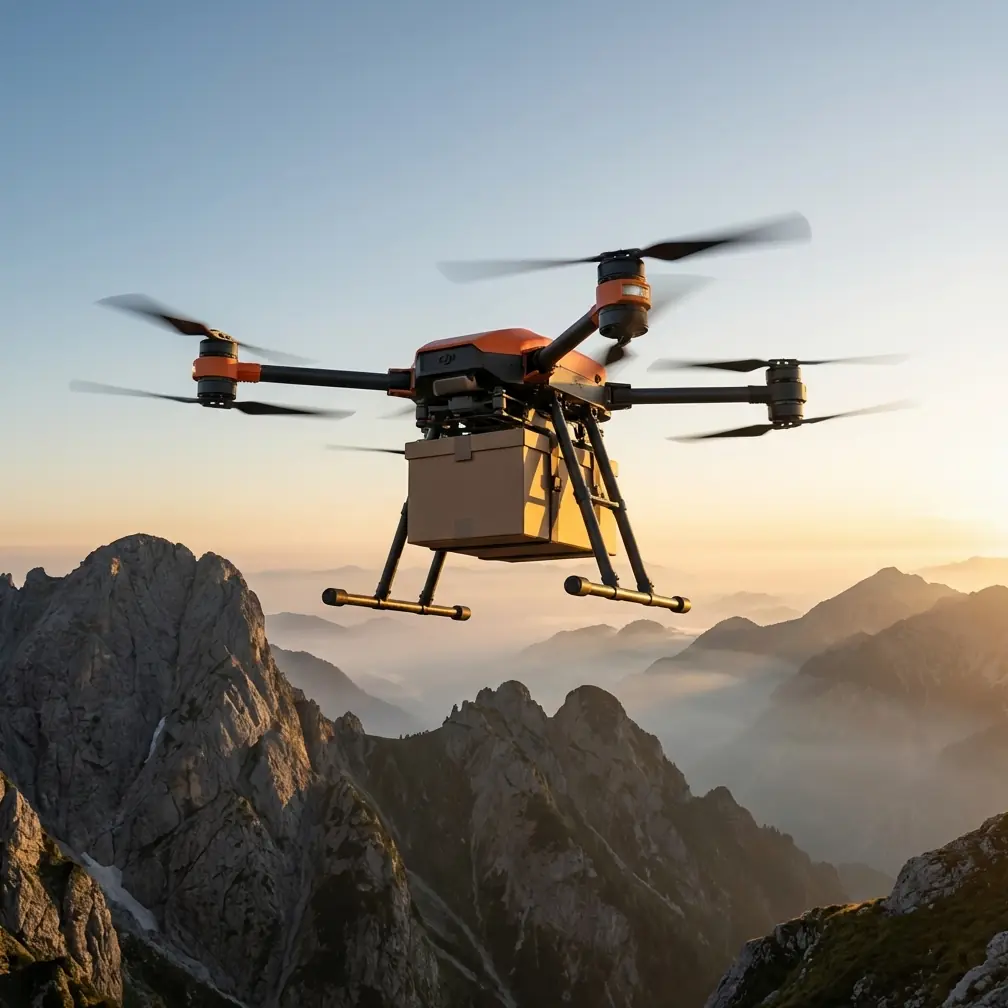
FlyCart 30 for Coastal Forest Mapping: Practical Flight Planning Around Emerging Vertiport Infrastructure
META: A field-focused tutorial on using the DJI FlyCart 30 for coastal forest mapping support, with route planning, EMI mitigation, winch workflow, BVLOS considerations, and lessons from Japan’s new Osakako vertiport consortium.
Coastal forest mapping sounds like a pure survey task until you actually stand on site. Salt air, uneven canopies, patchy landing zones, port-side interference, and weather windows that open and close quickly all change the mission. If your team is using a FlyCart 30 to support mapping operations rather than just moving cargo point to point, the aircraft becomes less of a transport machine and more of a logistics backbone for sensor placement, battery staging, field resupply, and hard-to-reach equipment recovery.
That matters even more near coastal urban infrastructure. A recent signal from Japan makes the point. On May 8, SkyDrive announced the country’s first consortium for the commercial operation and shared use of an eVTOL vertiport, centered on the Osakako Vertiport on Osaka Bay. The group brings together SkyDrive, Osaka Metro, Marubeni, Soracle, and local government partners. On the surface, that is about eVTOL operations, not heavy-lift multirotors. But for anyone planning FlyCart 30 missions in coastal zones, it highlights something bigger: low-altitude air operations are moving toward shared infrastructure, tighter coordination, and more complex electromagnetic and traffic environments.
If you are mapping forests along a bay, estuary, or coastal transport corridor, that shift affects how you set up a FlyCart 30 job today.
Why a cargo drone belongs in a mapping workflow
The FlyCart 30 is not a mapping drone in the strict sense. It is a logistics platform. Yet in coastal forestry projects, logistics often determines mapping quality more than the sensor itself.
A typical coastal forest mapping project may involve:
- moving batteries and GNSS gear to crews working beyond road access
- lowering ground control equipment into small clearings
- delivering replacement sensors or field networking hardware
- extracting damaged payloads or stuck equipment with a winch
- supporting distributed field teams without repeated foot travel through soft or protected terrain
This is where payload ratio starts to matter. In real operations, you are balancing useful load against range, reserve power, wind margin, and return safety. The wrong payload plan creates more than inefficiency. It can collapse your route structure for the whole day.
In coastal environments, I treat payload ratio as a planning discipline rather than a spec-sheet number. If the aircraft is carrying support equipment for mapping crews, every kilogram has to justify itself against reduced weather margin and fewer diversion options. Near bays and ports, conditions can change fast. A conservative loadout often produces better total output over a day than trying to maximize each individual flight.
The Osaka Bay lesson: shared airspace changes ground habits too
The Osakako Vertiport project on Osaka Bay is worth watching because it signals how organized low-altitude operations are maturing in dense coastal zones. Japan’s first consortium for a commercial and jointly used eVTOL vertiport is not just a headline about air taxis. It reflects a move toward shared-use nodes, multi-party coordination, and formalized operating environments.
That has direct operational significance for FlyCart 30 teams in similar terrain.
First, coastal missions increasingly happen near layered infrastructure: metro systems, marine transport links, industrial utilities, communications equipment, and future vertiport networks. Each one can affect access, scheduling, RF conditions, and recovery planning.
Second, once multiple stakeholders share a transport node, your drone operation cannot be planned as an isolated flight box. The launch site, staging area, communications links, and even vehicle parking may need to fit around other transport users.
Third, electromagnetic interference becomes a practical issue, not a theoretical one. Around bayside transport infrastructure, antenna placement and orientation are often the difference between a clean command link and recurring instability.
Step 1: Build the mission around logistics legs, not just map polygons
Most teams begin with the area to be mapped. For FlyCart 30 support work, start with the logistics legs instead.
Define:
- Primary launch and recovery zone
- Secondary contingency landing zone
- Crew support points inside or adjacent to the forest
- Equipment drop or pickup locations
- Dead zones where canopy, terrain, or port infrastructure may weaken the link
This changes route optimization completely. Instead of asking, “What is the shortest path?” ask, “What route preserves the most communication confidence and abort options?”
In coastal forests, the shortest line often crosses the worst RF corridor. Cranes, marine terminals, elevated transit, utility corridors, and reflective water surfaces can create unstable behavior in the link environment. A route that arcs slightly inland or avoids a transport structure may be slower on paper but cleaner in practice.
If your mapping crew is leapfrogging through the site, the FlyCart 30 should support those moves like a shuttle. Schedule around the sequence of field tasks, not around a fixed drone rhythm. This keeps aircraft utilization aligned with actual survey bottlenecks.
Step 2: Use the winch system to avoid bad landings
Coastal forest margins are full of marginal landing surfaces: mud, roots, broken concrete, scrub, unstable clearings. Landing a heavy-lift aircraft in those spots just to deliver a small but critical item is usually the wrong trade.
The winch system is one of the most useful tools in this kind of work because it lets you keep the aircraft in a safer hover while placing gear where the ground is unreliable. That can mean lowering a GNSS base component, spare power, a radio relay, or retrieval line to a crew positioned below canopy gaps or along shoreline edges.
Operationally, this matters for two reasons.
First, it protects turnaround time. Every risky landing introduces the chance of debris ingestion, awkward takeoff geometry, or delayed recovery.
Second, it protects the mapping workflow. If the delivery is only meant to keep the survey team moving, hovering delivery is often enough. You do not need a textbook landing every time. You need continuity.
I also recommend assigning one team member to winch-zone discipline. Their job is not general observation. Their job is to manage the drop footprint, confirm clear line movement, and stop improvised crew positioning before it becomes a rotor safety issue.
Step 3: Plan for BVLOS thinking even if the regulation set is tighter
A lot of coastal forest support missions naturally drift toward BVLOS-style operating logic. Distances stretch, vegetation blocks direct sight lines, and the most useful launch site may be offset from the actual field team by terrain or shoreline constraints.
Even where your mission remains within a more limited operational framework, you should still think in BVLOS terms:
- communication redundancy
- route segmentation
- pre-identified emergency actions
- clear handoff points between ground roles
- strict battery reserve thresholds
That mindset reduces improvisation.
In these environments, dual-battery strategy becomes more than endurance management. It is your hedge against a mission that expands unexpectedly. A field team may need one extra relay, one extra sensor battery, or one recovery pass for a dropped component. If your sortie planning assumes perfect execution, your real reserve is smaller than it looks.
I tell teams to separate “return power” from “problem-solving power.” The latter is the energy budget that lets you fix a mission without forcing a rushed recovery.
Step 4: Handle electromagnetic interference before it handles you
The most common mistake I see near coastal infrastructure is treating EMI as an after-the-fact troubleshooting issue. It should be part of preflight setup.
The narrative spark here is simple but real: antenna adjustment can solve what pilots often misread as a broader systems problem.
When operating near bay transport corridors, urban utilities, or future vertiport-adjacent zones, I use a structured antenna check:
Antenna adjustment checklist
- Face the expected flight corridor and verify antenna orientation for that path, not just for takeoff
- Avoid positioning the control station directly behind vehicles, fencing, metal containers, or utility cabinets
- Recheck orientation after any relocation of the pilot position
- If the route bends around infrastructure, identify the segment where alignment is weakest and optimize for that leg
- Test at low altitude first to identify noisy sectors before committing to the main run
This sounds basic. It is not. In complex coastal environments, a small antenna correction can materially stabilize the command link and reduce telemetry inconsistency.
The Osaka Bay development is relevant here because vertiport ecosystems will likely bring more layered communications infrastructure into exactly the kinds of coastal districts where utility and environmental work happens. As shared airspace and transport nodes grow, EMI awareness will stop being an advanced skill and become a standard one.
If your team is building SOPs for this kind of mission profile and wants a second set of eyes on route layout or link management, I’d suggest sending the flight concept to a specialist through this practical coordination channel.
Step 5: Use emergency systems as route-design tools, not just backup features
Too many teams mention the emergency parachute only during safety briefings, as if it exists outside daily planning. In reality, it should shape the route itself.
Over coastal forest edges, ask:
- Where would a descent create the least ground risk?
- Which route segment passes over workers, shoreline activity, or hard infrastructure?
- Does a slight route offset improve the consequences of an emergency event?
The emergency parachute is not permission to fly casually over poor options. It is a final layer that helps you make better route choices in advance.
This is another reason shared-use transport zones deserve respect. As areas like Osaka Bay become more organized for commercial low-altitude operations, tolerances for loosely planned drone routing will tighten. If your FlyCart 30 route intersects busy civilian activity, route geometry and contingency thinking need to be deliberate.
Step 6: Match payload to task phase, not project phase
On a multi-day forest mapping assignment, teams often carry the same support kit every flight because repacking is inconvenient. That is usually a mistake.
Break the project into task phases:
- site establishment
- crew deployment
- active mapping support
- recovery and extraction
Each phase needs a different payload profile. During establishment, you may prioritize ground control gear and power. During active support, the payload may shift toward replacement batteries, communications equipment, or light repair items. During recovery, the winch may become the priority if you are extracting gear from difficult terrain.
This phase-based approach improves payload ratio in practice. The aircraft carries what the job needs now, not what the team might need later.
Step 7: Build a coastal-specific turnaround routine
Salt air and moisture do not always create dramatic failures. More often, they produce subtle degradation, connector issues, and confidence loss over time. A reliable FlyCart 30 operation in coastal forestry depends on disciplined turnaround routines between flights.
Keep it simple:
- inspect exposed surfaces and attachment points
- confirm winch line condition and clean movement
- verify battery seating and contact confidence
- review signal quality by route segment, not just whole-flight averages
- note any location-specific interference patterns for the next sortie
This last point is often skipped. Yet after two or three flights, your team should know where the link weakens, where wind shears off the water, and where hover precision degrades near structures. Those notes become your real route optimization data.
What this means for FlyCart 30 teams now
The headline out of Japan is about an eVTOL vertiport consortium, with SkyDrive, Osaka Metro, Marubeni, Soracle, and local government partners working to commercialize the Osakako Vertiport on Osaka Bay. For cargo-drone operators, the value of that news is not imitation. It is anticipation.
Coastal air operations are becoming more structured, more shared, and more infrastructure-aware. If you use a FlyCart 30 to support forest mapping near bays, ports, or transport corridors, your edge will come from operational discipline:
- smarter payload ratio decisions
- deliberate use of the winch system
- BVLOS-style planning habits
- dual-battery reserve thinking
- antenna adjustment as a frontline EMI tactic
- route design that treats the emergency parachute as part of planning, not an afterthought
That is how a logistics platform becomes a dependable mapping support asset.
The aircraft is only part of the mission. The rest is how well you read the environment around it.
Ready for your own FlyCart 30? Contact our team for expert consultation.