
FlyCart 30 Field Report: Mapping High-Altitude Highways
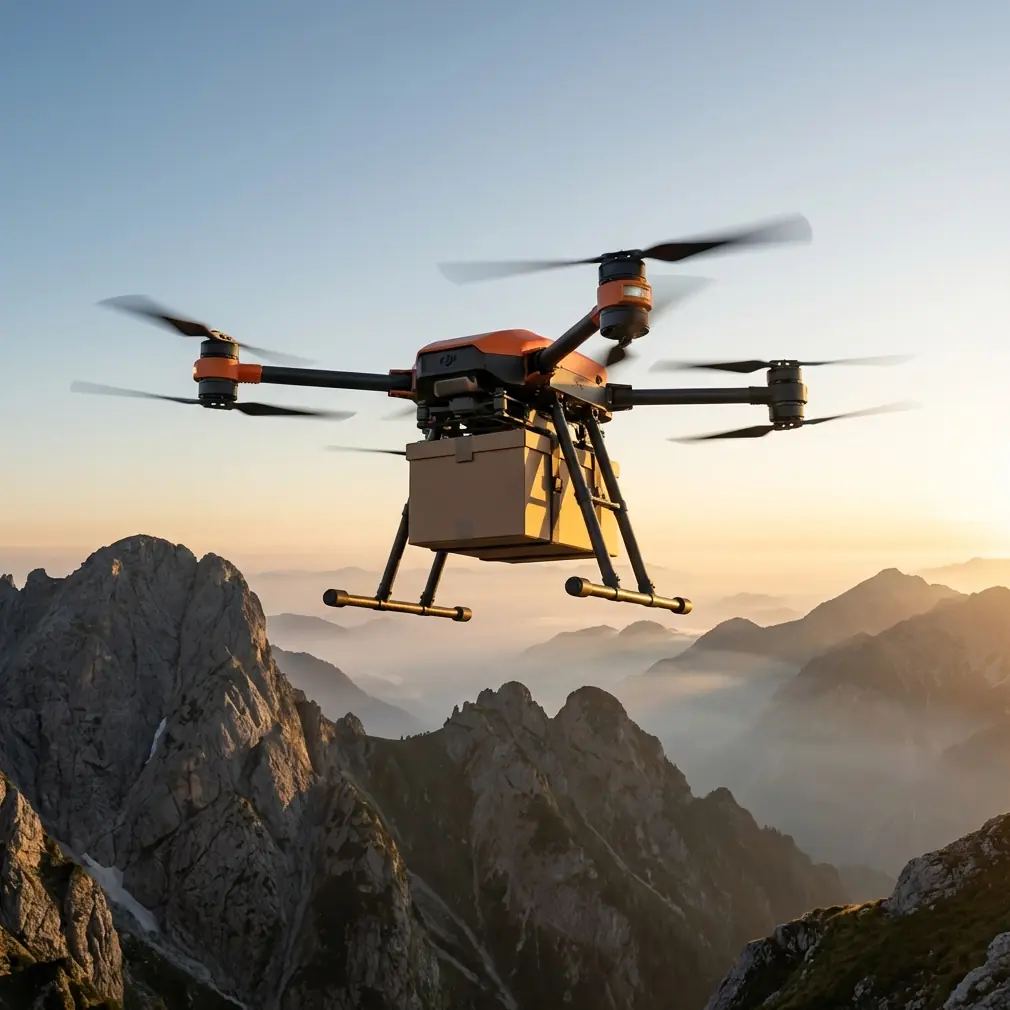
FlyCart 30 Field Report: Mapping High-Altitude Highways When the Weather Turns Mid-Flight
META: A field report on using the DJI FlyCart 30 for high-altitude highway mapping support, with practical insight on payload ratio, BVLOS planning, winch use, route optimization, dual-battery endurance, and emergency safety systems.
High-altitude highway work has a way of exposing every weak point in an operation. Thin air trims lift. Mountain weather changes its mind without warning. Roads snake through valleys where access by truck is slow, and in some stretches, not practical at all. That is exactly where the FlyCart 30 starts to make sense—not as a general-purpose aircraft, but as a logistics platform that can keep a mapping team moving when terrain, altitude, and timing start working against the mission.
I’m writing this as a field report rather than a brochure because that is how most highway teams actually evaluate aircraft. Nobody on a mountain corridor project cares about abstract capability. They care about whether a drone can move batteries, GNSS equipment, survey markers, compact lidar accessories, and field-critical parts to the right point on the route without introducing more operational friction than it removes.
For a highway mapping crew working at altitude, the FlyCart 30 is not the mapping sensor itself. It is the aircraft that supports the mapping mission. That distinction matters. A lot of stalled survey work does not fail because the data capture drone is inadequate. It fails because crews cannot sustain tempo across a long corridor with uneven access, weather exposure, and repeated elevation changes. In that environment, logistics becomes the hidden bottleneck.
The FlyCart 30 was built around cargo delivery, and two design details matter immediately in this scenario: its winch system and its dual-battery architecture. Those are not side features. They shape how a highway mapping operation can be planned.
Take the winch first. When crews are working above a narrow road bench or below a cut slope, there may be no safe landing spot near the required drop point. A conventional cargo landing forces you to search for a flat, stable surface, which wastes time and often pushes the handoff farther from the team than it should be. A winch changes that geometry. The aircraft can hold position overhead and lower equipment directly to a safer pickup point. For mountain highway corridors, that reduces rotor wash disturbance near loose gravel shoulders and avoids unnecessary touchdown risk on uneven terrain. Operationally, it means your support flight can serve more locations that are useful rather than only locations that are landable.
The second point is the dual-battery setup. On paper, a battery configuration sounds like a spec-sheet item. In actual mountain work, it affects launch discipline, turnaround planning, and confidence margins when weather shifts. A dual-battery cargo platform gives the operator more resilience in missions where return paths may become less efficient than the outbound leg. On a high-altitude highway route, that can happen quickly. Headwinds build in one valley while another stays calm. Temperature changes can alter performance assumptions. If you are pushing equipment to a remote mapping team and conditions tighten mid-flight, reserve capacity stops being theoretical. It becomes the difference between an orderly return and a rushed decision.
That mid-flight weather shift is not hypothetical. We saw it on a highway support run that started under relatively stable morning conditions and then changed faster than the forecast suggested. The route followed a mountain road section where the survey crew was moving between control points on a steep grade. We launched with a carefully balanced load: spare batteries for the mapping payload team, compact tripods, marked point kits, and a small box of field electronics that would have cost the crew several hours if delivered by vehicle from base.
The payload ratio mattered more than many operators admit. With cargo aircraft, teams often focus on maximum carrying ability and ignore the relationship between payload, altitude, and mission margin. In thinner air, that shortcut catches up with you. We treated payload ratio as the core planning variable, not a footnote. Rather than loading aggressively, we sized the cargo to preserve handling stability and keep enough energy reserve for a less predictable return leg. That decision looked conservative on the ground. It looked correct twenty minutes later.
Halfway through the run, cloud cover moved in across the ridge and surface winds along the road corridor shifted direction. Gusts funneled between cut slopes and open sections, creating uneven conditions along the route. This is where route optimization stops being a software buzzword and starts becoming operational discipline. We did not simply fly the shortest line between base and crew. We adjusted the route profile to follow a more sheltered corridor, even though it added distance. In mountain operations, the shortest path can be the most expensive if it crosses exposed airflow or forces the aircraft to fight turbulence for long segments.
The FlyCart 30 handled that shift the way a work aircraft should: predictably. Not dramatically. Not magically. Predictably. That is a more valuable quality than people realize. In logistics support for mapping work, consistency beats flair every time. The platform maintained stable transport behavior well enough for us to continue the mission rather than abort immediately and force a full ground resupply cycle. Just as important, the winch let us complete delivery without trying to place the drone on compromised terrain when the wind near the shoulder became inconsistent. Hover, lower, confirm release, clear out. That sequence preserved both safety and schedule.
If you are mapping highways at altitude, BVLOS planning also deserves a more honest discussion. Long corridor work naturally pushes teams toward beyond visual line of sight concepts because the road itself stretches far beyond practical observer coverage. The temptation is to frame BVLOS mainly as a range issue. It is not. For support operations with the FlyCart 30, BVLOS is really about structured route management, contingency decision points, and terrain-informed communications planning. Mountain roads create line-of-sight interruptions, radio complications, and deceptive weather pockets. A professional BVLOS concept for this aircraft has to include terrain-aware routing, predefined alternates, and drop-zone logic that still works if the crew relocates between passes.
That matters for mapping because the survey team rarely stays fixed. One hour they are near a bridge alignment, later they have moved to a cut-and-fill section several hundred meters away, and by afternoon they may be leapfrogging along the corridor. A support drone that can meet them through a winch drop rather than a rigid landing requirement gives the mission commander more flexibility. It effectively turns parts of the corridor into serviceable aerial handoff points. That can reduce idle crew time, and in mountain projects, idle time multiplies fast because daylight, temperature windows, and access constraints all stack on top of one another.
Safety systems also need to be judged in the real context of highway work. The emergency parachute is one of those features that can sound secondary until you picture the actual operating area: steep embankments, road users below, construction machinery, utility crossings, and teams spread along a narrow work band. In that environment, an emergency parachute is not a marketing line. It is part of the risk architecture. No responsible operator plans to use it, obviously, but its presence changes how you assess worst-case outcomes in a corridor where there may be very few forgiving surfaces. For operators seeking approval pathways or writing internal risk assessments, that kind of redundancy carries practical weight.
There is another layer here that rarely gets enough attention: what the FlyCart 30 does to the rhythm of the mapping team itself. Highway mapping at high altitude is physically demanding even before you factor in equipment movement. Every extra ground trip costs energy, time, and focus. By moving support items directly to the active segment, the aircraft helps preserve the crew for the work that actually creates value—capturing and validating corridor data. That has a knock-on effect on quality. Crews that are not burning hours on avoidable transport problems tend to make better field decisions.
I would not position the FlyCart 30 as the answer to every mountain mapping problem. That would be sloppy thinking. If the corridor already has excellent access, stable laydown areas, and easy vehicle movement, the advantage narrows. But when a project includes long grades, fragmented access, sharp elevation transitions, and a survey team that needs repeated re-supply, this aircraft moves from interesting to genuinely useful.
The key is to treat it as part of a logistics system, not as a flying shortcut. That means planning payload ratio against altitude and weather, defining winch drop procedures in advance, setting BVLOS trigger points and alternates, and using route optimization based on terrain exposure rather than pure distance. Teams that do that usually get the result they wanted in the first place: fewer interruptions in the mapping workflow.
For operators trying to build that kind of mountain corridor workflow, I’ve found it useful to compare delivery windows, road access delays, and battery rotation timelines before the first field day. If you are working through those details, this direct planning channel is a practical place to start: message the operations desk.
One final point from the field. The weather event on our run did not become a crisis because the mission was built with operational margin from the start. That is the real lesson. The FlyCart 30’s value in high-altitude highway mapping support is not that it ignores the mountain environment. It is that, when used correctly, it gives the team more options inside that environment. The winch system expands where a delivery can safely happen. The dual-battery architecture supports more resilient mission planning. The emergency parachute improves the safety case in narrow, exposed corridors. And disciplined route optimization makes the aircraft more than a simple point-to-point tool.
Those details are what separate a credible support platform from a nice-looking one. In mountain highway mapping, details decide whether the crew finishes the day with complete coverage or spends the afternoon waiting on a road run that should never have been necessary.
Ready for your own FlyCart 30? Contact our team for expert consultation.