
FlyCart 30 Mapping Tips for Highways in Extreme Temperatures
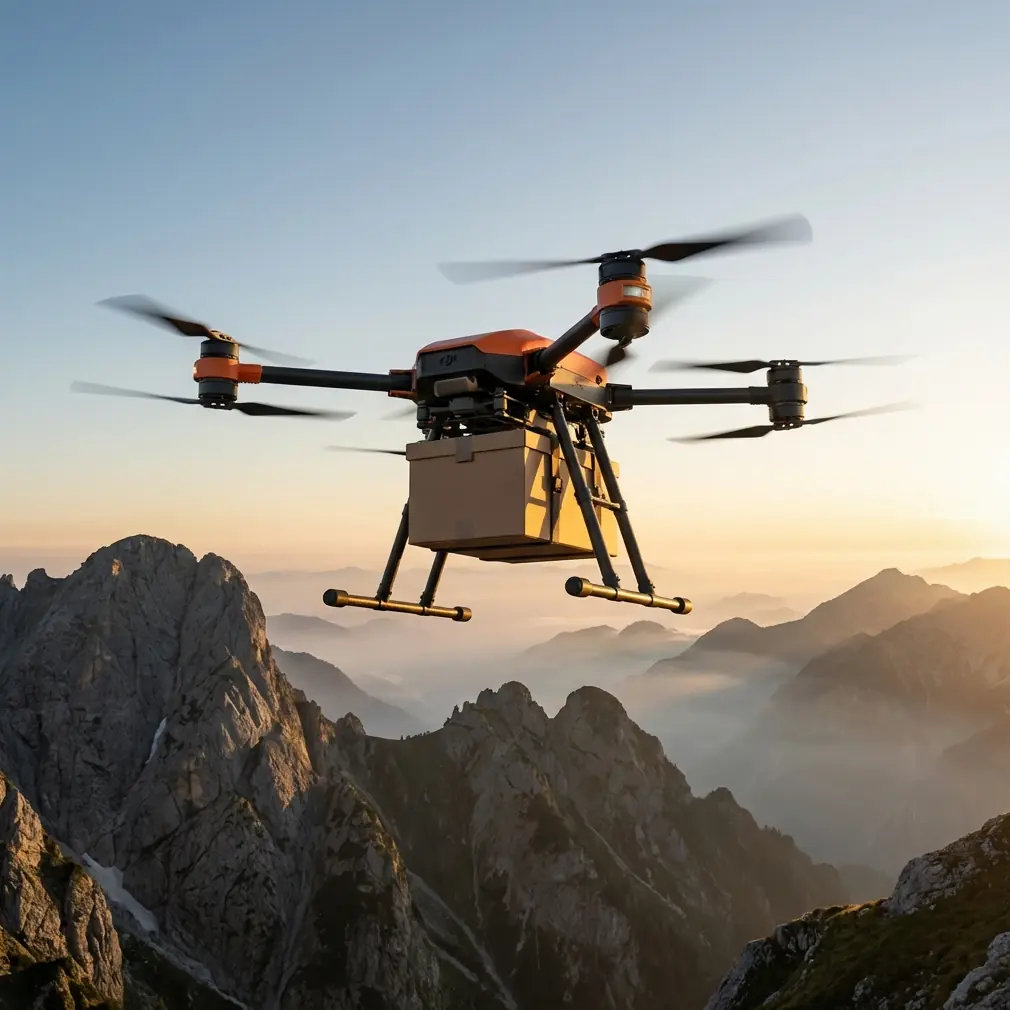
FlyCart 30 Mapping Tips for Highways in Extreme Temperatures
META: Practical FlyCart 30 insights for highway mapping in heat and cold, with a focus on payload ratio, winch workflow, dual-battery resilience, BVLOS planning, and safer route optimization.
Highway mapping sounds straightforward until the environment starts fighting back.
Long corridors. Repetitive terrain. Sparse landing options. Heat shimmer in summer, battery drag in winter, and wind that behaves differently over asphalt, embankments, cut slopes, and bridges. If you are planning a highway mapping mission in extreme temperatures, the aircraft choice shapes everything downstream: sensor packaging, route design, turnaround time, and how much risk your field team absorbs.
That is where the FlyCart 30 becomes interesting.
Most people still frame the FC30 as a cargo platform first. That misses a useful point. For corridor operations like highway mapping, the same design logic that makes it effective for transport work can also solve a stubborn set of operational problems for survey teams. I have seen this especially in projects where the sensor package is awkward, the staging area is poor, and the weather is good enough to fly but bad enough to expose every weakness in a lighter platform.
This article is not a generic overview. It is a practical look at how the FlyCart 30 fits a specific job: mapping highways in punishing temperature conditions, where endurance, deployment discipline, and payload handling matter more than brochure claims.
The real problem with highway mapping in extreme conditions
Corridor mapping creates a narrow but demanding mission profile. You are not hovering over a single site. You are covering distance, often repeatedly, and trying to keep image quality and positional consistency stable across changing surfaces and microclimates.
In high heat, the problems stack up quickly:
- battery performance degrades under load and aggressive climb profiles
- air over pavement becomes turbulent and inconsistent
- road shoulders and work zones limit safe takeoff and recovery options
- crew fatigue rises because every battery swap and sensor change happens under stress
Cold weather creates a different set of penalties:
- battery chemistry becomes less forgiving
- cables, connectors, and release systems can stiffen
- setup time increases because crews are moving slower with gloves and layered PPE
- the cost of an unplanned landing goes up if access is limited
Traditional mapping drones can do the job, of course. But once temperatures move toward the edges and the corridor is long, many operators start making compromises. They reduce payload complexity. They avoid certain launch points. They spend more time repositioning teams than collecting data. And if they need to move specialized equipment down steep roadside terrain or under bridge decks, the workflow becomes clumsy.
The FC30 stands out because it lets you solve more than one of those constraints at once.
Why a logistics drone matters in a mapping workflow
The FlyCart 30 was built around carrying useful mass, not just surviving in the air with a small sensor. That changes the equation.
Payload ratio is one of the overlooked metrics in corridor work. Not because survey teams want to carry excess weight for the sake of it, but because real projects rarely involve a perfectly minimal setup. You may need a protected sensor package, extra stabilization, field tools, target markers, or support gear for remote handoff points. A platform with a stronger payload ratio gives you room to build an operational system rather than a fragile one.
This is where the FC30 can outclass many competing airframes that look efficient on paper but become restrictive in the field. On a lighter competitor, every added component starts a negotiation with endurance and safety margin. With the FC30, you can preserve more flexibility in how you configure the mission.
That matters on highways because the route itself is often the constraint. Your ideal launch location may not exist. Your landing zone may be on a service road, a graded shoulder, or a temporary work area. A platform that can handle rugged logistics without becoming unstable gives the team more options.
The winch system is not a cargo gimmick
For highway work, the winch system deserves more respect than it usually gets.
A lot of field problems happen at ground level, not in cruise. Think about bridge inspections tied to a mapping run, roadside elevation checks on steep slopes, or moving gear between an upper embankment and a lower access track without forcing a technician to scramble through unsafe terrain. A winch-equipped FC30 can support those transitions cleanly.
Operationally, this does two things.
First, it reduces repeated takeoff and landing cycles in marginal spaces. That is useful in extreme temperatures because every cycle is another moment of high power draw, rotor wash disturbance, and crew exposure.
Second, it allows precision delivery or retrieval of support items without putting the aircraft itself into a cramped or obstacle-heavy landing zone. For highway mapping, that might mean lowering a compact sensor case, control point materials, or field consumables to a spot near the roadway while keeping the aircraft clear of signs, barriers, wires, and uneven ground.
This is one of the reasons the FC30 can be a smarter platform than some purpose-built mapping drones in difficult roadside environments. Competitors may carry the camera well enough, but they do not necessarily help the team solve access and terrain issues around the mission.
Dual-battery architecture is more than a redundancy story
People tend to treat dual-battery setups as a simple backup feature. In practice, for extreme-temperature missions, they are also a continuity tool.
In highway mapping, consistency matters. If you are flying repeated segments, trying to maintain predictable performance is almost as important as maximizing flight time. Dual-battery architecture supports steadier operations by giving crews a more resilient power framework, especially when ambient conditions are punishing.
That resilience shows up in three ways:
Reduced sensitivity to single-point power issues
On long corridor days, connectors, packs, and swap routines all get stressed. Redundancy lowers the chance that one battery problem ends the sortie at the worst possible point.Smoother mission planning
Teams can plan segment lengths and reserve margins with greater confidence. In heat, that helps avoid squeezing the last few minutes out of a pack when thermal conditions are already reducing performance. In cold, it helps crews keep a stronger reserve when battery response is less forgiving.Better risk management for remote sections
On a highway project, there are always sections where recovery is inconvenient. The dual-battery design gives operators more room to prioritize conservative decision-making instead of flying like every minute must be extracted.
That is not a small advantage. Corridor teams know that a single forced reposition or awkward recovery can erase the time saved by a supposedly faster aircraft.
Route optimization is where the FC30 earns its keep
Highway mapping is often treated as a pure airframe question. It is not. It is a routing problem with an aviation component.
The FC30 works best when operators lean into route optimization instead of trying to force traditional point-to-point survey habits onto a logistics-capable platform. That means planning around thermal zones, staging intervals, elevation changes, and handoff locations instead of just drawing the shortest line over the centerline.
For example, in hot conditions, road surface heating can create segments where maintaining stable altitude and image quality becomes harder around midday. Rather than pushing a continuous run through the worst thermal window, operators can break the corridor into sections that align with cooler launch windows, shaded staging points, or alternate flight geometry over adjacent margins. The FC30’s ability to support heavier or more protected payload arrangements helps because you can optimize for data integrity, not just bare-minimum airborne survival.
BVLOS planning also enters the conversation here. For long highway stretches, beyond visual line of sight capability is often what separates a practical mission from a logistical headache. The FC30 is not valuable simply because it can support extended operational concepts; it is valuable because it makes those concepts easier to execute with meaningful reserve and process discipline.
That distinction matters. A competitor may advertise similar mission reach, but if its payload tolerance is tighter and its deployment options are narrower, your theoretical corridor efficiency can disappear once real-world constraints show up.
Extreme temperatures expose weak emergency planning
Every experienced team has a story about a mission that went sideways not because of a catastrophic failure, but because a manageable issue became dangerous in a bad location.
Highways are unforgiving in that way. You may be operating near moving traffic, drainage channels, cut slopes, barriers, or utility crossings. In heat and cold alike, crews are more likely to make rushed decisions if the aircraft gives them too few escape options.
The FC30’s emergency parachute capability is operationally significant because it gives another layer of contingency for missions where a normal recovery path may not be available. That should never be viewed as a substitute for planning. But when you are mapping over a corridor with limited safe descent zones, an additional emergency measure can materially improve the risk profile.
It also changes crew behavior in a positive way. Teams with stronger contingency tools tend to make cleaner go/no-go decisions and maintain better discipline on reserve thresholds. They are less tempted to improvise late in the mission.
That is a subtle advantage, but an experienced operator will recognize it immediately.
A practical workflow for FC30 highway mapping
If I were setting up an FC30-based highway mapping operation in extreme temperatures, I would not try to turn it into a standard small-UAV survey routine. I would build the workflow around what the aircraft actually does better.
1. Segment by environmental stress, not just distance
Map the route according to heat concentration, wind exposure, access quality, and safe recovery options. A 6-kilometer segment over exposed asphalt may be operationally harder than a longer stretch near vegetated margins.
2. Use payload margin intentionally
Do not burn payload capacity on unnecessary hardware. But do use the margin to protect the sensor package, improve mounting confidence, and carry support gear if the mission architecture benefits from it. Strong payload ratio should buy stability in the field, not vanity complexity.
3. Treat the winch as part of the survey system
Plan points where the aircraft can lower or retrieve support items without landing. This is especially useful around embankments, bridge sections, and temporary roadworks where ground access is awkward.
4. Build battery rotation around thermal reality
In hot weather, avoid pushing packs into the ugliest part of the day unless there is a compelling reason. In cold weather, keep handling and swap procedures fast and disciplined. Dual-battery capability improves resilience, but only if ground routines stay organized.
5. Design BVLOS legs with recovery logic
A BVLOS segment should always have a defined set of contingencies: alternate recovery zones, reserve triggers, and communication checks. The FC30 supports corridor logic well, but route optimization has to be intentional.
6. Keep the parachute in the risk conversation
Do not mention it once during training and forget it. For long-road environments, emergency parachute procedures should be tied directly to terrain review and segment planning.
Why this matters now
The reference material behind this discussion contains one clear factual detail: aircraft and drones are being grouped in public attention alongside much larger, high-profile aviation systems. That broader visibility often distorts expectations. People start looking at UAVs as symbols first and tools second.
For civilian highway mapping, that mindset is unhelpful.
What matters is not spectacle. It is whether a platform can move through a difficult mission profile with fewer compromises. The FlyCart 30 deserves attention in this context because it brings cargo-grade thinking to corridor operations: carry more useful system weight, handle field logistics better, maintain stronger resilience through dual-battery architecture, and add practical recovery options through tools like a winch system and emergency parachute.
If your team is dealing with extreme heat, winter drag, bad roadside access, or long linear runs that push past comfortable visual workflows, those are not minor features. They are the difference between a mission design that looks clean in planning software and one that stays clean on a live project.
For teams comparing platforms, this is the right question to ask: not “Can it map a highway?” Almost any serious drone can do that under decent conditions. The better question is “Which aircraft still keeps the operation efficient and controlled when temperature, terrain, and access all become problems at once?”
That is where the FC30 starts to separate itself.
If you want to talk through a real corridor workflow, payload setup, or route strategy for your climate and terrain, you can message our flight team here.
Ready for your own FlyCart 30? Contact our team for expert consultation.