
FlyCart 30 for Low-Light Power Line Mapping
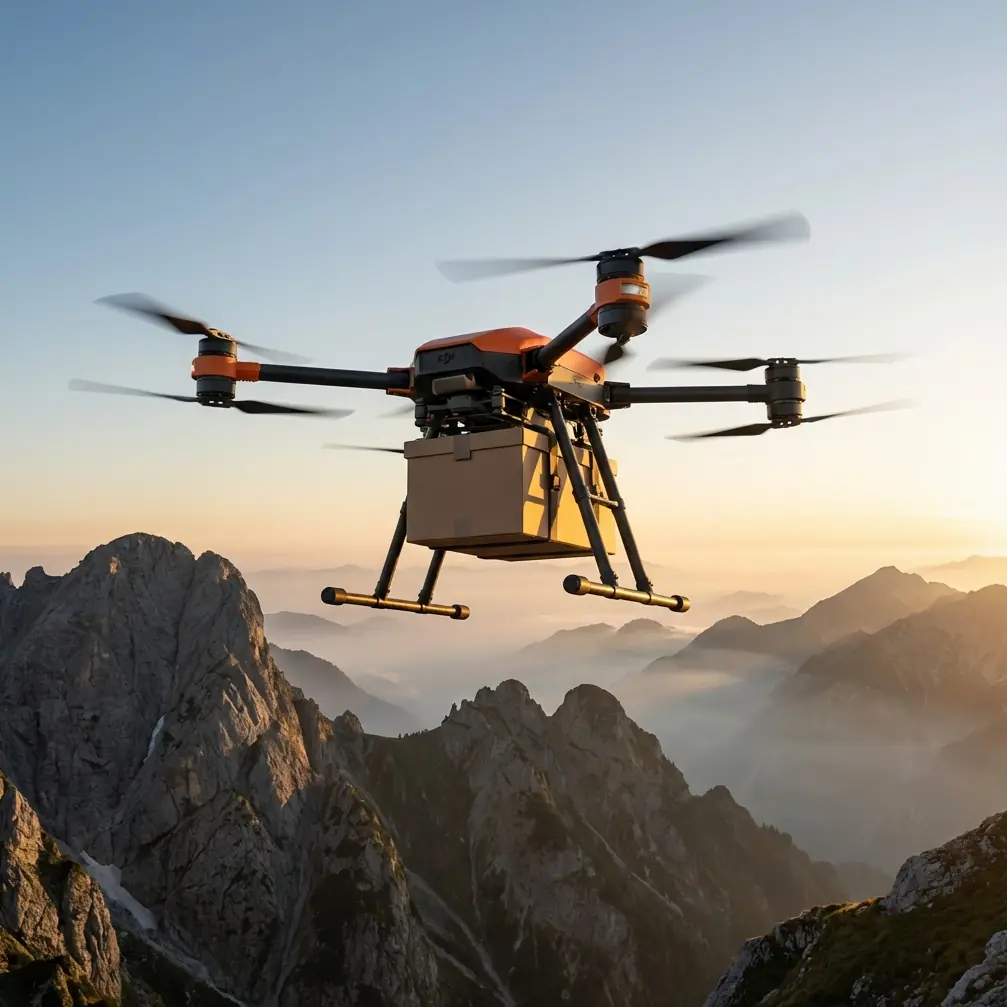
FlyCart 30 for Low-Light Power Line Mapping: A Technical Review from the Field
META: Expert FlyCart 30 technical review for low-light power line mapping, covering payload strategy, winch use, dual-battery planning, BVLOS workflow, and risk controls.
Power line work has a habit of exposing weak assumptions. A route that looks straightforward on a planning screen becomes a different problem at dusk, especially when access roads are poor, spans are long, and the mission depends on moving the right sensor package to the right point without wasting battery or creating avoidable risk. That is where the DJI FlyCart 30 becomes interesting—not as a general-purpose drone talking point, but as a specialized logistics platform that can support low-light utility mapping when the operation is built around its actual strengths.
I’m looking at this from a logistics lead perspective rather than a marketing one. The FlyCart 30 was designed to move loads, not replace dedicated survey aircraft. That distinction matters. For crews mapping power lines in low light, the aircraft’s value is not that it suddenly turns into a LiDAR specialist. Its value is that it changes how sensor kits, support gear, and line-adjacent payloads get into position with less friction. In tough terrain, that can be the difference between capturing usable data inside the weather and daylight window or losing the slot entirely.
The FlyCart 30’s headline capability is straightforward enough: it can carry substantial payloads, and its payload ratio is one of the reasons utility teams keep paying attention to it. A heavy-lift aircraft shifts the planning conversation. Instead of stripping a field package down to the bare minimum, operators can think in terms of mission architecture. Which camera body reaches the tower location first? Which lighting accessory goes with it? Can the crew deliver a compact charging unit, a relay kit, or a protective transport case to a staging point without a climb over rough ground? Those are operational questions, not brochure questions.
For low-light power line mapping, payload ratio matters because low-light workflows are rarely lightweight in practice. You may need a stabilized imaging setup, auxiliary illumination, spare batteries for the sensor package, or a protective housing that keeps optics clean during transport. The more margin an aircraft has, the less likely the mission gets compromised by small but necessary additions. That margin also gives crews options when wind picks up or when the safest route to a drop point is not the shortest.
The FlyCart 30’s winch system is where the platform stops being merely capable and starts becoming genuinely useful for infrastructure corridors. In line environments, touchdown is often the least elegant part of the mission. Ground conditions near towers can be uneven, obstructed, muddy, or simply unsafe for a full landing with a loaded aircraft. A winch changes the geometry of delivery. The drone can hold position above the site while lowering the payload, which reduces rotor wash impact on dusty or debris-filled surfaces and keeps the aircraft away from obstacles that become harder to judge in low light.
That is especially relevant when the mapping operation depends on placing a specialized sensor package or field accessory near a structure without crowding the tower base. A controlled cable drop is often cleaner than attempting to land near brush, fencing, or maintenance hardware. It also shortens turnaround. Instead of finding a perfect landing patch, the crew focuses on hover stability, cable clearance, and retrieval discipline.
One practical enhancement I’ve seen make a meaningful difference is the use of a third-party quick-mount lighting rig attached to the delivered field kit. Not a flashy add-on—just a serious accessory that gave ground crews controlled illumination at the exact point of work. In low-light corridor mapping, that matters because poor light doesn’t just affect the airborne platform; it affects every handoff after delivery. A compact third-party LED flood module with a battery-backed mount can improve marker placement, target identification, and cable management around the drop zone. The result is not dramatic. It is efficient, and efficiency is what keeps these missions repeatable.
The dual-battery design deserves a more practical discussion than it usually gets. Redundancy is only useful if the operation is built to exploit it intelligently. In low-light utility work, dual-battery architecture supports continuity and risk management in two ways. First, it provides resilience during long or uneven missions where route deviations happen. A corridor may require a wider diversion because of terrain, local airspace constraints, or a sudden need to avoid signal interference around a structure. Second, it improves the predictability of swap cycles. Predictability is the real currency of utility operations. If crews can plan staging and replacement intervals with confidence, they can synchronize aircraft movement, sensor deployment, and ground team timing with fewer dead periods.
That becomes even more valuable in BVLOS-oriented planning. Not every operator will fly beyond visual line of sight on every mission, and regulation will always shape what is actually permissible. Still, the FlyCart 30 naturally enters BVLOS discussions because linear infrastructure is exactly the type of environment where extended route logic matters. Power line corridors are long, repetitive, and operationally expensive to service manually. If your concept of operations includes corridor progression, relay points, and staggered field teams, then route optimization is not optional. It becomes the operating system of the mission.
Route optimization for low-light mapping is not simply about the shortest track. It is about minimizing exposure to poor visibility, preserving reserve battery for hover-dependent winch actions, and sequencing drops so crews are not standing idle while the aircraft ferries equipment to a distant tower. A well-planned route can cut wasted minutes at every leg, and small time savings compound fast when several towers are involved. If the team needs to move compact optical kits, target boards, portable beacons, or lighting equipment down a corridor, the FlyCart 30 can act as the connective tissue between staging vehicles and the actual work locations.
There is another layer to this: operational discipline in marginal light. The emergency parachute is not a decorative safety feature in this context. Heavy-lift missions near utility assets demand credible mitigation measures because the consequences of a failure are higher than in open-field flying. Low-light operations narrow visual margins. Corridors add structures, wires, and terrain complexity. A parachute system does not remove those risks, but it changes the mitigation profile in a way that safety managers and utility partners care about. The key is to treat it as part of a broader risk stack that includes route selection, payload restraint checks, hover height discipline during winch deployment, and conservative weather thresholds.
This is also where some teams misread the FlyCart 30. They see a large cargo drone and assume brute force solves everything. It doesn’t. A platform like this rewards planning more than improvisation. If you overload the mission concept with too many tasks—mapping support, line delivery, rapid resupply, and inspection in one cycle—you create coordination drag. The best results come when the aircraft is assigned a specific logistical role within the larger mapping workflow. For example: deliver the low-light imaging kit and illumination package to preselected tower access points, then reposition support gear to the next location while the survey team captures data. That is a coherent use case.
From a systems perspective, the FlyCart 30 is strongest when the mission is designed around handoffs. The aircraft moves equipment. The winch system handles awkward terrain. The dual-battery setup supports repeatable cycles. The emergency parachute strengthens the safety case. BVLOS-style route thinking expands corridor efficiency where regulations and approvals support it. None of that turns the aircraft into the sensor itself. Instead, it allows the sensor team to be more effective where field conditions usually steal time and consistency.
For operators mapping power lines in low light, the practical question is whether the aircraft reduces friction at enough points in the workflow to justify the complexity of integrating it. In many utility settings, the answer is yes—provided the team is honest about the role it will play. The FlyCart 30 is not there to collect the map. It is there to make sure the mapping mission arrives where it needs to, when it needs to, with fewer compromises.
That distinction is why the platform has relevance beyond cargo headlines. Utility work runs on windows: weather windows, access windows, light windows, outage windows. If a drone can help compress setup time and put the right tools at the right structure before those windows close, it has operational value. The heavier and more specialized the field kit becomes, the more that value shows up. A crew that no longer spends critical minutes hiking fragile equipment across poor ground enters the mapping phase sooner and with less fatigue. That has downstream effects on data quality, decision speed, and the number of structures that can be covered in one shift.
If I were building a FlyCart 30 workflow for this exact scenario today, I would focus on five points. First, define the aircraft as a logistics asset supporting the mapping stack, not replacing it. Second, reserve payload headroom for the accessories that actually make low-light work cleaner, including third-party lighting or protective mounting solutions. Third, use the winch wherever landing-zone quality is uncertain. Fourth, build route optimization around hover events and crew synchronization, not just distance. Fifth, make the emergency parachute and battery redundancy part of a formal risk model rather than a casual reassurance.
There is also a softer but important operational reality: crews adopt tools faster when the tools remove pain immediately. The FlyCart 30 does that best in terrain that punishes manual transport and in missions where every battery cycle must produce usable progress. Low-light power line mapping fits that profile better than many people realize. The aircraft is not glamorous in this role. It is useful. That is a better compliment.
Teams exploring this kind of workflow usually benefit from comparing payload layouts and drop-zone procedures before they standardize on a field method. If you want to discuss those details with an operations-focused lens, this quick WhatsApp thread can be a practical starting point: https://wa.me/example
The broader lesson is simple. The FlyCart 30 earns its place when it is used to solve the awkward middle of the mission—the gap between the truck and the tower, between the plan and the actual site, between available daylight and the work still left to do. In low-light power line mapping, that middle is where most delays live. A drone that handles that gap well can make the whole operation feel sharper, safer, and more repeatable.
Ready for your own FlyCart 30? Contact our team for expert consultation.