
FlyCart 30 for Urban Power-Line Mapping: A Technical Review
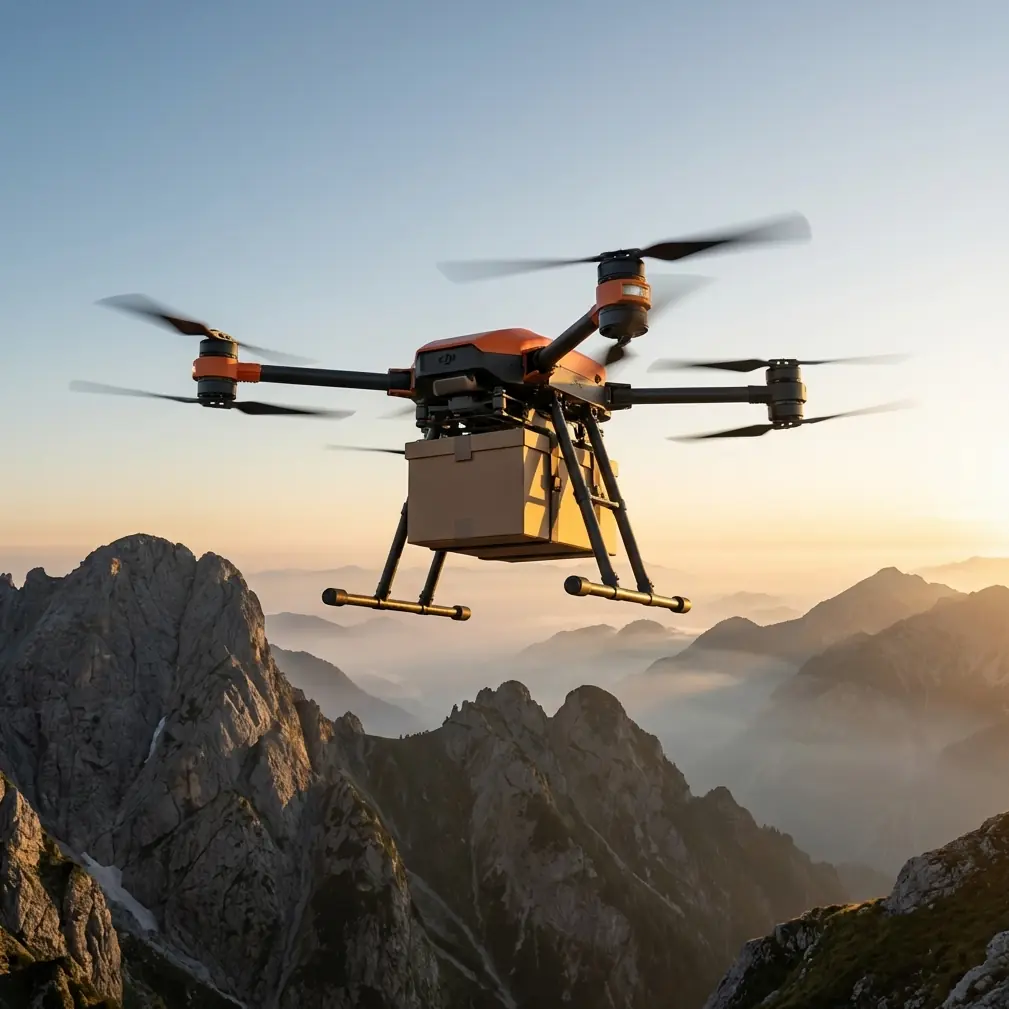
FlyCart 30 for Urban Power-Line Mapping: A Technical Review Through the Lens of Airspace Control
META: A technical review of FlyCart 30 for urban power-line mapping, focused on route control, safety workflow, low-altitude airspace awareness, and why rogue-drone response limits change mission planning.
Urban power-line mapping looks simple on a whiteboard. In the field, it rarely is.
You are threading a flight path through narrow utility corridors, reflective glass, signal noise, traffic, and unpredictable low-altitude activity. The aircraft may be stable. The sensors may be excellent. Yet one unmanaged variable in the airspace can turn a routine mapping run into a delayed or abandoned mission.
That is why any serious discussion of the FlyCart 30 for urban power-line work should go beyond payload and endurance. The more useful question is this: how does the platform fit into a real operating environment where low-altitude airspace is getting crowded, and where crews may detect a problem drone nearby but still have limited options to act?
A recent DRONELIFE report from the Motorola Solutions Summit 2026 adds weight to that issue. In an interview with Melissa Swisher, CRO of SkySafe.io, the conversation centered on rogue and unauthorized drones and the practical difficulty faced by agencies that detect them. The article also pointed to a SkySafe-Motorola Solutions integration as a marker of the next phase in managing low-altitude airspace. One line matters especially for utility and mapping operators: many agencies may identify an unauthorized drone but still lack the authority or means to respond directly.
For an urban power-line mapping team using the FlyCart 30, that is not background noise. It changes how you build the mission.
Why FlyCart 30 belongs in this conversation
FlyCart 30 is usually discussed as a transport platform. That reputation is deserved. But for corridor operations like utility-line mapping, its value is broader than cargo. It is a stable heavy-duty aircraft with the kind of system redundancy, route discipline, and controlled delivery architecture that translate well to structured infrastructure missions.
That matters in urban utility work because mapping power lines is less about raw speed than repeatability. The aircraft needs to hold a planned corridor, tolerate interruptions, and support safe interaction with obstacles and landing constraints. A platform designed around controlled operations has an advantage here.
The FlyCart 30’s dual-battery architecture is part of that story. In urban mapping, battery planning is not just about staying aloft longer. It is about preserving margin. Margin for an unplanned hover while checking line-of-sight obstructions. Margin for rerouting around a temporary hazard. Margin for a conservative return if airspace conditions change. In a city environment, the most expensive failure is often not a crash; it is a mission that has no operational breathing room.
The emergency parachute belongs in the same category. Many operators mention it as a spec-sheet safety item and move on. That undersells its significance in a power-line corridor above roads, sidewalks, rooftops, and parked vehicles. When you are flying near dense urban surfaces, passive and last-resort safety systems influence both internal risk assessments and stakeholder confidence. Utility clients, site managers, and adjacent property owners may never ask about flight-controller logic in detail, but they understand the value of a dedicated contingency layer.
The overlooked first step: pre-flight cleaning of safety-critical components
Before route optimization, before battery checks, before corridor permissions, there is a more mundane task that deserves more respect: cleaning.
Not the cosmetic wipe-down people do for presentation. A targeted pre-flight cleaning step for safety features.
On the FlyCart 30, any crew using the aircraft for urban power-line mapping should inspect and clean the areas that directly affect safety-system reliability and aircraft behavior. That includes sensor windows, obstacle-sensing surfaces, landing interfaces, battery contacts as appropriate under manufacturer procedures, and the winch-related components if that subsystem is installed or exposed during mixed-use operations. Dust, conductive grime, moisture residue, and fine debris from substation edges or roadside staging areas can degrade readings or create false confidence.
This is especially relevant in utility corridors. Urban power-line work often starts from improvised launch points: gravel verges, service alleys, rooftop access areas, or shoulder zones near traffic. Those places are magnets for airborne dust and particulate buildup. A small contamination issue on a sensing surface may not trigger a dramatic fault. It may simply reduce system clarity right when the aircraft needs accurate environmental interpretation around poles, crossarms, suspended cables, and nearby structures.
The emergency parachute also belongs in the pre-flight inspection mindset. I am not suggesting unauthorized maintenance. I am saying crews should keep its external housing area and related deployment path visibly clear and confirm condition within standard procedural limits. Safety systems are only reassuring when they are treated like mission equipment, not brochure language.
Short version: a clean aircraft is not about pride. It is about preserving the reliability of the protective layers you may need most in a dense urban corridor.
Mapping power lines is really a route-discipline problem
The common mistake in urban line mapping is to think of it as a sensor problem. In practice, it is often a route-discipline problem.
Power-line corridors are long, linear, and full of interruptions. Trees break up the visual geometry. Buildings crowd one side of the route. Road crossings introduce people and vehicles. Temporary work lifts and rooftop contractors appear without warning. An aircraft like the FlyCart 30 becomes useful when its mission logic supports predictable movement rather than improvisational flying.
This is where BVLOS planning enters the discussion, even if a specific operation remains under local visual constraints. The mindset behind BVLOS-grade route design is valuable because it forces the operator to think in segments, decision gates, and fallback paths. Urban power-line mapping benefits from exactly that discipline.
A good FlyCart 30 mission plan for this use case should separate the corridor into manageable blocks with predefined hold points and return triggers. That supports route optimization in a practical sense. Not “shortest line on the map,” but the safest sequence of passes based on line geometry, radio environment, launch alternatives, and public exposure below.
The payload ratio conversation matters here too. If the aircraft is carrying a mapping payload package, every kilogram allocated to sensors, mounts, or supplementary equipment affects mission flexibility. A poor payload ratio can quietly reduce reserve margin, limit repositioning options, or compress your weather tolerance window. In an urban environment, where a route adjustment can happen for reasons unrelated to the asset you are mapping, payload discipline is operational discipline.
The rogue-drone issue changes mission assumptions
This is the part many infrastructure teams still underweight.
The DRONELIFE report from April 23, 2026 did not just describe a public-safety concern in abstract terms. It highlighted a structural problem in low-altitude airspace management: detection is not the same as response. Even when a rogue or unauthorized drone is identified, agencies may lack the direct authority or means to intervene.
For a FlyCart 30 crew mapping power lines in a city, that means one thing: you cannot base your risk model on the assumption that someone else will clear the airspace for you in real time.
That has several consequences.
First, pre-mission coordination becomes more valuable than many operators admit. If your route runs near critical infrastructure, dense intersections, public venues, or known high-drone hobby activity areas, the planning phase should account for elevated probability of non-cooperative traffic. The significance of the SkySafe-Motorola Solutions integration mentioned in the report is not that it solves every field problem overnight. Its importance is symbolic and practical: low-altitude airspace management is moving toward connected awareness tools, and professional operators should build workflows that can make use of better situational visibility as it becomes available.
Second, your go/no-go criteria should include airspace uncertainty, not just weather and battery status. If there is unusual drone activity in the area, a technically flyable mission may still be an operational no-go.
Third, route design should avoid overcommitting the aircraft to sections where lateral escape options are poor. In urban power-line mapping, there are corridor segments boxed in by towers, facades, and traffic lanes. If a non-cooperative drone enters the same air volume, your safe options may shrink quickly.
That is why the FlyCart 30’s controlled systems architecture matters. A platform used in disciplined industrial workflows is easier to integrate into conservative operational frameworks. But discipline has to come from the crew as much as the machine.
The winch system has relevance even in a mapping discussion
At first glance, the FlyCart 30 winch system looks unrelated to line mapping. It is not.
If your operation mixes inspection, sensor deployment, or site support tasks around utility corridors, the winch can reduce unnecessary landings and awkward repositioning in constrained urban spaces. Even when it is not used on a mapping pass itself, the existence of a controlled vertical delivery method changes how crews stage accessories, place markers, or support adjacent field tasks at difficult access points.
Operationally, the significance is simple: fewer improvised touchdown zones. That matters in cities, where suitable landing areas are often the weakest part of the mission architecture.
Of course, the presence of the winch also raises the standard for pre-flight checks. Cable path cleanliness, attachment-point condition, and secure stowage matter because any externally exposed system can become a complication near utility structures if neglected.
A realistic urban workflow for the FC30
Here is how I would frame the FlyCart 30 workflow for an urban power-line mapping team.
Start with a conservative cleaning and inspection routine focused on sensing surfaces, safety features, landing interfaces, and any installed winch hardware. Then verify dual-battery health with enough reserve to absorb route disruption rather than merely complete the intended path.
Next, build the route around utility geometry and public exposure below, not around idealized straight-line efficiency. Segment the corridor. Define hold points. Mark sections with weak escape options. Treat likely interference zones as planning facts, not surprises.
Then account for low-altitude airspace uncertainty. The 2026 DRONELIFE coverage makes the point clearly: unauthorized drones can be detected, yet a direct response may still be limited by authority or capability. That means your team must know in advance what it will do if an unknown aircraft appears nearby. Hover? Divert? Return? Abort the block and reset? These decisions should not be invented mid-flight.
Finally, brief the client on operational logic. Utility stakeholders appreciate professionalism more than bravado. If a mission pauses due to uncertain airspace, that is not hesitation. It is a sign that the crew understands the environment they are working in.
If you want to compare workflow notes or discuss route setup for dense utility corridors, you can reach us directly on WhatsApp for FlyCart 30 planning.
The bigger takeaway
FlyCart 30 is not automatically the right aircraft for every mapping task. But for urban power-line operations, it earns attention because it supports a disciplined style of flying: controlled movement, serious safety layers, and enough system depth to handle missions where the environment is less predictable than the route file suggests.
The most relevant lesson from the rogue-drone discussion at the Motorola Solutions Summit 2026 is not about public safety agencies alone. It applies to commercial infrastructure teams as well. Low-altitude airspace is entering a period where awareness tools are improving, but response authority and field intervention still do not always match the problem. That gap creates a planning burden for operators.
So when evaluating the FlyCart 30 for urban power-line mapping, do not stop at endurance or payload capability. Ask whether your workflow respects the reality of contested, cluttered, civilian airspace. Ask whether your safety features are maintained, not just advertised. Ask whether your route design assumes interruption. Those questions will tell you more about mission success than a clean specification table ever will.
Ready for your own FlyCart 30? Contact our team for expert consultation.