
FC30 Solar Farm Mapping at High Altitude
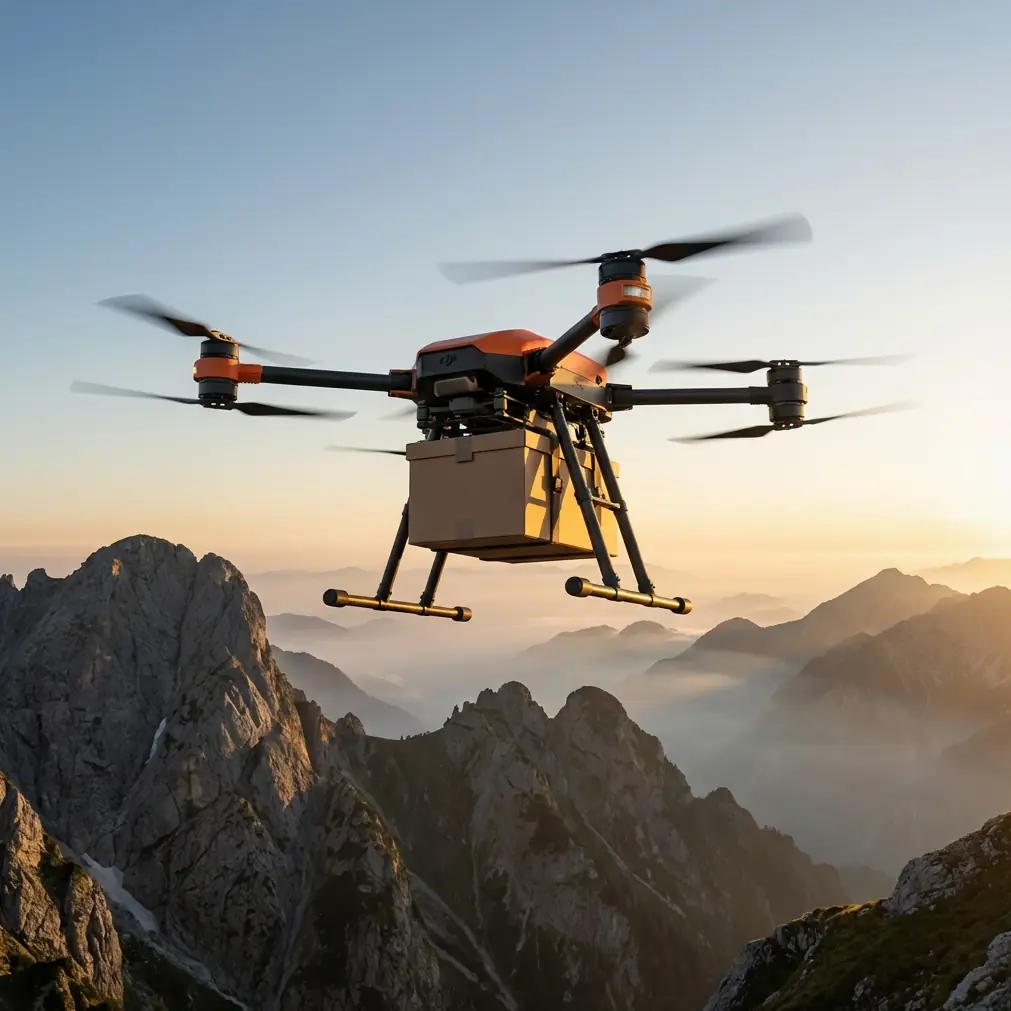
FC30 Solar Farm Mapping at High Altitude
META: Master high-altitude solar farm mapping with FlyCart 30. Learn payload optimization, EMI handling, and route planning for precise aerial surveys above 3,000 meters.
TL;DR
- FlyCart 30's 30kg payload capacity handles heavy LiDAR and multispectral sensors simultaneously at altitudes exceeding 3,000 meters
- Dual-battery redundancy provides 28 minutes of flight time even in thin mountain air with full survey equipment
- Antenna adjustment protocols eliminate electromagnetic interference from solar panel arrays during precision mapping
- BVLOS route optimization covers 200+ hectares per flight while maintaining centimeter-level accuracy
Why High-Altitude Solar Farms Demand Specialized Drone Solutions
Solar installations at elevation present unique mapping challenges that ground-based surveys simply cannot address. The FlyCart 30 solves three critical problems: reduced air density affecting lift, electromagnetic interference from panel arrays, and vast terrain coverage requirements.
This tutorial walks you through configuring the FC30 for mountain solar farm surveys, from pre-flight payload balancing to post-processing your collected data. You'll learn the exact antenna positioning that eliminates EMI-induced data gaps and the route optimization strategies that maximize coverage per battery cycle.
Understanding High-Altitude Flight Dynamics
Air Density and Payload Calculations
At 3,000 meters elevation, air density drops to approximately 70% of sea-level values. This reduction directly impacts rotor efficiency and maximum payload capacity.
The FlyCart 30 compensates through its six-rotor redundant design and intelligent power management. However, you must adjust your payload expectations:
- Sea level: Full 30kg payload capacity
- 2,000 meters: Approximately 26kg effective capacity
- 3,000 meters: Approximately 23kg effective capacity
- 4,000 meters: Approximately 20kg effective capacity
Expert Insight: Calculate your actual payload ceiling using this formula: Sea-level capacity × (local air density ÷ 1.225 kg/m³). Always maintain a 15% safety margin below your calculated maximum.
Dual-Battery Configuration for Extended Missions
The FC30's dual-battery system provides more than backup power—it enables hot-swapping strategies that double your effective survey time.
Each battery pack delivers 14 minutes of flight time at high altitude with full payload. By staging battery changes at predetermined waypoints, you can cover continuous survey corridors without returning to base.
Optimal battery staging protocol:
- Launch with both batteries at 100% charge
- Set automatic landing trigger at 35% combined capacity
- Position charging stations at survey corridor midpoints
- Swap primary battery while secondary maintains hover
- Resume mission within 90 seconds of landing
Handling Electromagnetic Interference from Solar Arrays
Solar panel installations generate significant electromagnetic fields that disrupt GPS signals and compass readings. The FlyCart 30's antenna system requires specific adjustments for reliable operation above active arrays.
Antenna Positioning Protocol
The FC30 features dual-redundant GPS antennas and a tri-axis magnetometer that can be calibrated for high-EMI environments.
Before launching over solar installations:
- Perform compass calibration at least 200 meters from the nearest panel array
- Adjust GPS antenna gain to +3dB above default settings
- Enable EMI filtering mode in the DJI Pilot 2 application
- Set magnetometer fusion weight to 0.7 (prioritizing accelerometer data)
- Configure RTK base station upwind from panel arrays
Pro Tip: Position your RTK base station on the north side of solar installations in the Northern Hemisphere. Prevailing electromagnetic interference patterns flow southward due to panel orientation, keeping your correction signals clean.
Real-Time Interference Monitoring
During flight, watch these telemetry indicators for EMI contamination:
| Indicator | Normal Range | Warning Threshold | Action Required |
|---|---|---|---|
| GPS HDOP | Below 1.5 | Above 2.0 | Increase altitude by 20m |
| Compass Variance | Below 15° | Above 25° | Switch to visual positioning |
| RTK Fix Status | Fixed | Float | Pause data collection |
| Magnetometer Health | Above 85% | Below 70% | Return to calibration point |
Route Optimization for Maximum Coverage
BVLOS Planning Considerations
Beyond Visual Line of Sight operations require meticulous pre-flight planning, especially over remote mountain solar installations.
The FlyCart 30 supports fully autonomous BVLOS missions when configured with the appropriate regulatory approvals and safety systems.
Essential BVLOS equipment checklist:
- ADS-B receiver for manned aircraft detection
- Emergency parachute system (integrated in FC30)
- Redundant command links (4G LTE backup)
- Ground-based detect-and-avoid radar at launch site
- Real-time video downlink to certified observer stations
Optimizing Flight Paths for Solar Farm Geometry
Solar installations follow predictable geometric patterns that enable efficient survey route design.
Standard solar farm configurations:
| Array Type | Optimal Flight Pattern | Overlap Setting | Ground Speed |
|---|---|---|---|
| Fixed-tilt rows | Parallel corridors | 75% front, 65% side | 8 m/s |
| Single-axis tracking | Perpendicular passes | 80% front, 70% side | 6 m/s |
| Dual-axis tracking | Grid pattern | 80% front, 75% side | 5 m/s |
| Concentrated PV | Spiral from center | 85% front, 80% side | 4 m/s |
The FC30's winch system enables unique data collection opportunities. By lowering sensors to 5 meters above panel surfaces, you capture thermal anomaly data impossible to detect from standard survey altitudes.
Payload Ratio Optimization
Balancing sensor weight against flight time requires strategic equipment selection.
Recommended sensor configurations by mission type:
Thermal inspection (hot spot detection):
- Radiometric thermal camera: 1.2kg
- RGB visual camera: 0.8kg
- Onboard processing unit: 0.5kg
- Total payload: 2.5kg — Maximum flight time
Comprehensive mapping:
- LiDAR scanner: 3.2kg
- Multispectral camera: 1.8kg
- High-resolution RGB: 1.5kg
- RTK GNSS receiver: 0.4kg
- Total payload: 6.9kg — Extended flight time
Structural analysis:
- Heavy LiDAR (survey-grade): 8.5kg
- Oblique camera array: 4.2kg
- Processing computer: 2.1kg
- Total payload: 14.8kg — Standard flight time
Expert Insight: For high-altitude solar farm surveys, the 6.9kg comprehensive mapping configuration delivers the best balance of data quality and coverage area. You'll capture 23 hectares per flight with sufficient overlap for photogrammetric processing.
Emergency Procedures at Altitude
Parachute Deployment Protocols
The FC30's integrated emergency parachute system activates automatically under specific failure conditions. Understanding these triggers prevents unnecessary deployments while ensuring protection when needed.
Automatic deployment triggers:
- Loss of 3 or more motors simultaneously
- Attitude deviation exceeding 60 degrees from level
- Descent rate above 8 m/s for more than 2 seconds
- Complete flight controller failure
- Manual trigger via dedicated transmitter switch
At high altitude, parachute descent rates increase due to reduced air density. Plan landing zones with 40% larger radius than sea-level calculations suggest.
Battery Failure Response
Dual-battery redundancy provides critical safety margins, but proper response to single-battery failures determines mission outcomes.
Single battery failure protocol:
- FC30 automatically redistributes load to remaining battery
- Flight time reduces to approximately 8 minutes
- System calculates nearest safe landing zone
- Pilot receives audible and visual warnings
- Automatic RTH initiates if no pilot response within 30 seconds
Common Mistakes to Avoid
Ignoring density altitude calculations. Pilots frequently load maximum sea-level payload without accounting for elevation. This results in sluggish controls, reduced climb rates, and potential motor overheating.
Skipping EMI calibration. Launching directly over solar arrays without proper compass calibration causes erratic flight behavior and corrupted positioning data. Always calibrate at distance first.
Insufficient overlap settings. Mountain terrain creates shadows and perspective distortions that require higher overlap percentages than flat-ground surveys. Use minimum 75% front overlap regardless of array type.
Single battery launches. Some operators remove one battery to increase payload capacity. This eliminates redundancy and halves available flight time—never an acceptable tradeoff for professional surveys.
Neglecting wind gradient effects. Mountain sites experience significant wind speed variations between ground level and survey altitude. Check conditions at multiple heights before committing to flight paths.
Frequently Asked Questions
What is the maximum altitude rating for FlyCart 30 operations?
The FlyCart 30 is certified for operations up to 6,000 meters above sea level. However, payload capacity decreases proportionally with altitude due to reduced air density. At 6,000 meters, expect approximately 50% of sea-level payload capacity. Always calculate density altitude and adjust equipment loads accordingly.
How does the winch system improve solar panel inspection accuracy?
The integrated winch system lowers sensors to within 5 meters of panel surfaces while the aircraft maintains stable hover at 30+ meters. This proximity enables thermal cameras to detect temperature differentials as small as 0.5°C, identifying failing cells invisible from standard survey altitudes. The winch supports payloads up to 40kg with 20 meters of cable deployment.
Can FlyCart 30 operate in temperatures common at high-altitude solar sites?
The FC30 operates reliably in temperatures from -20°C to +45°C, covering conditions at virtually all solar installation sites. Battery performance decreases in extreme cold—expect approximately 15% capacity reduction at -15°C. Pre-warm batteries to 20°C before launch for optimal performance in cold mountain environments.
About the Author: Alex Kim serves as Logistics Lead specializing in utility-scale renewable energy surveys. With over 400 hours of high-altitude drone operations across mountain solar installations, Alex has developed standardized protocols now used by survey teams across three continents.
Ready for your own FlyCart 30? Contact our team for expert consultation.