
FlyCart 30 for Remote Mapping Venues: What a 4
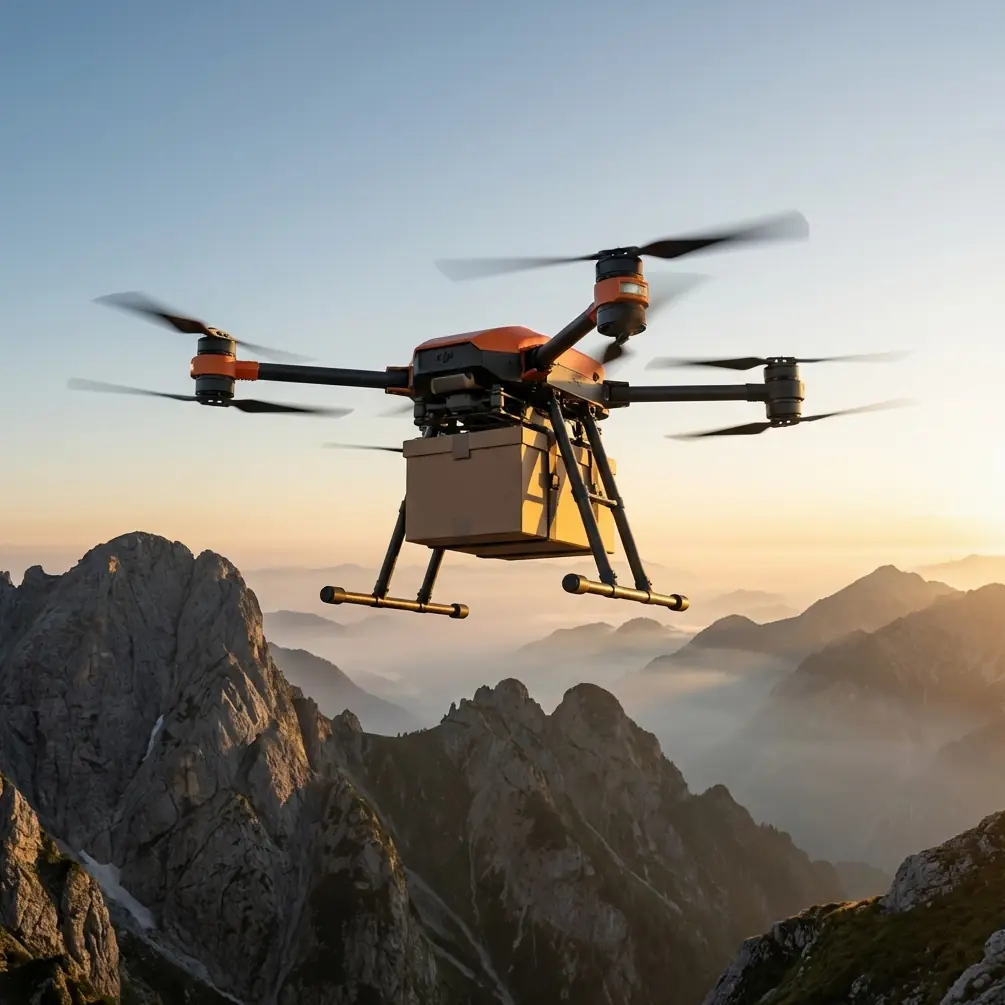
FlyCart 30 for Remote Mapping Venues: What a 4-Hour Hydrogen Flight in Shenzhen Really Signals for Operators
META: A practical expert analysis of what Shenzhen’s 4-hour hydrogen UAV demo means for FlyCart 30 users mapping remote venues, with advice on endurance planning, payload strategy, BVLOS workflow, and antenna positioning.
Remote venue mapping sounds simple until the terrain starts dictating the mission.
You arrive with survey gear, a schedule, and a rough weather window. Then the real constraints show up: long access roads, patchy communications, limited charging options, and repeated equipment moves between takeoff points. In that environment, the aircraft is only part of the equation. The power system, payload strategy, route planning, and even where you place your antenna can determine whether the day ends with a complete dataset or a partial job.
That is why a recent hydrogen UAV demonstration in Shenzhen deserves attention from anyone evaluating the FlyCart 30 for remote mapping support.
At a low-altitude hydrogen power technology seminar held on January 16 at the Yantian Eastern Low-Altitude Integrated Demonstration Base in Shenzhen, a hydrogen-powered drone took off at the start of the event, stayed airborne for 4 hours, and landed safely when the meeting ended. That single detail matters more than the headline. Four hours of continuous flight is not just a laboratory talking point. It directly addresses the endurance bottleneck that commercial operators keep running into when jobs extend beyond easy battery logistics.
The second signal from that event is just as relevant. Industry participants including EHang, XPeng AeroHT, United Aircraft, SF’s logistics arm Fengyi Technology, and JD drones discussed urgent demand for long endurance and heavy-lift power systems. That pairing, long flight time plus meaningful payload, maps closely to the real-world pressures surrounding FlyCart 30 deployments in remote environments.
For mapping crews, especially those working at difficult venues, this is the bigger story: the market is not asking for more endurance in isolation. It is asking for endurance that still leaves room for useful payload, flexible delivery methods, and fewer ground interruptions.
Why this matters specifically to FlyCart 30 users
The FlyCart 30 is often discussed as a transport platform, but for remote mapping teams its value is broader. It can function as a logistical bridge between the base of operations and the actual survey zone. That role becomes crucial when mapping venues are spread across hillsides, utility corridors, island facilities, quarry edges, or temporary project sites where carrying gear by vehicle is slow or impossible.
A mapping mission rarely fails because the sensor cannot collect data. It fails because the support chain breaks down.
Think about what usually has to move in and out of a remote venue:
- batteries
- GNSS base equipment
- radios
- antennas
- replacement propellers or field tools
- compact sensor packages
- safety kits
- communication gear
This is where FlyCart 30 changes the job. Its practical relevance is not just payload capacity on paper, but payload ratio in operation. In other words, how much useful field equipment can you move relative to the aircraft effort, crew time, and mission risk? If the aircraft can deliver the right gear without forcing repeated human movement across difficult terrain, the mapping team spends more time collecting data and less time servicing the mission.
The Shenzhen seminar points to the same operational gap. Experts there discussed endurance bottlenecks in hydrogen energy, while enterprise representatives called for long-endurance, large-load systems. That is exactly the tension remote mapping teams already know: carrying more equipment is useful only if the aircraft can still remain practical within the mission window.
The hidden bottleneck in remote venue mapping is not flight time alone
Plenty of operators focus on aircraft endurance as a single specification. That is too narrow.
For remote venue mapping, endurance has to be understood as mission endurance. That includes:
- how long the airframe can remain useful across repeated sorties
- how often the power system needs intervention
- whether the crew can sustain the operation with local resources
- how route structure affects turnaround time
- how much payload can be carried without degrading the mission plan
This is where the FlyCart 30’s dual-battery architecture remains relevant today, even as hydrogen draws attention for next-generation low-altitude systems.
A dual-battery setup is not the same as a 4-hour hydrogen flight, and it should not be treated as one. But operationally, it does provide a form of resilience that remote mapping crews value: a straightforward energy workflow, established battery handling practices, and a familiar support ecosystem. For operators working now, not in a future hydrogen adoption cycle, that matters. You can plan around recharge rotation, backup packs, and predictable swap procedures.
The Shenzhen demonstration, though, highlights where the market may be moving. If hydrogen systems continue maturing, the biggest benefit for commercial drone logistics will not just be longer airtime. It will be fewer interruptions in complex field operations. For a FlyCart 30 user supporting mapping teams, that future direction should influence how you think about route optimization today.
Route optimization is where endurance becomes productivity
In remote venue mapping, poor route design wastes more time than most operators realize.
A common mistake is treating delivery legs as separate from the mapping mission. They are not. Every transport flight affects crew staging, battery allocation, launch timing, and data collection windows. If your FlyCart 30 is supporting a mapping crew, the route should be built around the survey sequence, not around what is most convenient for the pilot at base.
A better framework looks like this:
- Establish the survey priority zones first.
- Identify the field team’s exact staging needs at each phase.
- Match payload drops or winch deliveries to those phases.
- Build the logistics route around terrain and communications reliability.
- Preserve reserve power for route deviations, weather changes, and extraction.
The operational significance of the Shenzhen event lies in its demonstration that endurance pressure is still central enough to bring together major low-altitude aviation companies. That should tell FlyCart 30 operators something simple: route optimization is no longer a “nice to have” discipline. It is now one of the main ways to preserve mission economics while waiting for next-generation power systems to become mainstream.
Where the winch system changes remote mapping support
For rough or obstructed venues, the winch system is often more valuable than a standard landing profile.
A mapping team working near rocky slopes, temporary structures, forest clearings, or fenced industrial sites may not have a safe landing zone close to where the equipment is needed. Landing farther away creates extra manual transport and delays. In those scenarios, a winch delivery is not just convenient. It protects time, reduces site disturbance, and limits the aircraft’s exposure to unstable ground conditions.
That matters for remote mapping because the support load is usually high-value but not necessarily bulky. A base station, radio mast component, spare batteries for survey instruments, or a compact sensor module can often be lowered directly to a team without committing the aircraft to touchdown.
The same long-endurance, heavy-load demand raised by participants at the Shenzhen seminar helps explain why systems like FlyCart 30 matter now. Even before hydrogen becomes common, the market is already rewarding aircraft that can move field-critical payloads efficiently and place them precisely.
BVLOS planning is only as strong as your communications geometry
Everyone likes talking about BVLOS because it suggests scale. But in remote venue work, BVLOS is usually constrained by something much more basic: line quality between aircraft, controller, and surrounding terrain.
This is where antenna positioning gets overlooked.
If maximum range is your goal, do not place your ground antenna based only on where the crew is comfortable standing. Place it where the radio path has the cleanest geometry to the mission area. In practical terms:
- choose elevation over convenience whenever possible
- avoid setting up directly behind ridgelines, metal structures, or tree walls
- keep the likely flight corridor in front of the antenna’s strongest coverage zone
- maintain separation from local interference sources such as vehicles, generators, and temporary communications hardware
- if the venue is elongated, position for the midpoint of the route rather than the first delivery point
For remote mapping support, this can make a noticeable difference. An operator may assume the aircraft is range-limited, when the real issue is poor antenna placement at the launch site. Better geometry can improve signal consistency, reduce command latency, and preserve confidence during long outbound legs.
This advice becomes even more relevant when the mission includes route optimization and staggered support drops. If your FlyCart 30 is expected to shuttle equipment to multiple mapping positions, the best antenna placement is the one that protects the full operational envelope, not just the first sortie.
If you want to compare setup options for a specific venue profile, this direct WhatsApp line for field planning questions is a practical place to start.
Safety systems matter more when the aircraft is carrying mission continuity
When a FlyCart 30 is used in support of remote mapping, the aircraft is often carrying more than equipment. It is carrying the next stage of the day’s workflow.
That changes the risk calculation.
Features such as an emergency parachute are not merely checklist items. In remote work, they support operational continuity by reducing the severity of unexpected events. If an aircraft issue occurs over a difficult venue, the consequences are not limited to hardware damage. You may lose survey timing, field access windows, crew synchronization, and weather margin all at once.
The Shenzhen demonstration emphasized safe landing after a continuous 4-hour flight. That detail is easy to pass over, but it is operationally significant. Endurance without safe completion does not solve anything. Commercial operators need systems that finish missions predictably. That expectation applies to current battery-powered cargo aircraft just as it will to future hydrogen-powered platforms.
Hydrogen is not replacing current FlyCart 30 logic overnight
There is a temptation to read any hydrogen drone story as a signal that battery-based cargo operations are about to become obsolete. That is not a serious field perspective.
What the Shenzhen event actually tells us is more measured. The industry is actively searching for a better answer to the endurance-plus-payload problem. A hydrogen drone sustaining 4 hours of flight in a public demonstration is evidence that the search is producing credible engineering results. At the same time, the fact that experts there discussed industry status, endurance bottlenecks, and engineering outcomes shows the technology is still in a development and scaling phase.
For FlyCart 30 users, that means two things.
First, current missions still depend on disciplined planning around today’s systems: battery rotation, route design, payload management, communications setup, and delivery method selection.
Second, buyers and operators should start thinking in terms of upgrade trajectories. The future winner in remote logistics support will not be the platform with the longest headline endurance. It will be the one that integrates dependable power, practical payload ratio, safe operation, and field-ready logistics workflow.
A practical model for mapping venues in remote locations
If I were structuring a FlyCart 30-supported mapping operation as a logistics lead, I would build it around three layers.
1. Core transport logic
Use the aircraft to remove the worst movement bottlenecks first. Do not waste sorties on items that crews can move easily by hand. Reserve flights for payloads that save meaningful time or preserve crew energy.
2. Delivery precision
Use the winch system whenever landing conditions are compromised or touchdown would create delay. Precision placement beats extra walking.
3. Communications-first positioning
Set launch and antenna locations based on the actual route geometry. If needed, sacrifice comfort at the base position to gain cleaner coverage across the mission area. This one decision often has a bigger effect on usable range than operators expect.
Layer on top of that the standard protections: battery discipline, weather thresholds, reserve planning, and emergency parachute readiness. Then route the mission around survey priorities rather than ad hoc transport requests.
That is how FlyCart 30 becomes more than a cargo drone. It becomes the system that keeps a remote mapping team moving.
The real takeaway from Shenzhen
The Shenzhen hydrogen seminar was not just another technology meeting. It put three realities on the table in one sequence.
A drone flew continuously for 4 hours.
Experts openly addressed endurance limits and hydrogen’s advantages.
Major companies across the low-altitude ecosystem voiced urgent demand for long-endurance, large-load power.
Those points matter because they describe the exact operational stress that remote venue mapping crews feel every week. The current mission has to be completed with the tools available now, and the future mission will be shaped by whichever power architecture best solves endurance without giving up payload utility.
For the moment, the FlyCart 30 sits in a very practical position. It gives operators a way to improve logistics efficiency immediately, especially when the mission is not just flying a route but sustaining a field team in a place where access is hard and time is expensive.
That is the right lens for evaluating it. Not as an abstract aircraft category. As a working support platform inside a larger mission system.
Ready for your own FlyCart 30? Contact our team for expert consultation.