
Mapping Wildlife in Extreme Temperatures With FlyCart 30
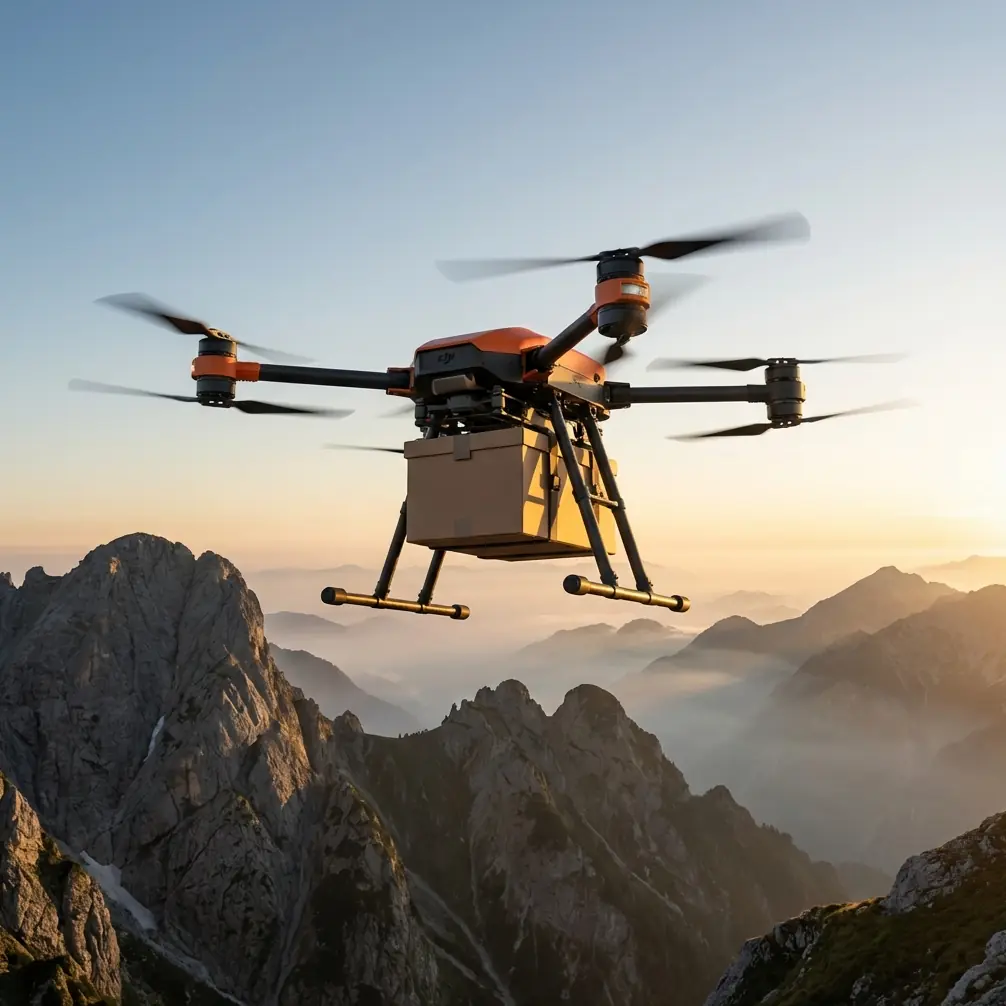
Mapping Wildlife in Extreme Temperatures With FlyCart 30: A Field Tutorial Built Around the Real Bottleneck
META: Learn how to plan FlyCart 30 wildlife mapping missions in extreme heat or cold, with practical guidance on payload balance, antenna placement, dual-battery management, winch use, BVLOS planning, and route optimization.
Most people talk about delivery drones as if the aircraft is the whole story. It isn’t. The better way to understand the FlyCart 30 in wildlife mapping is to see it as one moving part inside a larger field system: aircraft, sensors, route logic, landing workflow, battery discipline, communications, and the humans making decisions when conditions turn ugly.
That view lines up with a broader shift happening across the drone sector. A recent DroneLife report pointed to partnerships between Papa Johns, Wing, and Google Cloud as evidence that drone operations are maturing into connected commerce infrastructure rather than isolated flights. The names are from food delivery, but the operational lesson carries over cleanly to conservation work: the aircraft matters, yet software, autonomous logistics, and coordinated decision-making matter just as much.
If you are trying to map wildlife in extreme temperatures with a FlyCart 30, that mindset will save you more missions than any single hardware tweak.
I’m going to frame this as a practical tutorial from the perspective of a logistics lead. Not because the imaging side is unimportant, but because in remote habitat work, logistics usually decides whether the data gets collected at all.
Start with the mission architecture, not the drone checklist
A wildlife mapping operation in harsh heat or cold tends to fail for one of four reasons:
- the sensor package was too heavy or poorly balanced
- the route was planned as a straight line instead of an adaptive workflow
- the team treated communications as an afterthought
- battery behavior in temperature extremes was underestimated
With FlyCart 30, it is tempting to focus on lift capacity first. That is understandable. The platform invites payload thinking. But payload ratio is the more useful concept in the field than raw payload alone.
A heavy thermal camera, protective housing, mounting plate, environmental logger, and a release or winch accessory can all fit into one mission design on paper. In practice, each added component changes endurance, handling margin, and recovery options. In extreme temperatures, those margins narrow faster than expected.
So before you think about launch, define the mission in one sentence:
Are you mapping terrain-wide movement patterns, counting individuals in a target zone, or delivering and retrieving sensor packages from inaccessible habitat?
Those are three very different FlyCart 30 jobs.
The first is route-intensive.
The second is sensor-intensive.
The third is logistics-intensive.
The mistake is trying to build one aircraft configuration to do all three in the same sortie.
Why the larger drone ecosystem story matters to wildlife mapping
The DroneLife piece made a useful point that often gets lost in drone marketing: delivery is more than payloads, batteries, range, and regulations. It depends on broader logistics and software systems. That same principle applies in conservation mapping.
For FlyCart 30, route optimization should not be treated as a convenience feature. It is the difference between clean survey coverage and wasted battery cycles over empty habitat. In high heat, inefficient route structure means more time cooking electronics and packs in ambient thermal load. In severe cold, it means more minutes exposing the aircraft to power sag and reduced battery efficiency.
This is where the article’s mention of AI systems and autonomous logistics becomes operationally significant. Even if your wildlife project is not running a full AI agent stack, the logic still holds: combine aircraft capability with decision software, live telemetry review, and dynamic route adjustment. That connected system is what creates resilient missions.
The FlyCart 30 should be treated as the airborne executor inside that system, not the system itself.
Build the aircraft around the sensor objective
Wildlife mapping in extreme conditions usually relies on one of three payload categories:
- thermal imaging
- zoom/visual observation
- dropped or retrieved field sensors
FlyCart 30 can support more complex mission profiles than a lighter mapping-only aircraft, but every extra kilogram changes your payload ratio and flight behavior. For habitat surveys, I recommend deciding early whether the mission is primarily observe, deploy, or recover.
Observe missions
Keep the payload stack clean. Use only the imaging package and minimal mounting hardware. This preserves endurance and handling.
Deploy missions
This is where the winch system becomes genuinely useful. Instead of landing near delicate vegetation, unstable slopes, snow crust, or wetland margins, you can lower a compact sensor package into position. That reduces rotor wash impact and avoids risky touchdown attempts. In wildlife work, that matters not only for safety but also for disturbance control.
Recover missions
A winch can also help retrieve data loggers or environmental samplers without forcing a full landing in rough terrain. That is one of the strongest civilian use cases for the platform in conservation support.
The operational significance of the winch system is simple: it extends the number of sites you can work without converting every mission into a landing mission. In extreme temperatures, fewer landings in uncertain terrain usually means fewer failures.
Dual-battery discipline is not optional in extreme temperatures
A dual-battery setup is helpful only if the crew respects what temperature does to both packs before, during, and after flight.
In cold weather, crews often focus on keeping batteries warm before takeoff, which is correct, but then fly routes that are too long for the conditions. In heat, they do the opposite: they assume a full charge equals normal endurance, even when the packs and airframe are already starting from an elevated thermal baseline.
For FlyCart 30, build your flight windows around battery behavior instead of around calendar timing. That means:
- pre-condition packs for the ambient environment
- shorten route legs in severe cold or high heat
- reduce hover time unless the task absolutely requires it
- reserve enough margin for a second approach if a winch drop or retrieval is imperfect
- track battery pair consistency, not just total remaining percentage
The point of dual-battery redundancy in field operations is not merely extra power. It is mission stability and safer recovery under changing load conditions. That matters when you are carrying a thermal payload over remote habitat and the nearest practical recovery site may not be the nearest point on the map.
Antenna positioning advice for maximum range
This is the field detail too many teams learn the hard way.
If you are stretching operational distance for wildlife mapping, antenna placement is often a bigger limiter than the aircraft’s theoretical range. I tell crews to think in terms of line quality, not just line of sight.
Here is the practical approach:
1. Elevate the ground station when possible
A small rise, portable mast, or vehicle roof position can materially improve signal consistency over scrub, brush, snow banks, or broken terrain.
2. Keep the antenna broadside to the aircraft’s operating corridor
Do not aim casually. Set your antenna orientation based on the expected survey box or route arc, not the takeoff point alone. If the route bends behind terrain or tree lines, re-stage the control position instead of trying to brute-force the link.
3. Avoid parking next to reflective or obstructive surfaces
Metal structures, cliff faces, and dense parked vehicles can create signal problems that look like random instability. They rarely are.
4. Separate support electronics
If your field table has radios, laptops, boosters, chargers, and a tracking receiver crammed together, you are building your own interference nest. Give the control link some physical breathing room.
5. Plan the antenna around the mission geometry
For BVLOS-oriented planning, your best signal position may not be the easiest launch position. Those are often different. Pick the one that protects command and telemetry continuity.
This matters because wildlife mapping in extreme temperatures usually happens in locations where you cannot casually reposition mid-sortie. Strong antenna discipline up front is cheaper than recovering a failed mission later.
If your team needs a second set of eyes on communication layout or field staging, you can send your mission concept here: message our operations desk.
BVLOS thinking without turning the mission reckless
BVLOS is often discussed as if it is a badge. It is better understood as an operational planning problem.
In wildlife mapping, BVLOS logic becomes relevant when survey blocks are large, access roads are poor, or the target habitat is dangerous to enter on foot. With FlyCart 30, the value is not just distance. It is continuity. A larger platform can maintain mission flow over terrain where repeated repositioning of the crew would waste time and battery cycles.
But the safe version of that story depends on integrated planning. Again, this echoes the DroneLife point about connected ecosystems. Aircraft range alone does not create a productive operation. You need route optimization, communication reliability, alternates, and clear abort logic.
For extreme-temperature mapping, I recommend defining three boundaries before launch:
- the furthest planned task point
- the earliest mandatory return threshold
- the nearest acceptable recovery zone if conditions shift
This sounds basic. It is not. Teams often know the first point and assume the rest can be improvised. That assumption breaks down fast in freezing winds, desert thermals, or mountain weather shifts.
Route optimization for wildlife, not roads
Many route plans still inherit delivery-style logic: shortest path, fastest completion, minimum overlap. Wildlife mapping often needs the opposite.
You may need to bias routes around:
- known nesting or denning areas
- thermal contrast timing at dawn or dusk
- terrain shadow that affects imagery interpretation
- water sources that concentrate animal movement
- rotor noise exposure near sensitive species
That means route optimization should account for biological relevance, not just flight efficiency.
This is another reason the commerce-infrastructure story from the DroneLife article is useful. A connected operational model is not only for moving packages. It is also the right way to move data collection tasks through a complex environment. In both cases, the value comes from coordinating the aircraft with software logic and mission context.
For FlyCart 30 operators, that can mean assigning one crew member to live route supervision while another manages aircraft status and payload behavior. In harsh conditions, dividing those roles improves decisions.
Use the emergency parachute as part of your site-selection logic
An emergency parachute should not be mentally filed under “worst case” and forgotten. Its presence should influence where and how you fly.
If a route segment crosses terrain where an emergency descent would still create unacceptable risk to habitat, equipment, or access logistics, the route is wrong. Adjust altitude, shift the corridor, or split the mission.
For conservation teams, this is especially relevant near cliffs, dense forest edges, marshland, and remote rocky surfaces where post-incident recovery can be slow or ecologically disruptive.
The parachute is a safety layer. It is not permission to accept poor route design.
A field workflow that actually fits FlyCart 30
Here is the mission structure I would use for a wildlife mapping day in extreme temperatures:
Pre-departure
- define whether the sortie is observe, deploy, or recover
- confirm payload ratio and remove nonessential hardware
- assign route supervisor and aircraft commander roles
- review temperature effects on dual-battery plan
At staging area
- choose control position based on antenna performance, not convenience
- identify primary and alternate recovery zones
- verify winch operation only if the mission actually requires it
- set return thresholds based on environment, not ideal-spec assumptions
During flight
- monitor link quality trends, not just remaining battery
- reduce hover time over target unless imaging requires it
- adjust route if animal movement, wind, or thermal behavior shifts
- protect battery reserve for re-approach or controlled recovery
Post-flight
- inspect battery pair behavior
- compare planned route to actual useful data capture
- document signal weak points for future antenna placement
- decide whether the next sortie should use the same payload stack or a lighter one
That is how you turn FlyCart 30 into a repeatable wildlife tool instead of a one-off experiment.
The real lesson from connected drone infrastructure
The most useful detail in the cited news item is not the brand names themselves, though there are three notable ones: Papa Johns, Wing, and Google Cloud. The real takeaway is that mature drone operations are becoming ecosystems where AI systems, logistics, and aircraft function together.
For wildlife mapping with FlyCart 30, that means the winning teams will not necessarily be the ones with the biggest payloads or the boldest range claims. They will be the teams that connect payload planning, battery management, BVLOS discipline, communications setup, and route optimization into one coherent workflow.
Extreme temperatures expose weak planning faster than mild weather does. They also reward methodical operators.
The aircraft can carry a lot. That is useful.
The winch can reach places you should not land. That is useful too.
The dual-battery architecture gives margin.
The emergency parachute adds a layer of protection.
But those features pay off only when the mission is designed as a system.
That is the real bottleneck. Not whether FlyCart 30 can fly the route, but whether your operation is structured well enough to make the route worth flying.
Ready for your own FlyCart 30? Contact our team for expert consultation.