
FlyCart 30 for Coastal Wildlife Mapping: What Actually
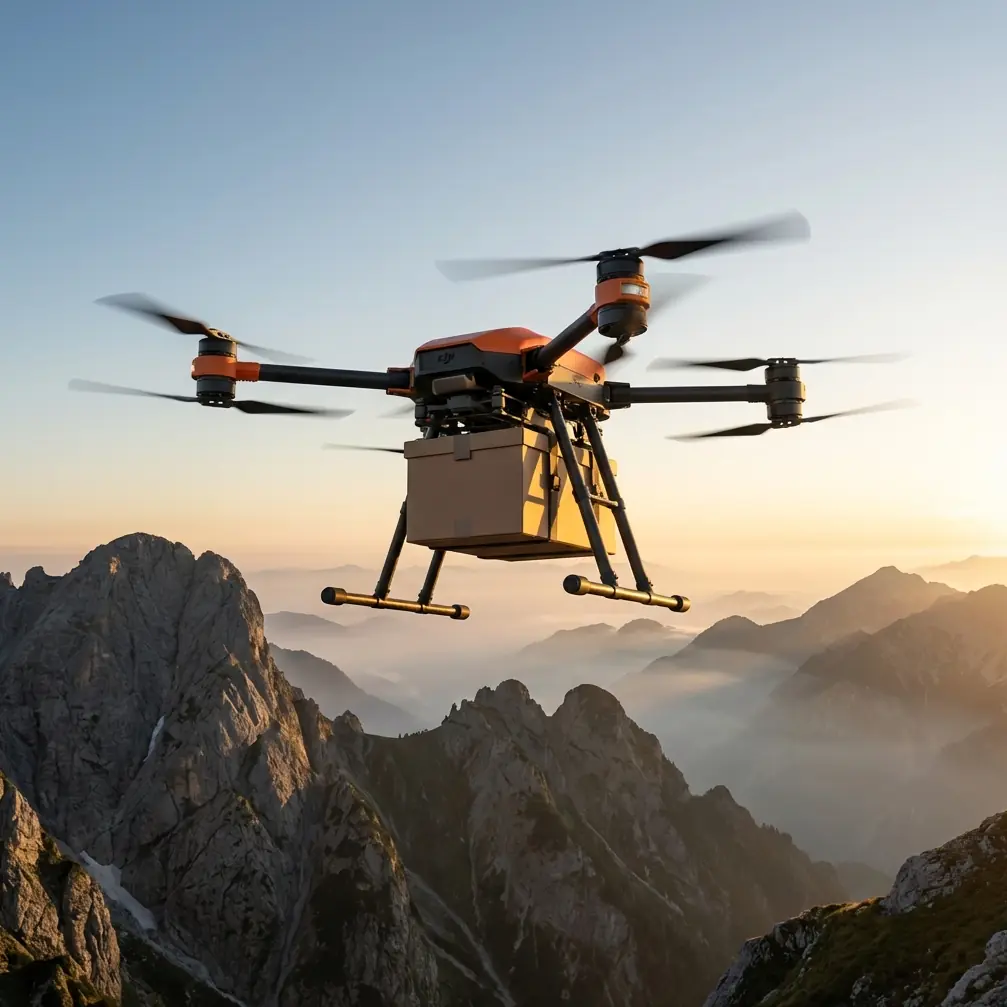
FlyCart 30 for Coastal Wildlife Mapping: What Actually Matters in the Field
META: A field-focused FlyCart 30 article for coastal wildlife mapping, covering payload ratio, dual-battery planning, winch use, BVLOS workflow, route optimization, emergency parachute readiness, and antenna adjustment under electromagnetic interference.
Coastal wildlife mapping looks clean on a planning board. Tidal windows are marked. Survey corridors are drawn. Payload weights are checked. Then the real environment shows up.
Salt air degrades connectors faster than expected. Wind shifts over dunes and rocky edges. Wetlands create uneven launch options. Harbors, telecom sites, and marine infrastructure can introduce electromagnetic interference at the exact moment you need stable command and video links. If the mission includes dropping or lowering remote sensors, tags, or sample kits into difficult terrain, the aircraft is no longer just a camera platform. It becomes a logistics node in a fragile ecosystem.
That is where the FlyCart 30 deserves a more serious discussion than the usual “heavy-lift drone” label.
For coastal wildlife work, the FlyCart 30 is most useful when the operator stops thinking about it as a transport machine alone and starts using it as a structured field system: payload management, route discipline, controlled delivery, redundancy, and recovery planning all working together. That matters even more in a setting where one missed sortie can mean losing a tide cycle, a nesting count, or a narrow weather window.
The real problem: coastal mapping missions are rarely just mapping
Teams often begin with a straightforward brief: map bird colonies, count marine mammals near shore, inspect vegetation changes, or document habitat disturbance. In practice, those missions expand quickly.
A field day may involve carrying a mapping payload to a remote launch point, transporting marker stakes or compact sensors, lowering collection tools into marsh zones where technicians should not walk, and repeating flights across long linear corridors. That creates conflicting demands. You need efficiency, but you also need low-impact operations. You need endurance, but you cannot ignore payload ratio. You need reach, but the route may push toward BVLOS-style planning disciplines even when operations remain tightly controlled.
This is why FlyCart 30 conversations that stay at the spec-sheet level tend to miss the point. In coastal wildlife mapping, the aircraft’s value comes from how well it absorbs operational complexity.
Why payload ratio changes the way you plan the mission
Payload ratio sounds like a procurement term. In the field, it is really a decision-making tool.
If too much of the aircraft’s lift capability is consumed by a poorly chosen payload stack, everything else becomes less forgiving: endurance tightens, route options shrink, reserve margins become thin, and wind tolerance becomes operationally expensive. For coastal wildlife mapping, that can be the difference between one clean sortie and two partial flights with a battery swap during a narrow tide interval.
A strong payload ratio allows the FlyCart 30 to do more than carry weight. It lets the team preserve margin. That margin matters when flying over uneven shorelines, open inlets, mudflats, or estuaries where recovery choices may be limited.
This becomes especially relevant when crews are tempted to “just add one more item” to a mission loadout. A compact sensor package, backup radio, or field marker kit may not sound significant on paper. But the combined effect on endurance and handling can quietly reshape the risk profile. Experienced teams treat payload ratio not as a maximum threshold to chase, but as a planning boundary to respect.
For wildlife work, that means defining mission-essential items first, then protecting enough capacity for stable handling and return reserves. The smarter metric is not “how much can it lift,” but “how much can it lift while still finishing the mission with control authority and decision space.”
The winch system is not a convenience feature
In coastal terrain, the winch system can be the difference between a low-impact operation and a bad field decision.
Many wildlife mapping zones are environmentally sensitive or physically awkward. Mangroves, marsh edges, cliff-backed coves, tidal flats, and nesting areas often punish ground access. Walking into them can alter animal behavior, damage habitat, or expose technicians to unstable footing. A drone that can lower equipment without landing changes the mission architecture.
That is where the FlyCart 30’s winch system earns its place. Not because lowering an object looks impressive, but because it reduces disturbance. A team can position the aircraft above a selected point and lower a sensor, compact recorder, small collection tool, or communication relay package with more precision than a full touchdown in uncertain terrain.
Operationally, this also keeps the aircraft out of contact with saltwater spray, soft mud, and uneven surfaces. Landing is often the riskiest part of any field mission. Removing unnecessary landings protects the aircraft and the schedule.
For wildlife mapping, the significance is clear: the winch system supports access without intrusion. That is a strong fit for projects where habitat preservation matters as much as the data itself.
Dual-battery thinking is about continuity, not just redundancy
The phrase dual-battery gets oversimplified. People hear redundancy and assume the story ends there. It does not.
On coastal missions, dual-battery architecture matters because continuity matters. Weather bands move quickly near shore. Wind can build faster than inland forecasts suggest. A mission may begin in calm conditions and end with a crosswind on return. In that environment, power planning is not just about staying airborne. It is about protecting the mission from abrupt interruptions.
A dual-battery setup gives teams more confidence in maintaining stable operations across longer survey legs or mixed tasks, especially when the aircraft is not simply transiting but hovering, repositioning, and supporting delivery work. That kind of stop-start profile can be harsher on planning than a simple out-and-back route.
From a workflow perspective, dual-battery planning should be tied to route optimization. If the mission includes several target zones, the order of operations matters. Handle the heaviest payload segment first when reserves are highest. Place less demanding mapping passes later, closer to the recovery point. That sequencing reduces pressure when field conditions shift.
The strongest operators treat batteries as a routing variable, not a background specification.
BVLOS discipline starts long before takeoff
For coastal wildlife mapping, even missions that are legally or procedurally constrained to conservative flight envelopes benefit from BVLOS-style discipline. That means route design, communication planning, contingency logic, and clear segmentation of airspace concerns before launch.
Why mention BVLOS at all? Because coastal missions often stretch across long shorelines, barrier islands, estuary edges, or infrastructure corridors where visual continuity is imperfect. Tall grasses, dunes, harbor structures, and topography can disrupt observation even when the map suggests an open area.
The lesson is simple: do not wait for distance to create complexity. Build the mission as if continuity must be engineered.
That includes:
- dividing the route into decision gates rather than one long uninterrupted flight,
- assigning alternates for return or hold points,
- identifying interference zones near marine radios, power assets, and communications towers,
- and defining what triggers route shortening versus mission continuation.
This kind of discipline becomes even more relevant when the aircraft is carrying a meaningful payload rather than a light sensor-only configuration. The consequences of poor route design increase with mission weight and environmental exposure.
Electromagnetic interference is not abstract near the coast
One of the most underestimated issues in coastal operations is electromagnetic interference. People expect wind. They account for salt. They often do not plan deeply enough for signal behavior near ports, marinas, coastal industrial facilities, radar sources, and telecom infrastructure.
The fix is rarely dramatic, but it does require technical calm. Antenna adjustment should be part of the active workflow, not an afterthought. If link quality degrades near a known interference source, small changes in ground antenna orientation, operator position, or staging location can materially improve reliability. In some cases, moving the control point a short distance away from reflective structures or cluttered RF environments is more useful than trying to force the original setup to work.
This is one of those field lessons that separates smooth operations from frustrating ones. Teams new to shoreline work sometimes assume all instability is weather-related. Experienced crews know to question the RF environment immediately.
For FlyCart 30 users, this matters because a larger mission profile often means more dependence on stable command and telemetry throughout transit, hover, and delivery phases. Mapping wildlife in coastal regions may sound gentle compared with industrial logistics, but the communication environment can be surprisingly hostile.
If your team is building procedures for these missions, it helps to compare notes with operators who have dealt with shoreline interference firsthand. A direct field discussion can save days of trial and error; one practical starting point is this WhatsApp channel for mission planning questions.
Emergency parachute planning belongs in the mission design, not the appendix
When people discuss safety gear, they often treat it as a checkbox. That mindset is too shallow for coastal work.
An emergency parachute system has operational significance because the areas below the aircraft are rarely uniform. A shoreline mission may pass over water, sandbars, marsh, rocky outcrops, boardwalk edges, or protected habitat. If a serious fault develops, the descent profile and likely impact area matter a great deal.
That means parachute readiness should influence route selection from the start. Avoid placing the aircraft over the most sensitive habitat whenever practical. Keep emergency descent paths in mind when choosing survey lanes. If one route is slightly longer but keeps the aircraft over less vulnerable terrain for more of the mission, it may be the smarter choice.
This also links back to route optimization. The shortest path is not always the best path. For wildlife projects, minimizing ecological disturbance during both normal and abnormal operations should be part of the flight logic.
A useful contrast: networked drone tactics versus single-platform discipline
One reference point worth reflecting on comes from a recent report describing a “Christmas tree” drone interception tactic, where multiple drones are launched in layered or grouped formations to create an aerial interception network. The report offered no specific time, place, or outcome data, but the operational concept is clear: several aircraft are organized in tiers to detect and engage incoming drones across a contested airspace.
For civilian coastal wildlife mapping, the relevance is not in the use case itself. That should be set aside. The operational takeaway is different: layered airspace thinking changes outcomes.
In commercial FlyCart 30 work, you are not building an interception network. But you can borrow the discipline of structured aerial organization. Instead of sending one aircraft into a broad, loosely managed operating area, create mission layers: primary route, alternate route, hold zone, delivery zone, and recovery corridor. In other words, replace reactive flying with managed geometry.
That same “layering” mindset is useful when multiple field teams share the shoreline. Mapping crews, ecological observers, and logistics support personnel should not improvise around each other. The cleaner the operational segmentation, the lower the disturbance and the higher the data quality.
The report’s mention of a multi-drone, layered framework is a reminder that airspace becomes safer and more effective when structure replaces assumption. In civilian work, that translates into cleaner route planning, clearer separation of tasks, and fewer surprises.
What a strong FlyCart 30 coastal workflow actually looks like
The best FlyCart 30 wildlife mapping teams tend to follow a pattern.
They begin by defining the mission in modules, not as one vague sortie. Mapping pass. Sensor drop. Hover capture. Return. That keeps payload ratio honest and prevents mission creep from eating endurance.
They use the winch system only where it solves a habitat-access problem or avoids a risky landing. They do not force it into the mission just because it is available.
They build dual-battery planning into route order, not just preflight checks.
They assume electromagnetic interference will appear somewhere near shore and prepare antenna adjustment options before the first warning appears on screen.
They think in BVLOS terms even when the flight envelope is conservative, because sight lines in coastal environments are often less reliable than they look.
And they treat emergency parachute readiness as part of the route map.
That is the difference between owning a capable aircraft and running a capable operation.
The bottom line for wildlife teams
The FlyCart 30 makes sense for coastal wildlife mapping when the mission is bigger than image capture alone. If the day includes moving equipment, accessing sensitive zones without landing, preserving ecological margins, and maintaining reliability in an RF-challenging environment, the platform begins to show its real value.
Not because it can do everything, but because it can connect tasks that are usually handled separately.
That integration matters in the field. Every extra vehicle movement, every unnecessary footstep into habitat, every rushed battery decision, every poorly planned route segment adds friction. Over time, friction becomes missed data.
Used well, the FlyCart 30 reduces that friction. The payload ratio keeps the mission realistic. The winch system reduces ground impact. The dual-battery design supports continuity. BVLOS-style route discipline improves control. Antenna adjustment helps manage electromagnetic interference near coastal infrastructure. The emergency parachute belongs in the actual route logic, not in a binder.
For teams mapping wildlife where the shoreline keeps changing the rules, those details are not accessories. They are the mission.
Ready for your own FlyCart 30? Contact our team for expert consultation.