
FlyCart 30 for High-Altitude Fields: A Practical Operator’s
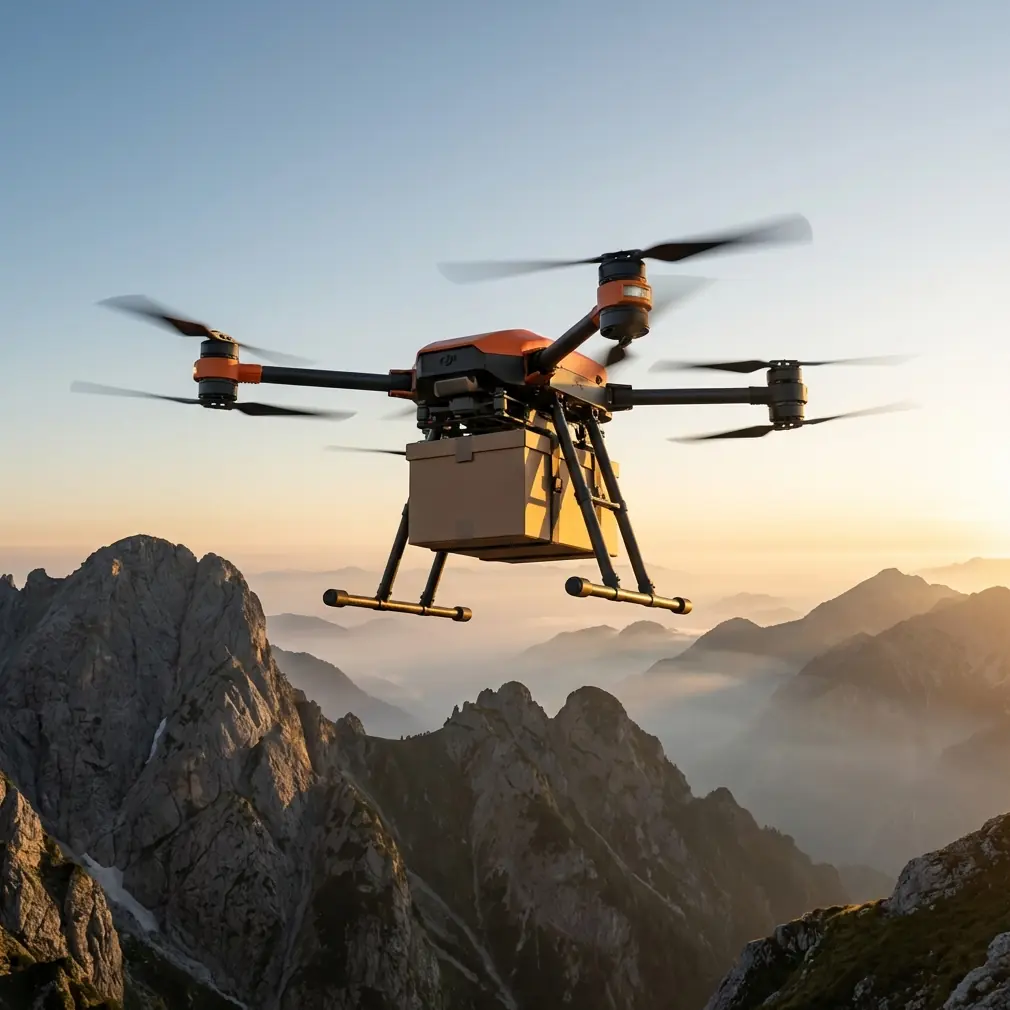
FlyCart 30 for High-Altitude Fields: A Practical Operator’s Guide from a Logistics Lead
META: Expert how-to guide on using DJI FlyCart 30 for monitoring and support over high-altitude fields, with practical notes on payload strategy, EMI handling, route planning, winch use, and why larger VTOL trends matter.
When people talk about heavy-lift UAV progress, they usually jump straight to headline aircraft. A recent example is the LanYing R6000, which completed its maiden flight on December 28 in Sichuan and was described as the world’s first 6-ton tiltrotor unmanned aircraft. Its published numbers are hard to ignore: 550 km/h cruise in fixed-wing mode, 2,000 kg maximum payload, 4,000 km range, and a service ceiling of 7,620 meters. Those figures sit in a very different class from a field logistics drone like the FlyCart 30.
Still, that news matters to FlyCart 30 operators.
Why? Because it points to the same underlying industry demand: aircraft that can work where roads are poor, terrain is steep, weather changes fast, and altitude punishes weak performance. In other words, the exact conditions many agricultural teams face when monitoring and supporting fields in upland regions. The R6000’s significance is not that it replaces a FlyCart 30. It doesn’t. Its significance is that the market is rewarding platforms designed around vertical access, flexible deployment, and better performance in hard geography. That is the same operational logic behind using a FlyCart 30 well.
I work from the logistics side, and in high-altitude field operations the question is rarely “Can the drone fly?” The real question is “Can it deliver stable, repeatable work without wasting sorties?” That is where setup discipline, payload ratio, route design, and antenna management make the difference.
This guide is built around that reality.
Start with the mission, not the aircraft
For high-altitude field monitoring, the FlyCart 30 is often brought in for more than one job at once. One sortie may deliver sensors, batteries, small tools, or plant protection supplies to a ridge plot. Another may support inspection of irrigation lines, fencing, weather stations, or communications points. In some operations, the aircraft is not the primary imaging platform at all. It becomes the transport backbone that keeps field technicians moving and measuring.
That distinction matters because high-altitude work is punishing on efficiency. Every unnecessary kilogram cuts into margin. Every poorly planned leg increases exposure to wind, terrain masking, and communication interruptions.
Before launch, define which of these you are actually doing:
- Transporting monitoring equipment to a field team.
- Resupplying a remote field station.
- Dropping material to a fixed point with the winch system.
- Running repeated route-based support over several plots.
- Combining delivery with visual condition checks on terrain and access paths.
Those are very different missions, even if they happen on the same farm.
Why the wider UAV industry trend matters here
The LanYing R6000 uses a tiltrotor layout to switch between vertical takeoff and landing and high-speed fixed-wing flight. Operationally, that means two things. First, vertical access is no longer optional for many real-world missions. Second, efficient forward flight is increasingly valued because terrain-heavy routes consume time and energy.
For FlyCart 30 users, the lesson is not to compare airframes directly. The lesson is to think in operational layers.
A larger aircraft like the R6000 shows where long-range unmanned logistics is headed. Its reported 4,000 km range and 7,620-meter service ceiling underline how seriously the industry is now treating remote access and altitude capability. At the field scale, the FlyCart 30 fits into that same problem set in a more localized way: shorter routes, smaller loads, tighter landing zones, and frequent deployment from improvised staging areas.
That is why route optimization matters so much. You are not flying a showcase mission. You are building a repeatable logistics loop under altitude constraints.
Payload ratio: the number that quietly decides your day
Most teams obsess over top payload. Smart teams track payload ratio.
By payload ratio, I mean the relationship between useful load and all the hidden mission overhead: rigging, container weight, battery demands, reserve margin, altitude penalties, and return leg conditions. In high-altitude fields, that ratio shifts faster than many operators expect.
A payload that feels conservative at lower elevations can become operationally expensive on a mountain-side route with gusts, sparse landing options, and cold temperatures. The practical answer is to avoid treating published capacity like an everyday planning number. Instead, categorize loads like this:
- Essential mission payload
- Flight support payload
- “Nice to have” extras
- Return contingencies
When teams do this honestly, they usually find that some weight can be removed without reducing mission value. That improves cycle times and reduces stress on the aircraft.
For field monitoring support, lighter and more frequent runs often outperform fewer heavy runs. That is especially true when several plots sit at different elevations and require staggered delivery windows.
Use the winch system to reduce landing risk
In high-altitude farming zones, the best delivery point is often not a place where you want to land. Sloped terraces, soft ground, narrow berms, crop rows, and unstable surfaces all create avoidable risk.
This is where the winch system becomes more than a convenience. It is a risk-management tool.
A controlled suspended drop lets the aircraft stay clear of uneven terrain while putting supplies where the field team actually needs them. That is valuable for monitoring equipment, sample containers, replacement sensors, handheld radios, line repair kits, and similar support items.
The operational significance is simple: every landing you avoid on compromised terrain removes one more chance for rotor wash issues, tip-over hazards, and awkward repositioning. It also speeds up multi-stop work because the crew spends less time hunting for a safe touchdown zone.
If your monitoring workflow requires frequent placement of small but important gear, train around the winch early. Don’t treat it as a backup feature.
Handling electromagnetic interference: antenna adjustment is not a minor detail
This is one of those lessons operators usually learn after a rough day.
High-altitude fields often look clean on paper. In reality, they can be full of interference sources: relay towers, pump controllers, solar installations, electric fencing, weather stations, long-wire power runs, and metal structures on ridgelines. Add terrain reflections and partial line-of-sight blockage, and link quality can degrade in inconsistent ways.
I’ve seen crews blame weather, battery state, or software when the real fix was antenna discipline.
A practical approach:
1. Walk the site before the first route
Look for likely EMI sources near the takeoff point and along the projected path. A launch area next to power hardware can create problems before the aircraft even begins the climb.
2. Adjust the antenna to match the route geometry
If your mission climbs sharply up-valley or traverses across a slope, set antenna orientation for the real flight corridor, not the abstract map line. This sounds basic. It is often skipped.
3. Re-check after moving the ground station
A small relocation for shade or convenience can change the signal environment. If you move, reassess.
4. Separate communications issues from terrain masking
If the signal degrades only at one point on the route, the cause may be terrain shadow rather than broad interference. That changes the solution. You may need to shift altitude or route shape, not just antenna angle.
5. Build a known-good baseline
When the link is stable, note the antenna position and site conditions. This becomes your reference for future flights.
For teams working BVLOS under approved conditions and proper local compliance, this becomes even more important. Once the aircraft extends beyond easy visual confirmation, your tolerance for sloppy ground setup drops fast.
If your crew wants a second set of eyes on route layout or antenna positioning for difficult farm terrain, this quick WhatsApp line can help: https://wa.me/85255379740
Route optimization for upland plots
The cleanest route on a screen is not always the best route in the air.
In high-altitude agriculture, route planning should reflect four realities:
- Elevation changes cost energy
- Valleys and ridges shape wind differently
- Communication quality varies by terrain
- Ground teams rarely stay exactly where the original plan assumed
A useful method is to split your route into mission blocks instead of one long chain. For example:
- Block A: lower access field and staging drop
- Block B: mid-slope irrigation or sensor support
- Block C: ridge-top monitoring point
- Block D: return reserve or contingency task
This gives you more control over battery planning, weather decisions, and payload sequencing. It also makes field changes easier. If a team no longer needs a ridge delivery, you can cut Block C without reworking the whole mission logic.
When possible, place the heaviest or most time-sensitive task earlier in the sortie, while reserve margin is strongest and the aircraft is freshest. Keep enough margin for a realistic return under changing wind, not ideal conditions.
Dual-battery thinking: resilience, not just endurance
Dual-battery architecture is often discussed as an uptime feature. In actual field operations, it should be treated as part of your resilience planning.
High-altitude work amplifies the cost of interruptions. If a battery issue forces an abort from a remote route, you lose more than time. You may leave a field team without equipment, delay crop checks, or miss a narrow weather window.
So the real value is continuity. Not merely staying aloft longer, but reducing mission fragility.
That means your battery practice should include:
- Matching battery condition across pairs
- Tracking performance by route type
- Avoiding “good enough” battery selection for uphill legs
- Watching temperature effects on repeated cycles
- Reserving your strongest sets for the hardest terrain blocks
It also means not stacking too many unknowns into one sortie. New route, heavier payload, colder air, and a late-day wind shift should not all be tested together.
Emergency parachute planning should exist before you need it
An emergency parachute is one of those systems people mention quickly and then mentally file away. That is a mistake.
For high-altitude field work, the point is not simply that a parachute exists. The point is how it changes your route acceptance criteria and ground safety planning. If your aircraft operates near field workers, livestock areas, greenhouses, or steep drop-offs, emergency procedures need to be part of the mission briefing, not a checkbox.
The crew should know:
- Where people must not stand during loading and launch
- Which route segments carry the highest ground risk
- What communication phrase signals an immediate clear-out
- Who confirms the drop zone or work zone is empty
- How to log and review abnormal events after the flight
That kind of discipline protects operations and makes repeat deployment easier to approve internally.
Folding and deployment flexibility: a detail larger aircraft have made newly relevant
One overlooked detail in the LanYing R6000 report is its emphasis on space-saving design. The aircraft reportedly uses a tandem wing folding layout and rotor blade folding to reduce parking footprint and improve deployment flexibility in tight areas. That may sound like a feature for a much larger class of aircraft, but the underlying issue is familiar to FlyCart 30 crews.
Field logistics rarely starts from a perfect apron. You launch from edges of tracks, temporary pads, cleared farm corners, or narrow terrace access points. Space efficiency is not cosmetic. It determines whether your setup remains orderly, safe, and fast enough for repeated work.
The broader unmanned industry is now designing around deployment practicality, not just raw flight numbers. That should reinforce a good habit for FlyCart 30 teams: build compact, disciplined ground procedures that assume limited space and changing access.
A workable high-altitude operating flow
For teams that want a repeatable pattern, this is the flow I recommend:
Pre-mission
Confirm the actual field need, not the assumed one. Strip payload to essentials. Check battery pairing and weather trend. Review terrain-linked communication risks.
Launch site setup
Choose a position with clean departure geometry and as little EMI exposure as possible. Set antenna orientation for the real corridor. Brief the crew on winch vs landing decision points.
First sortie
Use a conservative route and validate signal quality at known problem segments. Log where terrain or interference affects control and telemetry confidence.
Task execution
Prefer winch delivery when ground conditions are uneven or landing would slow the cycle. Keep payload categories disciplined. Don’t let convenience items accumulate.
Mid-operation review
Reassess wind, battery behavior, and ground team position. If communications require repeated correction, stop and fix the antenna setup rather than “flying through it.”
End-of-day analysis
Note actual payload ratio, route efficiency, and communication weak spots. These records become your real operating manual for that farm.
The real takeaway
The maiden flight of a 6-ton tiltrotor like the LanYing R6000 is not just a national aerospace milestone. It is evidence that unmanned aviation is being shaped by practical needs: vertical access, speed where distance matters, and performance in places where conventional logistics struggles. Its reported 2,000 kg payload and 4,000 km range belong to another operating scale, but the message carries down to field-level systems.
For FlyCart 30 operators monitoring and supporting high-altitude fields, success comes from the same mindset. Match payload to mission. Use the winch system to avoid bad landings. Treat antenna adjustment as mission-critical when electromagnetic interference is present. Plan BVLOS-capable workflows with route logic, not guesswork. Use dual-battery resilience and emergency parachute procedures as parts of a serious operating method, not brochure features.
That is how a field drone becomes a reliable logistics tool instead of an occasional convenience.
Ready for your own FlyCart 30? Contact our team for expert consultation.