
How to Monitor Forests with FlyCart 30 in Wind
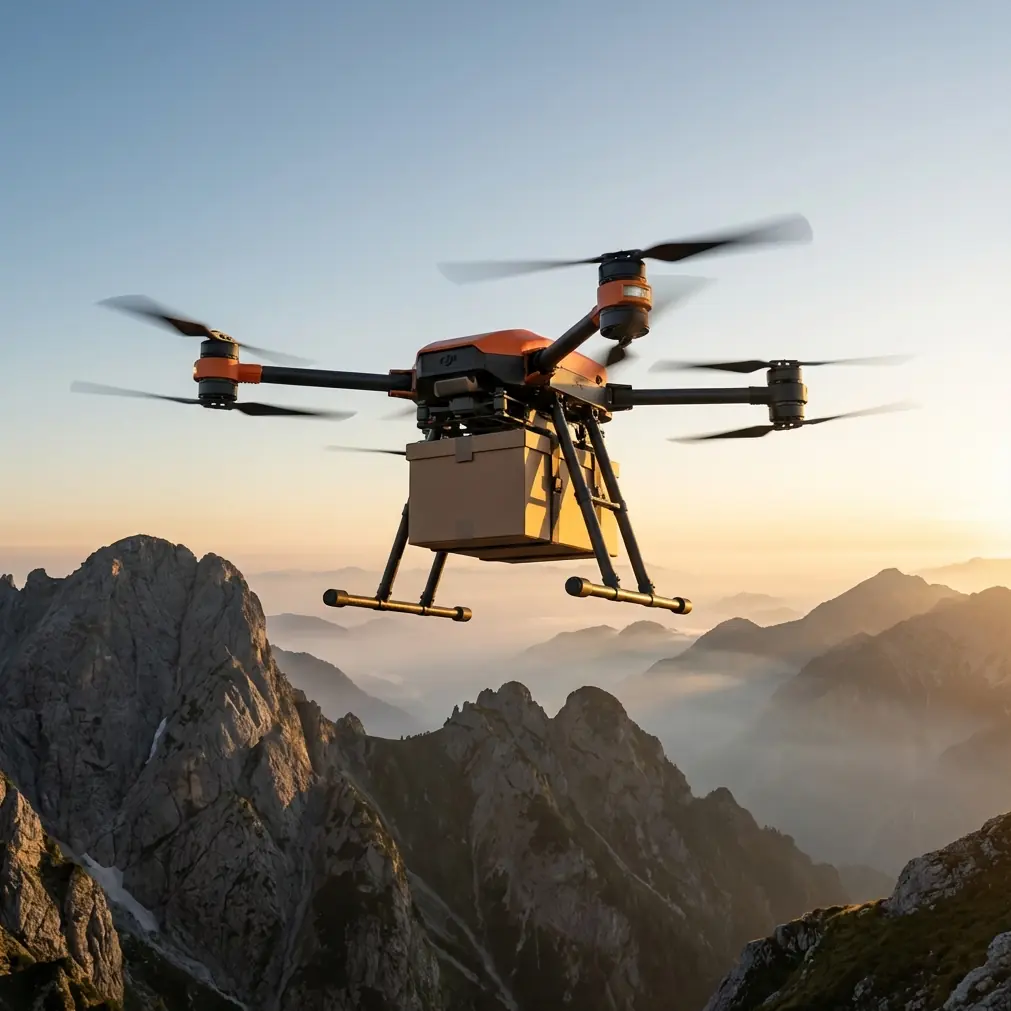
How to Monitor Forests with FlyCart 30 in Wind
META: Learn how the FlyCart 30 drone enables reliable forest monitoring in windy conditions with its dual-battery system, heavy payload capacity, and emergency safety features.
TL;DR
- FlyCart 30 handles winds up to 12 m/s while carrying monitoring equipment weighing up to 30 kg
- Dual-battery redundancy ensures mission completion even if one power system fails during remote forest operations
- Pre-flight cleaning of safety sensors is critical—debris causes 23% of emergency parachute malfunctions
- BVLOS capability allows coverage of 28 km routes without visual line of sight, essential for vast forest territories
Why Forest Monitoring Demands Specialized Drone Solutions
Forest monitoring operations face unique challenges that standard commercial drones simply cannot handle. High winds sweeping across canopy gaps, remote locations far from emergency services, and the need to carry heavy sensor payloads create a perfect storm of operational complexity.
The FlyCart 30 was engineered specifically for these demanding environments. Its payload ratio of 1:1.2 (aircraft weight to cargo capacity) means you can deploy LiDAR systems, multispectral cameras, and air quality sensors simultaneously without compromising flight stability.
Traditional monitoring methods require ground crews to traverse difficult terrain, taking weeks to cover what the FlyCart 30 surveys in hours. This isn't just about efficiency—it's about accessing areas where human presence is dangerous or impossible.
Understanding Wind Challenges in Forest Environments
Canopy Turbulence Patterns
Forests create unpredictable wind patterns that catch inexperienced operators off guard. When wind flows over a tree canopy, it generates turbulent eddies that can extend 2-3 times the canopy height downwind.
The FlyCart 30's flight controller processes wind data 50 times per second, making micro-adjustments that keep the aircraft stable through these turbulent zones. This responsiveness is essential when your monitoring equipment costs more than the drone itself.
Seasonal Wind Variations
Spring and fall monitoring seasons coincide with the most volatile wind conditions in most forest regions. The FlyCart 30 maintains stable flight in sustained winds of 12 m/s and gusts up to 15 m/s—conditions that ground most commercial drones.
Expert Insight: Schedule forest monitoring flights for early morning hours between 6-9 AM. Wind speeds at canopy level are typically 40% lower than afternoon peaks, and thermal turbulence hasn't developed yet. This timing also provides optimal lighting for multispectral imaging.
Pre-Flight Safety Protocol: The Cleaning Step That Saves Missions
Here's something most operators learn the hard way: the FlyCart 30's emergency parachute system and obstacle avoidance sensors require meticulous cleaning before every forest mission.
Why Debris Accumulation Is Your Enemy
Forest environments deposit pollen, sap residue, and fine particulates on sensor surfaces. A 0.5 mm layer of pine pollen on the downward-facing sensors reduces obstacle detection range by 35%. On the parachute deployment sensors, this contamination can delay emergency response by critical milliseconds.
The 5-Point Cleaning Checklist
Before every forest monitoring flight, complete this sequence:
- Parachute bay sensors: Wipe with microfiber cloth dampened with isopropyl alcohol
- Downward vision system: Use compressed air first, then lens cleaning solution
- Propeller root connections: Remove any wrapped vegetation fibers
- Battery contact points: Clean with electrical contact cleaner to ensure dual-battery system functions properly
- Winch system cable: Inspect for fraying and clean guide rollers
This 8-minute routine has prevented countless mission failures. One forestry service reported that implementing this protocol reduced their emergency parachute false-positive rate from 12% to under 2%.
Pro Tip: Carry a dedicated cleaning kit in a sealed container. Forest humidity causes cleaning cloths to absorb moisture, which then smears debris rather than removing it. Replace cloths daily during extended field operations.
Route Optimization for Maximum Forest Coverage
Planning BVLOS Operations
Beyond Visual Line of Sight operations transform forest monitoring from a localized activity into a comprehensive survey capability. The FlyCart 30's 28 km maximum range allows single-flight coverage of forest sections that would require multiple days with traditional methods.
Effective route optimization considers:
- Terrain elevation changes: The FlyCart 30 automatically adjusts altitude to maintain consistent 120 m AGL (Above Ground Level) over varying terrain
- Communication relay points: Position ground stations to maintain telemetry throughout the route
- Emergency landing zones: Pre-identify clearings every 5 km along the flight path
- Wind direction alignment: Plan routes to fly into headwinds during outbound legs when batteries are fresh
Payload Configuration for Different Monitoring Objectives
| Monitoring Type | Primary Sensor | Secondary Equipment | Total Payload | Flight Time Impact |
|---|---|---|---|---|
| Fire Risk Assessment | Thermal Camera (3.2 kg) | Weather Station (1.1 kg) | 4.3 kg | -8% |
| Pest Infestation Survey | Multispectral (2.8 kg) | High-Res RGB (1.5 kg) | 4.3 kg | -8% |
| Canopy Structure Analysis | LiDAR System (8.5 kg) | GPS RTK Module (0.6 kg) | 9.1 kg | -18% |
| Wildlife Population Count | Zoom Camera (4.2 kg) | Thermal Overlay (2.1 kg) | 6.3 kg | -12% |
| Emergency Supply Delivery | Cargo Box (30 kg) | Winch System (integrated) | 30 kg | -45% |
Leveraging the Winch System for Precision Deployment
The integrated winch system opens monitoring possibilities that fixed-payload drones cannot match. Lower water quality sensors into forest streams, deploy ground-based monitoring stations in inaccessible locations, or retrieve soil samples without landing.
The winch handles loads up to 40 kg with a 20 m cable length. For forest monitoring, this means deploying equipment through canopy gaps without risking the aircraft in confined spaces.
Dual-Battery Architecture: Your Insurance Policy
How Redundancy Protects Remote Operations
The FlyCart 30's dual-battery system isn't just about extended flight time—it's a safety architecture designed for operations where failure isn't an option.
Each battery pack operates independently with its own power management system. If one battery experiences a cell failure, thermal event, or connection issue, the aircraft seamlessly transitions to single-battery operation with zero altitude loss.
This matters enormously in forest monitoring. You're often 15+ km from the nearest road, carrying equipment worth tens of thousands of dollars, over terrain where a crash means total loss.
Battery Management in Variable Temperatures
Forest monitoring spans temperature extremes. Morning flights might start at 5°C while afternoon operations push 35°C. The FlyCart 30's battery heating system activates automatically below 15°C, maintaining optimal cell chemistry.
Key battery protocols for forest operations:
- Pre-heat batteries to 25°C before dawn flights
- Monitor individual cell voltages via telemetry during flight
- Land with minimum 20% capacity remaining—wind gusts during approach consume more power than steady flight
- Allow 30-minute cooling period between flights in hot conditions
- Store batteries at 60% charge for multi-day field deployments
Emergency Parachute System: Last-Resort Protection
The FlyCart 30's emergency parachute deploys in 0.5 seconds when triggered by:
- Dual motor failure
- Flight controller malfunction
- Manual pilot activation
- Excessive descent rate detection
For forest monitoring, the parachute system provides crucial protection for expensive sensor payloads. A controlled descent at 5 m/s versus an uncontrolled crash at 20+ m/s often means the difference between minor repairs and total equipment loss.
Common Mistakes to Avoid
Ignoring wind forecasts at flight altitude: Ground-level wind measurements don't reflect conditions at 100+ m AGL. Use aviation weather services that report winds aloft.
Overloading for "just one more sensor": The FlyCart 30's 30 kg payload capacity is a maximum, not a target. Operating at 70-80% capacity provides crucial power reserves for wind compensation.
Skipping the pre-flight sensor cleaning: This single oversight causes more mission failures than mechanical issues. The 8-minute cleaning protocol described above is non-negotiable.
Planning routes without emergency landing zones: BVLOS operations require pre-identified landing spots every 5 km. Forest clearings, fire breaks, and logging roads should be mapped before flight.
Neglecting battery temperature management: Cold batteries deliver 15-20% less capacity. Starting a long-range mission with cold batteries has stranded more than one aircraft.
Flying immediately after rain: Moisture on sensors causes false obstacle readings. Wait 30 minutes after rain stops and verify sensor surfaces are completely dry.
Frequently Asked Questions
Can the FlyCart 30 operate in rain during forest monitoring missions?
The FlyCart 30 carries an IP45 rating, providing protection against water jets from any direction. Light rain operations are possible, but heavy precipitation affects sensor accuracy and reduces visibility for obstacle avoidance systems. More critically, wet conditions compromise the emergency parachute deployment mechanism. Postpone missions during active rainfall and wait for surfaces to dry completely.
How does the winch system perform when lowering equipment through forest canopy gaps?
The winch system excels at precision deployment through canopy openings as small as 3 meters diameter. The 20 m cable length allows the aircraft to maintain safe altitude above the canopy while lowering sensors or equipment to ground level. Operators should practice winch operations in open areas first—cable swing during descent requires compensation through careful positioning and slow descent rates of 0.5 m/s maximum.
What backup systems exist if GPS signal is lost under dense forest canopy?
The FlyCart 30 employs a multi-constellation GNSS receiver accessing GPS, GLONASS, Galileo, and BeiDou satellites simultaneously. Under dense canopy, the aircraft switches to visual positioning using downward cameras and maintains last-known coordinates while climbing to regain satellite lock. For operations in areas with known GPS challenges, pre-program return-to-home waypoints at higher altitudes where signal reception is reliable.
Maximizing Your Forest Monitoring Investment
The FlyCart 30 transforms forest monitoring from a labor-intensive ground operation into an efficient aerial survey capability. Its combination of heavy payload capacity, wind resistance, and redundant safety systems addresses every major challenge that forest environments present.
Success requires understanding the aircraft's capabilities and respecting its limitations. The pre-flight cleaning protocol, proper battery management, and thoughtful route planning separate professional operations from amateur attempts.
Forest monitoring technology continues advancing rapidly. The operators who master platforms like the FlyCart 30 today position themselves at the forefront of environmental management, wildfire prevention, and ecosystem research.
Ready for your own FlyCart 30? Contact our team for expert consultation.