
FlyCart 30 in Low-Light Forest Operations
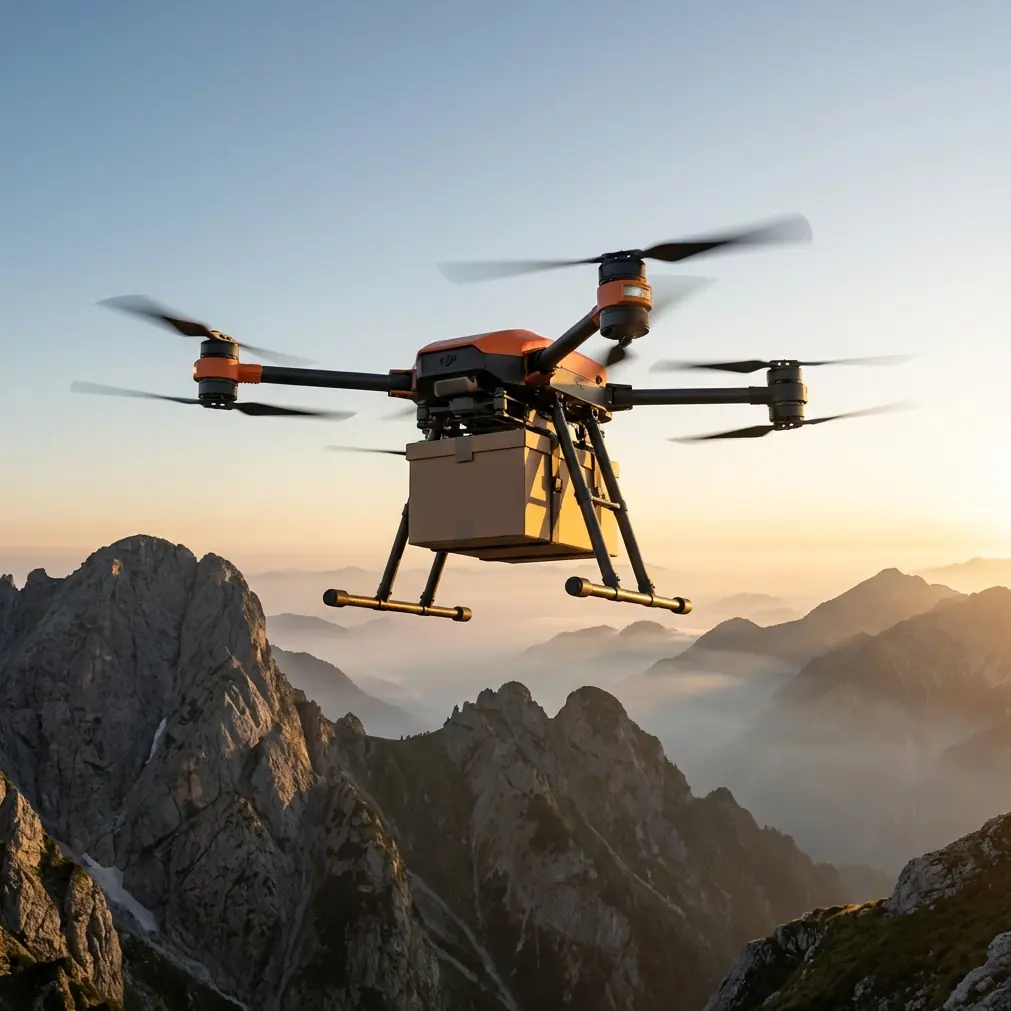
FlyCart 30 in Low-Light Forest Operations: A Field Report on Delivery Endpoints, Weather Shifts, and What Actually Matters
META: A field report on using the DJI FlyCart 30 for low-light forest logistics, with practical analysis of delivery endpoints, weather response, winch operations, payload planning, and why shared autonomous handoff infrastructure matters.
I’ve spent enough time around utility corridors, timber edges, and isolated forest access roads to know that the hardest part of a drone mission is often not the aircraft. It’s the handoff.
That becomes obvious in low-light forest work. You can have a capable heavy-lift platform, a clean route plan, redundant power, and a crew that knows the terrain. Then the weather turns. Tree canopies darken earlier than the clock suggests. Wind starts behaving differently across ridgelines. The payload still has to get to the right place, and the receiving point has to be secure, predictable, and usable by more than one transport method.
That is why a recent infrastructure development caught my attention in the context of FlyCart 30 operations. Arrive AI announced that it was granted its tenth U.S. patent, specifically U.S. Patent No. 12,591,840, covering shared-use secure delivery endpoints for autonomous logistics. The significance is easy to miss if you read it as pure patent news. It matters because those endpoints are designed to support drones, ground robots, and human couriers. For anyone thinking seriously about the FlyCart 30 in forest logistics, that is not a side note. It gets to the heart of reliable last-meter delivery.
Why endpoint design matters more in forests than on paper
A forest mission is never just point A to point B.
The map may show a straight line. The real operation includes canopy interference, inconsistent GNSS conditions, moisture, uneven landing alternatives, and limited visibility late in the day. In low light, a drop zone that seemed acceptable during planning can become a poor choice once the shadows deepen and the weather shifts.
That is where endpoint design moves from convenience to operational control.
A shared-use secure endpoint changes the conversation. Instead of treating the destination as a vague clearing or an improvised receiving area, the endpoint becomes a defined part of the logistics chain. It can serve the drone on one run, then accept a handoff from a ground robot or a human courier on another. In forest operations, that flexibility reduces mission fragility. If changing conditions make the final aerial approach less desirable, the system does not collapse. It adapts.
For FlyCart 30 users, this is especially relevant because the aircraft is built for carrying useful loads into places that are difficult to reach. But carrying a payload efficiently is only half the job. The other half is getting it transferred safely when terrain, light, and weather stop cooperating.
The mission that changed shape mid-flight
A recent low-light forest support run is a good example.
We launched near dusk for a supply movement into a managed woodland area where vehicle access was limited by wet ground and a blocked service track. The objective was straightforward: move equipment to a receiving point near a forest operations team before visibility degraded further. We planned conservatively, because in wooded environments low light is not just dimness. It compresses reaction time.
The FlyCart 30 was configured around a stable load profile rather than maximum capacity. That decision matters. Payload ratio is one of those terms people throw around casually, but in the field it determines how much margin you preserve for weather changes, route deviations, and controlled delivery behavior. In forests, preserving margin is rarely a mistake.
The route itself had been optimized for terrain and likely wind exposure, not shortest distance alone. That is another place operators get tripped up. Route optimization for a heavy-lift drone in woodland conditions should prioritize stability corridors and contingency options, especially when BVLOS workflows are part of the broader operating concept. The direct path is sometimes the least resilient one.
About halfway through the mission, the weather shifted faster than forecast. Wind strengthened along the upper canopy line, while light precipitation began moving through from the western edge of the route. Conditions at launch were manageable; conditions at the delivery segment were becoming less elegant. Not dangerous in a dramatic sense, but operationally noisier. The kind of change that turns a simple drop into a decision point.
This is where platform features and delivery infrastructure meet.
The FlyCart 30’s winch system gave us flexibility that a pure touchdown assumption would not have allowed. In forest settings, especially in low light, forcing a landing profile onto a marginal receiving area can create more risk than solving one. A controlled winch delivery lets the aircraft remain clear of obstacles and unstable ground conditions while still completing the handoff with precision.
But precision at the aircraft side is only useful if the receiving point is equally thought through. An endpoint designed for shared use and security closes that loop. If the drone can hand off to a secure endpoint rather than an improvised patch of earth, the mission becomes less dependent on a perfect final visual environment. That matters in forests where changing weather can erase “good enough” very quickly.
What the Arrive AI patent means for FlyCart 30 operators
Patent announcements are easy to dismiss as corporate signaling. This one deserves a closer reading because it addresses a weakness in many drone delivery concepts: endpoint inconsistency.
Arrive AI’s newly announced patent, No. 12,591,840, covers a secure endpoint that works across three different delivery actors: drones, ground robots, and human couriers. For FlyCart 30 operations, that has immediate practical value.
First, it supports route resilience. If weather or canopy conditions affect the aerial segment, a mission can still complete through another delivery mode using the same endpoint. Forest logistics rarely benefits from single-mode thinking.
Second, it improves chain-of-custody discipline. In commercial forestry, environmental monitoring, remote maintenance, and field team support, the question is not only whether an item arrives. It is whether it arrives securely and predictably. A shared secure endpoint creates a controlled handoff location rather than a loosely defined drop area.
Third, it helps normalize mixed-autonomy operations. That phrase can sound abstract, but the operational meaning is simple: not every leg of the mission must be served by the same machine. A FlyCart 30 may carry the high-friction portion of the route across difficult terrain, while a ground robot or person handles the final movement under canopy or near sensitive work zones. One endpoint serving all three modes reduces transition friction.
That is likely why this patent is more than a tally mark in an IP portfolio, even though the company emphasized that it is their tenth U.S. patent. Ten patents suggests sustained effort, but the practical story here is the endpoint itself. Infrastructure maturity often decides whether drone logistics remains a demo or becomes dependable field practice.
Low-light forests expose weak assumptions fast
The reason I frame this as a field report rather than a product overview is simple: low-light forest missions expose weak assumptions with no patience.
One weak assumption is that payload capacity alone defines mission value. It does not. Payload only becomes useful when paired with stable energy planning, weather margin, and a delivery method suited to the terrain. In that respect, a dual-battery heavy-lift platform matters not because redundancy sounds good in a spec sheet, but because it supports a more disciplined operational envelope when conditions shift. In the field, battery architecture is not a talking point. It is margin.
Another weak assumption is that endpoint choice can be improvised. In forest logistics, endpoint quality often determines whether a mission remains repeatable. If a receiving area depends on perfect ground conditions, perfect timing, and perfect visibility, it is not really an endpoint. It is a gamble.
A third weak assumption is that emergency systems are only there for rare catastrophes. In reality, features such as an emergency parachute shape operational confidence long before they are ever needed. When crews plan missions in low-light wooded areas, every layer of risk mitigation influences go/no-go judgment, route selection, and acceptable handoff methods. Safety systems are part of planning, not just incident response.
How I would structure a FlyCart 30 forest workflow around shared endpoints
If I were building a repeatable FlyCart 30 program for low-light forest support, I would treat the mission in four layers.
1. Aircraft capability as a constrained tool, not an all-purpose answer
Use the FlyCart 30 for the segment where heavy lift and aerial access solve the biggest access problem. Do not ask it to compensate for poor endpoint design or weak receiving procedures. That is how crews drift into unnecessary complexity.
2. Winch-first thinking where ground conditions are variable
In wooded terrain, a winch system often gives cleaner control than forcing a landing or relying on a rough drop zone. This is especially true as light fades and the visual character of the terrain flattens.
3. Shared secure endpoints as the operational anchor
The Arrive AI patent points toward a practical future model. A secure endpoint that can accept delivery from a drone, a robot, or a person means the mission no longer lives or dies by one transport mode. In forests, that flexibility is not theoretical. It is what keeps service continuity intact when weather bends the plan.
4. Route optimization built around fallback logic
For BVLOS-oriented operations, route optimization should include alternate delivery logic, not just alternate air paths. If the weather deteriorates near the receiving area, can the payload still be handed off to the same endpoint through another mode? That is the kind of planning that separates pilot skill from logistics maturity.
The operational significance of one weather change
The mid-flight weather change on our run did not become a dramatic incident. That is exactly the point.
The aircraft held its role. The crew adjusted. The endpoint strategy mattered. The mission remained controlled because the system was not built around a single brittle assumption. We had not designed everything around the idea that the drone must land in one perfect spot at one perfect moment. Instead, we had options.
That is why I think this patent news belongs in any serious FlyCart 30 discussion, even though the aircraft itself is not the subject of the patent. The more commercial UAV logistics grows up, the more value shifts from aircraft specs alone to infrastructure compatibility. In forests, where environment and access punish rigid thinking, a secure endpoint shared across drones, ground robots, and human couriers could prove more transformative than another headline about range.
If you are building your own FlyCart 30 operating concept for remote woodland support, endpoint planning deserves the same attention as aircraft setup. If you want to compare notes on practical route design or low-light delivery workflows, you can reach me through this field ops chat link.
The future of forest logistics is not just heavier lift or longer flight. It is smoother handoff, better recovery options, and infrastructure designed for the messy reality of real terrain.
That is where the newest patent news becomes useful. Not as a legal milestone, but as a clue about where mature drone operations are heading.
Ready for your own FlyCart 30? Contact our team for expert consultation.