
Highway Monitoring in Mountains with FC30 | Guide
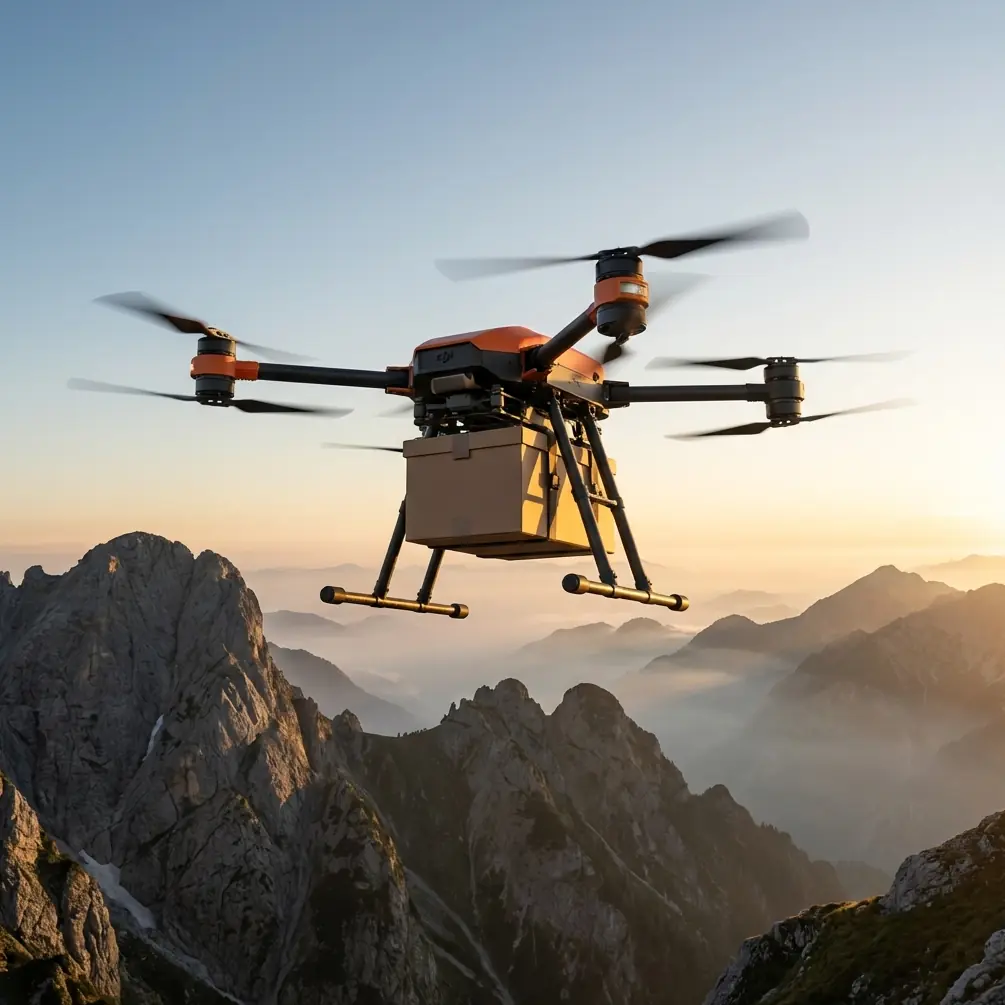
Highway Monitoring in Mountains with FC30 | Guide
META: Discover how the FlyCart 30 transforms mountain highway monitoring with its 30kg payload, dual-battery system, and BVLOS capabilities for safer operations.
TL;DR
- FlyCart 30's 30kg payload ratio enables carrying multiple sensor packages simultaneously for comprehensive highway assessment
- Dual-battery redundancy provides up to 28 minutes of flight time in challenging mountain terrain
- Emergency parachute system ensures safe operations over active highways and steep valleys
- Winch system capability allows precise equipment deployment to otherwise inaccessible inspection points
Mountain highway monitoring presents unique operational challenges that ground-based inspection teams struggle to overcome. The DJI FlyCart 30 addresses these obstacles with a heavy-lift platform specifically engineered for demanding terrain—delivering sensor payloads to remote locations while maintaining the safety margins essential for operations near active roadways.
This guide breaks down exactly how logistics teams can deploy the FC30 for highway infrastructure assessment, covering route optimization strategies, payload configurations, and the regulatory considerations for BVLOS operations in mountainous regions.
Why Mountain Highway Monitoring Demands Heavy-Lift Drones
Traditional highway inspection methods in mountainous areas require road closures, specialized vehicles, and teams rappelling down cliff faces. These approaches create traffic disruptions lasting hours and expose workers to significant fall hazards.
Aerial monitoring eliminates most ground-based risks while providing data quality that surpasses manual inspection. However, standard survey drones lack the payload capacity for professional-grade equipment packages.
The Payload Problem Most Drones Can't Solve
A comprehensive highway monitoring setup typically includes:
- LiDAR scanner for pavement condition assessment (3-5kg)
- Multispectral camera for vegetation encroachment detection (1-2kg)
- High-resolution RGB camera for visual documentation (1-3kg)
- Thermal imaging system for subsurface moisture detection (2-4kg)
- Communication relay equipment for remote area connectivity (2-3kg)
Combined, these systems easily exceed 12-15kg—far beyond what consumer or prosumer drones can handle. The FlyCart 30's 30kg maximum payload accommodates complete sensor suites in a single flight, eliminating the need for multiple aircraft or repeated sorties.
Expert Insight: When configuring multi-sensor payloads, distribute weight evenly across the FC30's cargo platform. Unbalanced loads reduce flight efficiency by up to 18% and stress the propulsion system unnecessarily.
FlyCart 30 vs. Competing Heavy-Lift Platforms
The heavy-lift drone market includes several options, but few match the FC30's combination of payload capacity, safety systems, and operational flexibility.
| Feature | FlyCart 30 | Competitor A | Competitor B |
|---|---|---|---|
| Maximum Payload | 30kg | 25kg | 20kg |
| Flight Time (loaded) | 18-28 min | 15-20 min | 12-18 min |
| Emergency Parachute | Integrated | Optional add-on | Not available |
| Dual-Battery System | Standard | Single battery | Single battery |
| Winch System | Available | Not available | Third-party only |
| BVLOS Ready | Yes | Limited | No |
| IP Rating | IP55 | IP54 | IP43 |
The FC30's integrated emergency parachute system stands out for highway operations. When flying over active roadways, equipment failure could result in debris falling onto vehicles. The parachute deploys automatically if the flight controller detects critical system failures, reducing descent velocity to levels that minimize impact damage.
Dual-Battery Architecture Explained
Mountain environments stress drone batteries through temperature extremes and altitude-related air density changes. The FC30's dual-battery configuration provides:
- Redundant power paths ensuring continued flight if one battery fails
- Extended operational windows through combined capacity
- Hot-swappable design for rapid turnaround between flights
- Intelligent load balancing that maximizes total flight time
At elevations above 2,500 meters, expect approximately 15-20% reduction in flight time compared to sea-level operations. Plan routes accordingly.
Route Optimization for Mountain Highway Corridors
Effective highway monitoring requires systematic coverage patterns that account for terrain obstacles, airspace restrictions, and communication limitations.
Pre-Flight Planning Essentials
Before launching any mountain highway mission, verify:
- Terrain clearance heights along the entire route
- Cell tower locations for command link reliability
- Weather windows with winds below 12 m/s
- Emergency landing zones every 2-3 kilometers
- Restricted airspace boundaries near airports or military installations
The FC30's flight planning software accepts terrain elevation data imports, automatically calculating safe altitudes that maintain consistent ground clearance. For highway monitoring, maintain minimum 50 meters AGL to avoid interference with tall vehicles and provide adequate reaction time for obstacle avoidance.
Pro Tip: Program waypoints at bridge approaches and tunnel entrances where structural inspections are most critical. The FC30 can hover for extended periods at these locations while sensors capture detailed imagery.
BVLOS Considerations for Extended Corridors
Highway monitoring routes often extend beyond visual line of sight, requiring BVLOS operational approval. The FC30 supports these missions through:
- Redundant communication links (4G LTE and dedicated radio)
- Automatic return-to-home on signal loss
- Real-time telemetry for remote pilot monitoring
- ADS-B receiver for manned aircraft awareness
Regulatory requirements for BVLOS vary by jurisdiction. Most authorities require demonstrated system reliability, pilot certification, and operational risk assessments before granting approvals.
Winch System Applications for Highway Infrastructure
The FC30's optional winch system opens inspection possibilities that hovering alone cannot achieve. Mountain highways feature infrastructure elements positioned in locations where direct aerial access proves difficult:
- Retaining wall anchors embedded in cliff faces
- Drainage culvert outlets below road grade
- Bridge pier foundations in steep ravines
- Rockfall barrier connections on unstable slopes
The winch lowers inspection cameras or sensor packages on cables up to 20 meters below the aircraft, reaching these critical points without requiring the drone to descend into confined spaces.
Winch Operation Best Practices
Successful winch deployments require attention to:
- Wind conditions that could swing suspended equipment
- Cable angle monitoring to prevent contact with structures
- Payload weight verification within winch capacity limits
- Retrieval procedures before transitioning to forward flight
Never attempt winch operations near power lines or communication cables. The suspended equipment creates entanglement risks that could result in aircraft loss.
Payload Configurations for Specific Monitoring Tasks
Different highway assessment objectives require tailored sensor packages. The FC30's payload capacity allows mission-specific configurations without compromising flight performance.
Pavement Condition Assessment
- Ground-penetrating radar for subsurface void detection
- High-resolution downward camera for crack mapping
- GPS receiver for precise defect geolocation
Total weight: approximately 8-12kg
Slope Stability Monitoring
- LiDAR scanner for terrain change detection
- Photogrammetry camera for 3D model generation
- Thermal imager for groundwater seepage identification
Total weight: approximately 10-15kg
Emergency Response Support
- Spotlight system for nighttime scene illumination
- Communication relay for first responder connectivity
- Thermal camera for victim location in vehicle accidents
Total weight: approximately 12-18kg
Common Mistakes to Avoid
Highway monitoring operations in mountain terrain present pitfalls that even experienced pilots encounter.
Underestimating altitude effects on performance. The FC30's specifications assume sea-level conditions. At 3,000 meters elevation, expect payload capacity reductions of 20-25% due to decreased air density.
Ignoring wind gradient near ridgelines. Mountain terrain creates localized wind acceleration zones. Conditions at launch may differ dramatically from those encountered 100 meters higher along a ridge.
Scheduling flights during peak traffic hours. Even with safety systems, operating over active highways during rush hour increases risk exposure. Early morning flights between 5:00-7:00 AM typically offer minimal traffic and calm winds.
Neglecting battery temperature management. Cold mountain temperatures reduce battery capacity and increase internal resistance. Pre-warm batteries to 20-25°C before flight for optimal performance.
Flying without redundant communication links. Mountain terrain blocks radio signals unpredictably. Always configure both LTE and dedicated radio links before BVLOS operations.
Operational Workflow for Highway Monitoring Missions
Systematic mission execution ensures consistent data quality and operational safety.
Day-Before Preparation
- Download updated terrain data for the monitoring corridor
- Check weather forecasts for wind and precipitation
- Verify all batteries are fully charged and health-checked
- Confirm sensor calibration status
- File flight notifications with relevant authorities
Launch Day Procedures
- Arrive at launch site 60 minutes before planned flight
- Conduct physical inspection of aircraft and payload
- Verify GPS lock with minimum 12 satellites
- Complete communication link checks on all frequencies
- Brief any ground observers on emergency procedures
Post-Flight Processing
- Download all sensor data before battery removal
- Log flight time and any anomalies observed
- Inspect propellers and motors for debris damage
- Recharge batteries within 24 hours of use
- Back up data to redundant storage systems
Frequently Asked Questions
What permits are required for highway monitoring with the FlyCart 30?
Requirements vary by country and region. Generally, you need commercial drone operator certification, specific airspace authorizations for controlled zones, and potentially BVLOS waivers for extended corridor operations. Contact your national aviation authority for jurisdiction-specific requirements. Some highway agencies also require coordination agreements before flying over their infrastructure.
How does the FC30 perform in rain or snow conditions?
The FC30's IP55 rating provides protection against water jets and dust ingress, allowing operations in light rain. However, heavy precipitation affects sensor data quality and reduces visibility for obstacle detection. Snow accumulation on propellers creates dangerous imbalances. Avoid operations when precipitation exceeds light intensity or temperatures drop below -10°C.
Can the FlyCart 30 operate autonomously for repeated monitoring routes?
Yes, the FC30 supports fully autonomous waypoint missions once programmed. For repeated monitoring, save route files and reload them for subsequent flights. The aircraft will follow identical paths, enabling precise change detection analysis between survey dates. A pilot must remain available to assume control if needed, even during autonomous operations.
Mountain highway monitoring represents one of the most demanding applications for heavy-lift drones. The FlyCart 30's combination of payload capacity, safety systems, and operational flexibility makes it the logical choice for teams serious about infrastructure assessment in challenging terrain.
Ready for your own FlyCart 30? Contact our team for expert consultation.