
FlyCart 30 Highway Monitoring Tips in Complex Terrain
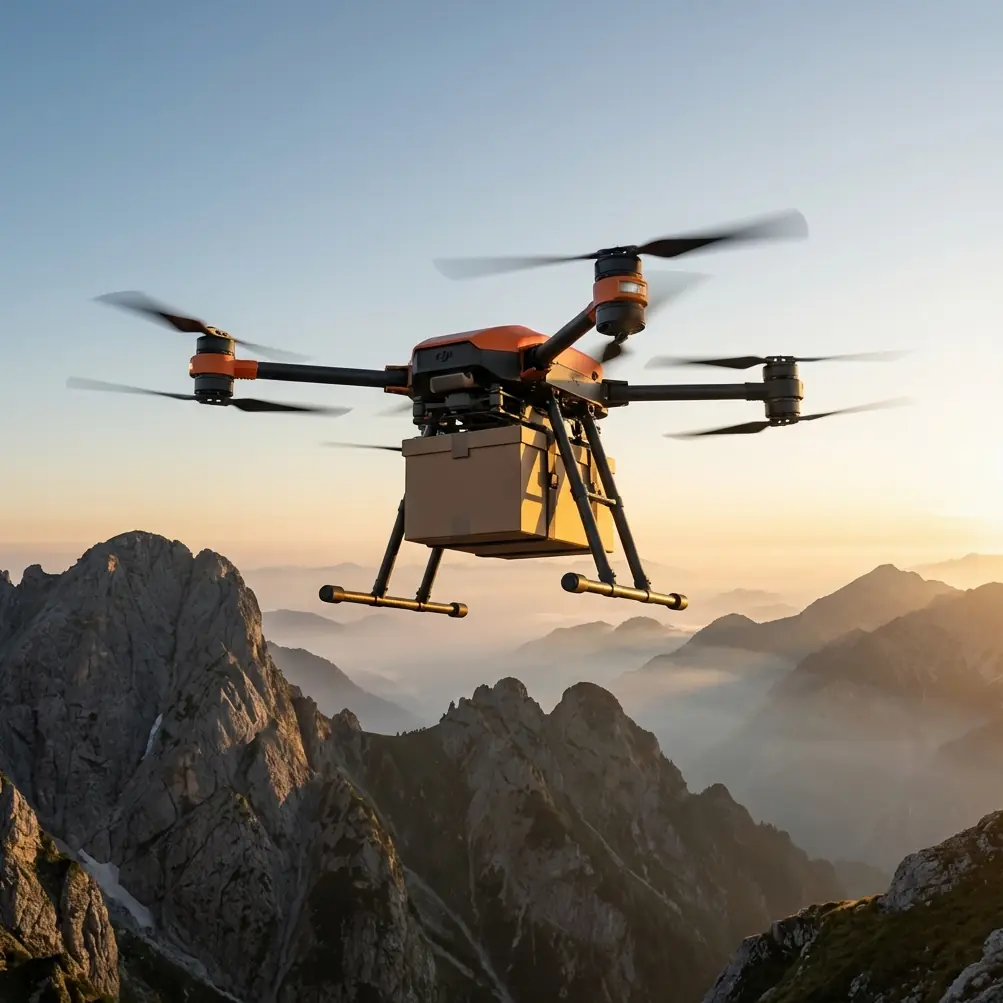
FlyCart 30 Highway Monitoring Tips in Complex Terrain: Range, Winch Strategy, and Safer BVLOS Workflows
META: Practical FlyCart 30 guidance for highway monitoring in complex terrain, including antenna placement, BVLOS planning, winch use, dual-battery strategy, payload ratio, and emergency parachute considerations.
Highway monitoring sounds straightforward until the route disappears behind a ridge, cuts through a valley, or runs along a corridor packed with reflective surfaces, utility lines, and shifting wind. That is where the FlyCart 30 starts to make sense in a way smaller aircraft often do not. It is not just a lifting platform. In the right workflow, it becomes a logistics and observation tool for long linear assets where access is inconsistent and ground teams lose time every time they need to reposition.
I approach this from the field side, not from a brochure. When the assignment is a highway segment in complex terrain, the question is rarely “Can the aircraft fly?” The real question is whether the operation stays stable when terrain, comms, and task load all start working against each other at once.
For the FlyCart 30, that means thinking in layers: antenna positioning for link quality, route optimization for line-of-sight continuity, payload ratio so endurance is not sacrificed for convenience, winch system use when landing zones are unreliable, and emergency systems that reduce operational exposure when the corridor gets unforgiving.
Start with the route, not the drone
A highway mission across broken terrain should never be designed as one long straight line just because the road looks linear on a map. Roads bend. Terrain interrupts radio geometry. Wind channels through cuts and saddles. The cleanest missions usually come from dividing the corridor into segments based on comms behavior rather than road mileage.
That matters even more if you are preparing for BVLOS-style workflow planning. Even where local rules, waivers, and site-specific approvals govern the actual operating method, your route design should still assume that terrain will degrade the link before the battery becomes your first limitation.
A practical approach is to break the highway into observation cells:
- ridge-to-ridge sections
- valley floor sections
- bridge and interchange sections
- tunnel approach zones
- utility-crossing zones
Each cell has its own radio and visibility character. If you treat them as identical, the mission gets sloppy. If you treat them as separate operating environments, the FlyCart 30 becomes much more predictable.
Antenna positioning advice for maximum range
This is usually the first thing teams get wrong.
In complex terrain, the best antenna position is almost never the most convenient spot beside the vehicle. You want the control station placed for radio geometry, not driver comfort. A few meters of elevation change can make a larger difference than a much more elaborate route edit later.
Here is the field logic I use:
1. Put the controller on the terrain shoulder, not in the depression.
If your vehicle is parked in a low turnout or beside a cut slope, your signal path is already compromised before takeoff. Move uphill when possible. Even a modest rise can reduce terrain masking and improve continuity as the aircraft follows the highway.
2. Favor clear forward exposure along the intended corridor.
Highway monitoring often follows a linear alignment. Your antennas should face the corridor with the least obstruction, not the takeoff pad alone. The aircraft may launch well from one position but lose link once it moves behind a shoulder or embankment.
3. Avoid metal clutter near the ground station.
Guardrails, service trucks, steel barriers, and temporary site equipment can create ugly local interference and reflections. Give the antennas breathing room. Do not crowd the setup against the highway furniture if you can step away from it.
4. Use ridge edges carefully, not aggressively.
An elevated crest can help, but do not sit so close to the break that the aircraft drops immediately behind the terrain edge after departure. You want broad exposure, not a dramatic cliff in your radio path.
5. Reposition on purpose between mission cells.
For long corridors, maximum range is often achieved by shorter, cleaner segments with disciplined ground-station moves. Teams that insist on “squeezing one more kilometer” from a poor antenna position usually lose more time recovering the mission than they save.
If you want a second opinion on corridor-specific setup logic, I usually recommend sharing the topography and road profile with a technical team first through this FlyCart 30 planning contact. A quick review of ridge lines, road cuts, and staging points can prevent a bad field layout.
Why payload ratio matters more than people admit
On highway work, operators often carry more than they need. Extra attachment hardware, redundant field items, or a payload concept copied from another mission profile can quietly undermine the entire day.
Payload ratio is not just about whether the FlyCart 30 can lift something. It is about what share of the aircraft’s available performance is being consumed by the task package. That ratio affects endurance margin, climb behavior, route flexibility, and reserve capacity when wind or rerouting shows up.
In complex terrain, reserve matters. A platform that looks comfortable on paper can feel constrained once it needs to climb out of a valley, hold position over an incident point, or deviate around an obstacle corridor. The heavier your task package relative to the aircraft’s available lift and battery strategy, the more every route decision becomes unforgiving.
For highway monitoring, the best payload decisions are usually the ones that support the mission without forcing the aircraft into a narrow performance box. That means asking a blunt question before launch: does every gram on the aircraft actively improve the inspection or delivery objective?
If the answer is no, remove it.
The winch system changes where work can happen
The FlyCart 30’s winch system is one of the most operationally useful features for highway environments with unreliable access. In mountain roads, divided carriageways, embankments, and narrow shoulders, landing can be the worst part of the mission. A clean approach area may not exist exactly where the item, tool, sensor, or support package is needed.
That is where the winch stops being a convenience and becomes a planning advantage.
For highway monitoring teams, the winch system helps in several practical scenarios:
- lowering support items to maintenance crews on difficult embankments
- delivering small field equipment without forcing a landing near traffic infrastructure
- transferring tools or consumables to a work point below the aircraft when terrain access is poor
- reducing the need to commit to marginal touchdown zones
Operationally, this matters because every avoided landing in a bad spot removes a layer of risk. It also keeps the mission adaptable. If the road shoulder is narrow, the slope unstable, or the surface conditions uncertain, a controlled vertical handoff through the winch can be the cleaner choice.
That is especially true in complex terrain where a suitable landing area may be offset from the actual work point by elevation, vegetation, drainage channels, or roadside barriers. The winch collapses that mismatch.
Dual-battery planning is not just redundancy
People often hear dual-battery and think only in terms of backup. That is too simplistic for real corridor operations.
For a platform like the FlyCart 30, a dual-battery architecture has operational significance because highway work rarely unfolds under ideal consistency. Wind profile changes with terrain. Hover demand can spike during verification. The route may require a reposition, a second pass, or a delayed recovery because a ground crew needs more time.
That means energy management should be treated as a mission-planning tool, not a passive spec.
In practice, dual-battery thinking improves three things:
- confidence during route segmentation
- reserve margin for terrain-driven climb and hold
- resilience when the mission shifts after launch
For highway monitoring, that reserve can be the difference between finishing a segment cleanly and cutting the mission short after an avoidable energy squeeze. The more complex the terrain, the more valuable this becomes. Terrain adds invisible cost. Headwinds in a gap, cautious hover near a work site, or a wider return arc around a ridge all consume margin.
A disciplined team builds those realities into the route from the start instead of hoping the battery chart solves them afterward.
Emergency parachute logic for corridor work
When people talk about safety systems, the conversation often drifts into abstract reassurance. That is not helpful. The real value of an emergency parachute in a highway environment is that it changes risk planning around difficult terrain and narrow operating envelopes.
A corridor flight can place the aircraft near slopes, barriers, work zones, and access areas where recovery options are limited. In those conditions, a parachute system is not about flying more aggressively. It is about reducing the consequences of a severe failure when the environment leaves little room for a conventional outcome.
That matters for highway monitoring because the route often runs through precisely the kinds of places that punish small mistakes: cut sections, elevated roadbeds, bridge approaches, and irregular shoulders. Safety equipment should be understood in that context. It supports a more defensible operating framework, especially when missions involve complex geography and limited contingency landing areas.
The better mindset is this: the emergency parachute does not justify a poor route. It strengthens a good one.
Route optimization should follow terrain logic, not map aesthetics
Many teams optimize for visual neatness. They want the flight path to look efficient on a planning screen. That can backfire badly in real terrain.
The best FlyCart 30 route for highway monitoring may not sit directly over the road centerline for the entire mission. Sometimes a slight offset preserves cleaner comms, safer standoff from obstacles, and more stable altitude management relative to terrain. Sometimes a segmented leapfrog pattern with controlled ground-station moves is better than a single elegant line.
Here is what good route optimization usually prioritizes:
- sustained link quality over theoretical shortest path
- predictable recovery points over maximum coverage per sortie
- cleaner terrain transitions over strict geometric alignment to the highway
- mission continuity over headline range
This is where antenna placement, payload ratio, and battery planning start interacting. A poor antenna location forces a more conservative route. Excess payload shrinks flexibility. Weak reserve removes options during a terrain-induced diversion. Optimize one in isolation and the mission still suffers. Optimize them together and the aircraft starts performing like part of a system.
A field workflow that actually works
If I were building a repeatable FlyCart 30 process for monitoring highways in complex terrain, it would look something like this:
Pre-site review
Study elevation change, road curvature, likely reflective clutter, and possible control positions. Mark ridge shoulders, valley pinch points, and any sections where the aircraft could disappear behind terrain from the ground station.
Segment design
Break the corridor into manageable cells instead of forcing a continuous run. Build each segment around communications continuity and recovery logic, not just road distance.
Ground-station placement
Choose antenna positions with forward exposure, moderate elevation, and minimal metal interference. Do not default to the nearest parking point.
Payload discipline
Keep the task package lean. Preserve payload ratio margin so the aircraft retains useful endurance and climb flexibility.
Winch-first thinking where landing is poor
If the work point has unstable, narrow, or obstructed access, plan a winch operation rather than improvising a landing later.
Battery reserve policy
Use the dual-battery setup as a planning asset. Hold enough margin for route deviations, hover time, and terrain-related energy penalties.
Safety envelope
Treat the emergency parachute as one layer in a broader risk model. Build routes and staging decisions that remain conservative even with that system available.
That framework sounds simple, but it changes outcomes. Not because it makes the aircraft more powerful, but because it makes the operation more honest.
What the strange source reference really reminds us about field operations
The reference material provided here mentions a recent report from uavcn about a U.S. military poster that mistakenly used imagery of China’s J-35 fighter jet. The key verified detail is the embarrassing visual mix-up itself, along with the fact that no further confirmed specifics about timing or source are available from the provided input.
At first glance, that story has nothing to do with the FlyCart 30. But operationally, it points to a useful lesson for civilian UAV teams: details matter, and visual assumptions are dangerous. If an official poster can carry the wrong aircraft image, a field team can just as easily carry the wrong assumptions about route geometry, staging positions, or equipment setup if nobody verifies the fundamentals.
That is relevant to highway monitoring in a very direct way. Complex terrain punishes lazy assumptions. The route that looks clear on a map may be radio-shadowed in reality. The turnout that seems perfect for setup may be wrapped in metal clutter. The landing zone that looked adequate in a desktop review may be unusable on arrival. Precision in planning is not bureaucracy. It is performance.
The uavcn item also reminds us to separate verified facts from convenient narrative. We know the story describes an embarrassing poster error involving the J-35 image. We do not know more from the provided reference. The same discipline applies in UAV operations. Use what is verified. Build decisions on observed conditions, measured performance, and confirmed site realities.
That attitude is what keeps a FlyCart 30 mission effective on demanding highway corridors.
The bottom line for FlyCart 30 highway work
If your monitoring environment includes steep grades, blind valleys, narrow shoulders, and inconsistent access, the FlyCart 30 earns attention for reasons that go beyond lift. The winch system expands workable delivery points. Dual-battery planning improves reserve and flexibility. Emergency parachute capability supports a stronger safety framework. And when payload ratio is managed carefully, the aircraft retains the performance margin needed for real terrain instead of idealized terrain.
None of that helps if the antenna setup is poor.
For maximum range and cleaner mission continuity, position the control station for radio geometry first: elevated if practical, clear of roadside metal clutter, oriented toward the active corridor, and moved deliberately between route segments when terrain starts winning. That single discipline often does more for highway results than any last-minute tweak after takeoff.
Ready for your own FlyCart 30? Contact our team for expert consultation.