
FlyCart 30 Field Report: Highway Monitoring in Extreme
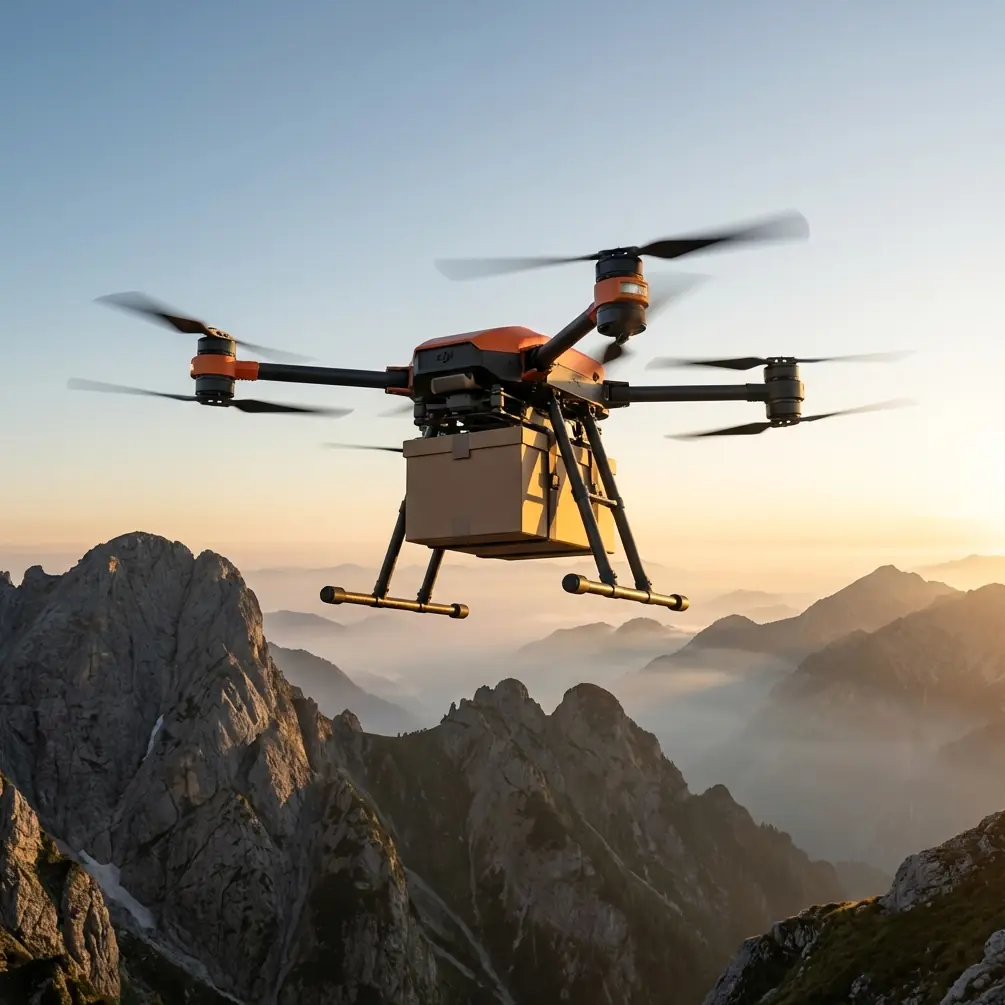
FlyCart 30 Field Report: Highway Monitoring in Extreme Temperatures
META: A field-based look at how the FlyCart 30 can support highway monitoring in extreme heat and cold, with practical notes on visibility, route planning, winch use, dual-battery resilience, and image capture discipline.
Highway monitoring sounds simple until weather strips away that illusion.
A straight road crossing open terrain can become one of the hardest environments to cover consistently. Heat shimmer distorts distant visuals. Snow glare flattens surface detail. Low winter sun throws long shadows across lanes and barriers. In summer, asphalt radiates enough heat to stress crews and equipment alike. That is where the FlyCart 30 starts to make sense—not as a generic cargo drone, but as a platform that can be adapted into a serious corridor-support tool when road operators need eyes on remote stretches without sending people into avoidable exposure.
I’m writing this from the perspective of logistics, not marketing. My interest in the FC30 begins with a practical question: can a heavy-duty UAV do more than move payloads when the job is monitoring highways in punishing conditions? The answer is yes, but only if the operation is built around the realities of visibility, endurance planning, and data capture discipline.
What changed my thinking was not one headline specification. It was the combination of systems. Payload ratio matters because highway work rarely stays static. One day the aircraft may be carrying a visual inspection package. The next day it may need a loudspeaker, a temporary relay device, a lightweight sensor pod, or a drop kit for roadside support items. A platform with meaningful lift margin gives the operator options without rebuilding the whole mission concept every week.
The FC30’s winch system is especially relevant here. Most people associate that with delivery. On a highway corridor, the more useful interpretation is standoff servicing. If an operations team needs to place a compact diagnostic device, a communications node, or a small emergency supply package near a hard-to-access shoulder or embankment, the winch reduces the need for a vehicle stop in a dangerous location. That is operational significance, not convenience. Every avoided roadside deployment lowers exposure to traffic and weather.
The same logic applies to BVLOS planning. Long highway segments are linear by nature, which makes them a better fit for beyond visual line of sight workflows than many dense urban scenarios. But long and straight does not mean easy. Extreme temperatures create subtle problems that undermine monitoring quality before they cause obvious flight issues. In cold conditions, for example, teams often focus on battery readiness and overlook image interpretation. In heat, they may watch aircraft telemetry closely while underestimating what glare and atmospheric distortion are doing to the footage.
That is why an unlikely reference point matters here: smartphone exposure control.
A recent photography note reminded readers that many phones let users adjust brightness through exposure compensation. On many devices, tapping the screen reveals a sun icon; drag it up and the image brightens, drag it down and it darkens. That sounds basic, almost too basic for a professional UAV conversation. It isn’t. It gets at a field truth that many road-monitoring teams learn the hard way: the success of an aerial mission depends not only on where the aircraft goes, but on whether the operator is disciplined enough to manage what the camera sees.
In backlit scenes, increasing brightness can lift dark faces in a portrait. Translate that to highway work and the principle still holds. If an operator is assessing a road crew, parked maintenance vehicle, sign panel, or the shaded side of a barrier during low-angle sun, slight positive exposure compensation can reveal details that would otherwise disappear into silhouette. That is not an artistic adjustment. It can be the difference between identifying surface debris near a median and missing it.
The same source also noted that brighter settings help snow scenes and white subjects look cleaner rather than muddy gray. Anyone monitoring highways in winter knows exactly why that matters. Snow-covered shoulders, lane markings, reflective barriers, and salt residue can confuse automatic exposure. Cameras tend to average the scene, which often makes snow look dull and suppresses subtle texture in ruts, tire tracks, and accumulation patterns. A deliberate bump in brightness can produce cleaner visual separation across the corridor. On a practical level, that helps teams evaluate whether a shoulder is merely dusted, drifted, or partially obstructed.
The inverse is just as valuable. Lowering brightness improves photos of lights or sunsets and preserves darker atmosphere and shadow detail. On roads, that matters during dawn and dusk monitoring, tunnel entrance checks, work-zone lamp inspection, and wet pavement surveys under artificial lighting. If the exposure is too high, point light sources bloom and reflective surfaces clip into useless glare. Pulling brightness down slightly can hold shape around illuminated signage, warning beacons, and vehicle lights while preserving the darker context around them. In winter, when usable daylight may already be compressed, that one adjustment can rescue an entire sortie’s worth of data.
This is where I think many FC30 discussions miss the mark. They focus on lift, range, or delivery mechanics without paying enough attention to image management as part of mission design. A heavy-lift platform used for monitoring should not just carry equipment; it should support a repeatable observation method. If your highway operation runs in extreme temperatures, camera discipline is part of airworthiness in the real-world sense. Not legal airworthiness—operational credibility.
On our side, route optimization became the bridge between aircraft capability and useful output. Highway monitoring is repetitive by design, and that is actually an advantage. You can build route logic around known heat islands, common drift zones, bridge decks that freeze first, runoff-prone shoulders, and segments where accidents historically create traffic backups. If the FC30 is flying a repeatable corridor pattern, exposure settings can also be standardized by segment. A snow-exposed overpass section may need one image profile. A west-facing urban approach during sunset may need another. Once crews stop treating the whole route as one visual environment, data quality improves.
The dual-battery concept matters in this context for a reason beyond redundancy. Extreme temperatures punish consistency. Even when a system remains fully within operational thresholds, heat and cold can change how confidently teams schedule sorties, especially when the mission involves repeated dispatches over a shift. A dual-battery architecture supports steadier mission planning because crews are not thinking only about single-point depletion; they are thinking in terms of sustained operational rhythm. That makes a difference in highway response windows, where the real challenge is not one flight but the tenth one of the day.
Then there is the emergency parachute factor. For corridor work, any risk-control feature should be evaluated against where the drone is likely to spend its time: over roads, shoulders, embankments, service areas, and sometimes near maintenance teams. An emergency parachute is not a substitute for disciplined planning, but it changes the risk conversation. It becomes part of the operational case when stakeholders ask whether a heavy UAV belongs anywhere near live infrastructure. In temperature extremes, where environmental stress can amplify uncertainty, that extra layer of mitigation carries weight with both field supervisors and safety managers.
A third-party accessory ended up improving our concept more than expected: a high-visibility quick-mount strobe package built for day and low-light recognition. It did not change the FC30’s core performance. It changed how comfortably nearby maintenance teams could track the aircraft visually during handoff moments near the corridor. In heat haze or flat winter light, visual reacquisition is not always clean. The accessory helped ground teams maintain awareness during short-duration hover tasks, especially when the winch was lowering a compact item near a shoulder access point. Small improvement, real effect.
That is one of the underappreciated strengths of the FC30 platform. It invites adaptation. Not random bolt-ons, but mission-specific refinement. If your operation includes highway monitoring in harsh climates, you are rarely solving a single problem. You are combining observation, logistics, timing, and safety buffering into one repeatable system. A flexible payload strategy, sensible route optimization, a useful winch system, and support for BVLOS workflows all matter because they reduce the number of compromises you have to make at once.
There is also a human factor that deserves mention. Extreme-weather highway monitoring wears people down fast. If you can use the aircraft to inspect a suspect segment, verify lane shoulder status, place a lightweight device, or check a work-zone edge without dispatching a vehicle immediately, you are not just saving time. You are preserving crew energy for the tasks that truly require boots on the ground. Good UAV integration is often less about replacing labor than about reserving labor for higher-value and higher-judgment interventions.
For teams still shaping their FC30 workflow, my advice is simple: build your SOPs around environmental contrast, not just flight distance. Train operators to treat exposure compensation as a deliberate monitoring tool. The “sun icon” logic familiar from smartphones is actually a useful teaching shortcut. Up for backlit or snow-heavy scenes when details are falling into murk. Down for bright lights, sunsets, reflective pavement, and situations where preserving highlight control matters more than making the whole frame brighter. That principle is accessible enough for fast crew training, yet meaningful enough to improve inspection consistency.
And if you are configuring an FC30 program for long road corridors, make room for accessory testing. The aircraft’s baseline capability is only part of the story. The right strobe, sensor mount, relay module, or quick-swap visual package can make a good platform fit the job properly. If you need to compare field setups or ask about practical integrations for corridor operations, this FC30 workflow contact is a reasonable starting point.
The FlyCart 30 is often introduced through its transport identity. Fair enough. But on highways in extreme temperatures, its real value can come from how well it supports a layered mission: watch, verify, relay, lower, reassess, repeat. The aircraft’s payload flexibility gives operations room to evolve. The winch system reduces roadside exposure during targeted placement tasks. Dual-battery design supports steadier dispatch planning. An emergency parachute strengthens the safety case. BVLOS and route optimization let crews think in terms of corridors rather than isolated flights. And the camera lesson—borrowed from something as everyday as a smartphone—reminds us that a mission only becomes useful when the imagery is readable.
That is the field reality. Not every breakthrough in UAV operations comes from a new airframe behavior. Sometimes it comes from pairing a capable platform with better habits. On highways, under punishing sun or in snow glare, that combination is what turns flight time into operational value.
Ready for your own FlyCart 30? Contact our team for expert consultation.